
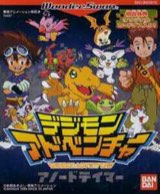
A Digimon Adventure role-playing game with grid battles, in which the boy Ryo Akiyama is called to the Digital World to fight Millenniummon; the first of a pair with Cathode Tamer.
Screenshots
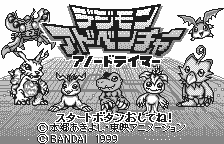
Title screen 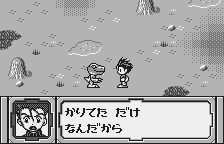
In play 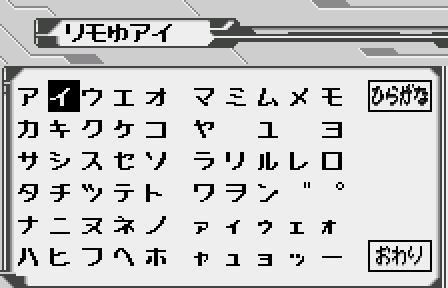
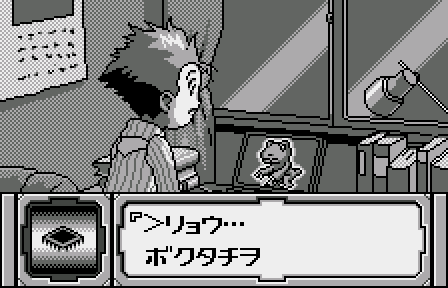

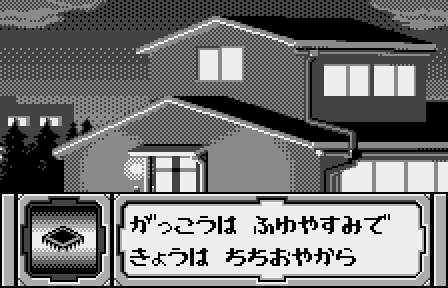
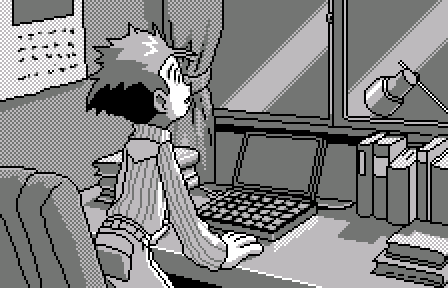
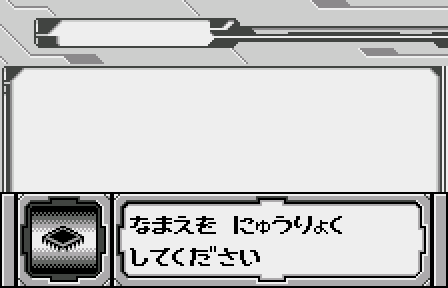
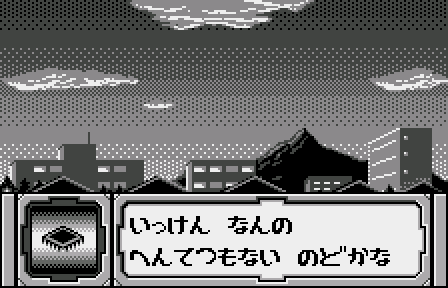
Digimon Adventure: Anode Tamer is a role-playing game set after the first Digimon Adventure television series, made by SIMS and published by Bandai on 16 December 1999. It opens the line of WonderSwan games about the boy Ryo Akiyama and his long fight with Millenniummon, a Digimon born when the surviving villains Kimeramon and Machinedramon fuse. Millenniummon bends time, brings back enemies the Chosen Children had already beaten and imprisons the children, and on New Year’s Eve Ryo is called into the Digital World by Agumon to help.
The player explores dungeons with a stock of Digimon, fights turn-based battles on a grid and recruits beaten enemies, while Variable attacks learned from the right combinations of Digimon stand in for evolution.
Cathode Tamer, released a month later, tells the same story with different Digimon and events. The adventure itself is for one player, but through the link cable two cartridges of either version can trade Digimon, lend one for a dungeon, or meet in a battle. Veedramon, needed for some Variable attacks, was handed out only to tournament winners and at events.
The story
The game takes place in the Digital World after the first Digimon Adventure series, on File Island and the Server Continent that the anime’s heroes once crossed. Anode Tamer and Cathode Tamer are set in two parallel worlds that tell the same tale, and Anode’s version leans towards flying Digimon, with Kimeramon as the villain’s lieutenant.
The hero is Ryo Akiyama, a boy of about eleven who has no part in the anime. On New Year’s Eve 1999 he is chatting online when a blackout cuts him off, and his mother sends him to look at the fuse box. A voice from a computer screen showing a device he does not recognise asks him to touch it. He wakes in a forest face to face with Agumon, takes it all for a dream, and almost at once a Kuwagamon and a Betamon attack.
Agumon and Gennai explain what has happened. Millenniummon, the Digimon made from Kimeramon and Machinedramon, has twisted time, brought back Devimon, Etemon, Vamdemon and Piemon, and captured all eight Chosen Children. Agumon alone got away, with Gennai’s help, and it was Agumon’s call for help that only Ryo answered. Gennai gives him Taichi’s Digivice. Because Ryo is not its true owner it cannot make Digimon evolve, but its holy power can turn enemies into allies, and that is how he builds a team.
The story moves from dungeon to dungeon, each ruled by one of the revived villains. File Island comes first, then the Server Continent. Each villain defeated sets some of the captured children free; they lend Ryo their partner Digimon and go home ahead of him, so the team of anime partners grows as the adventure goes on. Leomon, Andromon and Piximon help along the way, and in Ryo’s own world only minutes pass while he is away.
How it plays
The console is held horizontally. Each outing starts at Gennai’s house in the village, which tells the player where to go next, and the Gate run by ToyAgumon leads into the dungeons. Every floor of a dungeon is a single battle on a map chosen at random, and between floors the player can go on, retreat to the village or save. Clearing a dungeon or losing a battle sends the party back to Gennai’s house, and DP and VP refill on leaving a dungeon. The story has 13 main dungeons with 58 floors in all, and four hidden dungeons of seven floors each bring the total to 86. The anime partners join after the fourth, sixth and ninth dungeons.
Battles are fought on a grid in the manner of Fire Emblem or Super Robot Wars, with up to three Digimon on each side. Turn order follows each Digimon’s SP. An ordinary attack needs the attacker to stand next to its target, it can miss, the target can counter, and critical hits come at random. Using an item takes up the Digimon’s turn. Terrain matters: land Digimon lose a point of movement crossing water, sea Digimon hit harder on water but lose a point crossing land, and sky Digimon cross anything and move furthest of all. A win pays out Bits and up to three items picked at random.
Each Digimon has a generation, an attribute and a trait, the values DP (health), AP (attack), SP (speed), PP (defence), VP (for Variables) and MP (movement), and two needs, EP for hunger and UP for droppings, each counting up to 8. There are no levels: AP rises by attacking, PP by being hit and VP by using Variables, up to twice the starting value, or three times for the rare Digimon that arrives with hidden great power. At EP 0 a Digimon is hungry and fights worse until it eats meat. When UP reaches the limit it cannot counter-attack and gets hungry faster until a toilet item clears it, which players came to treat as the key to some of the strongest tactics.
Variable attacks take the place of evolution. At the start of a turn a Digimon may suddenly learn one if the team meets the right conditions, which depend on species, generation, version, trait or the anime’s story; Agumon fighting beside another anime partner learns Greymon, then MetalGreymon and then WarGreymon. A Variable can also be picked up by watching it used, five times for a fitting Digimon and ten otherwise. Each Digimon holds up to five, sorted into attack, defence and support. A Variable replaces the Digimon’s move for that turn, reaches anywhere on the map, never misses and draws on VP, and the first use is free. A Digimon whose EP has run too low cannot learn new ones.
Recruiting opens after the first dungeon. Using the Digivice from the item menu on an enemy spends holy-power points, which build up as enemies are beaten; a baby Digimon costs about 20 to 30, a child 40 to 50, an adult 80 to 90, and bosses far more. New Digimon go to Nanomon’s Server Room, where they can be renamed or released, though the anime partners cannot be released during the story. The stock starts at ten slots and grows to thirty with HD upgrades from Nanimon’s shop, which also sells floppies that restore DP and plugins that restore VP. Otamamon, Numemon and Bakemon become Gekomon, Scumon and Soulmon when traded. Koushiro’s Digimon Analyzer lists 186 entries, 113 Digimon and 73 Variables, and can only be completed by trading with Cathode Tamer. Airdramon, Yukidarumon, Vegimon, Tortamon, Seadramon, Mushmon, Kiwimon and Kimeramon appear only in Anode Tamer.
The early game is gentle and the post-game dungeons are much harder. A well-known start is to take Tyranomon and Koromon from Nanomon’s server, since Koromon beside Agumon learns Whamon, a healing Variable. Players use the terrain to gang up on a single enemy and avoid being surrounded, and soften enemies with Variables from range before closing in for ordinary attacks. In the third dungeon the right-hand route is harder because its enemies use Variables, and the three adult Digimon met before Piemon in the twelfth are a famous hard fight. Plugins help against Vamdemon, who drains VP, and toilet items against Piemon, who can stop counter-attacks. The Garbemon Variable, learned by Numemon together with Scumon, fills every enemy’s UP at once for 18 VP. Item space is worth keeping free for rare drops that the shop does not sell, and holy points worth saving because some bosses can be recruited.
Development and release
Bandai presented Anode Tamer as the second WonderSwan Digimon game, a collecting role-playing game with 170 Digimon to gather, and it went on sale while the first Digimon Adventure series was still being broadcast; the second version followed five weeks later. A bundled edition followed on 23 March 2000 for 5,980 yen with its own product code, SWJ-77A007; what it was packed with is unknown. Copies from the first production run came with a promotional Carddass card showing Kimeramon.
Veedramon was never placed in the game for players to find. Shueisha’s preview of Jump Festa 2000 told readers that anyone who brought Anode Tamer to Bandai’s booth would receive Veedramon’s data, and between 27 February and 26 March 2000 Bandai handed the Digimon out again at a series of shop events, held at toy shops, department stores and supermarkets from Otaru to Iwata. It was also built into the limited edition of Cathode Tamer that Bandai gave away in its Digimon Adventure 2000 Campaign.
Modes and features
The village on File Island acts as the hub. Gennai’s house is where the player returns after clearing a dungeon or losing a battle, and progress can be saved between the floors of a dungeon. Piccolomon runs practice battles with ready-made teams in four settings (standard, land, air and underwater), Leomon’s colosseum hosts link-cable battles, and Penmon’s trading house handles trades and the lending of Digimon. A further colosseum, opened after one practice battle, connects through Bandai’s link adapter to the Digital Monster virtual pets.
Secrets and extras
Four hidden dungeons can be opened. The first two open by themselves after the ending; in Anode Tamer they are filled with baby Digimon and with sky Digimon. The third appears once the player has spent more than twenty hours in the game after the ending, and there Kimeramon can be recruited. The fourth opens when every Digimon usable in battle has been collected, and in it the player fights the Chosen Children’s own partners, such as Agumon and Gabumon, and can recruit them.
A hint tree in the village gives up to eight tips as the story advances, and a newly recruited Digimon occasionally comes with hidden potential that lets its values grow higher than usual.
Reception
Anode Tamer and Cathode Tamer together sold roughly 210,000 copies, which places the pair third among the best-selling WonderSwan games.
Players who look back on it remember the grid battles fondly and recall that the anime’s evolution song played when a Variable attack was learned. The most common complaint is that the strongest attacks, including the one for Omegamon, needed the event-only Veedramon, so most players could never use them.
Ports and other versions
Anode Tamer was made for the WonderSwan and did not appear earlier on another system. Its only later edition stayed within the WonderSwan family. In September 2001 Bandai Asia put Anode Tamer and Cathode Tamer together on one WonderSwan Color cartridge in English, Digimon Adventure: Anode/Cathode Tamer – Veedramon Version, released in Hong Kong on 18 September 2001. A South Korean release followed in the same month, with the same changes but without Veedramon. The game was never released on a system outside the WonderSwan family.
In this edition the monochrome graphics were given colour, and Diaboromon’s battle sprite was swapped for the design used in D1 Tamers. The music of the title screen and of the Variable attack scene was replaced with a different tune. Menus were widened for English text; people take their names from the English dub of the anime and Digimon from Bandai’s English-language toys, while attack names were left as they were. Veedramon no longer depends on an event, since it joins after the first dungeon and can learn AeroVeedramon’s attack, and the link to the Digimon Analyzer toy, which the Japanese Anode Tamer lacked, works in both halves of the cartridge.
Later history
Ryo Akiyama’s story continued on the WonderSwan in Digimon Adventure 02: Tag Tamers and D1 Tamers and ended in Digimon Tamers: Brave Tamer. Outside Japan the game is known mostly through the combined English edition.