
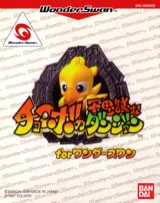
A handheld version of Square's PlayStation dungeon crawler starring the Chocobo, made by Tose and sold by Bandai on the day the WonderSwan launched.
Screenshots
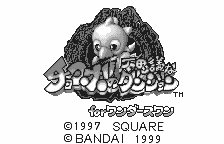
Title screen 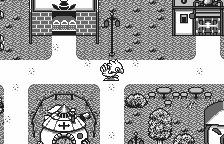
In play 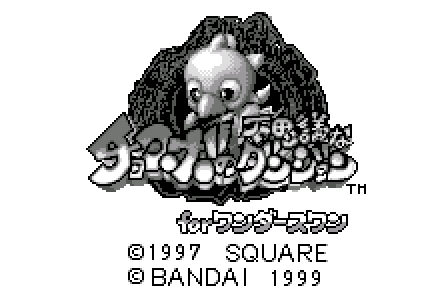
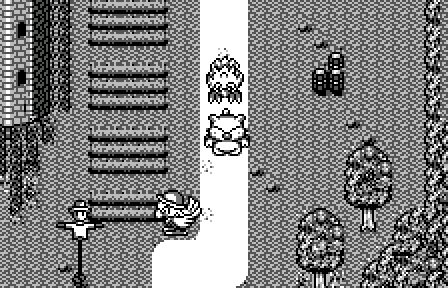
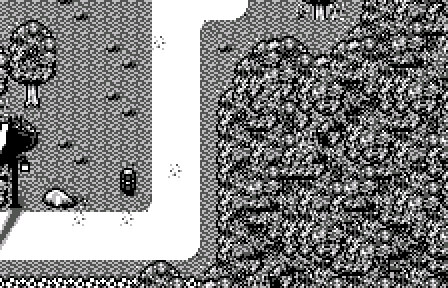
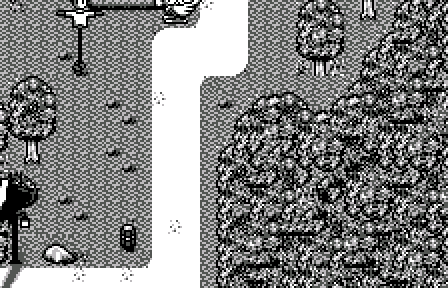
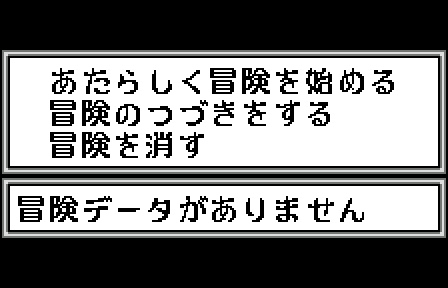
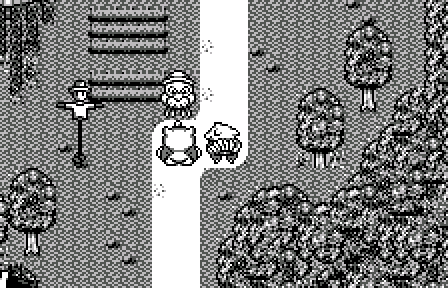
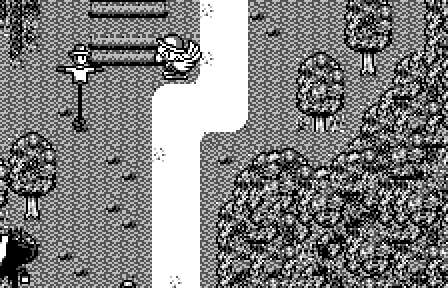
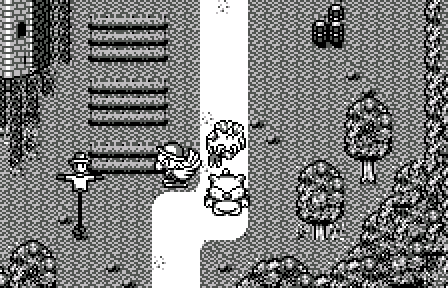
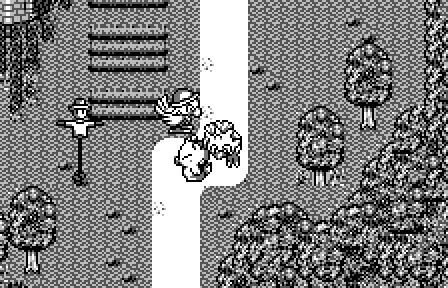
Chocobo no Fushigi na Dungeon for WonderSwan brings Square’s 1997 PlayStation game to the handheld. The original was a Final Fantasy spin-off built on the Mystery Dungeon formula, with the Chocobo as its hero. The WonderSwan version was developed by Tose and published by Bandai with Square’s cooperation, and it went on sale on 4 March 1999, the same day as the console itself. A year later, on 23 March 2000, a limited set paired the cartridge with a WonderSwan in a yellow Chocobo colour.
The Chocobo goes down through dungeons beneath a village, whose floors are laid out anew on every visit, picking up items and equipment to grow stronger against the monsters further down. The structure follows the PlayStation game, with some changes described below.
The game is for one player. The game is for one player, and it supports the WonderSwan link cable. The game is known for its bugs, among them items that vanished or could not be removed from the inventory, freezes and sudden resets.
The story
The game is set in a world of animals and monsters, with no humans in it. Its creatures are taken from the Final Fantasy series and drawn small and round, in a cute and comic style. The hero is a young male chocobo, called Poulet unless the player gives him another name, who travels with Atla, a young moogle with a very strong appetite for possessions. The two are on a journey when they arrive at a small village, and the game takes place in and under it.
As they arrive, the village’s farmer, a chocobo who is the father of Camilla, is tilling his field and digs up a purple crystal that grows by soaking up desire. The crystal takes his soul, and at the same moment a mysterious dungeon opens up in the village. The opening scene shows the farmer, now under the crystal’s sway, kicking the Chocobo down into it, and from then on the aim is to go down through the dungeon and bring him back.
The village is the home base between trips. Camilla runs the item shop and grows plants in pots, a large chocobo named Wiz rents out storage, the village chief and a scholar lend the pair an empty house to live in, a raccoon runs the shop where equipment is combined, and a hamster brings things out of Atla’s chest when he is called with a whistle. Down in the dungeon a mysterious figure named Cleyr keeps turning up and seems to know something about the crystal and a mysterious shopkeeper does business inside the dungeon.
The story is told in three stages, one for each dungeon. The first goes down at most 30 floors and the second 60, and each ends with its own ending before the next dungeon opens; the third runs to 9999 floors. The plot itself is light and simple, given in short conversations that change as the Chocobo gets deeper, and much of the game’s pull lies in collecting rather than in the story. The village changes along the way, as the residents’ families move in and new shops and services open.
How it plays
The WonderSwan is held horizontally. Like other Mystery Dungeon games, the game is turn-based on the map: every step the Chocobo takes counts as one turn. Each floor is a random layout of rooms and corridors with a staircase down, and the items and monsters on it are random as well. The handheld has fewer buttons than the PlayStation pad, and the reworked controls are the weakest part of the port. An equipped stone shares the button used for normal attacks, so every attack throws the stone, and many players simply leave stones unequipped. Walking diagonally is easy, but turning on the spot to face a diagonal is very hard to do. The map is opened with the Y1 button.
Fights use a system the game calls TATB, for Turn Active Time Battle. When a monster comes near, both sides get an ATB bar that fills in real time. Quick attacks need a short bar and strong ones a long bar; red bars are for physical attacks and blue for magic and special attacks, which take longer. The Chocobo can strike before his bar is full, but the blow is weaker and more likely to miss, while most monsters wait for a full bar before attacking. If the Chocobo walks away out of the room, the monster’s bar empties. This allows the game’s best-known tactic, hitting a monster, stepping back to reset its bar and coming in again, and it makes most fights easy, though some monsters never reset and some follow him out of the room.
The Chocobo wears four kinds of equipment, one of each: claws as a weapon, a saddle as armour, a collar as an accessory and a stone. Some claws and saddles show a plus or minus number, and a minus always means a curse; many collars are cursed too. Two claws or two saddles can be combined, at the village shop or at a stove found in the dungeon, so that the second passes its abilities to the first. Later in the story seeds allow a three-way combination for special gear, and a weapon combined again and again can suddenly turn into a new one.
Magic comes from items. Books cast one of seven spells, Fire, Blizzard, Thunder, Aero, Dim, Shine and Drain, over a wide area, and grow stronger the more they are read. Stones and orbs are kicked at monsters, orbs releasing spells such as Holy and Flare. Magic stones call up Final Fantasy summons with a very wide reach and short animated scenes, which survived in the WonderSwan version, but they are rare and only start to appear after a special floor. Potions leave an empty bottle that can be refilled at springs, fruit restores health or shortens the ATB bar, and cards identify items or take the Chocobo out of the dungeon. Collars, potions, fruit, seeds and cards are found under vague names such as a sparkly potion, and which name means which item changes every time the Chocobo enters a dungeon. Attacks carry elements, fire against ice and thunder against wind.
The floors hold traps that stay hidden until stepped on, switches, magic circles, chests and paintings that may explode, and sealed chests that open only to the right kind of spell, with a Drain book opening every one. Books also light torches and the stoves, and a recycle box turns two unwanted items into a new one, some of which can be made in no other way. Every fourth floor normally has a monster room, often with a stove and shelves. Staying on one floor for too long brings out a Grim Reaper, whose attack sends the Chocobo down a floor.
The rules are much gentler than in the Mystery Dungeon games by Chunsoft. The Chocobo keeps his level when he returns to the village, and the game can be saved partway through a dungeon. If his hit points run out he is thrown out of the dungeon and loses everything except his equipment, but drops only one level and keeps his gil; a village event later lets the player choose to start from level 1 on every trip instead. Items are plentiful, so the game is easy, and long-time fans of the series thought it too soft. Items found below are sold in the village, and giving residents certain items again and again sets off events that make the village grow. Pots found in the dungeon let Camilla grow fruit and seeds from potions and fruit, and filling in the item and monster records is a large part of the play.
In the third dungeon, floors whose numbers repeat a digit, such as the 11th and 22nd, have a fixed theme, and past the 100th floor the same themes come round again. The WonderSwan version changes two of them: the 55th floor has a monster called Marionator in place of the Magic Pot, and the slot machine room on the 77th floor became an ordinary floor. Two tricks are well known on the WonderSwan. Once the Chocobo has reached the 15th floor of the second dungeon, the village item shop sells a Map card for 600 gil that it buys back for 900, so buying and selling it over and over makes money. A glitch in the inventory window, used by setting an item down on the floor until the cursor is left on an empty slot and then choosing to kick, adds an Identify card that is never used up.
Development and release
The game was one of four titles on sale on the WonderSwan’s first day, alongside Gunpey, Densha de Go! and Shin Nihon Pro Wrestling Toukon Retsuden. Its many bugs are generally put down to a schedule that had to meet the console’s launch date. It was seen at the time as the best-known of the four, and reports of faults were already being posted on the official message board soon after release. Much of what players first took for quirks of the design turned out to be faults in the cartridge, which owners could send in to a service centre, though at the cost of their saved progress.
Modes and features
The manual has two known faults. It leaves out the map, which the Y1 button opens, and it wrongly says that only the Fire book can light a stove, when the Thunder and Shine books work as well.
Reception
Weekly Famitsu’s Cross Review gave the WonderSwan version 27 points out of 40, against 31 for the PlayStation original. The graphics are thought very well made for a monochrome screen, and the sound is in stereo through headphones. Players liked the game and found that the quick pace of a cartridge suited the dungeon format on a handheld, but criticised the controls and the bugs, which had cost some players their saved progress.
Ports and other versions
This is not a new game but a conversion. Square released the original on the PlayStation in Japan on 23 December 1997, and Tose rebuilt it for the WonderSwan a little over a year later. The handheld edition was never ported or re-released, but the PlayStation original was brought back: in 2010 it was put on sale in Japan as a download for PlayStation 3 and PSP, without the bonus data disc that came with the first release, and the download was also offered for the PS Vita. Later games such as Chocobo no Fushigi na Dungeon: Toki Wasure no Meikyuu and its remakes are separate titles in the series, not new editions of this one.
The two versions share their overall design, but the black-and-white screen led Tose to rework some monsters and events. The slot machine room on the 77th floor of the PlayStation game became an ordinary floor, and the Magic Pot that turns up on the 55th floor was swapped for a different monster. The art and sound were made anew for the handheld; the monochrome graphics are very polished, and music and effects play in stereo. The Chocobo and monster sprites are finely detailed, the short scenes played when a magic stone is used survived, and the cartridge does away with the loading pauses of the CD-ROM original.