
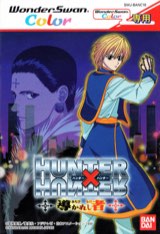
The third of Bandai's Hunter × Hunter games for the WonderSwan, an adventure covering the manga's Yorknew City arc as seen through several characters' eyes.
Screenshots
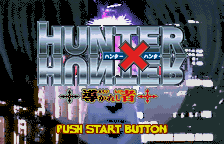
Title screen 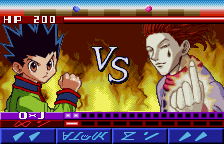
In play 
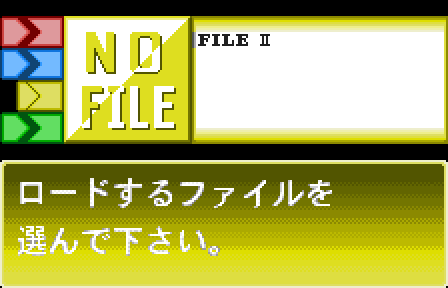
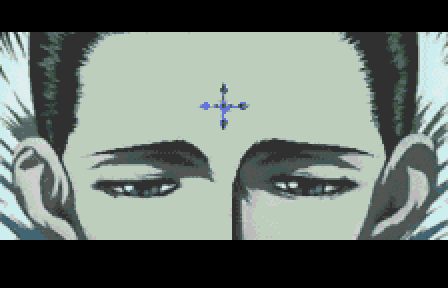
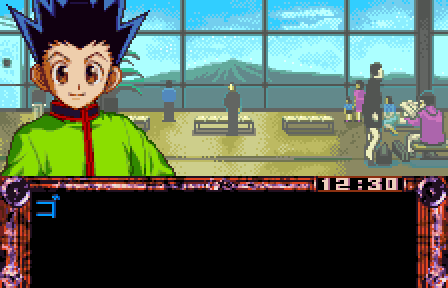
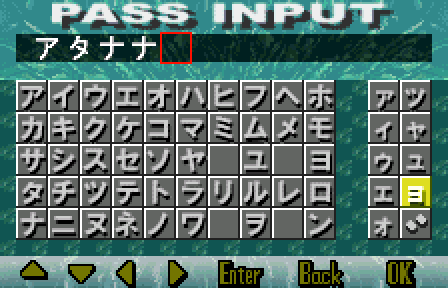
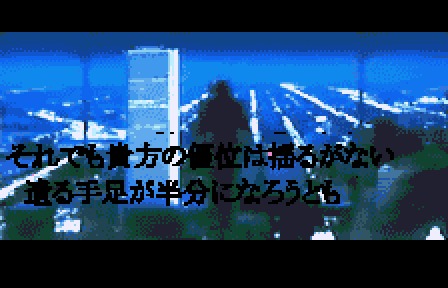
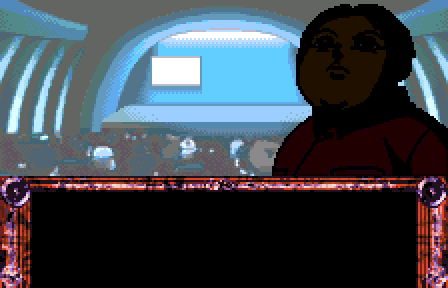
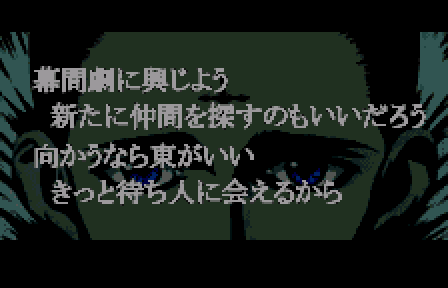
Hunter × Hunter: Michibikareshi Mono, roughly “Those Who Were Led”, is an adventure game for the WonderSwan Color based on Yoshihiro Togashi’s manga Hunter × Hunter and its anime. Bandai released it on 23 August 2001, four months after Sorezore no Ketsui, and it was developed by Access. It was the third of the four Hunter × Hunter games on the WonderSwan.
The game takes on the Phantom Troupe arc, also called the Yorknew City arc, and tells it from several characters’ points of view, with story events that never happen in the manga and several endings.
Michibikareshi Mono builds on the previous game but puts more weight on its scenario. Battles fought with Nen, the manga’s system of special powers, now allow two-against-two fights. The Dennou Mobile, a keyword search device from the first WonderSwan game, is included again as a side feature. The cartridge runs only on the Color.
The story
The setting is Yorknew City, which hosts one of the largest auctions in the world. Into it comes the Phantom Troupe, a band of thieves. They raid the auction venues one after another, and the raids grow into open war with the Ten Dons, the bosses who control the whole of the mafia. To deal with the Troupe the Dons bring in the Zoldyck family of assassins, and one of the scenes Bandai showed before release has the Troupe’s leader, Chrollo, fighting the Zoldyck father and son together.
Kurapika is the main figure this time. In the manga his clan, the Kurta, were wiped out by the Troupe for their scarlet eyes, and he has come to Yorknew as a bodyguard for the Nostrade family, who are attending the auction, with the aim of finally facing the people he has been hunting. Gon and Killua are in the city too, for their own reasons: in the manga they come to bid for the rare game Greed Island and meet up again with Leorio there. In the game the player also takes the Troupe’s side, and Chrollo is one of the characters the player controls.
The story does not run in a single line. The player picks a point in time and a character, plays that person’s part of the events, and learns things from one side that another side never sees. Choices made along the way can push the story off the manga’s course into what-if scenes and battles, so the same few days in Yorknew can turn out very differently from one playthrough to the next.
How it plays
Michibikareshi Mono is a text adventure with battles. On the map the characters appear as icons, and selecting one starts that character’s scenario at that moment of the story. Within a scenario the player reads the text and makes choices, and a single wrong choice can end the game on the spot with a bad end, much like a Japanese sound novel. The game keeps two running tallies, one of Hunter points and one of Spider points, and whether they reach a set level by the end decides which of the endings the player sees.
The fights use the same visual Nen battle system as Sorezore no Ketsui, in which the player decides when and how to use each fighter’s Nen abilities. The new feature is team fights of up to two against two, which Bandai added so that the manga’s group battles, such as Chrollo against the two Zoldycks, could be staged with more tension. The battle system is the part that divides players most, and the ordinary enemy henchmen all share the same face.
The branching produces many what-if battles that never happen in the manga. One famous example pits Hisoka against the Troupe’s Uvogin, whose Big Bang Impact kills in one hit; even winning that fight leads to a bad end, because the battle belongs to a world that has gone off the true path. With bad ends this easy to reach and several real endings, the game is built to be played through more than once.
Chase sequences appear in the story, and how the player does in them can change the ending reached. There are also mini-games, among them arm wrestling and a casino, and the Dennou Mobile returns as a bonus feature. V Jump published a strategy guide for the game.
Development and release
Access is a Tokyo developer that also made the other three Hunter × Hunter games for Bandai on the system. Bandai ran a promotion aimed at people who already owned an earlier entry: an application form packed in the box could be sent off with the package tag cut from either Sorezore no Ketsui or Ishi o Tsugu Mono, and every applicant was promised a Phantom Troupe coin. Bandai also announced that players who had finished Sorezore no Ketsui before starting this game would find a hidden scenario and some altered scenes, though it did not explain how the game detects this.
Modes and features
Bandai called the viewpoint structure its multi-sight system, and presented the move to two-against-two battles as a way to stage the manga’s group fights more faithfully. The game is for one player only and has no link-cable play.
Reception
The game drew little attention, but some players rank it among the best games on the WonderSwan Color, praising its handling of the Yorknew arc and its many bad endings and what-if battles, such as Hisoka facing a member of the Troupe, that can end a run early. Some also feel that text-heavy adventure games of this kind suit the WonderSwan well.
Ports and other versions
Michibikareshi Mono was made for the WonderSwan Color and was never ported, remade or re-released. In the same years Konami held its own Hunter × Hunter licence and released separate games on the Game Boy Color, PlayStation and PlayStation 2, among them a PlayStation roguelike set on Greed Island; those are different games, not versions of this one. Bandai’s four WonderSwan entries, all by Access, stand apart as a line of their own, and this one is the only adventure among them that is built entirely around the Yorknew City story.