
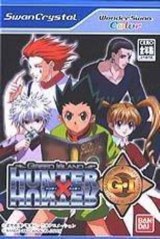
The last of Bandai's four Hunter × Hunter games for the WonderSwan: Gon and Killua explore the manga's Greed Island, collecting 100 cards in 3-on-3 grid battles.
Screenshots
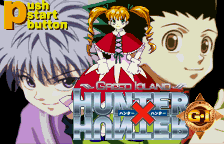
Title screen 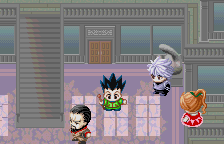
In play 

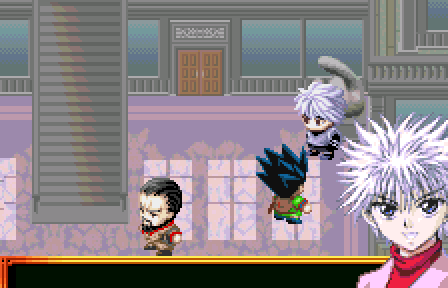
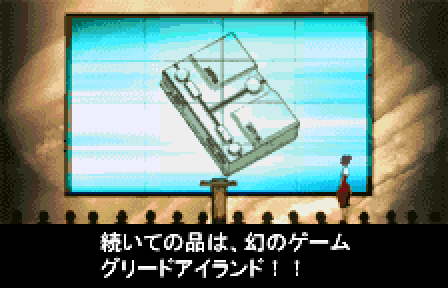
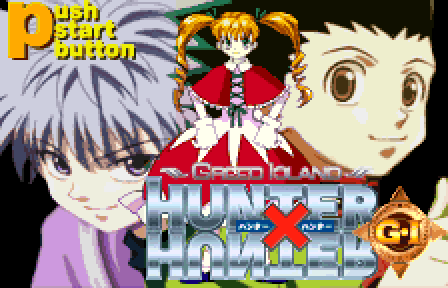
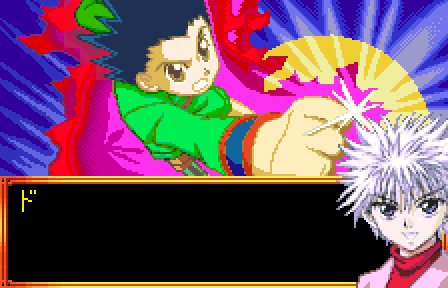
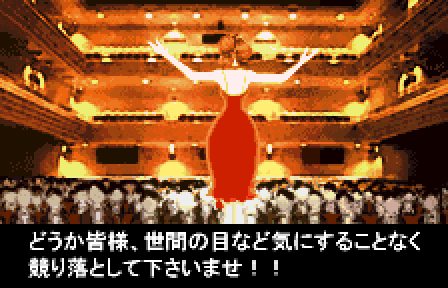
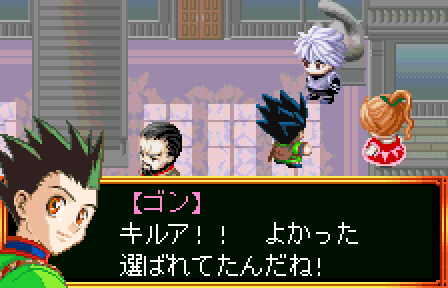
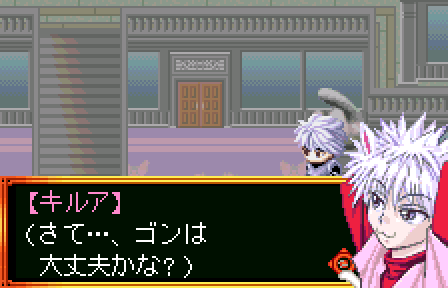
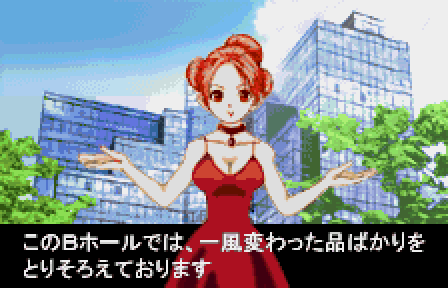
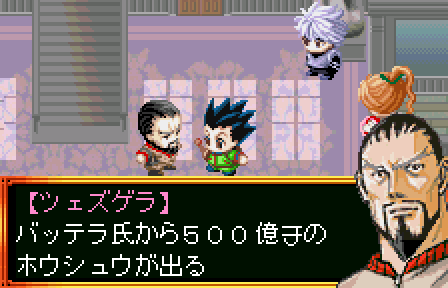
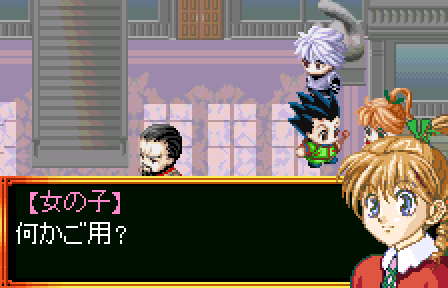
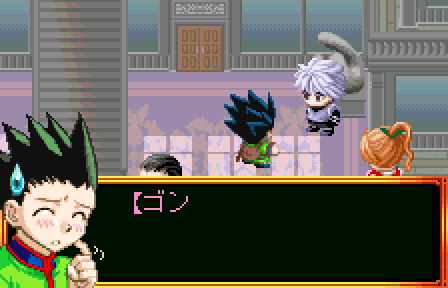
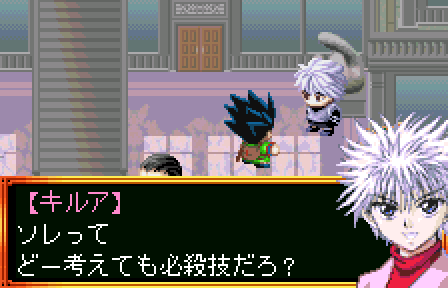
Hunter × Hunter: Greed Island is a role-playing game for the WonderSwan Color based on Yoshihiro Togashi’s manga Hunter × Hunter. Bandai released it on 24 April 2003, and it was developed by Access, the studio behind all four of Bandai’s Hunter × Hunter games on the WonderSwan. Coming almost two years after the previous one, it was the last of the series on the system.
The game follows the manga’s Greed Island arc. Gon and Killua enter Greed Island, a game made by Gon’s father Ging, and play centres on collecting the cards numbered 000 to 099. Battles are turn-based fights of up to three against three on a small grid, and the game has more than one ending. The cartridge is Color-only.
The story
Greed Island is a game inside the manga’s world. Ging and his friends built it with Nen, so only people who can use Nen are able to play it, and a player enters it by performing Ren with both hands on the console. Once inside, the player is on an island with its own towns, villages, wilderness and monsters, and the game’s goal is to complete a binder of one hundred designated cards.
The WonderSwan game puts the player in Gon’s place as he and Killua arrive on the island. At the start a recorded message from Ging greets Gon, welcomes him to the game and tells him it is something Ging made with his friends. The central question the cartridge sets up is why Ging made Greed Island at all, and the way to an answer runs through the island’s people, so the two boys travel from town to town gathering information and taking on the requests and incidents they come across.
Gon and Killua begin alone. Along the way they train their Nen under the hunter Biscuit, and other characters, including monsters they have beaten, can join them. The party holds up to three, and some of the possible line-ups never happen in the manga.
The story is told through events in individual places rather than one long chain of chapters. Towns such as Masadora, Soufrabi, Antokiba, Dorias and Aiai each have their own residents and small storylines, and new areas, among them the Witch’s Mansion, the Golden Ruins and the Wandering Restaurant, open up as the boys hear about them. The incidents range from a mad scientist’s mansion to a witch’s tower and a delivery firm for lost property, all set against the larger aim of clearing the game.
How it plays
The player moves the party around the island on a field map and walks into towns, villages and outlying areas. Many places are closed at first and open only after the party hears about them, for example from an innkeeper or a resident of another town, and some events only happen at a particular time of year, since the game keeps its own calendar of months and seasons. The game gives few hints about what sets an event off, and the stages look much alike, so mapping them by hand is close to essential.
Cards are the heart of the game, and more than 220 of them exist. The 100 rare designated cards fill the numbered slots of the binder and are the main goal. Alongside them come 40 spell cards with magical effects, 40 item cards and 40 monster cards, which are captured from defeated enemies. Events in towns and villages hand out most of the designated cards, often in return for other cards, materials or favours, and some designated cards are needed to unlock further events. Cards can be exchanged for money, the manga’s jenny, at a trading shop, but many monster and helper cards are needed later in trades, so selling them is a common mistake.
Meeting a monster or an enemy starts a battle. Fights are turn-based and command-driven, take place on a field of eight by three squares, and can involve up to three fighters on each side. Distance and position on this field change whether an attack hits and how much damage it does. The system builds on the Nen battles of Bandai’s previous Hunter × Hunter game: characters attack with Nen abilities or with cards, items can be used mid-fight, and storing up Nen with Ren lets a character unleash a special move, shown with cut-in artwork.
The strongest attacks are Hatsu techniques, and most enemies can only really be beaten with them, but a character has to be in the right position to use one, which seldom happens in an ordinary fight. Gon is slow and Killua is fast, so the order in which they move and where they stand decides who gets close enough to the enemy. Planning each turn and making the three party members work together is the key to winning.
Collecting 99 cards does not finish the game. The hundredth card comes from going back to the spot where the adventure began and beating a boss there, and the game has several endings. Progress is saved to the cartridge’s battery-backed memory.
Development and release
Bandai printed the title as Hunter × Hunter G.I., the initials standing for Greed Island, and sold it as a Color-only cartridge that runs on the WonderSwan Color and the SwanCrystal. The game has stereo sound, one player and no link-cable support, and it sold for 4,800 yen before tax. While the WonderSwan games came from Bandai, the Game Boy and PlayStation adaptations of the manga were published by Konami, and the two companies’ games met on the same day: Konami’s Game Boy Advance title Hunter × Hunter: Minna Tomodachi Daisakusen!! also came out on 24 April 2003. Ahead of release, Bandai published a March 2003 recording of the radio programme Hunter × Hunter R, in which Junko Takeuchi, Kanako Mitsuhashi and Chieko Higuchi, the voices of Gon, Killua and Biscuit, introduced the game with SwanCrystal consoles in hand.
Secrets and extras
Entering the password “GIギャラリー” (GI Gallery) on the options screen unlocks a set of illustrations. The multiple endings may depend on which three cards the player chooses at the very end, though this has not been confirmed.
Ports and other versions
Hunter × Hunter: Greed Island was made for the WonderSwan Color, and it was never ported or re-released on another system. It is easy to confuse with Konami’s PlayStation game Hunter × Hunter: Maboroshi no Greed Island, released on 26 October 2000, which takes its setting from the same arc but is an unrelated game. The Konami title is a roguelike in which a newly qualified hunter of the player’s own investigates the island, with everything original to the game and the cards dropped altogether, whereas the Bandai cartridge follows Gon and Killua and builds its play around collecting cards.
Later history
The game came out late in the WonderSwan’s life. It is one of the scarcer cartridges for the system, owing to the small number of copies in circulation and the lasting popularity of the Greed Island story, and no printed strategy guide was ever published. Bandai Namco’s next Hunter × Hunter game, Wonder Adventure for the PSP, did not arrive until 2012.
Notes
The game gives little indication of what triggers each event, and the areas look so alike that drawing one’s own maps is close to essential. Most enemies fall only to Hatsu techniques, which rarely come into play in an ordinary fight, so it helps to charge Nen with Ren first and arrange the party so the slower Gon ends up next to the enemy.