
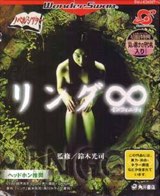
A horror novel game in the world of Ring: three linked stories of a curse spread by videotape, web page and nightmare, released for the WonderSwan in 2000.
Screenshots

Title screen 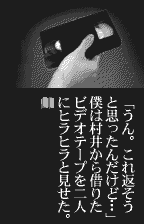
In play 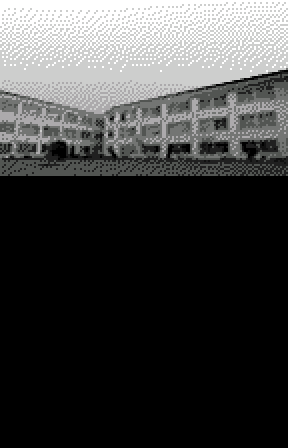
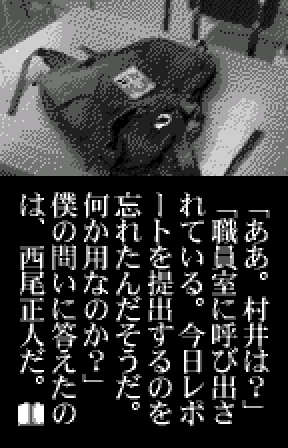
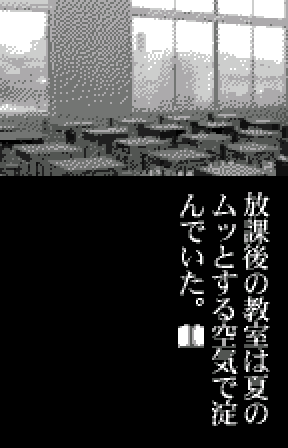
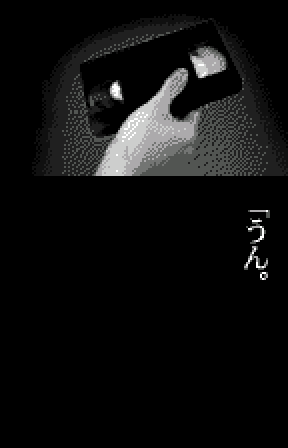
Ring Infinity is a horror novel game for the WonderSwan, released in Japan on 10 August 2000. It is set in the world of Ring, the horror story about a cursed videotape that kills those who watch it within a week, published by Kadokawa Shoten and also told in films and on television. It follows the same format as Bandai’s earlier WonderSwan horror novel TERRORS and was presented as the next entry in that line of novel games.
The story is told in text over still pictures across three linked chapters, and the player steers it through choices, some of which have to be made within a time limit. Each hero has met the curse in one form or another, and the aim is to live through the week. Reaching an ending does not close the story: the game starts again, and the new run opens with rumours about what happened in the last one.
Through the WonderGate adapter and a mobile phone, the player could download mails and an extra scenario that shows events from the viewpoint of another character in the story.
The story
Ring Infinity tells new stories in the world of Koji Suzuki’s Ring, set in the year 2000. A rumour is going round of a videotape that kills whoever watches it at the same hour one week later, and the one known escape is to copy the tape and show it to someone else. Sadako Yamamura and her mother Shizuko tie the game to the novel, but the cast around them is new. The game is split into three chapters, each a separate story with its own narrator, a young man with a young woman at his side, and in each chapter the curse finds a new way to spread.
The first chapter takes place during a midsummer heat wave at a co-ed high school. The unnamed narrator lives on his own and spends his days with Kana Miike, his bossy childhood friend and a star of the track team, and with his friends Yota Sato, an occult fan who carries an 8 mm camcorder, Masato Nishio, a tidy rationalist from the chemistry club, and Kenji Murai, a timid anime fan. One afternoon after school Kyoko Yokoi of the chemistry club dies screaming, and the word is soon that she had seen the cursed video. That night the narrator sits up watching tapes, and from then on his sleep is full of dreams of a well under the moon. The chapter counts down the days of his week through school, a wake, posts on a message board and the search for a way out.
The second chapter follows Naoki Arisawa, a loner who goes online with a laptop on a phone line and writes to e-mail friends all over the country, among them one who goes by the name Pochi. On a stormy Friday his classmates pass round a memo with the address of a cursed home page and the time 4:44, and at that minute four of them look at it together. The page tells them they will die at the same time a week later, and Arisawa sets out to learn about Sadako and find a way to live, crossing paths with Tomi Suda, a shy girl from a private school who is under the same curse.
The third chapter has an unnamed narrator who has dreamed of the well every night for days, and the friends he tells about the dream start to die one after another, for in this chapter the curse spreads by being told. With his classmate Asako Kitani he follows the trail of Sadako and her mother back to Izu Oshima, the island they came from. The three chapters are linked, and after the last one the game begins again with the first: at lunch two girls gossip about a boy at another school, and what they say depends on how the previous run ended.
The tone is quiet everyday dread that turns into real terror. Because the only cure passes the curse on, each hero has to weigh his own life against someone else’s, and the guilt of saving himself by sacrificing another runs through all three stories.
How it plays
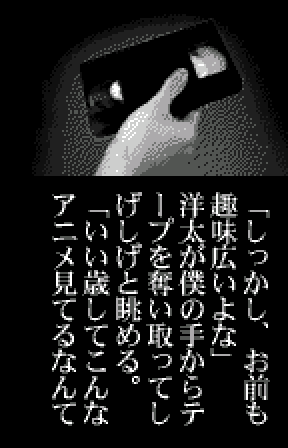
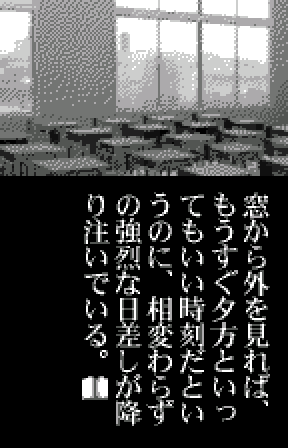
Ring Infinity belongs to Bandai’s Novel Theater line and is built on the system of TERRORS. The console is held upright, and each page shows a live-action photograph above a few lines of text, written in vertical Japanese columns. A button press turns the page, the B button brings back the text just shown, and the whole game can be played with one hand, so that it reads rather like a paperback. Short animated scenes, such as footage from the cursed tape, break up the still pictures.
At points in the story the text stops for a choice of what to say or do, listed in the text box. Some choices come with a gauge that runs down, and running out of time is an outcome of its own. The hero’s fear is tracked as terror points, shown on screen as a waveform, and choices that lead him toward danger push it up. A second, hidden count of scenario points rises and falls with how he treats the people around him. Together with the ordinary choices these decide where the story goes, and a wrong move often ends in death and sends the player back to the start.
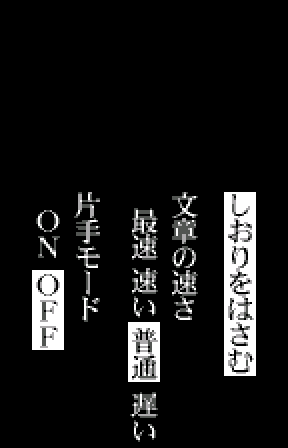
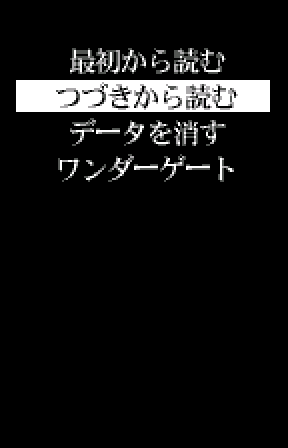
Pressing START opens a small menu with Insert Bookmark, Text Speed and One-Hand Mode. Inserting a bookmark saves the current place and asks the player to switch the console off, and the title menu then offers Start, Continue and Erase. Text Speed has four settings from Slow to Fastest, and a skip function speeds through text that has already been read, which makes repeat runs quicker.
Each chapter has several endings, most of them deaths. A chapter takes about an hour and a smooth run through all three about three hours, but seeing the whole story takes many runs, since every new run opens with a rumour shaped by the last ending. The script is long for a handheld novel game, with more than 4,200 pages over 679 scenes. No strategy guide was published, and finding the best ending was long thought impossible; the official hint for the last chapter was that success depends on how far the hero is willing to act for the heroine.
Through the WonderGate and a DoCoMo phone the game connected to Bandai’s server, and each connection brought a mail from a fictional fellow player, 31 in all, read from the title menu with Read Mail. They begin as cheerful tips and hints and drift into fear that the game itself has put a curse on the writer. Once the first chapter has been survived, a connection also opens Read Extra Scenario, a short story that retells the first chapter’s opening days from the side of the narrator’s friend Nishio. The mails and the scenario are stored on the cartridge, and Bandai’s server is long gone.
Development and release
Bandai billed the game as the second Novel Theater title after TERRORS, built on that game’s system and improved. Kadokawa Shoten is named as the seller, and the copyright line credits Koji Suzuki, the author of the original novel, for 1991 alongside Kadokawa Shoten and Bandai for 2000. The standard edition was priced at 3,800 yen before tax, and a first-print limited edition, SWJ-KDK002, came bundled with a headphone adapter for 5,200 yen. The game inside is the same in both, and only the box art differs. Kadokawa Shoten and Bandai published it, and Megas, the studio behind TERRORS and TERRORS 2, developed it.
Modes and features
The graphics and sound were much improved over TERRORS, with less noise in the sound, and the text was made a size larger so that it is easier to read. Branches in the story are decided in three ways: by ordinary choices, by a hidden count of terror points, and, new to this game, by how long the player takes to choose. The cartridge holds 32 megabits and saves to a 16-kilobit EEPROM.
Secrets and extras
For years many players doubted that a good ending could be reached at all; a 5ch thread about the game ran from 2007 into the mid-2010s with players comparing endings and wondering whether a bug blocked full completion. In 2016 a player who had analysed the ROM posted the results on a 2ch retro handheld board: alongside terror points, hidden scenario points that rise or fall with the protagonist’s choices about the people around him decide which ending of the last chapter is reached, and one combination is regarded as the best ending. The WonderGate also delivered hint mails that unlock in stages, and the analysis made their full text readable.
Reception
Players recall the game as genuinely frightening when played at night, with an engaging story whose chapters each have a different setting. The grainy video clips blur the actresses on screen, though the poor quality has been thought to make them scarier. Its endings, which loop back to the start, left many players unsure whether they had ever finished it, and the infinity sign in the title has been read as a deliberate nod to that loop.
Ports and other versions
Ring Infinity was made for the WonderSwan and was never ported or re-released. The other Ring game of the same year is a different work: Asmik Ace’s The Ring: Terror’s Realm, released for the Dreamcast in Japan on 24 February 2000, is a survival horror game set at an American disease-control centre, in which a researcher explores a virtual world and fights monsters with guns. It keeps Sadako Yamamura and one scene from the Japanese film, but it is generally thought far removed from the film, with little of its dread. Ring Infinity takes the opposite route, telling new stories through text and still pictures in the Novel Theater format of Bandai’s TERRORS, with the curse spreading by new means.
Notes
The developer was Megas. Its website of the time listed two finished Novel Theater titles, dated 5 August 1999 and 10 August 2000, with a third in development: TERRORS, Ring Infinity and TERRORS 2.