
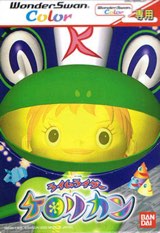
A music action game from NanaOn-Sha and Masaya Matsuura, played with the console held at a slant, released on the WonderSwan Color's launch day.
Screenshots
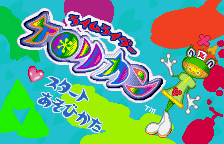
Title screen 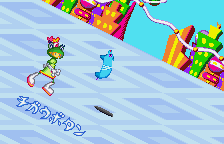
In play 
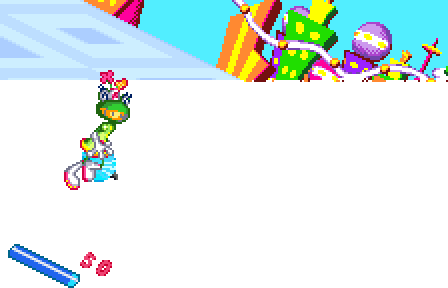

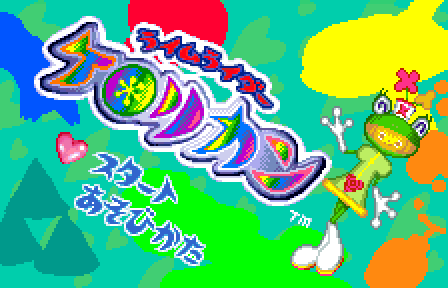


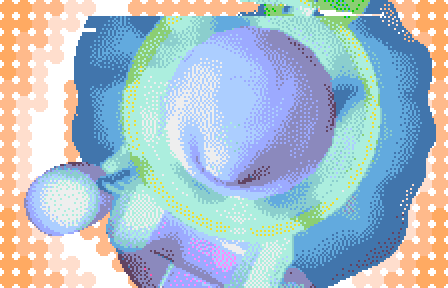
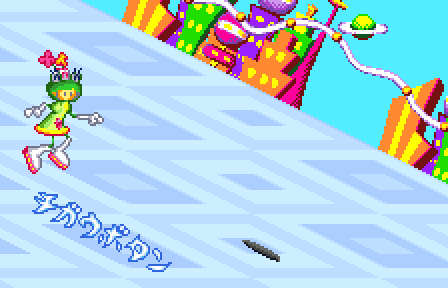
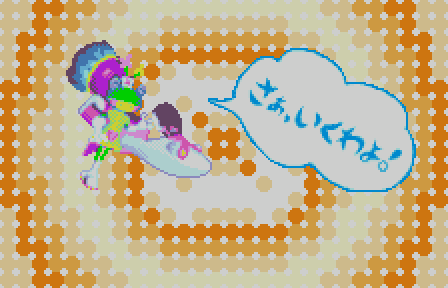
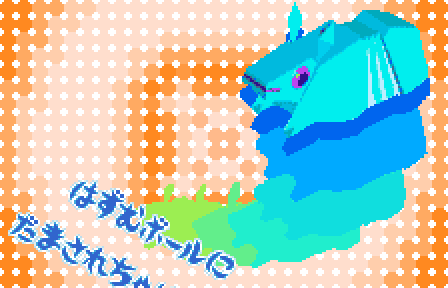
Rhyme Rider Kerorican is a music game made by NanaOn-Sha, the studio of Masaya Matsuura, who had started the rhythm game boom with PaRappa the Rapper. Bandai published it in Japan on 9 December 2000 as one of the titles that went on sale together with the WonderSwan Color. The music comes from Tunin’Glue, an earlier NanaOn-Sha title for the Pippin.
The player guides Kerorican, a female astronaut in a frog-shaped helmet, through each stage in time with the music. She jumps, ducks and kicks her way past the obstacles in her path, and each action adds notes to the tune.
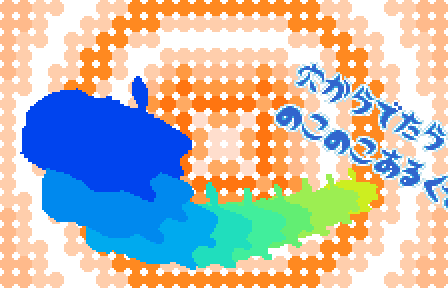
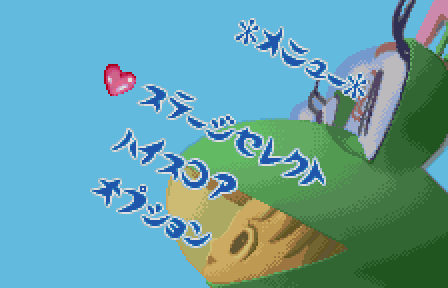
The game is unusual in that the WonderSwan Color is held at an angle while playing, and the screen and its text are drawn on a slant to match. No other game for the system is laid out this way. The cartridge is made for the Color and does not run on the original black-and-white WonderSwan.
The story
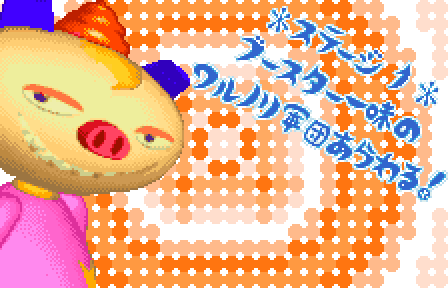
The heroine is a young woman named Hiromi. A villainous gang called the Boosters kidnap her and set about surgically remaking her, but she escapes before the operation is finished and comes out of it reborn as Kerorican, a hero on the side of justice. It is the kind of origin story familiar from masked-hero shows such as Kamen Rider.
Her aim is to turn all the bad vibes around her, the warunori, into good vibes, the iinori, and that sets her against the Boosters again and again. The enemies she meets each move to a rhythm of their own, and the only way to beat one is to match it. The adventure is split into four stages, each built around its own piece of music.
The story is a light frame for the music rather than a plot to follow, and how much of it the game tells between stages is not certain. Bandai sold the game on its bright, pop look. Kerorican’s frog helmet has animal-ear features, and some players simply take her for a girl in a frog costume. The music is jazzy techno, and because the screen is tilted, even the text runs on a slant.
How it plays
The WonderSwan Color is held turned at an angle, and the picture and all the text are drawn on the diagonal to match, a layout chosen to make use of the console’s buttons. The exact button assignments are not certain. On an emulator the screen does not tilt, and the buttons have to be set up by hand before the game is playable.
Each stage scrolls sideways as Kerorican walks on to the beat. Enemies and obstacles come at her, and each kind calls for its own button combination, which the player has to learn and then enter in time with the music. She can jump over a hazard, duck under it, kick it aside or dodge it some other way. Every correct input adds notes and sounds to the backing track, so a cleanly played stage builds its own melody on top of the music. Bandai also said that the layout of a stage shifts according to how the player plays.
A badly timed input costs health. Kerorican then jumps backwards on her own, the music rewinds, and the player has to try the same input again. When her health runs out, the stage starts over from the beginning. Clearing obstacles one after another raises a combo count, and a long enough run earns a crown, which carries her over an obstacle without the player having to clear it.
There are four stages, each with its own music track and its own level design. Finishing them takes about two to three hours. The small number of stages is a common complaint, since little is left to do once they are cleared.
The difficulty is the game’s best-known trait. The timing of the judgement is hard to read, so misses can feel unfair, the controls feel only middling, and the trickier button combinations cause most failures. Some players never manage to lock on to the rhythm at all. For anyone who struggles, a mode that needs only one button removes the combinations and makes the game easier.
Development and release
Bandai announced the game on 30 August 2000, in the same press release that introduced the WonderSwan Color itself. It was one of four titles planned for the hardware’s launch day of 9 December, together with Square’s Final Fantasy, Bandai’s Gunpey EX and Bec’s Dokodemo Hamster 3, and it was listed at a planned price of 3,980 yen before tax as a game that would only run on the Color. Masaya Matsuura is credited as producer, the copyright line carries NanaOn-Sha’s name alongside Bandai’s, and the model number is SWJ-BANC01. In its report on launch day, Game Watch singled it out as an original title whose heroine was already starting to win fans.
Modes and features
The game is for one player, with no link-cable play, and the 32-megabit cartridge has 256 kilobits of SRAM for saving. The sound is mono, and Bandai recommended playing with headphones.
Reception
Japanese players have been lukewarm. The graphics are generally thought bold for a WonderSwan game, but players found the timing hard to read, so that misses felt unfair, and questioned the point of holding the console at a slant. The game takes two to three hours to finish. Harsher critics found the tilted grip awkward and the music forgettable, and others found the rhythm hard to keep. An emulator shows the screen without the intended tilt.
Ports and other versions
Rhyme Rider Kerorican was made for the WonderSwan Color and stayed there, with no port, remake or re-release. It is the studio’s first game with Bandai as publisher, years before the Tamagotchi shop games it made for Bandai on the Nintendo DS, and its only game for a handheld of that era. Its closest relatives are NanaOn-Sha’s PlayStation rhythm games, above all Vib-Ribbon, which it resembles, and Tunin’Glue for the Pippin, whose music it reuses; Tunin’Glue lends the tunes but is not an earlier version of this game. What sets Kerorican apart from them is its tilted screen and its walking, obstacle-dodging play.