
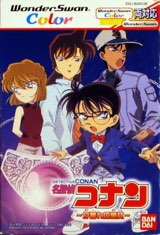
The third and last Detective Conan mystery adventure on the WonderSwan, a single case around a cursed jewel unveiled at a party, in colour but also playable in mono.
Screenshots
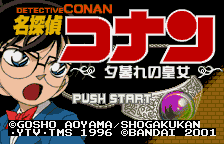
Title screen 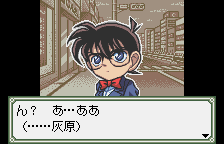
In play 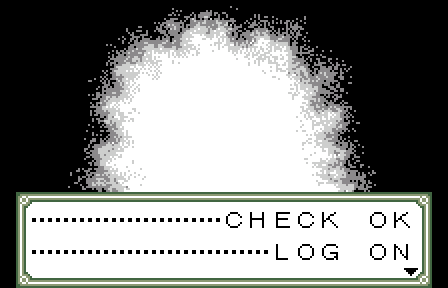
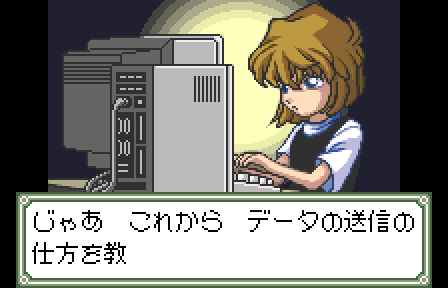
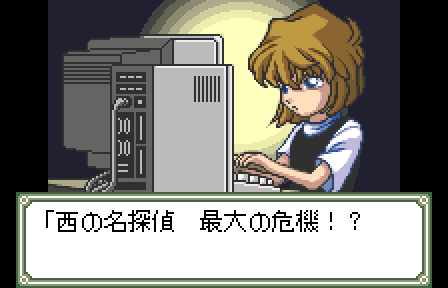
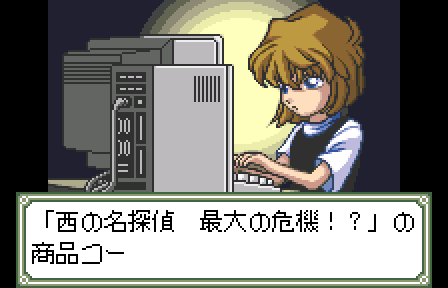
Meitantei Conan: Yuugure no Oujo is a mystery adventure based on Detective Conan, whose hero is the high-school detective Shinichi Kudo living under the name Conan Edogawa. Bandai released it on 5 April 2001 as the third and last of its Conan games for the WonderSwan, after Majutsushi no Chousenjou! and Nishi no Meitantei Saidai no Kiki!?. A wide cast from the series appears, including Ran Mouri, Heiji Hattori and Ai Haibara.
Where the first game was a collection of separate cases, this one follows a single case from start to finish. The case grows out of the party at which a cursed jewel is unveiled. The player gathers clues by talking to the people involved and collecting keywords, and uses them to work out what really happened.
The cartridge supports the WonderSwan Color and shows the game in colour, but it also runs on the original black-and-white WonderSwan. It can be connected with the two earlier Conan games: bringing over data from them changes parts of the story and opens an extra branch.
The story
The setting is the one the series is built on. Conan Edogawa is a sharp-witted primary-school pupil who lives at the Mouri Detective Agency and takes on one hard case after another, and he is really the high-school detective Shinichi Kudo. Ai Haibara, a scientist once known as Sherry in the Black Organization, drank the same poison as Shinichi and was shrunk the same way. The game opens on a single case built around the alexandrite, a rare and costly gem named after Tsar Alexander II because it was first found in Russia in his day. It looks blue to green in daylight and purple to red under an incandescent lamp, and the stone at the centre of this story is nicknamed the Twilight Princess.
One day Kogoro Mouri receives an invitation to a party at which the largest alexandrite in the world is to be unveiled. Famous guests are expected, and Heiji Hattori and Kazuha Toyama have been invited as well. Also among the guests are people who were once suspected of trying to kill Heiji, and the prologue asks whether that can be chance. While the guests are taken with the beauty of the jewel, hydrogen cyanide gas bursts from a bouquet sent to Heiji. As if the jewel carried a curse, one person after another is caught up in the case, and Conan sets out to find who is behind it.
The regulars are introduced much as in the series. Heiji, son of the head of the Osaka prefectural police, is a high-school detective on a par with Shinichi who knows Conan’s secret and helps him, and Kazuha, daughter of an Osaka police detective chief, is his frank, slightly jealous childhood friend. Ran is the kind, home-loving daughter of Kogoro and Eri who keeps waiting for Shinichi, and Kogoro is a former police officer whose fame as Sleeping Kogoro is owed to Conan. Sonoko, second daughter of the Suzuki conglomerate, is Ran’s star-struck best friend and is sometimes put to sleep by Conan’s tranquilliser and made to play the detective. Professor Agasa, the inventor next door to Shinichi, knows the secret and builds his gadgets, and Inspector Megure is a veteran of the Tokyo police’s first investigation division who was once Kogoro’s superior.
Around the jewel stands a cast written for the game. Shigeo Shimizu, the company president who owns the Twilight Princess, has a bad heart and suffers attacks. His only son Takanori belongs to the mountaineering club of Teitan University and cannot see a woman without chasing her, and his younger brother Toshiyuki is a pharmacology researcher who keeps to his room all day. The others are Yasutaka Izumiya, the subordinate in charge of the party who plans and runs films for the company, Tomomi Matsuda, the president’s own doctor, Ayane Sakurai, his clear-headed secretary, Misato Matsushita, a gossip-loving writer who spreads the story of the curse, and Tatsuhiro Saruya, the family driver, skilled at the wheel but rude, who spends his days in mahjong parlours. These names are only defaults, since the casting system can give the parts the names of the player and friends. Characters from the two earlier games return, some of them as suspects once more, and the case keeps widening to draw in the Detective Boys, the Black Organization and Kaito Kid.
How it plays
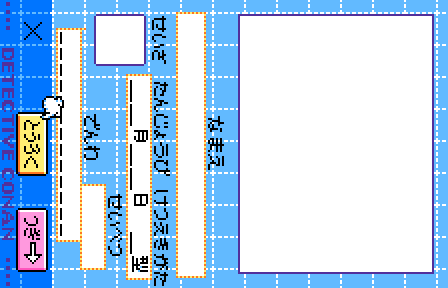
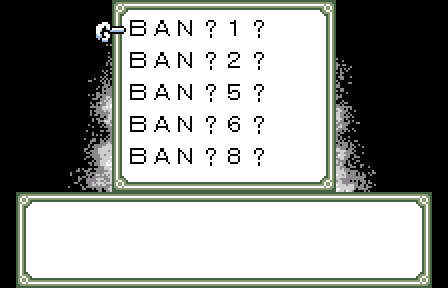
The first time the cartridge is switched on it opens on user registration. A data-link screen asks whether the player owns the first game, the second, or both, answered by choosing the SWJ-BAN number printed on the cartridge label. Owners of Nishi no Meitantei Saidai no Kiki!? can then send the friend data registered there across with a link cable. The player enters personal data and favourites, of which only name and sex are required, and as in the second game the casting system hands these names and the friends in the Conan notebook to the original characters in the story, such as suspects, culprits and passers-by. Holding Y1 while switching on runs the casting again but wipes scenario progress, and holding A and B offers to clear the save memory.
There are three modes. Scenario is the main game: its menu lists the FILEs that can be played, each with a detective rating, and clearing the newest FILE opens the next one. After a save, Continue Investigation resumes from that point, while starting a scenario afresh discards the old investigation data. The Conan notebook is an organiser with friend data, a calendar and a school timetable. Haibara’s Room swaps data with friends over the link cable, shows profiles of characters from the whole series in a database, keeps a film gallery and holds summaries of the first two games.
The game uses both ways of holding the console. Investigation, the town map and Haibara’s Room are played sideways, with the X buttons moving the cursor, A confirming and advancing text and B cancelling or fast-forwarding; on the map B brings up the icons on the right of the screen. The deduction notebook, the logic grids, the Conan notebook and the bonus puzzles are played upright, with the Y buttons moving the cursor or turning pages and the X buttons giving the commands. SOUND sets the volume in four steps.
Each FILE opens with a scene in which the incident happens, followed by investigation through moving, talking and examining. Up to four icons sit on the investigation screen, lit when they can be used: the bow-tie voice changer for talking to people nearby and sometimes disguising a voice, the turbo-engine skateboard for moving elsewhere, the deduction notebook, and a special icon that becomes the magnifying glass, the tranquilliser gun or the Detective Boys badge as the situation needs. Questioning and statements yield keywords, the keys to the deduction, and mysteries to be solved in the form of deduction boxes, and both are written into the notebook automatically. At times a choice appears on screen. Some choices affect the detective rating or branch the scenario, and when one has to be made against the clock a meter shows at the lower right.
The notebook is where all the reasoning happens. Its deduction flow shows every mystery the investigation has raised, such as what the weapon was or whether an alibi holds, as a chart that leads up to the truth of the case at the top, and several mysteries have to be cleared to reach it. Each mystery has a deduction check, a box for between one and six keywords depending on the mystery. The player fills it from the keyword list and presses the check button, and Conan marks each correct keyword; when all are right the mystery is cleared and ticked OK. The notebook also holds the keyword list, the logic grid and a system page for saving and reading an online manual.
The Marubatsu-ru logic grid now serves to sort statements and information rather than to end each stage. Upright, the Y buttons move the cursor, X2 shows the next statement, X3 writes or erases a circle and asks for a verdict, X4 writes or erases a cross and X1 switches to the eraser. Large grids return, and the keyword displays fall between the styles of the two earlier games. The reworked notebook takes time to learn, and progress depends on more complex conditions than simply solving grids.
When a FILE ends, its ending scene plays and the next one opens. Codes from the earlier games or a link with them change the story in places and open a new branch. Hidden bonus puzzles are earned by finding members of a puzzle club during the story or by linking with an earlier game, and solving all of them opens a final extra scenario. The game shows its colour artwork against sepia backgrounds, and the alexandrite’s change of colour plays a part in the deduction.
Development and release
Bandai billed the game as the all-star finale of its WonderSwan Conan series, with Heiji, Ran, Ai Haibara, the Detective Boys, the Black Organization and Kaito Kid all drawn into a case that keeps widening. It announced a 32-megabit cartridge with 256 kilobits of save memory, stereo sound, link-cable support, compatibility with both the WonderSwan and the WonderSwan Color and a provisional price of 3,980 yen, along with a campaign: the first 1,000 players to clear the game quickly would receive a serial-numbered detective card, with invitations to that spring’s Conan film and badges also offered. The model number is SWJ-BANC0E. Tomcat System developed the game, and Bandai and Caramel Mama are also credited. The writer of the series’ main scenarios later posted recommendations and behind-the-scenes notes online.
Modes and features
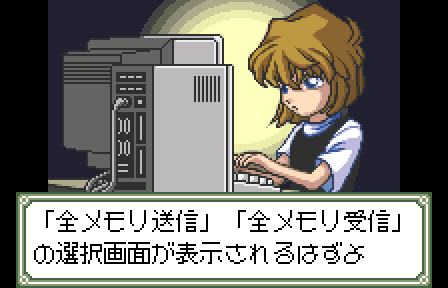
The hint system of the previous game grows into a deduction system, which Bandai called Dicto Navi and fans know as the deduction box: main mysteries move the story on, while smaller ones and the Marubatsu-ru logic grids supply the statements needed to crack them. Deduction box, keywords, grids, saving and an in-game manual all sit in one notebook used with the console held upright. Timed choices appear for the first time in the series. Data from the earlier games can be brought in by entering either game’s product code, and the notebook data from Nishi no Meitantei Saidai no Kiki!? can also be carried over by link cable, bringing with it the names the player gave to characters.
Reception
It is regarded as a well-made conclusion. The colour artwork, set against sepia backgrounds that give the game its own mood, is praised, and colour makes the colour-changing alexandrite at the centre of the story easy to grasp, a property that also matters in the deduction. The long story ties together elements of both earlier games and builds to a climax worthy of a finale. The criticisms are that event pictures reused from the earlier games were mostly left uncoloured, that the reworked notebook takes time to learn and makes progress depend on more complex conditions than simply solving grids, and that the upright notebook brings back the constant turning of the console. Playing the series from the first game is recommended despite the built-in summaries.
Ports and other versions
The game was made for the WonderSwan Color and was never ported or re-released. Its linking features with the two earlier WonderSwan Conan games tie it to this console in particular. The nearest games elsewhere are Banpresto’s Conan adventures for the Game Boy Color, which moved to a single long scenario in colour from 2000 onwards; the last of them, Norowareta Kouro, appeared two months after this game, but they are separate titles, built around switching between characters or choosing a partner rather than the logic grids and deduction notebook of Bandai’s WonderSwan trilogy.