
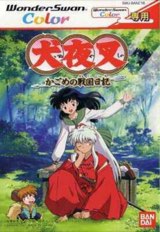
The sequel to Kagome no Sengoku Nikki, a "fureai" adventure on the same system that adds a dream scene at the close of every in-game day.
Screenshots
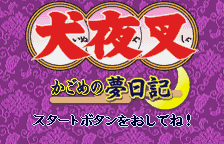
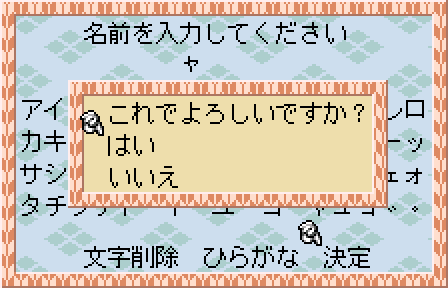
Title screen 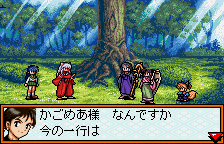
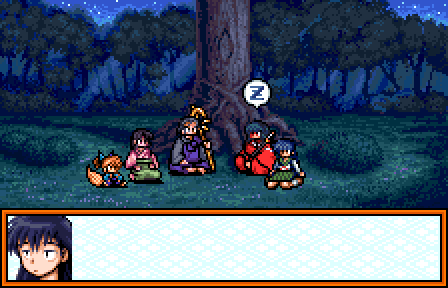
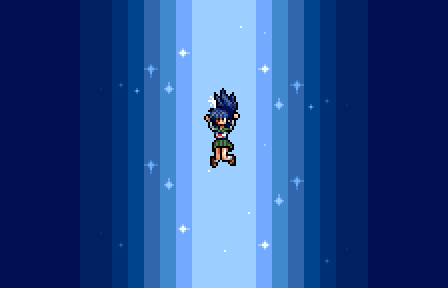
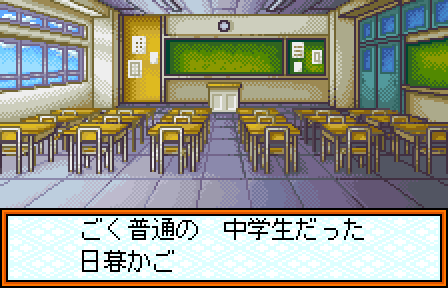
In play 
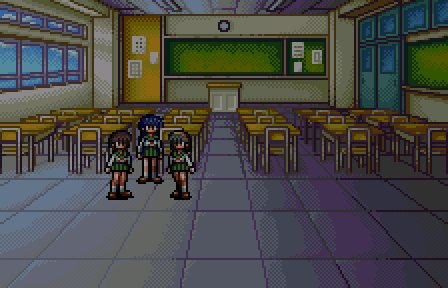
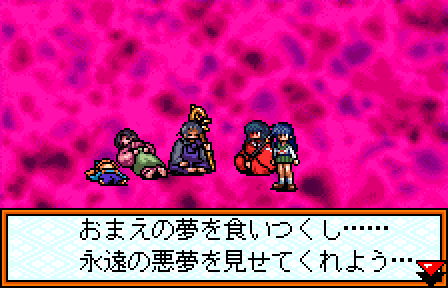
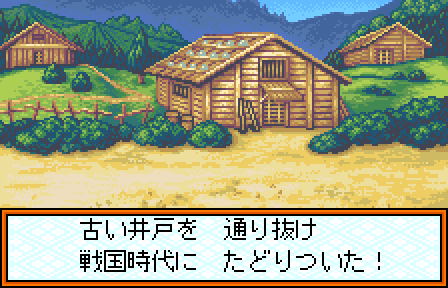
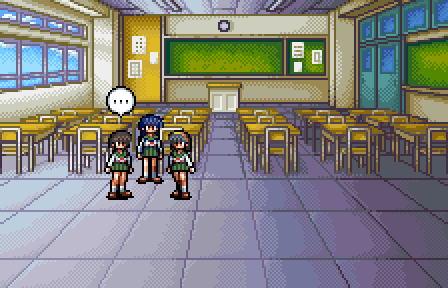
Inuyasha: Kagome no Yume Nikki is an adventure game based on Rumiko Takahashi’s Inuyasha, published by Bandai for the WonderSwan Color on 16 November 2002. It was the last of the three Inuyasha games on the system and a direct sequel to Kagome no Sengoku Nikki from the year before. Like that game, it was billed as a “fureai” adventure about spending time with the characters.
The basic system is carried over: the player is again Kagome, getting closer to Inuyasha while the adventure goes on. What is new is the dream of the title, a dream event that closes every in-game day, along with a new original villain and about two and a half times as many events as the first game.
The cartridge needs a WonderSwan Color and does not run on the original black-and-white model. Customers who reserved the game received a poster, and Bandai ran a campaign giving away a thousand Kagome diaries to buyers of two of its Inuyasha games for the Color who sent in an entry.
The story
Kagome no Yume Nikki picks up the story where Kagome no Sengoku Nikki left it and carries on following the manga from that point, adding scenes of its own that the manga and anime never show. Kagome is once more in the Sengoku period at Inuyasha’s side, and once more the player sees the story through her eyes.
As the title suggests, dreams are at the centre of this game. The new enemy is Yakumo, an original half-demon who controls dreams, and the fights against her take place inside the dream world. Hayate, the weasel demon created for the first game who had decided Kagome would be his bride, comes back to cause more trouble.
The dreams are also where the game goes to places the series does not. Each day’s dream can show situations that never happen in the comics or the anime, and they carry the episodes set in Kagome’s own present-day world, which fans had asked for after the first game. Hōjō, Kagome’s relentlessly cheerful and upbeat classmate, is among the characters who appear there.
How it plays
The game keeps the structure of Kagome no Sengoku Nikki, cycling between a “fureai” part and an adventure part. In the fureai part Kagome talks with Inuyasha and tries to get on better terms with him, and how she treats him changes both his personality and the course of the story.
In the adventure part Kagome walks the streets of Sengoku-period towns, gathers information from the people who live there and takes on quests for them. The basic rhythm is to spend time with the characters, make the rounds of the towns and collect items along the way.
At the end of each day comes the new dream event, where the game keeps its unusual situations and its modern-day scenes, and where the battles against Yakumo are fought. The game has a great deal of conversation, and its total number of events is two and a half times that of the first game. Bandai made a point of the care taken over the graphics for both the original scenes and the story’s key moments.
The game is clearly made for people who already know the series, since much of its appeal lies in the detailed exchanges between familiar characters. Unlike the first game, the cartridge carries no clock, and it saves its progress to a small EEPROM.
Development and release
The game was developed by Tomcat System, a Tokyo studio that had earlier made WonderSwan titles for Bandai such as the Detective Conan games and One Piece: Niji no Shima Densetsu. Bandai promoted it as the long-awaited sequel to Kagome no Sengoku Nikki and as the third Inuyasha game on the system, and advertised a campaign linking the games in the series. The cartridge works on the WonderSwan Color and SwanCrystal, is for one player and has no link-cable support. Unlike Kagome no Sengoku Nikki, which stored its data in SRAM alongside a clock, it uses a small EEPROM for saving.
Modes and features
The game is for one player, plays in stereo and has no link-cable support. It runs on the WonderSwan Color and the SwanCrystal. Each in-game day goes through the fureai part, the adventure part and the closing dream event, and the dream scenes hold the game’s modern-day episodes.
Ports and other versions
Kagome no Yume Nikki was made for the WonderSwan Color and was never ported, remade or re-released. The series’ games on other machines, from Bandai’s PlayStation role-playing game and PlayStation 2 fighting games to a board game on the Game Boy Advance, are separate works. Together with Kagome no Sengoku Nikki it forms a small pair found only on the WonderSwan, built around playing as Kagome, and this entry is set apart from its predecessor by the dream scene that closes each day.