
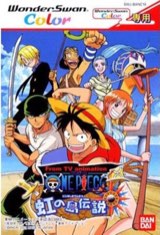
A One Piece role-playing game for the WonderSwan Color in which an original hero, Dias, joins Luffy's crew at Loguetown and sails in search of the Rainbow Island.
Screenshots
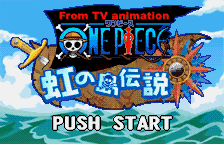
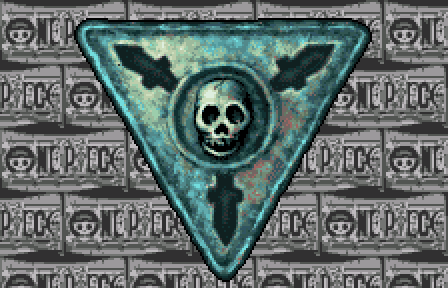
Title screen 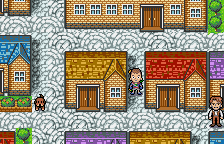
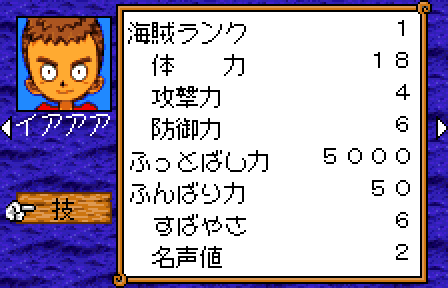
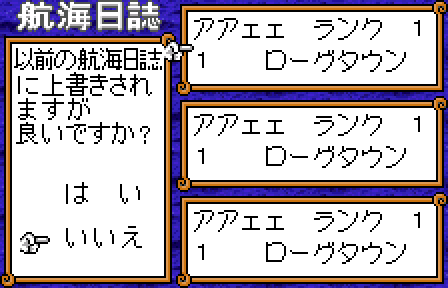
In play 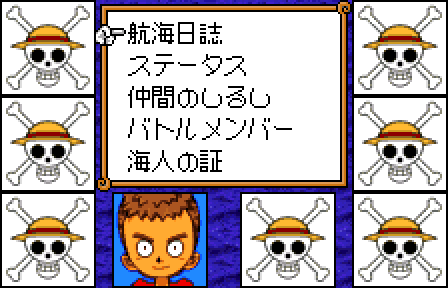

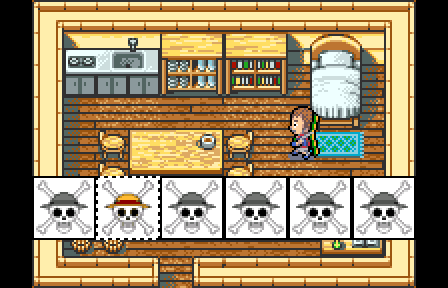
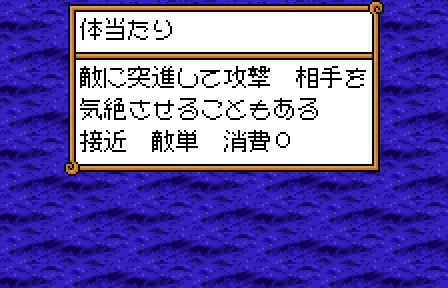
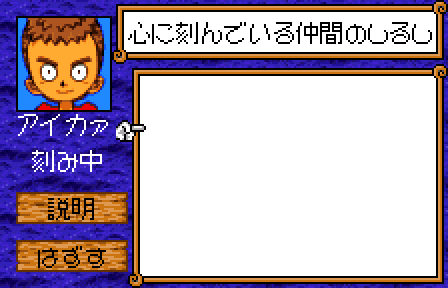
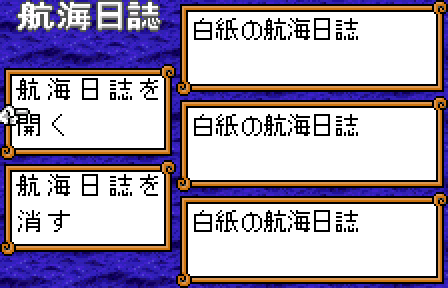
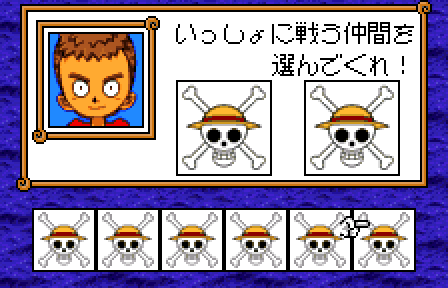
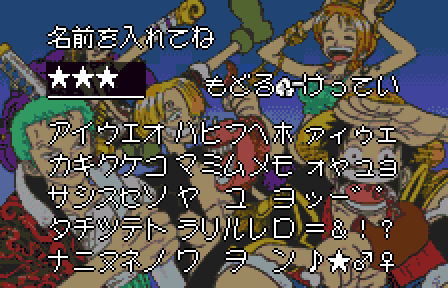
Niji no Shima Densetsu (“Legend of the Rainbow Island”) is a One Piece role-playing game that Bandai released on 13 September 2001, the second One Piece game on the WonderSwan and the first made for the WonderSwan Color. It was developed by Tomcat System, a Tokyo studio. Where the first game followed the East Blue story, this one moves on toward the Grand Line part of the series.
The hero is an original character who meets Luffy’s crew in Loguetown and sails with them as a new crewmate, and Bandai presented him as the player’s own place in the crew. Bandai called the genre a “communication RPG”, with talking to the crew as part of the game, and the story mixes scenes from the manga and the anime with original events: a mysterious pirate crew met on the way, and three tokens needed to reach the Rainbow Island. The cartridge is for one player, does not use the link cable, and does not run on the original WonderSwan. First copies came with an original Carddass card.
The story
The game takes place in the stretch of the series between Loguetown and Arabasta, when the Straw Hat crew are entering the Grand Line, and it builds an original adventure around the early story of the manga. Its starting idea is the wish to become one of Luffy’s friends and sail with his crew.
The hero, Dias, is a young travelling salesman who fights with a boomerang. He dreams of finding the Rainbow Island, he carries an emblem left to him by his father, the Fisherman’s Emblem, and he has been separated from his parents. The story opens at the harbour in Loguetown, where the Straw Hats save him from two pirates. They show him round the town, eat with him at a tavern and talk about their dreams, and they offer to teach him how to fight.
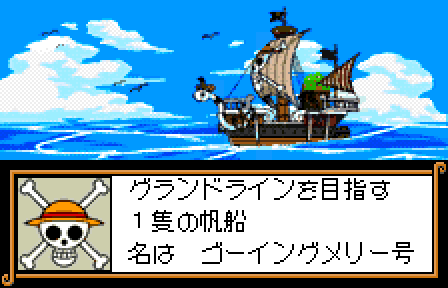
The second original character is Atoli, the princess of Silver Arrow Island, who carries the King’s Emblem. She was captured by the Drayke Pirates and brought to Loguetown, and she has escaped them. When Dias drives off two men who are threatening her, the two emblems glow and fit together. Loguetown then plays out as in the series: lightning strikes the execution platform as Buggy tries to kill Luffy, the Marines block the way to the harbour, Smoker gives chase, and the crew put to sea on the Going Merry ahead of a storm, with Dias and Atoli aboard.
On the ship Atoli tells the legend of the Rainbow Eye, which can only be opened with three emblems and a set of Quest Words, and the search for the remaining emblem and the island drives the rest of the voyage. The route follows the series into the Grand Line, over Reverse Mountain to Laboon and Crocus, with the crew splitting up for a while and the player choosing which group to follow. The Drayke Pirates, led by Drayke, called the Sea Wolf, and his six executives, are the rivals along the way, and agents of Baroque Works also appear. The tone is light and the plot a straightforward adventure.
How it plays
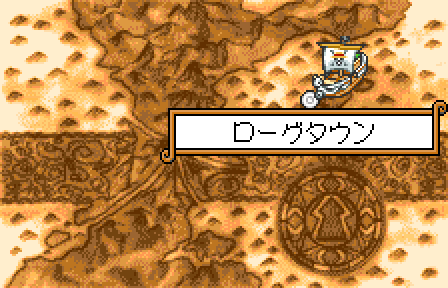
The game is a command-driven role-playing game. A world map is used to pick the next town or place to visit, and conversations often stop to let the player choose a reply. Talking with the crew raises each member’s friendship with the hero; crewmates who like him give hints for the adventure and start conversations on their own, so the game works something like a dating game turned into a game about friendship. The ending shows a picture of the crewmate the hero is closest to.
The party holds up to six crewmates, and the hero takes two of them into each battle, so fights are between teams of up to three against three. Besides Dias, the fighters include Luffy, Zoro, Nami, Usopp, Sanji, Atoli and Vivi, who joins the playable cast. Friendship levels raised through story events teach the characters combination attacks.
Bandai named the battle system Futtobashi Gangan Battle (“knock-flying, all-out battle”) and said it was meant to bring the speed and slapstick of the series into the fights. Commands are chosen in turns, but the fight takes place in a rectangular field, so the positions of enemies and allies matter. When a special attack knocks a fighter flying into another enemy, that enemy is sent flying too, and a fighter knocked over to where one of the player’s side stands takes an extra follow-up hit. Slamming an enemy into the scenery scores repeated hits for heavy damage, and landing attacks builds up energy for stronger techniques. Some moves show a picture of the character using them.
The presentation is plain. Scenes use full-colour stills from the anime, the characters on the field are small sprites, the locations are flat, and the music is simple, played in stereo.
Battles and story progress are simple and quick, and the game is short, with little reason to play it a second time once the adventure is over.
Development and release
Tomcat System was a contract developer based in Meguro, Tokyo, founded in 1991 and known later for detective adventures in D3 Publisher’s Simple series. Besides this game, it made the Detective Conan games for Bandai on the WonderSwan. Bandai sold the cartridge at 4,500 yen before tax, with stereo sound and no link-cable play. Besides the Carddass card packed into first copies, shops that took pre-orders gave out an oversized pirate flag, 72 centimetres square, while stocks lasted.
Reception
Some players thought the story a conventional adventure and the game not boring. Buyers’ opinions were mixed: some found it worth more than its price and liked the fresh battles, while others found it short, the story thin and the feel of One Piece lacking, with little reason to play again.
Ports and other versions
Niji no Shima Densetsu was made for the WonderSwan Color and was never released on another system. Its nearest relative is the PlayStation role-playing game Tobidase Kaizokudan!, released the same year, which shared the idea of the player befriending the crew and was tied to the same Carddass Hyper Battle card campaign, but it is a separate game rather than a version of this one. The One Piece role-playing games on the Game Boy in those years came from Banpresto and are separate works too. This game’s two original companions never appeared in the series again.