
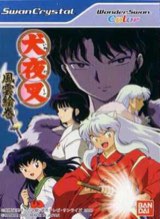
An action adventure based on Rumiko Takahashi's Inuyasha, mixing story scenes told from several characters' viewpoints with real-time battles against demons.
Screenshots
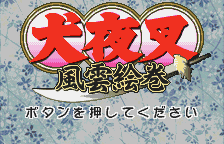
Title screen 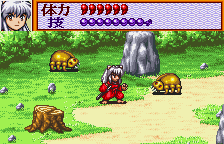
In play 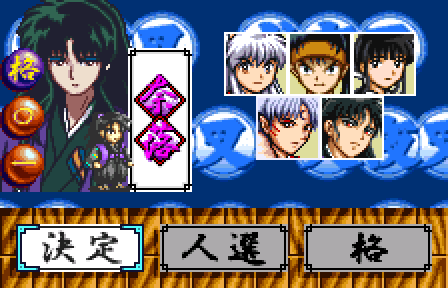
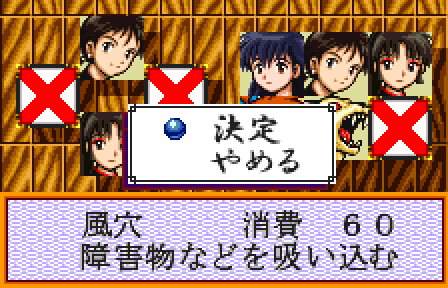
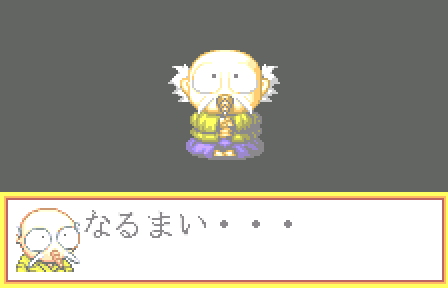
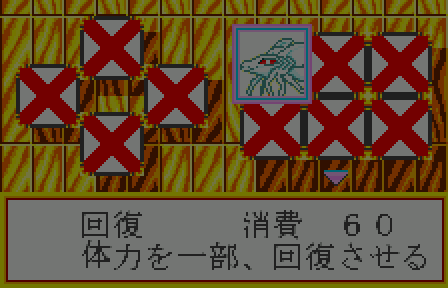
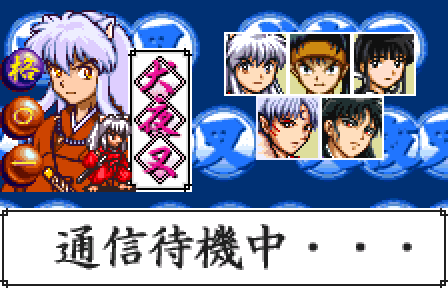
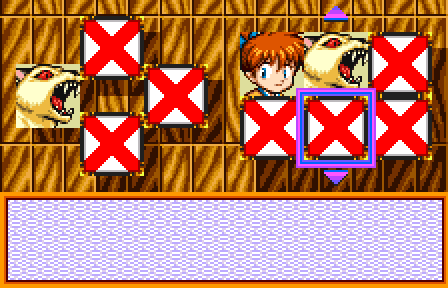
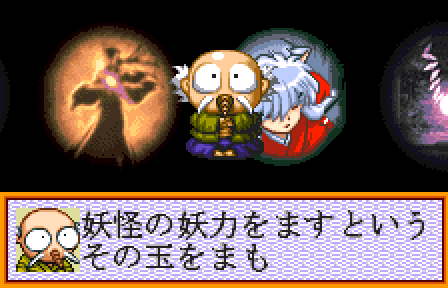
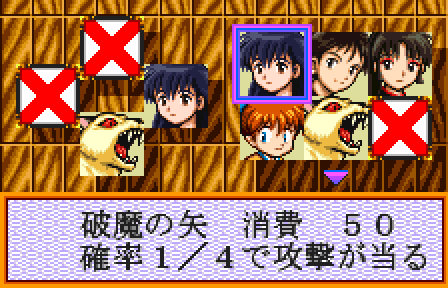
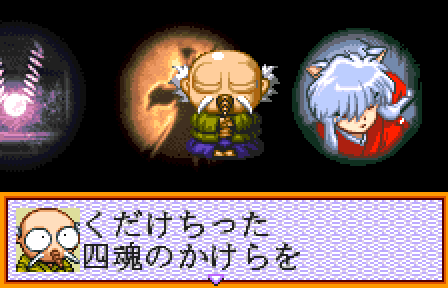
Inuyasha: Fuuun Emaki is an action adventure based on Rumiko Takahashi’s manga Inuyasha and its anime, published by Bandai for the WonderSwan Color on 27 July 2002. It was the second of three Inuyasha games on the system. Where the other two, Kagome no Sengoku Nikki and Kagome no Yume Nikki, were billed as “fureai” adventures about spending time with the characters, this one is billed as an action adventure, and characters such as Naraku, Kikyō and Sesshōmaru appear. The story follows Inuyasha and his companions as they cross paths with Kōga and his wolf demons while hunting for shards of the Shikon Jewel.
Play alternates between story scenes, in which the player moves around a map, gathers clues and makes choices, and short real-time battles against demons, and the story can be followed from the side of several different characters.
The cartridge needs a WonderSwan Color and does not run on the original black-and-white model. It is for one or two players and works with the link cable. The first print run came with an Inuyasha drawstring pouch large enough to carry the console.
The story
The game is set in the world of the manga, the Sengoku period of Japan, where Kagome Higurashi, a middle-school girl from present-day Tokyo, travels with the half-demon Inuyasha to recover the scattered shards of the Shikon Jewel. It does not retell how the two met. It opens once the group has already formed, with Inuyasha, Kagome, the monk Miroku, the demon slayer Sango and the young fox demon Shippō on the road together, and the story begins as they cross paths with Kōga, the leader of a tribe of wolf demons. From there it runs as a string of episodes, each tied to the hunt for shards of the jewel.
The cast comes from the series. Besides the travellers and Kōga, Naraku, Kikyō and Sesshōmaru appear, along with Sango’s two-tailed cat demon Kirara, and the game adds an original character that Rumiko Takahashi designed for it. The story can be seen from eight sides: Kagome, Inuyasha, Miroku, Sango, Shippō, Kōga, Naraku and Sesshōmaru. The events themselves are the same whichever side is taken; what changes is the dialogue, its shading and the pace, so a later run shows a familiar scene through someone else’s eyes.
Bandai billed the game as an action adventure, but most of it is told through scenes rather than played, and it feels closer to a visual novel broken up by fights. As the battles grow fiercer, Kagome grows more anxious, and the game keeps close to the look, music and personalities of the anime.
How it plays
The game moves between two kinds of section. The story sections are mostly scenes to read. Between them the player moves from place to place on a map, looks around, talks to the people there to pick up clues, and now and then makes a choice that sends the story one way or another. The route through the story is mostly linear, but some places on the map are training spots that offer extra battles for players who want them.
The battles are short action scenes seen from the side, played in real time, in which the player controls Inuyasha himself. He can attack, jump and use special moves, and pressing a button rapidly sets off techniques such as the Tessaiga. Bandai stressed that the controls are simple. A support system lets him call in an ally, such as Kagome or Kirara, for a special attack, and each ally’s attack differs in accuracy, reach and power. Which ally comes to help depends on how the story has been played.
Fighting earns experience points, which are spent on raising the characters’ attack, defence and health. The cartridge has its own save memory, so progress is kept between sessions.
The game is built to be played more than once. On later runs more characters’ viewpoints become available, so the same scene can be played as Kagome the first time, as Inuyasha the second and as Sesshōmaru the third. Clearing the game or meeting certain conditions also brings out hidden content, including further allies and characters who can be controlled. The pace is slow and the battles repeat themselves, and the game is aimed above all at fans of the series.
Development and release
Bandai presented the game as a follow-up to Kagome no Sengoku Nikki, which it described as a hit that had brought a new audience of elementary and junior-high-school girls to its Inuyasha games, and said that the new entry added action to that formula. Bandai said the multiple viewpoints were a response to players who had asked to play as characters other than Kagome. The promotion also highlighted an original character newly designed for the game by Rumiko Takahashi herself. The drawstring pouch for the console was a first-run bonus, and Bandai urged fans to reserve a copy to be sure of getting one. The developer is unknown.
Modes and features
The game is for one or two players. With two cartridges connected by the dedicated link cable, which the packaging recommends, a player can fight against an Inuyasha raised in a friend’s game. The cartridge plays in stereo and runs on the WonderSwan Color and SwanCrystal. It came with a 31-page manual.
Ports and other versions
Fuuun Emaki was made for the WonderSwan Color and was never ported, remade or re-released. Bandai’s other Inuyasha games of the period, a role-playing game on the PlayStation and fighting games on the PlayStation 2, are separate works. Of the three WonderSwan Color games, this is the one that adds real-time battles to the adventure and lets the player switch between several characters’ points of view.