
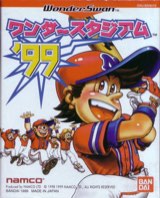
An update of Namco's WonderSwan baseball game Wonder Stadium with player data from the 1999 season, including that year's rookies.
Screenshots
Title screen 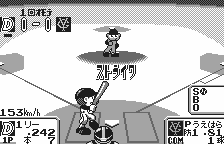
In play 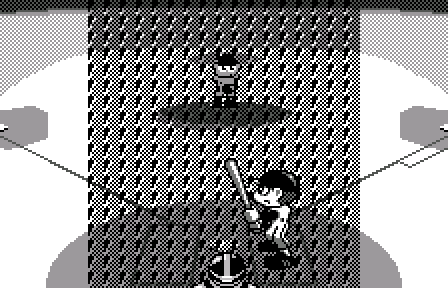
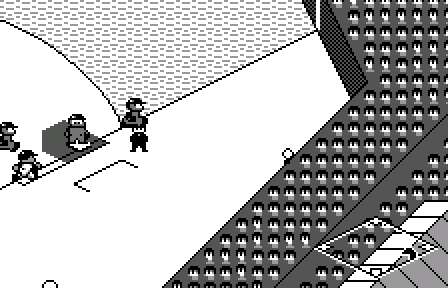
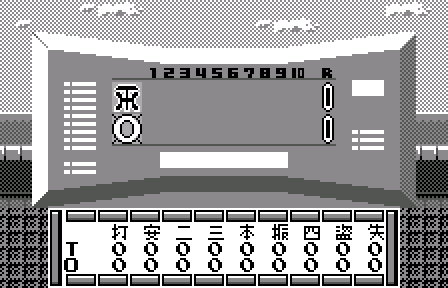
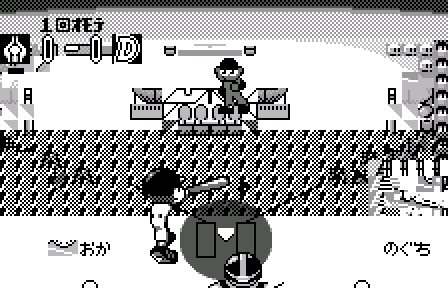
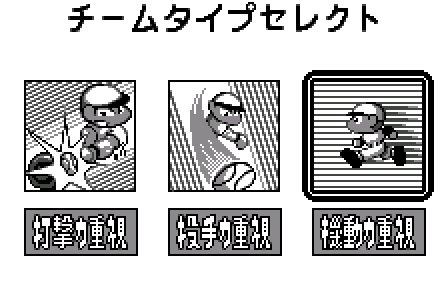
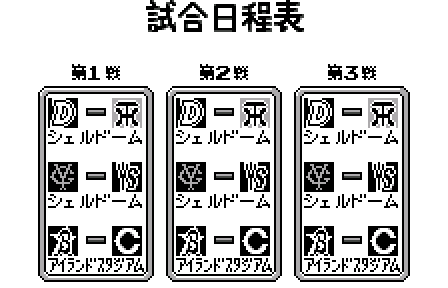
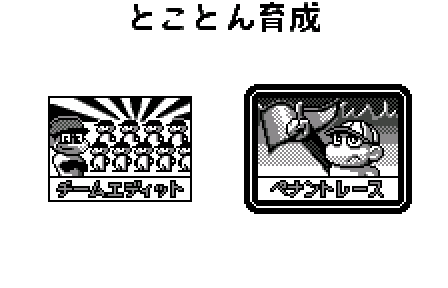
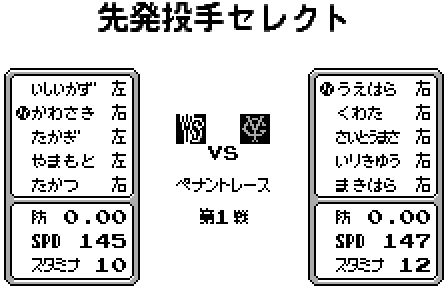
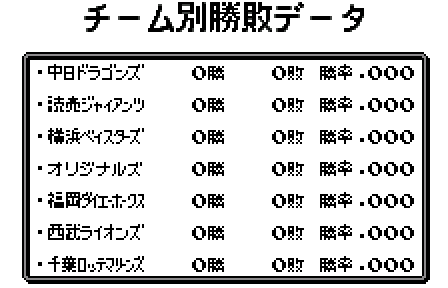
Wonder Stadium ’99 is a revised edition of Wonder Stadium, the WonderSwan baseball game in Namco’s Family Stadium series. Bandai published it on 30 September 1999, about six months after the original, and it again carries Namco’s copyright and the licence of Japan’s twelve professional baseball teams.
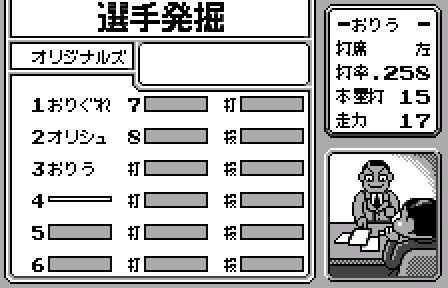
The main change is the roster. Bandai said that the data for more than fifty players had been renewed to match the 1999 season, among them that year’s much-watched rookies such as Matsuzaka of the Seibu Lions and Uehara of the Yomiuri Giants, as well as players who joined teams during the season. Apart from the updated players, the game is essentially the same as the first release.
The story
Like the first release, Wonder Stadium ’99 has no story. It is set in Japanese professional baseball, with the twelve Central and Pacific League clubs under their real names, now with their players as they stood partway through the 1999 season. That season’s arrivals let the game stage match-ups that had not yet happened for real, such as the Seibu rookie Matsuzaka pitching to the hitters of the Central League.
The fourteen teams are the same as before: the twelve clubs, Namco’s own Namco Stars and an original team that the player creates and names. The Namco Stars keep the same line-up of characters from Namco games, among them Techno from Techno Drive at third base, Haron from Final Furlong at shortstop, the side-arm pitcher R4 and the reliever Wagyan.
The three ordinary ballparks return unchanged: the large Shell Dome with its retractable roof, Island Stadium by the sea and the small Tsukimi Stadium floating in space. The hidden teams and the hidden fourth ballpark, Wonder Egg, are also the same as in the first game.
How it plays
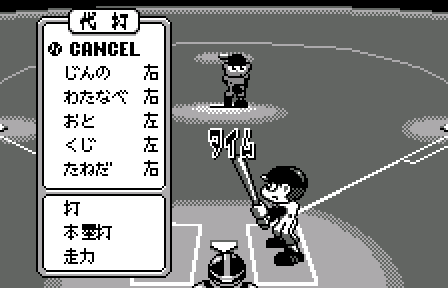
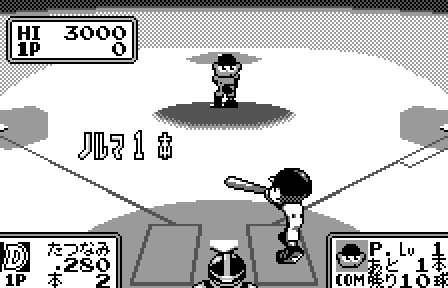
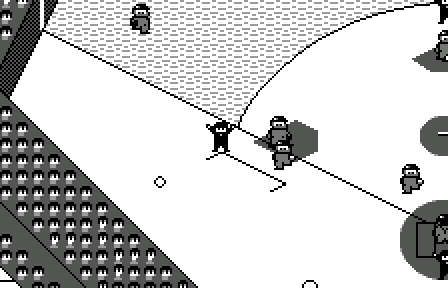
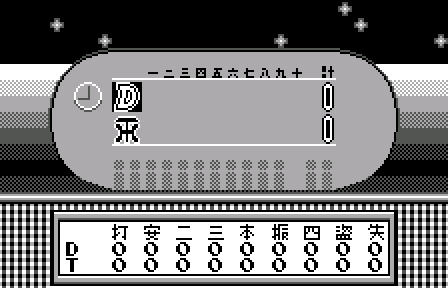
The game plays as the first Wonder Stadium does. The console is held horizontally, the A button swings, pitches and throws, the B button sends runners and tags bases, and the X pad moves players and picks bases, pitches and locations. The pitcher and batter are shown in a large view, the field switches to a smaller view for fielding and running, and the runners on first and third base appear on the same screen as the pitcher and batter.
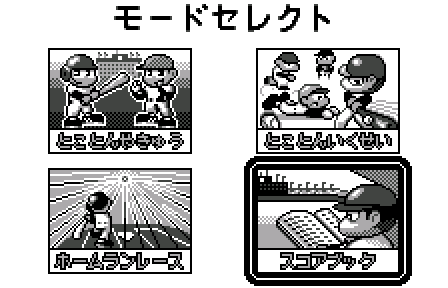
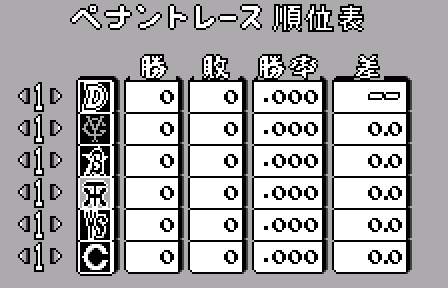
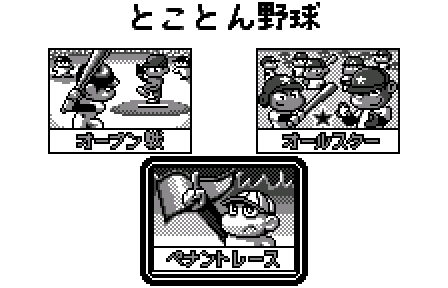
The main mode offers exhibition games, a pennant race and an all-star game, and games can be shortened from nine innings to as few as one. A second mode lets the player build an original team and take it through a season in which its players improve or decline with their results.
There is also a home-run contest, in which a batter must hit a set number of home runs from each round of ten pitches, and a scorebook of team and player records. Winning exhibition games opens the hidden teams and the hidden stadium.
Two players can face each other with two consoles joined by the link cable. Because only the player data changed, the difference from the March release lies in the teams themselves: more than fifty players were updated, so rookies such as Matsuzaka, Uehara and Fukudome and mid-season signings such as Martinez can be used.
Development and release
Bandai published the game, while the copyright line belongs to Namco, which Bandai had credited with planning and developing the first Wonder Stadium; both games are credited to Bandai and Namco. The cartridge is the same size as before, 8 megabits with 64 kilobits of save memory, and it was again announced at 3,600 yen before tax.
Ports and other versions
Wonder Stadium ’99 exists only on the WonderSwan. It is a revision of the March 1999 Wonder Stadium, a game that Namco made for the console using the PlayStation’s World Stadium EX as its base, and the ’99 edition adds nothing new but its player data. Neither WonderSwan edition was ported or re-released. The series carried on elsewhere with new games, not with this one.
Notes
The players brought up to date besides Matsuzaka and Uehara make a long list: the rookie Fukudome of Chunichi, Martinez, who joined the Giants during the season, and others such as Nioka of the Giants, Fukuhara and Johnson of Hanshin, Fukumori of Yokohama, Petagine and Takahashi of Yakult and Bolick of Lotte. The roster is the only real difference from the March release, and the data reflects the league partway through the 1999 season.