
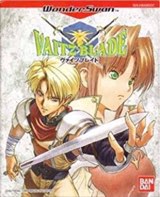
Bandai's early WonderSwan role-playing game: an imperial soldier turned fugitive, more than 180 monsters called Vaitz to capture and fuse, and seven endings.
Screenshots
Title screen 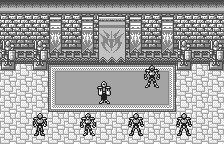
In play 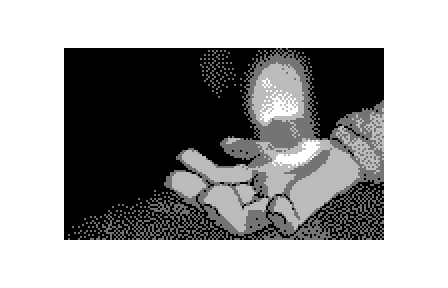
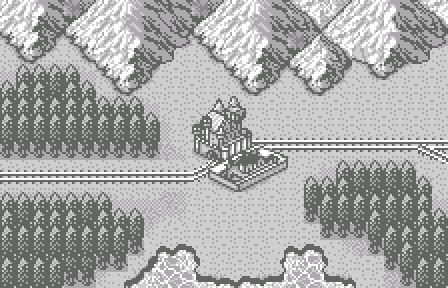
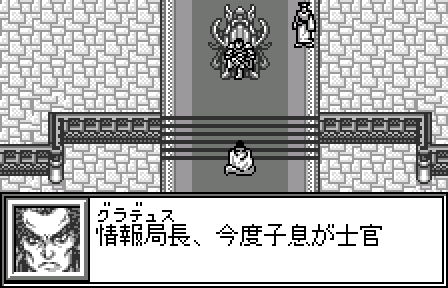
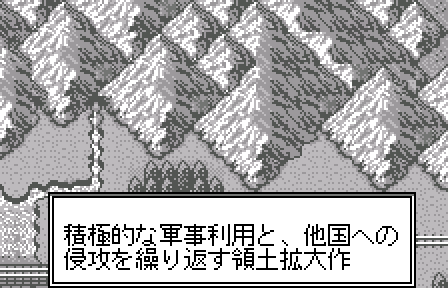
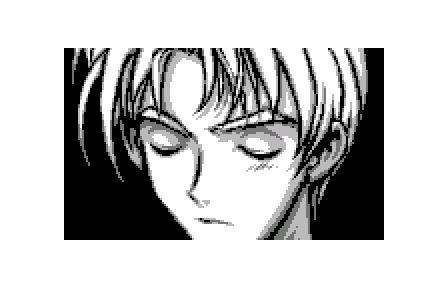
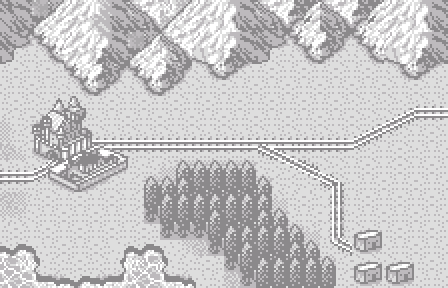
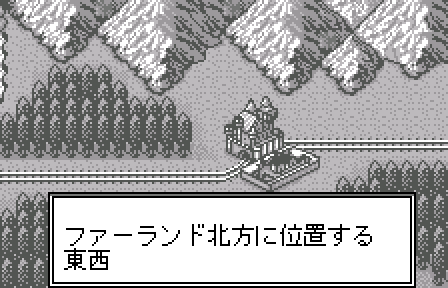
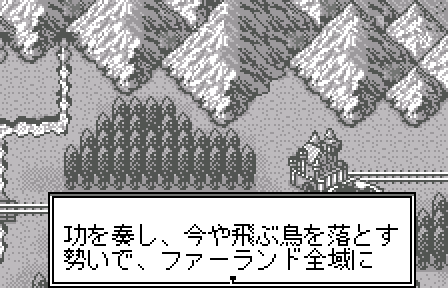
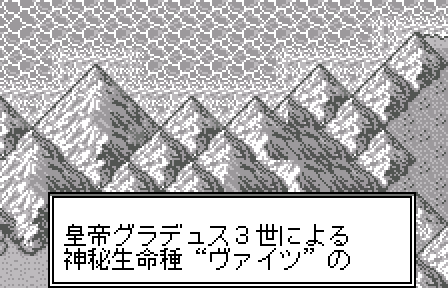
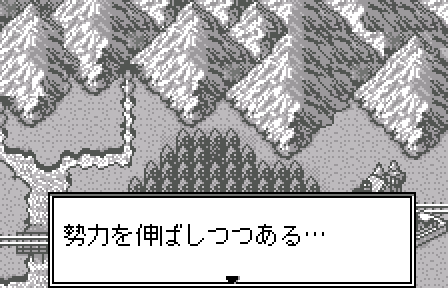
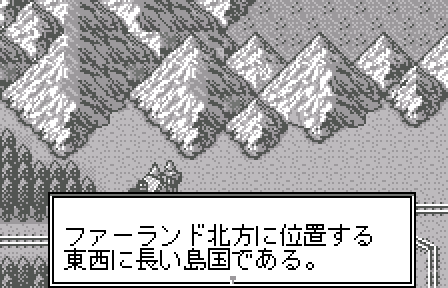
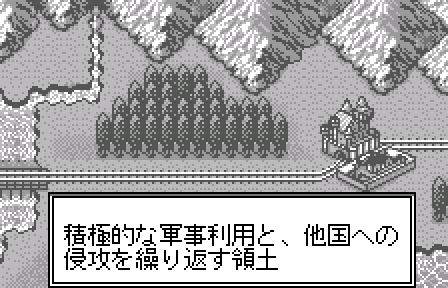
Vaitz Blade is a role-playing game for the WonderSwan, published by Bandai on 24 June 1999, a little over three months after the console’s launch. Bandai presented it as the first full-scale role-playing game made for the system. It is set in a world modelled on medieval Europe, where an empire named Randall has grown powerful by putting monsters to military use. The hero, Will, is a young soldier of that empire.
The monsters are called Vaitz, and the game has more than 180 of them. At its heart is fusion: Vaitz can be combined with one another to make new ones, and items can be combined in the same way. The game uses both the sideways and the upright screen, and the story has seven possible endings.
The story
The world of the game is called Farland, and its strongest power is the Randall empire, ruled by Emperor Gradus III. Randall has spread its reach by turning Vaitz into weapons of war. Opposing the empire is Stanga, an underground group that works against Randall.
Will begins the game as a newly made officer of the Randall army. His father, Brian, is a man of standing in the empire, and Will has taken up a soldier’s life as a matter of course, as has his older brother Gerard, who holds high rank in the army. The opening hours are a run of modest duties. His first mission takes him to a fishing village to put down a large Vaitz that is troubling it, and he goes on to do well in Randall’s arena tournament. Life in the army is going well for him.
That changes when Will lets Fritz, one of the leaders of Stanga, slip away, and he is confined to quarters as punishment. Soon after, Marsh brings word that Brian has been arrested for treason. Will ignores Marsh’s attempt to hold him back and goes to find out the truth for himself, and from there the story turns him from a loyal soldier into a man on the run, who begins to see the empire he served from the other side.
The story is a traditional one of a soldier of a military state who breaks with his own country and joins those fighting it. It does not cast the hero as a simple champion of justice, and it asks questions about the hidden side of the country and about what is done to the Vaitz. It grows noticeably darker from the middle of the game on. The cast is large, with many men and women met along the way, and story scenes use full-screen illustrations and a wide range of facial expressions. The towns are full of small jokes and hidden lines for those who search them.
How it plays
Vaitz Blade is a role-playing game with command-based battles. Will travels between towns, castles and dungeons on a field map, and battles start at random away from the roads; walking along a road on the field map does not lead to fights. The game is mostly text and menus, and its messages appear slowly and move on one line at a time with the A button, which makes long scenes tiring to read through. Some story events change the play entirely, such as a vertical shooting game played with the console held upright.
The party can grow to seven members, made up of human characters and Vaitz. At the start of each turn the player picks three of them to fight, gives each an order, and confirms the turn. An automatic mode makes battles much faster, but it only has the fighters make ordinary attacks at random. The balance is uneven: ordinary enemies do as little as one point of damage, while bosses can hit very hard even after being weakened, and ordinary attacks and magic are not well balanced against each other. The human characters are strong enough that many players finish the game relying mostly on them.
Vaitz join the party by being captured in battle, and new ones are made by fusing two of them together. The game has more than 180 kinds. Each fused Vaitz belongs to a generation, and growth rates differ from one generation to the next, and breeding a fifth-generation Vaitz from pure base Vaitz makes the game far easier. Wild Vaitz are weak, and building on the ones the player is given or obtains by trade is the usual approach. Characters level up to 99, and an experience medal doubles the experience earned; wearing more than one gives no further bonus.
Items have their own fusion system. Metals and other materials can be combined into strong weapons and armour, and a trade centre and auctions where good equipment can be obtained. These systems can be pushed far enough to break the balance of the game, for example by buying goods cheaply in one place and selling them in another, or by trading for a strong party without leaving town.
The arena provides the special battles: one-on-one duels, tag matches, team battles, elimination bouts and time attacks. Some of these come up in the story, and the arena also gives a reason to keep playing after the ending.
A full play-through takes roughly 15 to 25 hours, and the difficulty is on the easy side, though the start can be hard to find one’s way through because hints are few and the maps are large. There are at most two save files, and because the cartridge keeps its saves in battery-backed memory, losing a save partway through is a well-known risk with the game. The seven endings depend on Will’s affection with particular characters, four of them are reached only by meeting particular conditions, and seeing them all takes several play-throughs.
Development and release
The game was developed by Tom Create, a Tokyo studio, as one of its early WonderSwan titles alongside SD Gundam Emotional Jam from a month earlier. P-Softhouse, a Sendai company related to Tom Create, is also credited among the makers. Bandai published the cartridge on 24 June 1999 at 3,980 yen before tax, under the model number SWJ-BAN00C, and promoted it as a role-playing game made specifically for the WonderSwan. The 32-megabit cartridge saves to 256 kilobits of SRAM, and the sound is in stereo.
Modes and features
The game is for one player, with stereo sound. Its systems feed into one another, with Vaitz fusion, item forging, trading, auctions and the arena all offering different routes to a strong party, so that players can take quite different approaches to the same story. The game supports the link cable, but what the link is used for is unknown.
Reception
The game is valued as one of the few original role-playing games on the monochrome WonderSwan. Players have praised how much the designers fitted into one cartridge and the replay value of fusion and the arena, but criticised the balance, with ordinary enemies doing almost no damage, as well as slow text that must be advanced line by line, drawn-out battles and oversized towns and castles. Others pick out the variety of Vaitz, the freedom to create them and the endings that change with the player’s choices.
The design is seen as a mix of ideas from famous role-playing games, with monster collecting, demon-style fusion and a carefully written story, and as a solid, traditional game that would suit a remake. The full-screen illustrations in story scenes are liked, but the tall monochrome characters are hard to tell apart and the opening is hard to find one’s way through, because hints are scarce and the maps are large. Save data has sometimes been lost partway through the game.
Ports and other versions
Vaitz Blade was written for the WonderSwan and has stayed there, with no later version, port or download release. It belongs to no series, and its nearest relatives are the well-known role-playing games whose monster collecting and demon-style fusion show in its design, though it mixes these ideas with a self-contained story and uses the WonderSwan’s upright screen for some events. No remake has appeared.