
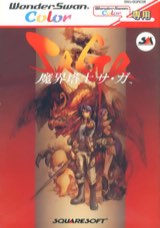
Square's 2002 colour remake of the first SaGa, The Final Fantasy Legend: climb a tower of worlds with humans, espers and meat-eating monsters. The Game Boy original is included.
Screenshots
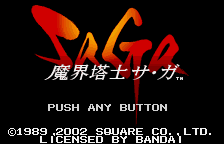
Title screen 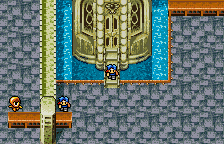
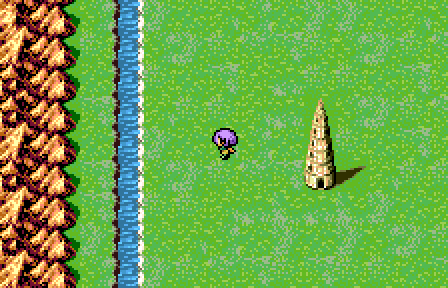
In play 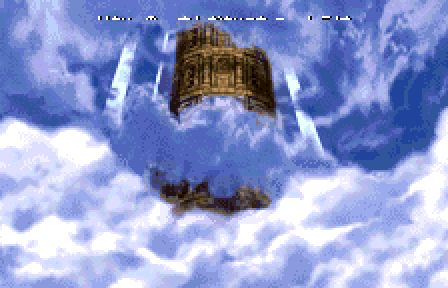
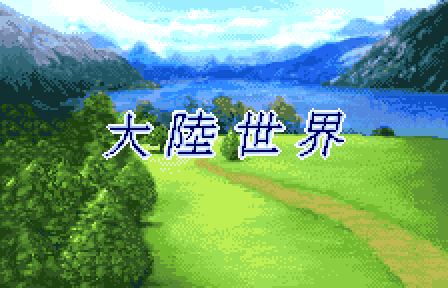
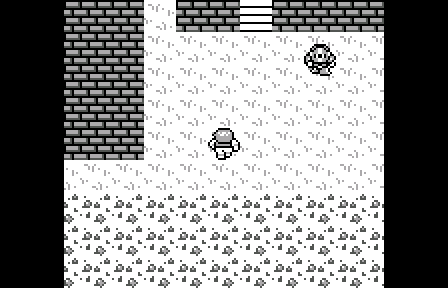
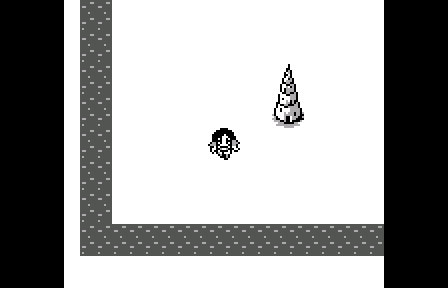
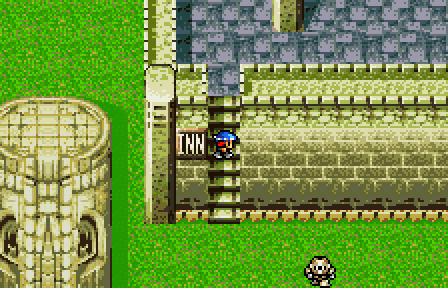
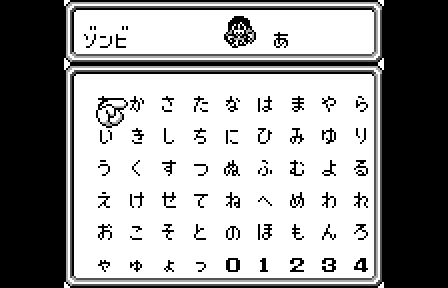
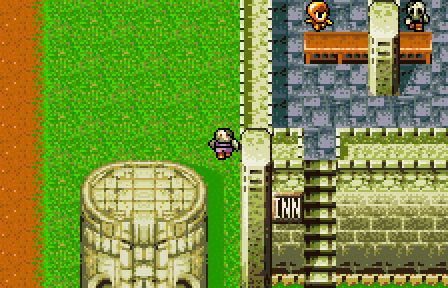
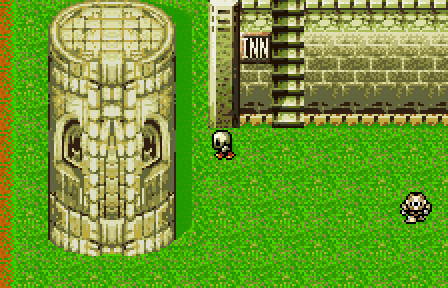
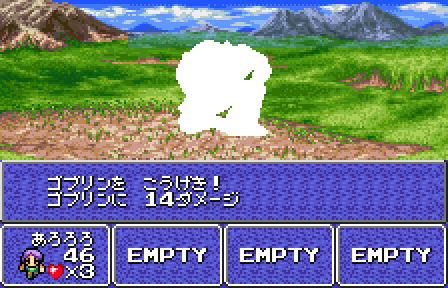
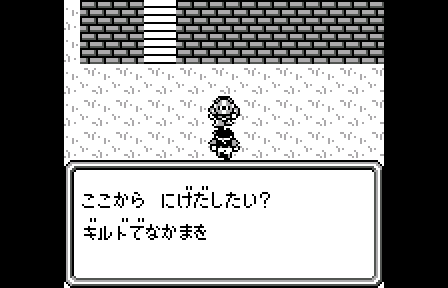
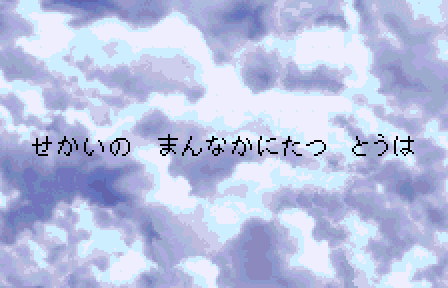
Makai Toushi SaGa is a remake of the first game in Square’s SaGa series, which came out on the Game Boy in December 1989 and was sold in North America as The Final Fantasy Legend. The WonderSwan Color version was published by Square on 20 March 2002 as part of its Square Masterpiece line of remakes for the console.
The story and structure are those of the original: a party climbs a tower that links several worlds, and its members grow by race rather than by levels, through items, random mutation or eating meat. Battles are random and turn-based.
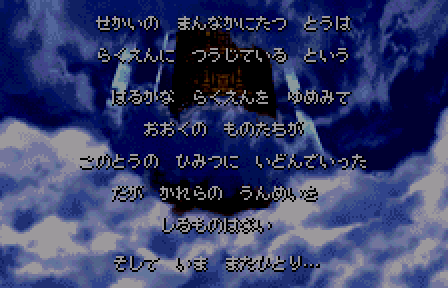
For the WonderSwan Color the graphics went from four shades of grey to full colour and were drawn again, with new character designs by Toshiyuki Itahana, backgrounds behind the battles and an animated opening. The remake adds a monster encyclopedia and an automatic targeting option, shows what a monster will turn into before it eats, fixes many bugs and misprints, and lets a lone hero clear an event that needed a party of four on the Game Boy. A separate mode keeps a near-untouched copy of the late Game Boy revision. The cartridge does not run on the original black-and-white WonderSwan.
The story
A tower stands at the centre of the world, and it is said to lead to a paradise on its top floor. The tower was once open to anyone, but its entrance has been shut, peace has gone out of the world and monsters have spread through it. The legend of the paradise is the one hope people have left. Many adventurers have gone through the tower’s door to find out its secret, and none of them has come back. The game opens as one more adventurer, the hero, steps inside.
The tower has 23 floors. Floors 1, 5, 10 and 16 open into large worlds, and each of them is held down by one of four rulers, Genbu, Seiryu, Byakko and Suzaku. The doors between the main floors are sealed, and each seal opens only with a crystal from the world below it. The worlds grow more modern as the party climbs: a medieval continent of forests and rivers, a southern sea of scattered islands that reaches down to the sea floor, a land of clouds where a resistance holds out against its ruler, and a ruined city with a subway and districts named Akiba, Shinjuku and Ameyoko, under a ruler who cannot be killed. Between them lie smaller worlds, among them a heaven where nobody does anything at all, a hell of needle mountains, a parched world of octopuses, a flooded world, a nuclear shelter and a company profiting from the chaos. In the colour remake each world shows its own picture and music the first time the party enters it.
The first world is a continent where three kings, of the Sword, the Armour and the Shield, are at war, each holding one piece of the gear from the hero’s statue: a sword, a suit of armour and a shield. Years of war have hardened people. The Armour King cannot get the beauty of a southern village to accept his proposal, the Sword King is rumoured to kill everyone who comes to his castle, and the Shield King trusts nobody and turns all visitors away. The hero starts in Basic Town, gathers companions at its guild, and sets out to bring the three pieces together, which draws the hidden ruler of the continent into the open.
The tone is light and often comic. Each side world is a one-off joke, guns and machines turn up in a fantasy setting, and the lines are fixed, so every hero speaks the same way whatever the race or sex. The puzzles that block the way are simple, such as an old man’s riddle. The early worlds are open to explore, and the later ones are more linear and built around set scenes. The remake keeps the scenario as it was, apart from the presentation and corrected misprints.
How it plays
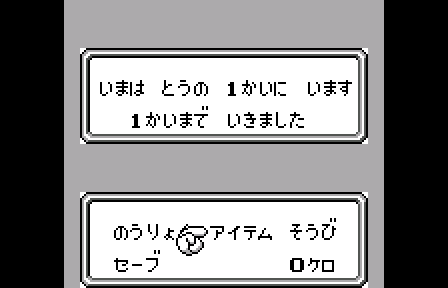
The X buttons move the hero and the cursor, A confirms and talks, and B cancels and makes the party run. The four Y buttons open the equipment, items, main menu and abilities screens, and can be reassigned in the options. A checks the square in front of the hero rather than the one underfoot. The remake folds the original’s several menus into one, from which equipment, items and the marching order are all changed. The game can be saved at any moment the menu can be opened, even inside a dungeon or just before a boss, though saving in the wrong place late in the game can leave a party with no way out.
The player first names and picks the hero from eight choices: a human man or woman, an esper man or woman, or one of four monsters, a giant earwig, a red bull, a rat man and a zombie. Men start with more attack and women with more agility. Up to three companions can be hired free at an adventurers’ guild, and guilds in later towns offer stronger recruits. A member can only be replaced once dead, and the hero never. The remake drops the Game Boy rule that held back some events until the party was full, so the whole game can be played alone, with the hero speaking every companion’s lines.
Each race grows in its own way. Humans carry eight items and get stronger only by drinking bought potions for strength, agility and extra HP, so they can be maxed early but cost a great deal of money; defence comes from armour, and their magic barely rises. Espers carry four items plus four abilities, and after battles their statistics rise at random while abilities swap in and out and their remaining uses shift up or down; the remake announces these changes, which the Game Boy game left to the status screen. Monsters carry no items and have eight abilities fixed by their form. Eating the meat an enemy drops turns a monster into a new form chosen by the two families involved and by the higher of the two levels, and a careless meal can make it weaker. The remake shows the result before the meal, adds a monster encyclopedia of every form taken, and rebalances levels so that every monster form can be reached, apart from machines, bosses and a few human-type foes. Statistics top out at 99 and HP at 999.
Nearly everything has a limited number of uses. In place of an attack command, each equipped weapon appears in the battle menu by name and breaks when its uses run out. Damage multiplies the user’s statistic by the weapon’s power, so a strong weapon is wasted on a weak character. Swords and the like draw on strength, agility or magic depending on the weapon; bows, guns and whips do set damage; firearms and heavy weapons always hit, and those that strike every enemy ignore defence; martial arts grow stronger as their uses run down; and books and staffs release spells that hit a whole group. Shields are used in battle to dodge blows. Abilities refill at an inn, but used-up items are gone. The party also shares an eight-slot bag that cannot be reached during battle, and the remake keeps story items in a separate slot for important things. Money, counted in kero, goes up to 999,999.
Battles start at random. Enemies come in up to three groups of one to five of a kind, ten at most, and single-target attacks hit the front member of a group. On the Game Boy an attack aimed at a group already wiped out did nothing; the remake adds automatic targeting, which can be switched off. The marching order decides who is attacked most, and in the remake the front member is the least likely target. A failed escape gives every enemy a free round. Enemies that run out of uses flee, and bosses and the visible figures that start fights when touched cannot be escaped, though they die when their own uses run out. A win brings kero, a chance of esper growth and sometimes meat. If the whole party falls, play resumes from the last save.
Towns have an inn, an arms shop, an item shop and a house of revival. A night at the inn costs one kero for each missing point of HP, so a healthy party sleeps free and still gets its abilities back. Each character starts with three hearts, up to nine, and reviving a dead character at the house costs 100 kero and one heart; with no hearts left the house cannot help until more are bought at the item shop. In the remake every way of reviving costs a heart, and items can be equipped straight from the shop counter.
The game is short, with only four main worlds, and takes something like six hours. It eases after the first world and stays easy until a climb in difficulty near the end, where the strain on weapons and inventory space starts to matter. Espers are the strongest choice early on, and some of their gaze abilities fell most enemies in the first half of the game, while humans need heavy spending to keep up. Carrying spare weapons avoids a character who cannot act in the middle of a dungeon. Among the first guild’s monsters the albatross deals good damage, and a heroine is a good start because she comes with an expensive sabre.
Development and release
The Game Boy original was directed and written by Akitoshi Kawazu, with music by Nobuo Uematsu, and it was Square’s first game to sell a million copies. Bandai’s catalogue introduced the remake as the return of the series’ starting point, and contrasted it with the WonderSwan Color Romancing SaGa of December 2001, which had been a straight conversion of the Super Famicom game: this one was rebuilt on top of the Game Boy version. The price was 5,200 yen before tax, and shops gave early orders a Square Masterpiece neck strap carrying the line’s logo.
Modes and features
At the start the player chooses between the colour remake and the original version. The remake has new spell effects, reworked event scenes and a battle screen laid out for the new hardware, and the colour mode’s other changes are covered above. Humans and espers can no longer eat meat at all, and a few monsters, items and abilities were renamed, partly out of copyright concerns. Some rules also differ between the two modes; for example, the item that revives a fallen character costs a heart only in the remake, and enemies that run away still leave meat behind only in the remake.
Secrets and extras
The original mode keeps a sound test: holding left, B and Start on the title screen for about two seconds opens a menu that plays the game’s 17 pieces of music and 36 sound effects. The famous trick of the Game Boy version, in which the chainsaw kills any boss outright, was carried over unchanged, since it had become too well known to remove. A flooded room on the fourteenth floor of the tower, blamed in the game on a boy throwing rubbish into a lake, is based on a real incident in which staff member Takashi Tokita blocked a sink at the office.
Reception
Weekly Famitsu’s Cross Review gave this version a total of 27 out of 40. Players treat it as a model of how to remake a game: the colour graphics, the many quality-of-life changes and the fixed balance are praised, while the story itself was left as it was. The remake is also felt to make the story easier to follow than the Game Boy original.
Ports and other versions
The game began on the Game Boy, where Square released it in Japan on 15 December 1989 and in North America in September 1990 as The Final Fantasy Legend; Sunsoft reissued that Western cartridge in 1998 without changes. The Game Boy game itself exists in an early and a later revision, which differ in their bugs and exploits and in small details such as the name of the attack statistic. The WonderSwan Color cartridge is the first remake, and the original mode it carries is the later Game Boy revision, left almost untouched; the changes made in the colour mode are described above.
The remake was then carried to Japanese mobile phones, on NTT DoCoMo in July 2007, au in December 2007 and SoftBank in March 2008, and these versions were built on the WonderSwan Color game rather than on the Game Boy. They are the first to show kanji in the dialogue, change the controls and the shops, add a few lines and a helper in the first town, and drop the monster encyclopedia and the original Game Boy mode; on phones without the larger application format, the opening movie and some effects were also lost.
Later re-releases went back to the Game Boy version instead. Collection of SaGa: Final Fantasy Legend, released for the Nintendo Switch in December 2020 and brought to iOS and Android and to Windows in 2021, contains the Game Boy original together with its two Game Boy sequels, and neither the WonderSwan Color remake nor the mobile versions have been released again.