
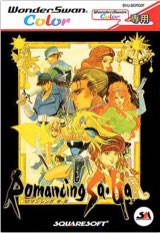
Square's expanded WonderSwan Color port of its 1992 Super Famicom RPG, restoring cut content and adding a new scenario and a dash button.
Screenshots
Title screen 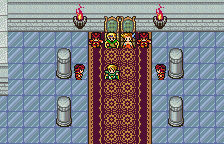
In play 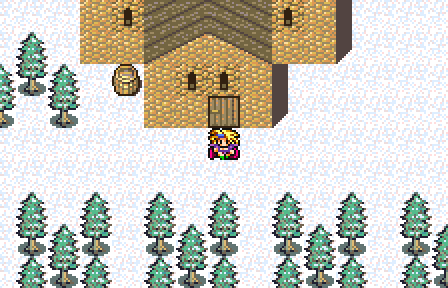
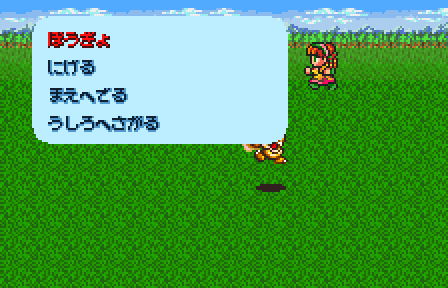
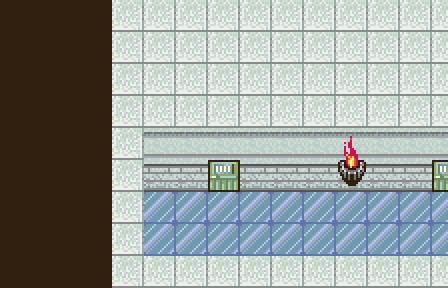
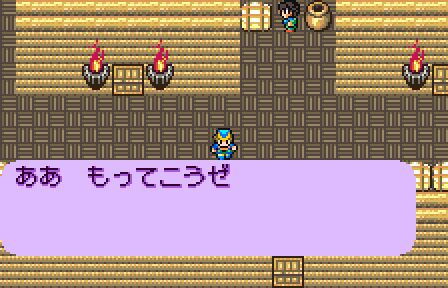
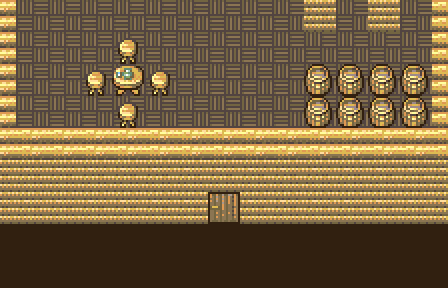
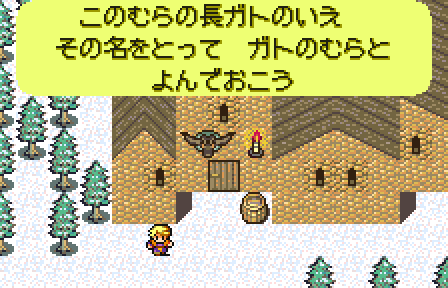
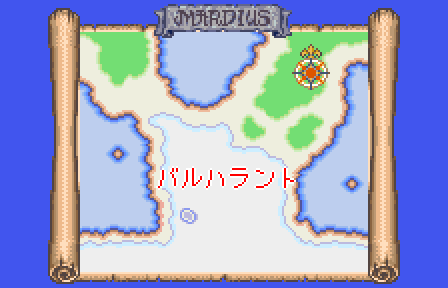
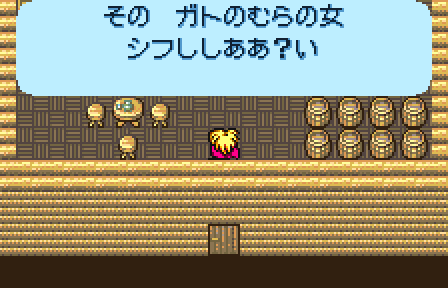
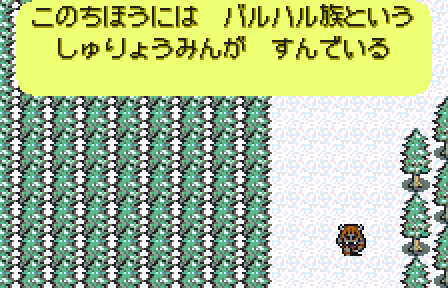
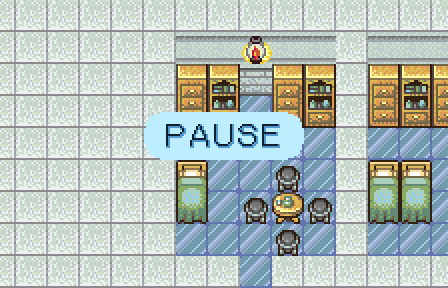
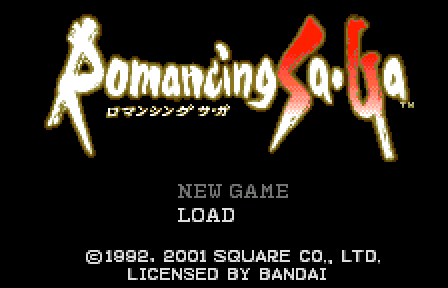
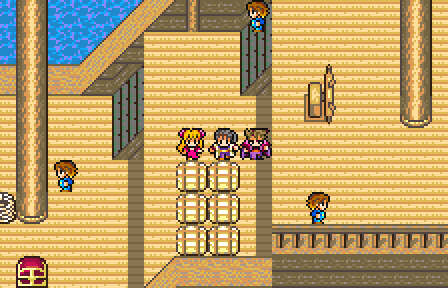
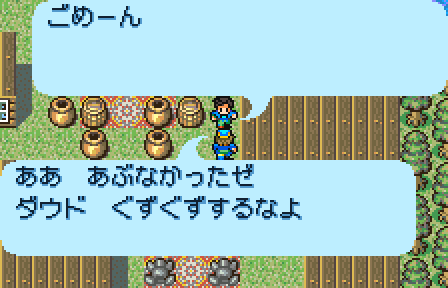
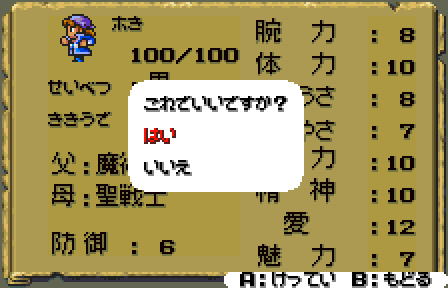
Romancing SaGa for the WonderSwan Color is a port of the role-playing game Square first released on the Super Famicom in 1992, the opening entry of the Romancing SaGa trilogy within the wider SaGa series. Square announced the conversion in September 2000, and it went on sale in Japan on 20 December 2001 as part of the company’s run of classic games on Bandai’s handheld. The port itself was carried out by Kan Navi.
The game keeps the free-form structure of the original: the player picks one of eight heroes and wanders a shared world in which events open up according to where they go and what they do. Square presented this version as the complete form of the game, putting back material that had not fitted on the Super Famicom cartridge. The cartridge needs a WonderSwan Color or SwanCrystal and does not run on the black-and-white WonderSwan.
The story
The game is set in the world of Mardias. Long ago, not long after humans appeared, three sibling gods of evil, Death, Saruin and their younger sister Schirach, led the monsters in a war against Elore, king of the gods, and against humankind. Death and Schirach gave in, but Saruin fought on. Elore made jewels holding ten kinds of power, the Destiny Stones, and gave them to Mirsa, a hero chosen by the people, who used them to seal Saruin away.
The story opens about a thousand years later, when that war has passed into legend and Saruin’s return is drawing near. The land is divided into regions such as the kingdom of Rosalia, the Baffal Empire, the Knights’ domain, Kjarat, the frozen north of Valhalland, the Frontier, and islands and seas such as the Coral Sea. Eight people in different corners of this world are drawn by fate into a series of fights that bring them together and set them against the evil gods.
Each of the eight starts in a different place and situation. Albert, 18, is the son of the lord of Isthmus, whose home is destroyed by monsters, and he takes refuge with the royal family of Rosalia. Jamil, 20, is a thief from the slums of South Estamir who runs with his childhood friends and is the fastest of the eight. Gray, 24, is a quiet mercenary swordsman who travels in search of treasure. Claudia, 22, was raised deep in a forest by a witch, keeps animals as companions and is leaving home for the first time.
Hawke, 30, is a chivalrous pirate of the Coral Sea who is out for revenge on a rival pirate. Aisha, 16, is a girl of the nomadic Taralian tribe of the steppes who sets out to see the world. Barbara, 26, is a carefree dancer who travels with a troupe and its wagon. Sif, 28, is a proud warrior of the Valhal people of Valhalland. A wandering minstrel turns up in taverns throughout the game.
Every hero plays through a short fixed opening of their own and is then left free to go anywhere. From there the story is a web of separate episodes rather than a single line: rumours heard in towns open new places on the map, most quests can be taken in almost any order, and the choices made in them can paint the hero as good or bad. Gathering the Destiny Stones is the thread that ties it together, and the final aim is to defeat Saruin.
How it plays
Movement takes place on a map of named locations rather than an open overworld; talking to townspeople and listening to rumours adds new places to it. Monsters are visible in fields and dungeons and rush at the party, so there are no random battles; a fight starts on contact and can be avoided by dodging or running away. The WonderSwan Color version adds a dash that speeds the hero up, but it also doubles the speed at which time passes, so dungeon monsters close in faster, and enemies in general chase harder than on the Super Famicom. Inns cost nothing, ships charge a fare for each person aboard, and the party can carry up to 63 items.
Time in the game is measured by the number of battles fought. The battle count, not the location, sets how strong enemies are, so places that once held only weak monsters become dangerous as the count rises. Events start and close at set counts, and some can be missed for good; companions who can be recruited also move from town to town as the count rises. In this version the main recruitable heroes still appear in the tavern of Crystal City even when the count has grown high, so they can no longer be lost that way.
Battles are fought in side view. The party stands on a three-by-three grid and the enemy on a grid of three by four, and the front row is hit more often. Weapons have a range: swords reach only from the front row, spears also from the middle, and bows and spells from anywhere, so the formation set with the line-up command decides who can attack. The direction from which the party meets a monster changes the starting positions, an attack from behind or the side scrambles the formation, and members can step forward or back one row per turn. A member who falls is moved to the back row. After a fight, every ailment except stone is cured and fallen members come back with 1 HP.
There are no experience points or levels. Characters grow from what they do in battle, and their stats rise in jumps after fights: strength, vitality, dexterity, agility, intelligence, spirit, love and charisma, among others. HP can reach 999 and most other stats 99. In the WonderSwan Color version characters outside the party grow more than on the Super Famicom.
Any character can use any weapon, and each can carry up to eight. Using a type of weapon raises the skill for it, and as the skill rises the character learns special techniques tied to that weapon, up to four per weapon, which spend weapon points. Hitting an enemy with the type of attack it is weak to does heavy damage. Armour goes on separate slots for shield, body, head, arms, legs, neck and fingers, and heavier gear lowers evasion. Many techniques, such as attacks that strike first or hit a whole row, need both hands, so the shield does not work that turn.
Magic is split into ten schools, among them fire and water, earth and wind, and light and darkness, arranged in five opposed pairs. A character who learns one school cannot learn its opposite. Each school has eight spells, and spells are bought at magic shops rather than learned by growing; they cost magic points and also take both hands. Healing spells restore less in this version than on the Super Famicom.
Monsters drop only money, and there are two currencies: gold, which tops out at 9,999, and jewels, each worth 10,000 gold, of which up to 99 can be held. Gold won beyond the limit is lost, so selling items at shops is how sums are turned into jewels. Hidden good-deed and bad-deed values, each from 0 to 15, rise with choices in quests and affect later events. Beyond the content it adds, the WonderSwan Color version reworks many details. Enemy attack patterns, Saruin’s included, are milder or changed, techniques that hit several enemies no longer lose half their damage, the Jewel Beast can be fought only once, and well-known bug tricks of the original no longer work. Some monsters and an ailment are renamed, saves record time down to the second, and on horseback some stairs can be climbed.
Development and release
Romancing SaGa and Hanjuku Hero were the first two releases in the Square Masterpiece line, Square’s label for bringing its older games to the WonderSwan Color, and both were set for December 2001. To promote them, Weekly Famitsu ran a conversation in September 2001 between Akitoshi Kawazu, producer of the SaGa series, and Takashi Tokita of Hanjuku Hero. Kawazu explained that the game balance had been carried over from the Super Famicom version as it was, and said he had put a great deal of feeling into the episodes newly written for this release, which tell parts of the story the original had left out. The illustrations are by Tomomi Kobayashi. The cartridge sold for 5,200 yen before tax, and early buyers could receive a white Masterpiece cartridge holder carrying the series logo, limited to 10,000 pieces.
Modes and features
The game is for one player and has no link-cable support. Kawazu pointed out that the dash makes it possible to slip past the monsters crowding the field, which on the Super Famicom often left players surrounded, although enemies speed up too. Square’s preview page for the release teased answers to two long-standing puzzles of the original: only seven of the ten Destiny Stones could be obtained on the Super Famicom, and the whereabouts of one of the three evil gods was never explained. Nine stones can be collected in this version.
Reception
Weekly Famitsu’s Cross Review gave it 28 out of 40. That is three points below the Super Famicom original, which had scored 31 and entered the magazine’s Silver Hall of Fame. This version sold about 80,000 copies.
Ports and other versions
The WonderSwan Color cartridge is a conversion of the Super Famicom game of January 1992. Its rules and music stay close to that version, its graphics are recoloured for the Color’s palette, and it adds a scenario that the original never had. The new dash also speeds up the passing of time, so monsters in dungeons close in faster as well. Two rulers were renamed, Ahmad becoming Domafa and Haloon becoming Luhan. The Super Famicom game was notorious for bugs, including one that could wreck the save when Hawke was repeatedly sent away from a certain place; this and many other faults were fixed, though new ones appeared, such as ways to pick up items that were never meant to be obtainable. A reviewer for the English-language site Hardcore Gaming 101 saw the result as largely a straight port, with a smaller screen and weaker sound than the Super Famicom original.
The Super Famicom version itself was later sold as a download on the Virtual Console for Wii, Wii U and New Nintendo 3DS, starting on Wii in 2009. Also in 2009, Square Enix released the game for Japanese mobile phones on the i-mode, SoftBank and EZweb services. That phone version was built on the WonderSwan port, with its graphics and music redone and its interface and balance revised under the supervision of Akitoshi Kawazu and the composer Kenji Ito.
The game was remade from the ground up for the PlayStation 2 as Romancing SaGa: Minstrel Song, released in Japan in April 2005 and in North America that October, and later offered on the PlayStation 3 as a PS2 classic. An HD remaster followed in December 2022 on PlayStation 4, PlayStation 5, Nintendo Switch, Windows, iOS and Android. The remake moves to 3D environments, borrows techniques such as sparking new moves and combination attacks from later SaGa games, and rearranges the music; it also makes all ten Destiny Stones obtainable, against nine on the WonderSwan Color, and renames the two rulers once more.