
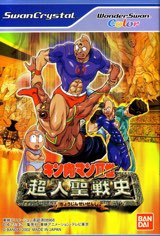
A Bandai role-playing game for the WonderSwan Color in which an original Hercules Factory wrestler is thrown back in time and can rewrite the first Kinnikuman as hero or villain.
Screenshots
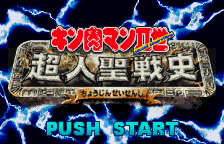
Title screen 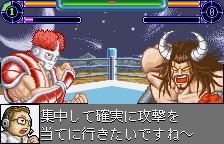
In play 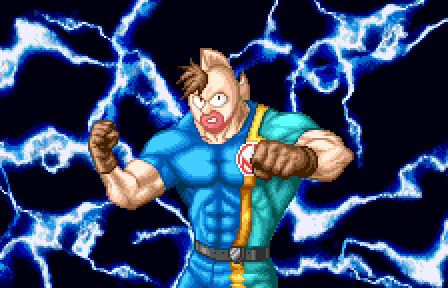
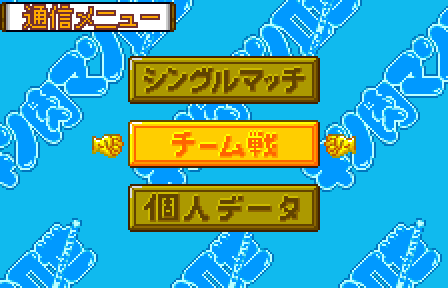
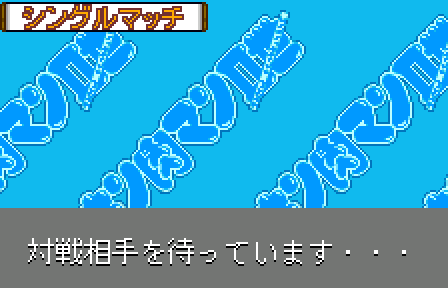
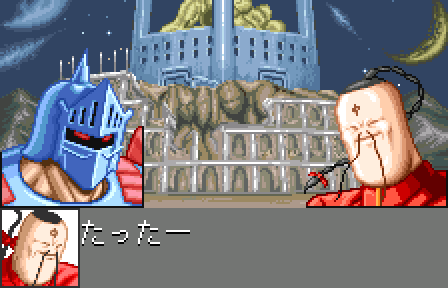
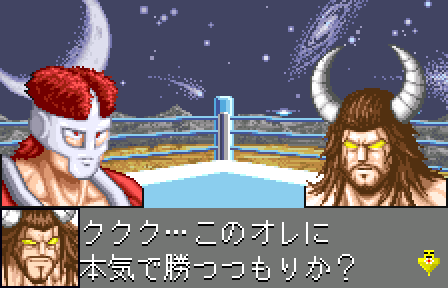
Kinnikuman Nisei: Choujin Seisenshi is a role-playing game from Bandai for the WonderSwan Color, released on 30 January 2003. It was Bandai’s second WonderSwan game based on Kinnikuman II-sei, the sequel manga about the son of the wrestling superhero Kinnikuman, but most of it is set in the time of the original series, which the player relives with a wrestler of his own.
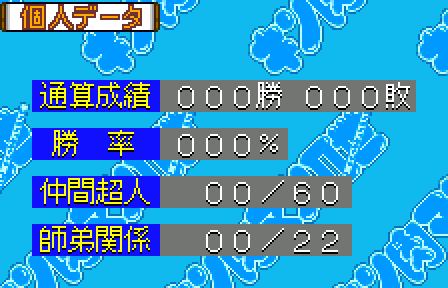
That wrestler travels the world recruiting choujin, more than 60 of them, learns techniques by becoming a pupil and fights in command battles. Every choice moves an attribute gauge that decides whether he fights beside Kinnikuman as a hero choujin or turns villain and works for the other side, and the chapters follow the arcs of the first manga, from the Choujin Olympics to the battle for the throne.
The story
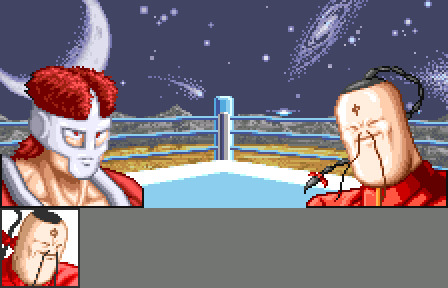
The game opens in the present day of Kinnikuman II-sei. The hero, called The Mask unless the player renames him, has just graduated from the Hercules Factory, the school that trains the new generation of choujin, as one of its third class. He is due to fight Kinnikuman Mantaro in a match for Mantaro’s post, since Mantaro has been neglecting his duty of guarding Japan. Before the match can happen, the villain Scarface kidnaps Mantaro.
Meat explains what has happened, and The Mask teams up with the other new-generation choujin to defeat Scarface. At that moment space begins to warp, and someone sends every new-generation choujin there, all except Meat, back in time to the age of the legendary choujin. They arrive just before the Choujin Olympics of the original manga, with no obvious way home and no idea who sent them.
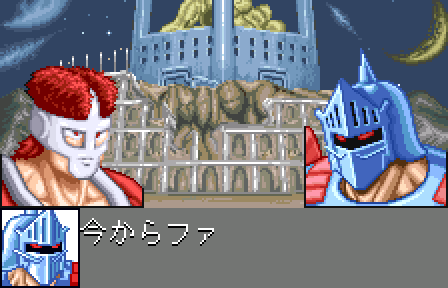
The Mask is an original character drawn for the game by Yudetamago, the authors of the manga. Around him are the new generation: Mantaro, Terry the Kid, Gazelleman and Seiuchin, the three who form Team AHO with Mantaro, along with Jade, Check Mate, Kevin Mask and Scarface himself. In the past they meet the legends in their prime, Kinnikuman, Terryman, Robin Mask, Ramenman, Brocken Jr., Warsman and many more, together with the villains the manga set against them, from the Seven Devil Choujin to Akuma Shogun and the Perfect choujin. In the present, Buffaloman, Ramenman and Geronimo appear as instructors at the Hercules Factory.
The story runs in chapters that follow the arcs of the first manga. A short new-generation chapter with Scarface as its boss serves as the tutorial, and it is followed by the Choujin Olympics, the Seven Devil Choujin, the Golden Mask, the Dream Tag tournament and the battle for the Kinniku throne. The hero takes part in these events, and his presence changes them: if he wins the Olympics, the Seven Devil Choujin come to challenge him instead of Kinnikuman, the protection of Silver Mask in the Golden Mask arc may fall on him rather than on Kinnikuman, and in the throne arc he can join one of the candidates fighting for it.
The tone is the manga’s own mix of brutal bouts and comedy, recast as a what-if history. The attribute gauge has three broad states, justice, neutral and villain, and the route follows it. A hero choujin fights beside Kinnikuman and his friends; a villain can serve Akuma Shogun and beat the justice choujin down, and on that route Scarface is his only ally. Some arcs play out differently or are skipped altogether depending on the route, and the game has several endings, around seven, depending on whom the hero stands with and whether he leaves history as the manga told it.
How it plays
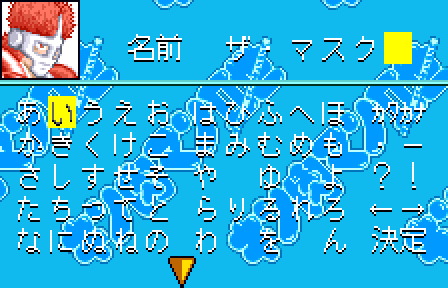
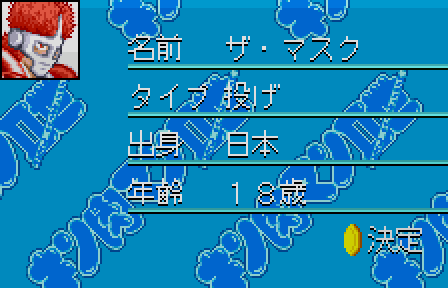
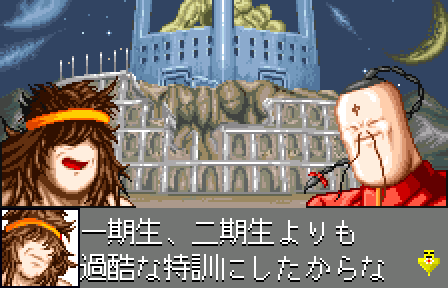
The game is played through menus and a world map rather than by walking a character around: the player picks where to go and what to do there, and the scenes are told in pictures and text. A new game begins by making the hero, choosing his name, his birthplace, his fighting style (strikes, throws or joint locks) and his age. These matter later, because masters take pupils only on conditions. The fighting style also decides which Hercules Factory instructor he faces first: Geronimo for a striker, Buffaloman for a thrower and Ramenman for a joint-lock fighter.
Between story events the hero has free time to travel the world, meet choujin and trigger events, and both his answers in events and what he does in free time move the attribute gauge. There are 63 fighters in all, more than 60 of them can be recruited, and up to five, the hero included, form the party. Every choujin belongs to justice, neutral or villain, and one whose side does not match the hero’s gauge refuses to join or even attacks. Some want a particular reading: Kevin Mask joins only a neutral hero, Check Mate accepts a hero whose gauge is a little off, and the Perfect choujin are all neutral, so collecting them takes careful adjustment. Terry the Kid, Gazelleman and Seiuchin join only when Mantaro is with the hero.
Techniques come from masters. Becoming a pupil has conditions such as the hero’s birthplace, fighting style or age: Mantaro takes pupils born in Japan, throwers or those aged 15 or under, while Terry the Kid takes only those from North America. A technique is learned by raising the matching skill, strike, throw or joint, to a set level and then beating the master at the training ground of his region, which is one of Japan, North America, South America, Eurasia, Africa and Oceania. Kinnikuman teaches the Kinniku Buster once throws reach level 7, and Kevin Mask’s Big Ben Edge needs all three skills at 10. A known trick concerns Kevin’s OLAP: a hero made British and a joint-lock fighter, or one who answers that it cannot be helped when he first meets Meat, can recruit a Kevin who already knows it.
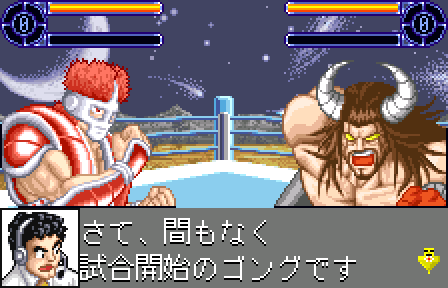
Battles are fought by choosing commands for strikes, throws, joint locks and guarding, shown with still pictures of the two fighters and the damage each side takes. An attack that has the upper hand over the opponent’s choice adds a point to the special-move gauge, which opens a Special command with its own input. Each choujin has up to four special moves, some of them tag moves for set pairs, and there are more than 150 in all, each shown with its own cut-in picture. Some characters fill a spirit gauge and, once their life falls below a set point, set off a hidden ability: Kinnikuman’s and Mantaro’s Kajiba no Kuso-jikara raises power, defence and speed by 10 percent each, others add 20 or 30 percent to one statistic, a few seal the opponent for a turn or turn damage back on him, and Prisman alone can heal. Computer-controlled choujin follow set attack patterns.
Winning gives experience, and every 100 points raise the level, which the game counts in Inochi-dama. The chapters have rough recommended levels: about 20 for the Olympics, 25 for the Seven Devil Choujin on the justice route, 30 for the Golden Mask, 35 for the tag tournament and 45 to 50 for the throne. Some recruits start far ahead: two members of No Respect, villains from the II-sei era with Hanzou among them, begin at level 50. After each win the game shows how much the fighter’s skills have grown.
The chapters have their own rules. The Olympics open with two mini-games, rock-paper-scissors and the Shinkansen Attack, before a tournament against randomly drawn opponents; the hero can also let time pass and stay out, and if he beats Kinnikuman in the first round but loses later, Kinnikuman is still counted as the winner. The Seven Devil Choujin arc starts with back-to-back bouts against Stecasse King and Black Hole; on the justice route a three-man team match and a tag match follow, while a villain fights the justice choujin twice and then faces the new generation alone, one against five, which becomes very hard if the player has trained them well. In the tag tournament the manga’s own teams are already taken, so the partner comes from the new generation or the devil choujin, with Benkiman the only justice legend allowed, and a pair that meets the conditions can force its way in as intruders.
The main hazard is the save system. There is a single save, so a hero who arrives too weak at a strong opponent can be stuck with no way forward, and it pays to keep levels near the recommended ones. Reaching an ending and starting again begins with a weak hero once more, so seeing every ending means fighting through the game several times.
Modes and features
On the justice route the player sometimes takes control of Kinnikuman himself in place of the hero, and the hero’s look can change with the route taken. The game runs on the WonderSwan Color and SwanCrystal, with stereo sound, and came about a year after Bandai’s Kinnikuman Nisei: Dream Tag Match. Early copies came with a clear blue figure of Kinnikuman.
Ports and other versions
Choujin Seisenshi was made for the WonderSwan Color. It was never ported, remade or re-released on another system. Other Kinnikuman II-sei games of the same period appeared elsewhere, among them Bandai’s GameCube game New Generation vs. Legend Choujin in November 2002 and Banpresto’s Game Boy Advance game Seigi Choujin e no Michi in December 2002, but those are wrestling action games rather than role-playing games. A mobile phone game from 2001, Kinnikuman Choujin Colosseum, also had players make a wrestler of their own, trained under famous choujin and could end up on either side. This cartridge differs from it as a self-contained role-playing game that follows the arcs of the first manga with command battles.
Notes
The game is for one or two players and supports the link cable, though what the two-player mode does is unknown. An official strategy guide titled Rekishi no Michishirube no Sho appeared in the V Jump game books line, covering the system, every character and the story.