
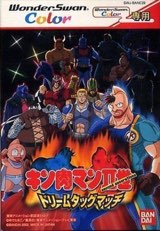
A wrestling game for the WonderSwan Color that remakes the Famicom's Kinnikuman Muscle Tag Match with the new generation of choujin, and also includes the 1985 original.
Screenshots
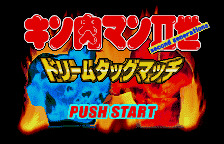
Title screen 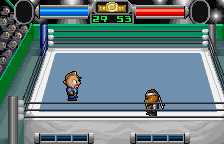
In play 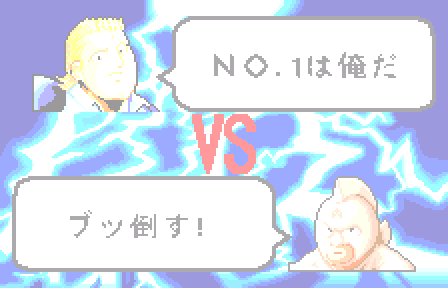
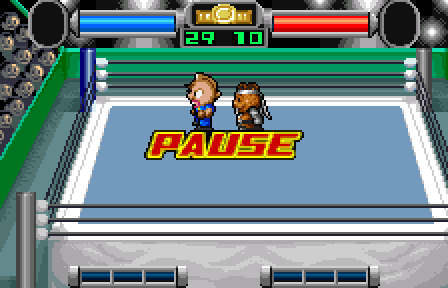
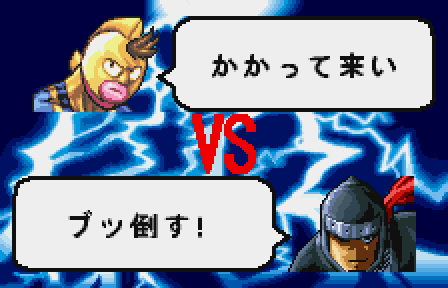
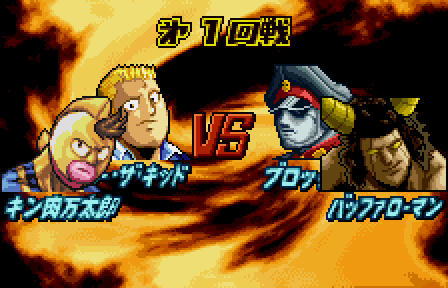
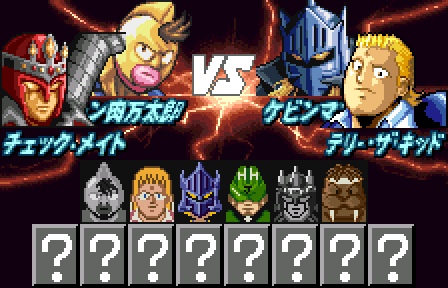
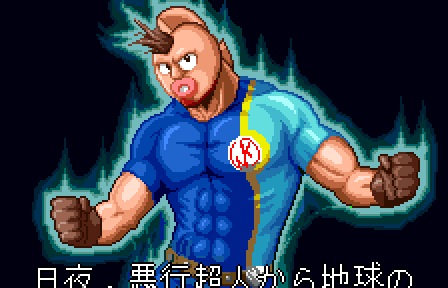
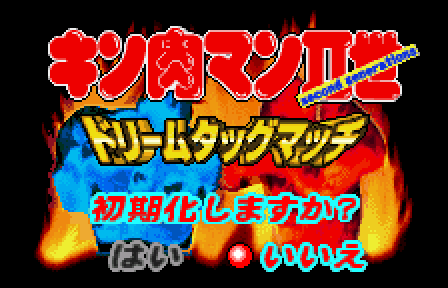
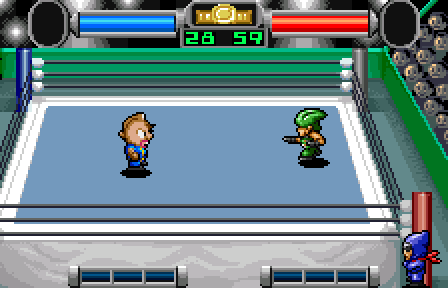
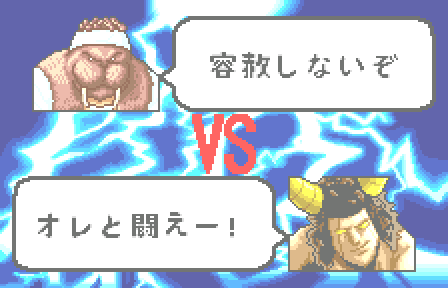
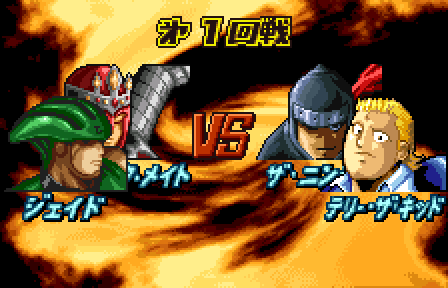
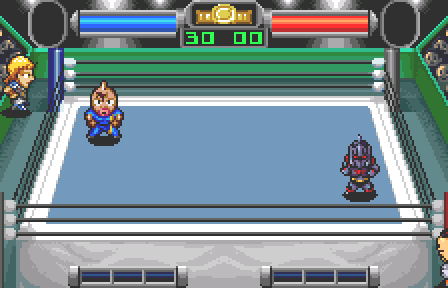
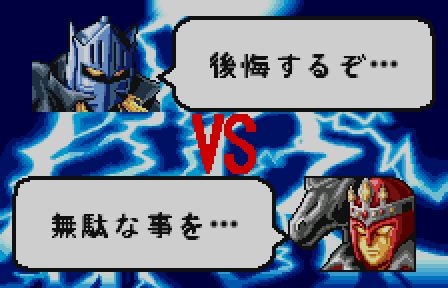
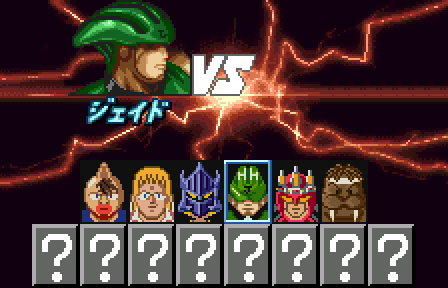
Kinnikuman Nisei: Dream Tag Match is a wrestling game published by Bandai for the WonderSwan Color on 2 March 2002. It remakes Kinnikuman Muscle Tag Match, the first Kinnikuman game for the Famicom, released by Bandai in 1985, and rebuilds it around Kinnikuman II-sei, the manga about the next generation of choujin, timed to the television broadcast of its anime. The basic system of the Famicom game is kept, with added animation and effects when a special move lands. Its roster mixes seven of the new wrestlers, among them Kinnikuman’s son Mantaro, Kevin Mask and Terry the Kid, with seven legendary fighters from the original series such as Robin Mask, Ramenman and Warsman.
It has a story mode, a tag mode and a link-cable versus mode, and the 1985 Famicom game is hidden on the same cartridge.
The story
The game is set in the world of Kinnikuman II-sei, a generation after the original manga, when the sons and pupils of the old heroes have taken over the ring. Kinnikuman’s son Mantaro is the lead, and the story mode puts the player in his boots as he takes on the new-generation choujin one at a time in a tournament. Scarface, the strongest of them, waits at the end as the boss of the story mode.
Around Mantaro stand the other new wrestlers of II-sei: Terry the Kid, son of Terryman; Kevin Mask, son of Robin Mask; Jade, the pupil of Brocken Jr.; Check Mate, the pupil of Sunshine; and Seiuchin. The other half of the cast are the legendary choujin of the first series, Kinnikuman himself, Buffaloman, Robin Mask, Brocken Jr., Ramenman, The Ninja and Warsman, who return in their young bodies thanks to a device built by Meat, the Muscle Restore. That lets fathers and sons, and masters and pupils, share a ring and even a tag team.
There is little plot beyond that setup. The story mode is a run of matches rather than a told story, and the appeal lies in the mix of old and new characters and in the comic side of the series, which comes through in the special moves; Seiuchin’s last resort is to attack with a fish. The tone is the light, knockabout one of the Famicom original, dressed up with the faces and signature moves of the II-sei cast.
How it plays
The WonderSwan Color is held sideways. The X buttons move the wrestler, B jumps and A attacks, and the move that comes out depends on where the wrestler stands: a punch on the ground, a kick in the air, a backdrop from behind, and a lariat when the opponent has been thrown into the ropes and comes back. Jumping at the ropes gives a flying attack. Tapping twice toward the opponent circles round behind him, tapping away is an emergency dodge, and Y3 gets out of a string of attacks.
Special moves come from the Inochi no Tama, the balls thrown into the ring during a match. Collected balls are stocked in a gauge with three levels. With stock in the gauge, A and B together make the wrestler flash, and an attack during the flash lands his special move; it connects only once per flash, and a fuller gauge brings out the level 2 and level 3 moves. Every wrestler has three specials, each with its own trigger, such as standing in front of the opponent, getting behind him, being at the ropes or being in the air. Mantaro’s go from the Kinniku Buster up to the Muscle Millennium; Jade’s and Robin Mask’s first-level moves are projectiles that reach a long way; The Ninja’s third-level move goes off when he takes a hit. A special that lands plays an animation, and one that wins the bout shows the wrestler’s face and the name of the move.
The fourteen wrestlers differ widely. Mantaro is strong in every respect, Terry the Kid is weak and slow but has moves that are easy to use, and Kevin Mask has hard-to-land specials but hits hard with normal attacks. Seiuchin is slow with a powerful backdrop, Buffaloman has the strongest punch and the most stamina of anyone but moves slowly, The Ninja is the fastest wrestler, and Ramenman is quick with a strong kick. Kinnikuman’s Muscle Spark is the most powerful of the third-level moves, with Robin Mask’s next. Scarface outclasses everyone.
In a tag match the active wrestler tags his partner by standing in his own corner and pressing A; after a tag the partner needs time to recover before he can be tagged again. A pinch tag, on Y2 from his own side of the ring, spends one gauge stock and sends the partner in with a kick. Bouts take place in five rings: a normal ring, an ice ring where wrestlers slide, an electric ring whose ropes hurt on contact, a concrete ring where backdrops and falls do more damage, and a parade ring where many balls are thrown in at once.
Progress comes through the two single-player modes. The story mode always uses Mantaro. In the tag mode the player picks two wrestlers and fights through a tournament of tag teams, and winning there brings legendary choujin into the roster, so not every wrestler is available at the start; Warsman can be made to appear in two different ways. The game saves which modes have been cleared after each match. The original Famicom game is on the cartridge as a hidden mode.
Development and release
In the game’s fiction the legendary choujin fight in their younger bodies, restored by a device built by Meat. Terryman was planned for the roster and his graphics were drawn, but he was dropped because his moves were almost the same as those of his son, Terry the Kid. In the official guide the manga’s creators, Yudetamago, said that they first doubted a modern remake of Muscle Tag Match could work, but enjoyed playing it and found it improved down to the details; they approved Seiuchin’s comic fish attack because it amused them.
At launch, shops in the WonderSwan Color Leaders Shop network handed out a special Kinnikuman sticker to early buyers. From late March to May 2002 Bandai held a series of in-store tournaments across Japan named for its prize, a copy of the rice bowl Mantaro eats from. At each, the first sixteen visitors played a knockout in the tag mode over the link cable, in best-of-three bouts of up to three minutes on a random ring; the winner took home that bowl, a lidded ceramic one about 16 cm across, and a hard case for the WonderSwan Color, and every entrant received a postcard. Shueisha published an official guide in its V Jump books line on 9 March 2002, with game data, background stories, a look back at the Famicom original and an interview with Yudetamago.
Modes and features
Besides the story and tag modes, two players can face each other with two consoles joined by the link cable, choosing any wrestler for singles or tag matches. The options let the player switch the automatic saving after each match on or off, clear the save data, turn on an extended mode, and start the original game.
Secrets and extras
Legendary choujin are unlocked by winning the tag mode, and Warsman can be made to appear in two different ways. Turning on the extended mode in the options gives the Inochi no Tama a wider range of effects.
Ports and other versions
Dream Tag Match is a remake of Kinnikuman Muscle Tag Match, which Tose developed and Bandai released for the Famicom on 8 November 1985. That game reached North America on the NES in 1986 as M.U.S.C.L.E., with Brocken Jr. replaced by a wrestler called Geronimo. Tose is credited with the WonderSwan remake as well. The cartridge also carries the Famicom game itself as its original mode, with some of the background music changed.
Against the Famicom game, the remake builds its cast around the new generation of Kinnikuman II-sei, with seven legendary choujin beside them; the 1985 game has eight playable wrestlers against fourteen here. Special moves now come with animation and effects and are charged in three gauge levels. A wrestler can circle round an opponent by tapping toward him twice, a special move connects only once per flash, and the Inochi no Tama balls can be stocked to reach the stronger levels.
The Famicom original went on to other systems without the WonderSwan remake. It was included in the PlayStation 2 game Kinnikuman Muscle Grand Prix 2 Tokumori in 2008 and built into the Weekly Shonen Jump edition of the Nintendo Classic Mini Famicom in 2018, and a new remake for smartphones and Windows, Muscle Tag Match Reiwa Fukkatsu-hen, is dated November 2026. The new-generation remake was never released outside the WonderSwan.
Notes
The cartridge works only on the Color. Tose, the developer of the 1985 original, is credited as the developer of this remake, though Bandai never named one.