
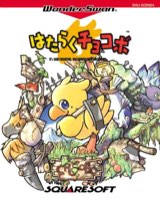
Square's first game of its own on the WonderSwan, a land-clearing simulation in which chocobos cut wood, farm, dig and carry water to open up wild country.
Screenshots
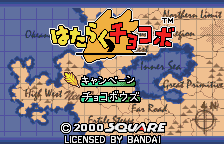
Title screen 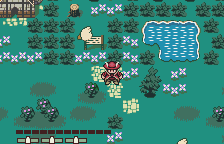
In play 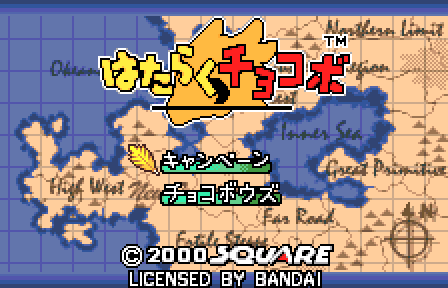
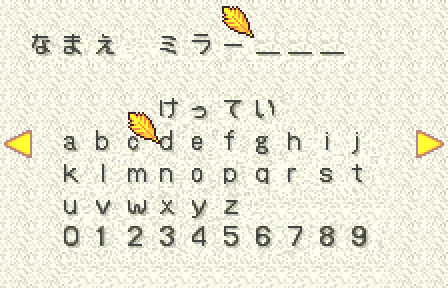
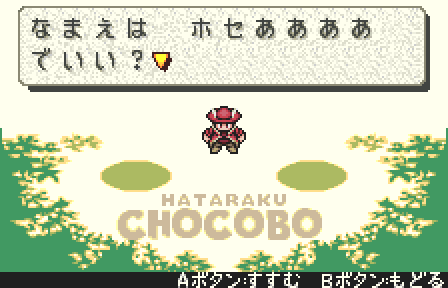
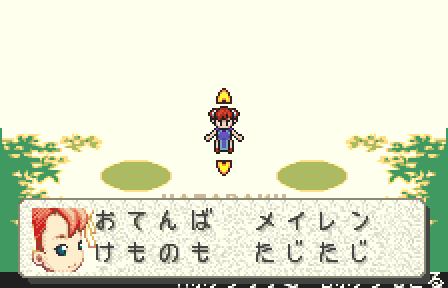
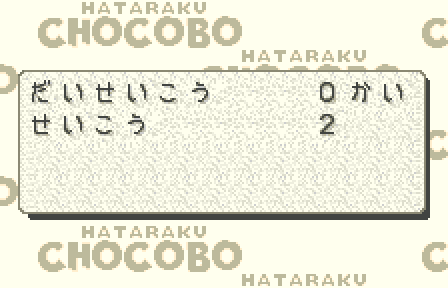
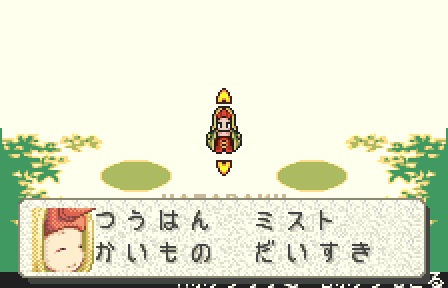
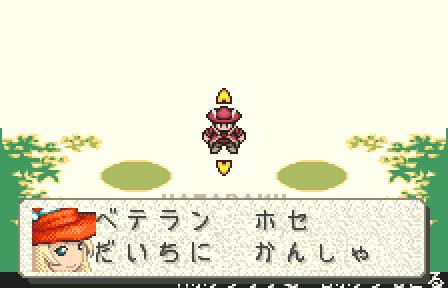
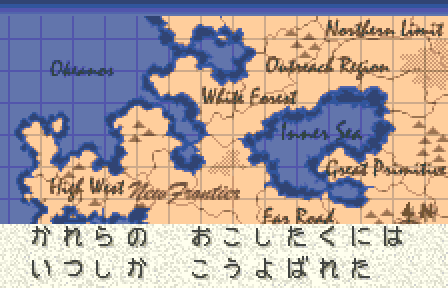
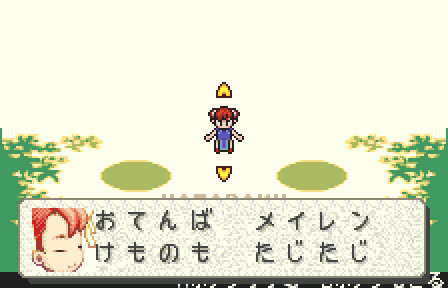
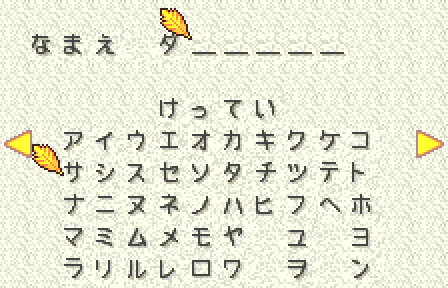
Hataraku Chocobo, “Working Chocobo”, is a simulation game starring the chocobo, the riding bird of the Final Fantasy series. Square released it on 21 September 2000. An earlier chocobo game on the WonderSwan, Chocobo no Fushigi na Dungeon, had been published by Bandai, so this was in practice the first WonderSwan game Square put out itself, and its first handheld game since SaGa 3 on the Game Boy nine years before. Akitoshi Kawazu produced it, and the team came from the Game Boy SaGa games.
The game is about bringing untamed land into use. The player sets chocobos to work clearing and developing the wilderness, and plays as one of four settlers who share each stretch of land, working with and against the other three at once.
The cartridge is made for the original WonderSwan and also runs on the WonderSwan Color, which went on sale about three months later; on the Color it is shown in colour, which made it Square’s first handheld game with colour support.
The story
The game is set in a new frontier, a dry and desolate country where an earlier wave of settlers failed to make a home. The one creature that thrives there is the chocobo. The birds cannot talk, but they can use tools and follow instructions, and the people who arrive decide to live alongside them and put them to work. The settlers set up an administration office, and the man who represents it is Shid, who asks chocobo ranchers to bring them into use one at a time. His design matches the character of the same name in Chocobo no Fushigi na Dungeon 2.
The player is one of these ranchers. Each region is worked by four of them together, and the other three are rivals run by the computer. Back home the player has a chocobo farm, where the birds that have been brought back can be raised and visited, though they answer only with their cries.
There is very little story beyond this setting. Apart from the dialogue in the tutorials, the game has almost no plot or conversation. It unfolds as a run of regions of rising difficulty, and the tone is light, with the interest lying in the chocobos themselves: the different kinds that live in each region, the rare ones hidden in the wilds and the birds that grow into seasoned workers.
How it plays
The WonderSwan is held horizontally. The player chooses a region to develop, and each region is a map of eight work sites around a home base in the centre square. Play runs in turns, each one standing for a year, and the player starts every map with three chocobos. The player only gives orders: the chocobos’ work is shown on screen, but the player mostly watches and then sees what was harvested.
At the start of each year the player gives each chocobo one of four jobs, farming, carrying water, felling trees or digging, and sends it to a site, where it gathers the matching resource: vegetables, water, timber or ore. Every site yields a different amount of each resource, and each year has its own weather, which usually raises the yield of one of them. The first chocobo placed on a site takes the largest share of its harvest, and rival chocobos doing the same job in the same place cut the payout for both sides. Some breeds are better at one job and others work best on certain ground; brown chocobos suit cooperating with a rival, and tiger chocobos suit playing aggressively. Random events also strike during the work, from fine weather and bumper crops to chocobos vanishing without trace and the arrival of a Behemoth.
The resources are also what the player spends. Water sets how much can be done in a year: walking about the map is free, but catching a chocobo, distracting a rival’s bird and giving a chocobo a job or a site all use water, and giving out jobs uses timber and ore as well. At the end of each year every chocobo must be fed vegetables, and a bird left hungry may run away, so the more chocobos the player keeps, the more farmland they need. Leftover resources can spoil, which makes it worth building a storehouse on the later maps or planning ahead; ore is the one resource that never spoils. Resources held at the end of a year also earn coins.
Between years come two economic phases. Shid holds an auction of the office’s resources, where one resource can often be bought with fewer of another, and then sells more resources in a shop. Trading with the bank is the fallback: two of one resource buy one of another, and the bank’s stock of each is limited, so the resource the player needs may not be there. A player who loses the race for farmland usually has to trade for vegetables or let a chocobo go. Turn order, both for placing chocobos and in the auctions and trading, follows the standings, with the leader going last, so holding back early can let a player move first and claim the best sites.
Wild chocobos roam the map and can be caught to add workers, and each region has its own mix of breeds. Some chocobos are hidden, and some have special abilities that the game does not explain. Birds that stay with the player for a long time become veterans and work faster. At the end of a map a few of the chocobos can be taken home to the farm, up to three, and the settler who contributed most is named MVP and may take more.
When the deadline comes, Shid totals everyone’s resources. The venture succeeds if the four together pass a target: a score above 50 is a success, and above 100 a great success, which is marked with a star on the map. Success earns medals, and medals open harder regions; winning outright opens new stages sooner. The medals cannot be spent on decorating the home farm.
The tips players pass on follow from this. Coming first is not needed to clear a region, since a success or great success is what counts, and being MVP is optional, so working with the computer settlers rather than against them is the safer way through. Beginners are advised to start in the easiest region, to keep an eye on vegetable supply when claiming sites, and to keep long-serving birds working until they become veterans.
Development and release
The game was made inside Square by staff from the Game Boy SaGa games, with Akitoshi Kawazu as producer. Yoko Shimomura, later known for Kingdom Hearts, wrote the music, and Toshiyuki Itahana, who designed the characters of Chocobo no Fushigi na Dungeon 2, drew the illustrations. The game was sold for both the WonderSwan and the WonderSwan Color, for one player, at 4,200 yen before tax. Its sales copy promised new kinds of chocobo suited to different regions, rare chocobos hidden in the wilds and a chocobo farm of the player’s own, along with fellow settlers who carry Final Fantasy-style jobs.
Reception
Japanese players have tended to find it a plain but demanding game. There is almost no story or dialogue beyond the tutorials, though the underlying system is thought deeper than it looks. Some players enjoyed scouting the different chocobos, while others found it a half-finished chore and felt the competition with rivals did not suit a farming game. Players who expected a relaxed life simulation in the manner of Harvest Moon were disappointed to find that the player mostly gives orders and reads the results while waiting through the rivals’ turns, though it was thought to work well enough as a competitive settlement game.
Ports and other versions
Hataraku Chocobo was made for the WonderSwan, and it was never ported, remade or re-released on any other system. It belongs to the wider family of chocobo games, which on other systems includes the Mysterious Dungeon role-playing games, racing games and the Magic Picture Book titles; it is one of the series’ standalone games, outside those lines, and no other game in the series is a version of it.
Notes
The colour support was not advertised on the box. The screenshots in the manual are in black and white, while those in the strategy guide are in colour. What the link cable listed on the box is used for is unknown.