
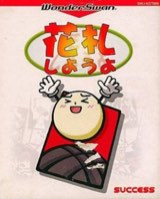
Success's hanafuda card game for the WonderSwan, offering Koi-Koi and Hana-Awase against the computer or a friend over the link cable.
Screenshots
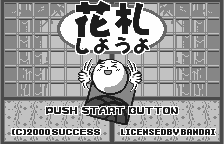
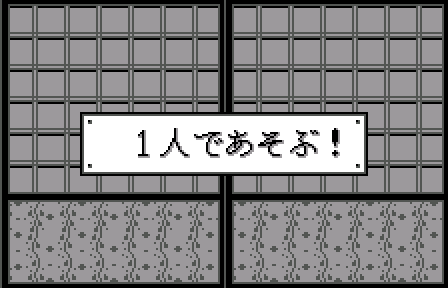
Title screen 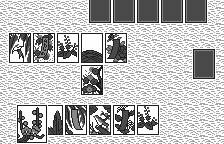
In play 
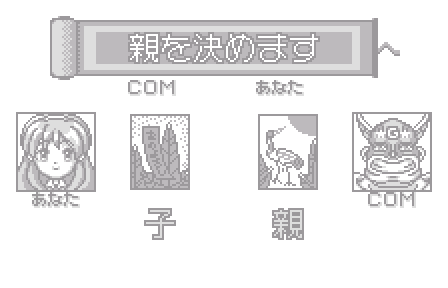
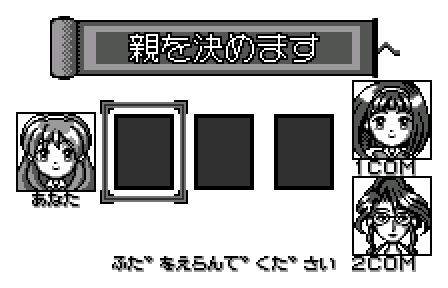
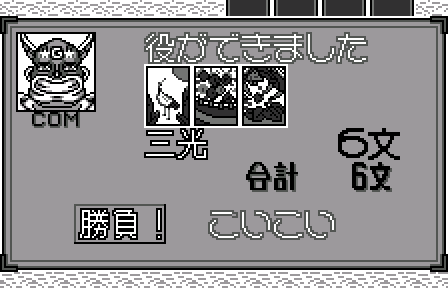
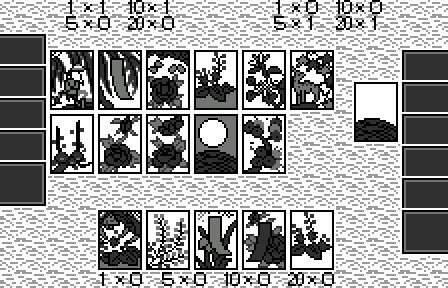
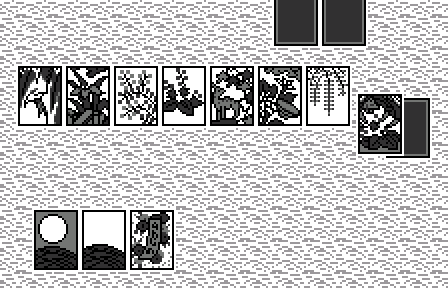
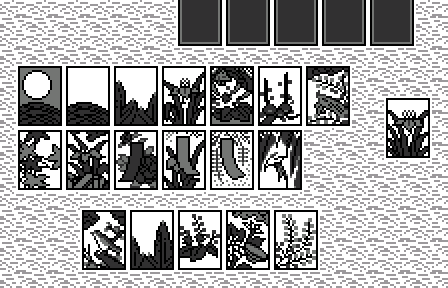
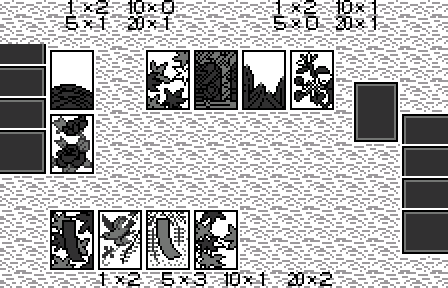
Hanafuda Shiyouyo, whose title means “Let’s play hanafuda”, is a card game for the WonderSwan released by Success in Japan on 17 February 2000, in the console’s first year. Bandai presented it as the first time hanafuda, the traditional Japanese flower-card game, had been brought to the WonderSwan. It was built on the experience gained from The Hanafuda, a release in the PlayStation’s Simple 1500 budget series.
The cartridge offers Koi-Koi and Hana-Awase, the two most popular games played with hanafuda cards. Both are quick to finish, and the game was pitched as something to play in a spare moment while out or waiting for someone.
Games can be played against the computer, and two players can play each other with the link cable. The game is played with the console held horizontally, and the cartridge has save memory. A week later Success followed it with a go game for the WonderSwan, Taikyoku Igo Heisei Kiin.
The story
Hanafuda Shiyouyo has no story and no characters. It is a plain reproduction of the card game itself, and its title is simply an invitation to a game of hanafuda. The presentation is built around short sessions, offering a quick hand to play while out or while waiting to meet someone.
The theme is the hanafuda deck. It has 48 cards for the twelve months of the year, four cards to a month, and each month is marked by a plant, such as pine for January, plum for February and cherry for March. The cards are of four kinds: five bright cards, nine animal and object cards, ten ribbon cards and 24 plain cards. Three of the ribbons are red, on the pine, plum and cherry cards, and three are blue, on the peony, chrysanthemum and maple cards.
The game was made for the original monochrome WonderSwan, so the flower cards are drawn in black and white, and it has no WonderSwan Color support. It is laid out for the console held horizontally and plays in stereo sound.
How it plays
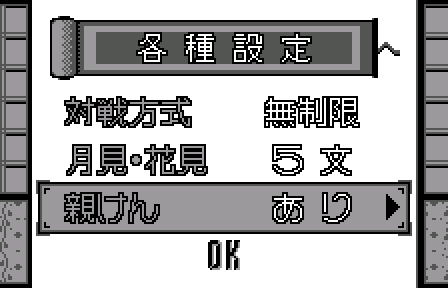
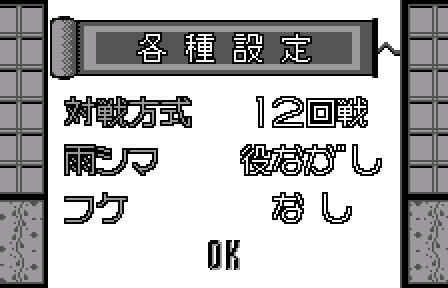
The console is held sideways throughout. The player picks one of the two games on the cartridge, Koi-Koi or Hana-Awase, and plays against the computer, or a second player joins through the link cable, each on their own WonderSwan. Hands are short, which suits the game’s aim of filling a spare few minutes, and the cartridge’s 256 kilobits of S-RAM keep saved data.
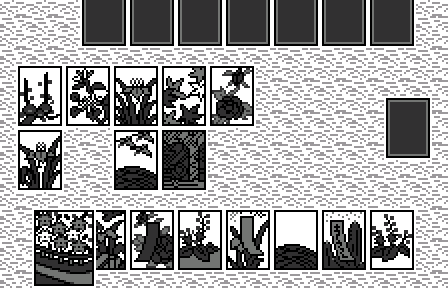
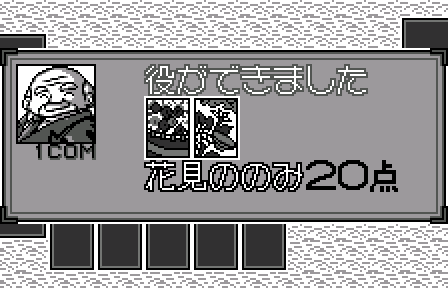
Koi-Koi is normally a two-player game, with each player dealt eight cards. On a turn a player matches a card from the hand with a card of the same month on the table and takes both, then draws a card from the pile and tries to match that too. The aim is to build scoring sets, called yaku, from the cards taken, such as the set of the three red ribbons or of the three blue ribbons. In Koi-Koi the point values printed on the cards do not count; only the sets do.
Hana-Awase uses the same matching but scores by the value of every card taken: 20 points for a bright, 10 for an animal or object card, five for a ribbon and one for a plain card. Traditionally it is a game for three, in which the 264 points of the deck are shared so that each player’s base is 88, and how the cartridge seats its players in this game is not certain.
The monochrome screen shapes how the game is played. The cards have to be studied to tell them apart, and the red and blue ribbons cannot be told apart by sight, which matters because each makes its own set. The game also gives no way to look over the cards that either side has already taken, so the player has to remember them to judge how close a set is. Seeing everything the cartridge has to offer takes about three to four hours.
Development and release
Success had a long record with digital versions of traditional table games by the time it came to the WonderSwan. It was Success that took the idea of a cut-price home game line to D3 Publisher in 1998, which became the Simple 1500 series, and The Hanafuda was among the Simple 1500 titles Success made, alongside go, shogi and mahjong. Hanafuda Shiyouyo carried that background over to Bandai’s handheld, priced at 3,800 yen.
Reception
Little was written about the game. It is regarded as an orthodox and inoffensive way to pass the time, helped by how small and portable the WonderSwan is. The complaints are mostly about the hardware: on the monochrome screen the cards can be told apart only by looking closely, red and blue ribbon cards look the same, and the cards already taken by each side cannot be checked to see how close a scoring set is. The content was also thought thin for the full price, and players wished it had supported the colour display of the WonderSwan Color.
Ports and other versions
Hanafuda Shiyouyo was written for the WonderSwan, and it was never ported, remade or re-released on another system. Its nearest relative is The Hanafuda, the PlayStation card game Success made for D3 Publisher’s Simple 1500 budget line, which Bandai named as the groundwork for this cartridge. The two are separate products rather than one game on two systems; the WonderSwan title is the handheld counterpart, built around quick hands of Koi-Koi and Hana-Awase on a small black-and-white screen, with two-player games played over the link cable.