
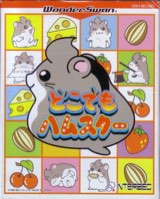
A real-time pet game for the WonderSwan in which a hamster from a faraway village lives in your cage, learns words and tricks and writes you mail; the first Dokodemo Hamster.
Screenshots
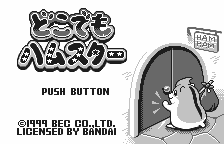
Title screen 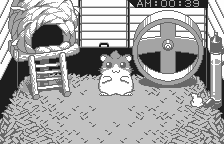
In play 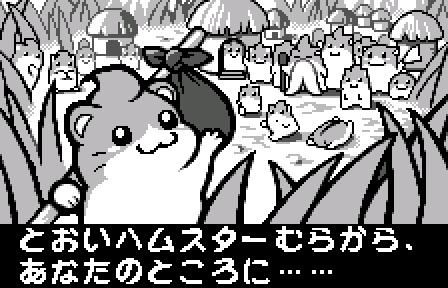

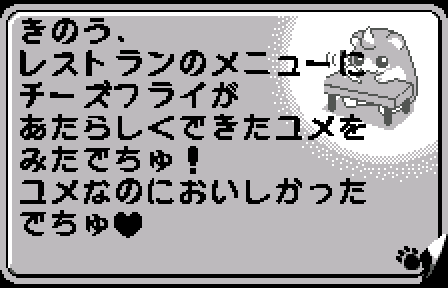
Dokodemo Hamster is a pet-keeping game for the WonderSwan, developed and published by Bec, a Bandai group company, and released in Japan on 6 January 2000. It began a small series of the same name: three PlayStation games followed, and the WonderSwan received a second entry, Dokodemo Hamster 3: Odekake Saffron, at the end of the same year. From September 2000 the hamster characters also appeared in a four-panel comic serialised in the girls’ manga magazine Nakayoshi.
The player keeps a single Djungarian hamster that lives in its cage in real time and gets to know it by feeding it, cleaning up after it, talking to it and reading the mail it writes. It is the hamster the series later calls Saffron, the lead character of both WonderSwan games.
The story
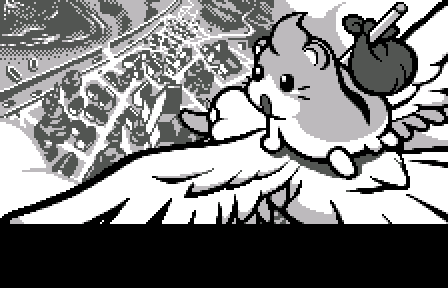
There is no plot in the usual sense, only a framing. The opening shows a hamster setting off from a hamster village far away, carrying a bundle, and flying over a town on its way to the player’s home. On-screen captions explain that a small friend is coming to live with you, and that it will learn words, write mail and pick up tricks.
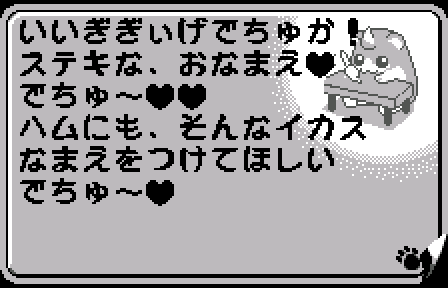
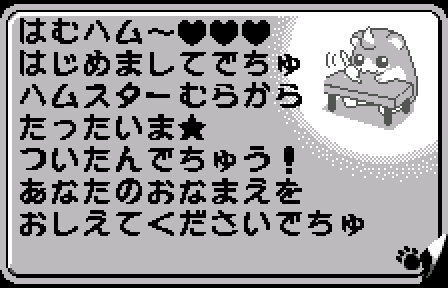
When it arrives, the hamster introduces itself in baby talk, ending its sentences with “dechu”, says it has only just come from the hamster village, and asks for the player’s name. From then on it is simply the player’s companion. The official site describes it as a mysterious hamster, and in the series’ own telling this is Saffron’s first appearance, from a time when it did not yet have a name.
Each hamster has its own personality, and its behaviour and little gestures change with that personality. Bec presented the game as neither a realistic hamster-keeping simulation, nor a collection of mini-games played for points, nor a game about gathering many kinds of hamster to fight. The idea is the kind of conversation a real hamster cannot offer: the pet tells you what it is thinking.
How it plays
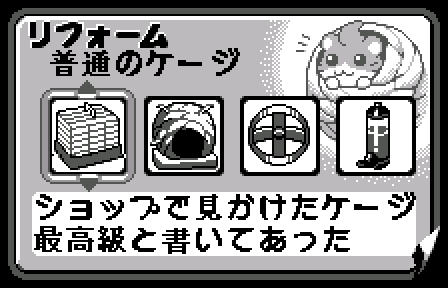
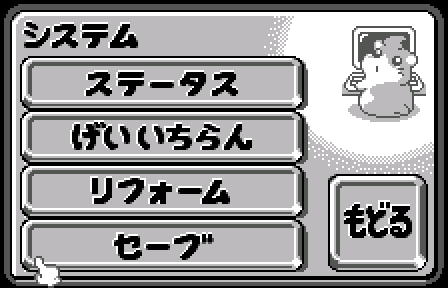
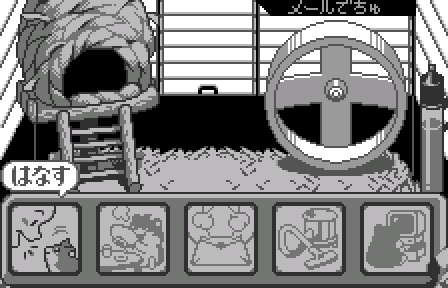
The game runs on the WonderSwan’s clock, held horizontally, and the hamster lives through the day in real time. Its cage holds a straw nest with a ladder, an exercise wheel and a water bottle, and a clock on screen shows the time of day. The hamster walks about, eats and sleeps by itself; the player steps in through a menu along the bottom of the screen, with a talk command and five icons.
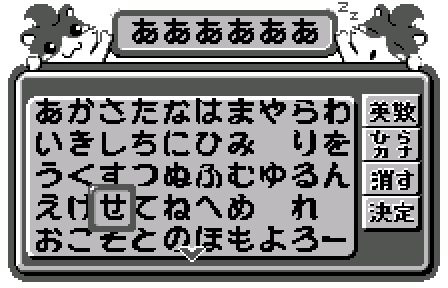
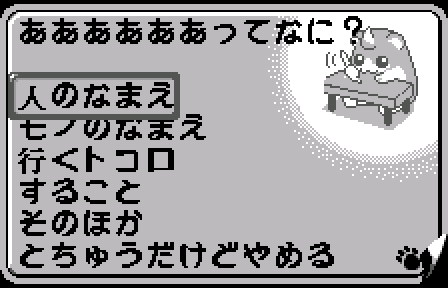
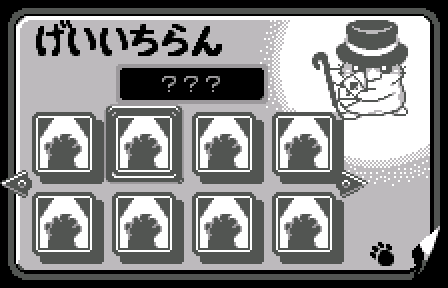
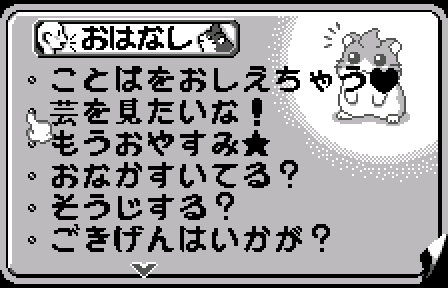
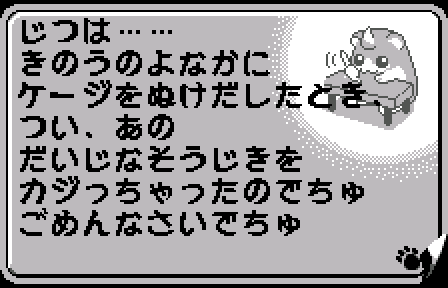
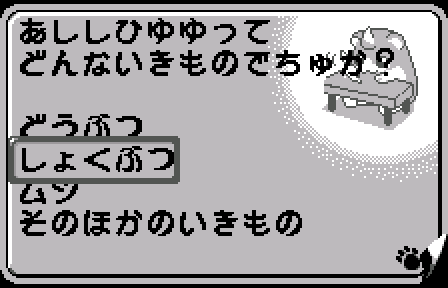
Talking means choosing a line from a list of prompts. The player can teach the hamster a word, ask to see a trick, tell it to go to bed, ask whether it is hungry, offer to clean up, ask how it is feeling, or tell it to have a run in its wheel. The hamster answers in its baby talk, and it performs the tricks it knows with their own animations.
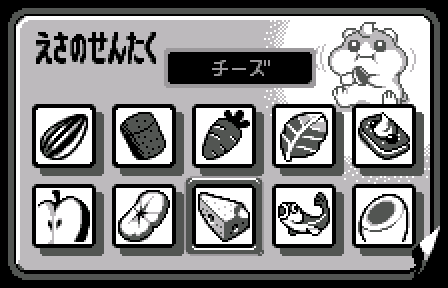
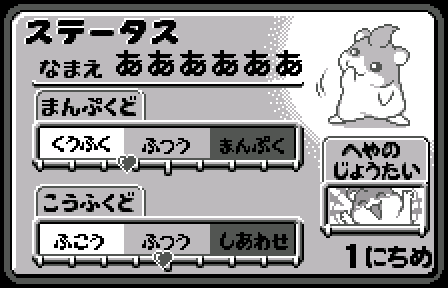
Food is picked from a list of ten, among them sunflower seeds, carrot, a leaf, apple, cheese and a small fish. Cleaning brings out a bucket and mop. Feeding the hamster and keeping its cage clean raise its happiness, a value the game calls kofukudo, and as that rises the hamster gradually learns more words and more tricks. How it is treated also shapes its mood from day to day, so neglect shows in the way it behaves.
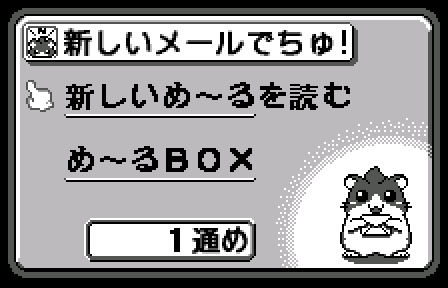
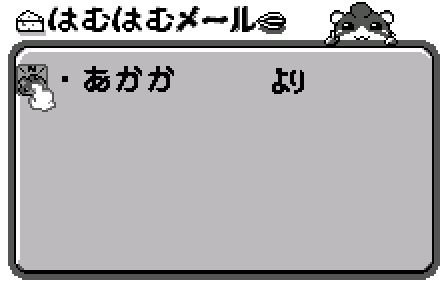
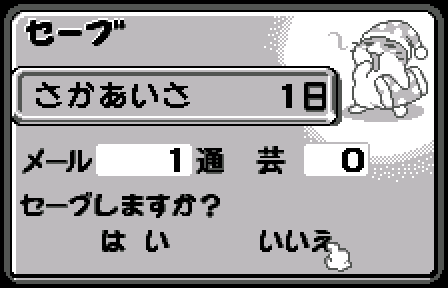
The hamster also writes to its owner. New mail arrives with the hamster’s thoughts, can be read from the mail screen and is kept in a mail box that counts how many letters have come. These letters are the part of the game people remember best, and the game is usually seen less as a raising simulation than as a game about talking and exchanging mail with a pet, close in spirit to Sony’s Doko Demo Issyo but with a hamster in a cage.
Two players can connect their WonderSwans with the link cable and let their hamsters play together. The game has stereo sound. Progress shows in the hamster’s growing vocabulary and repertoire of tricks rather than in a score.
Development and release
Bec, the publisher, was a Tokyo studio founded in 1990 that later became a wholly owned subsidiary of Bandai Namco Games; it worked as a second-party developer for Bandai in 1999, while the WonderSwan line was being built, and was folded into B.B. Studio in 2011. The Nakayoshi comic by Neko Nekobe ran from September 2000 to March 2002 and was collected in a single volume in April 2002.
Ports and other versions
Dokodemo Hamster was made for the WonderSwan, and it was never ported, remade or re-released. The later games that share its name are sequels rather than versions of it: the three on the PlayStation and Odekake Saffron on the WonderSwan Color are separate games. Unlike Odekake Saffron, in which the hamster can be taken out of the house, this first game keeps it at home in its cage, with play built around feeding, cleaning and short exchanges of words and mail with a single hamster.
Later history
Three PlayStation games followed: Dokodemo Hamster 2 in August 2000, Dokodemo Hamster 4: Doki Doki Sugoroku Daibouken! in July 2001, and Dokodemo Hamster: Bikkurick Tankentai in February 2002. The WonderSwan received one more entry, Dokodemo Hamster 3: Odekake Saffron, in December 2000.