
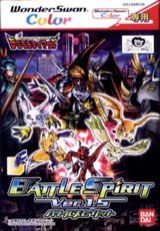
Dimps' expanded edition of Digimon Tamers: Battle Spirit, a versus action game won by collecting spirits, with new playable Digimon, stages and a hidden final boss.
Screenshots
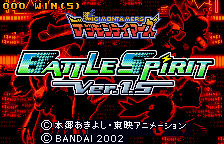
Title screen 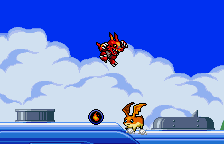
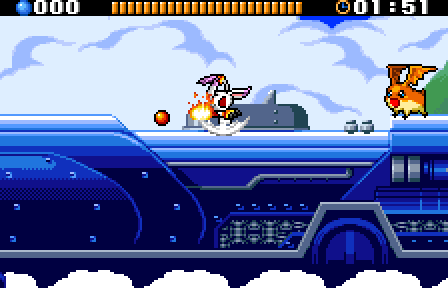
In play 
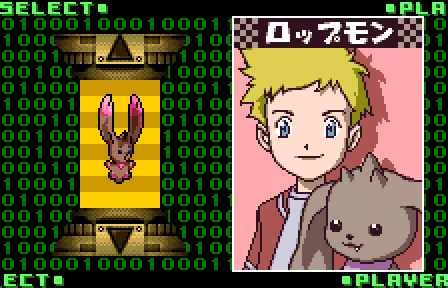
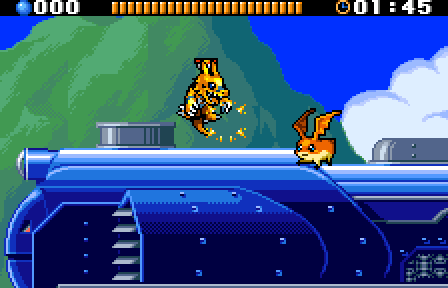
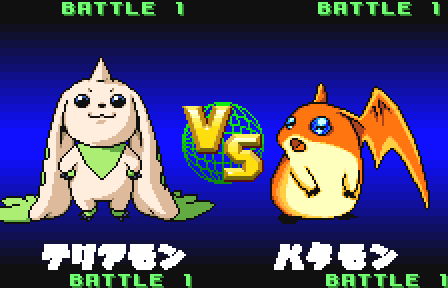
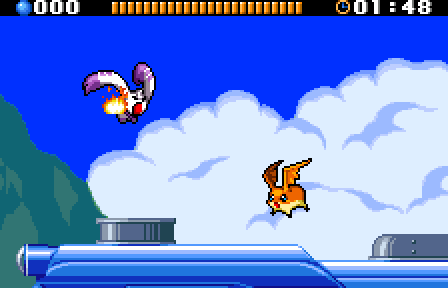
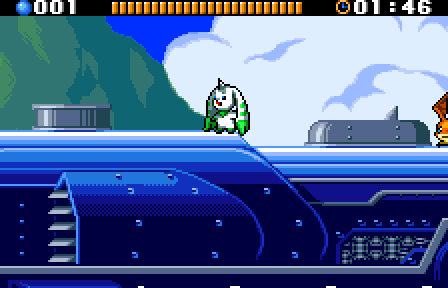
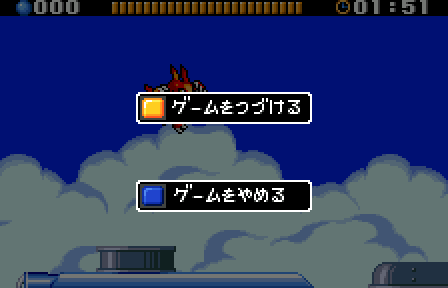
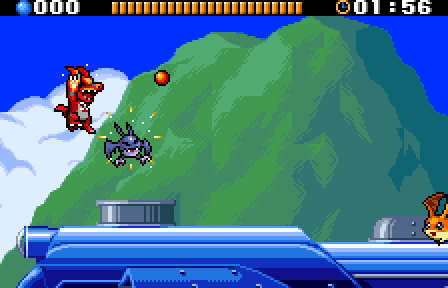
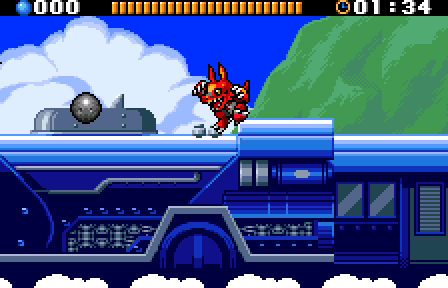
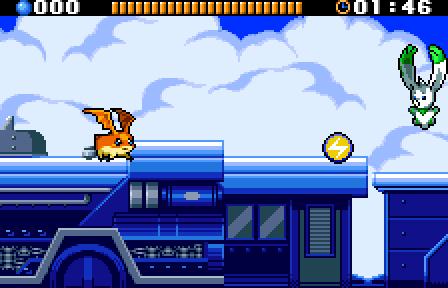
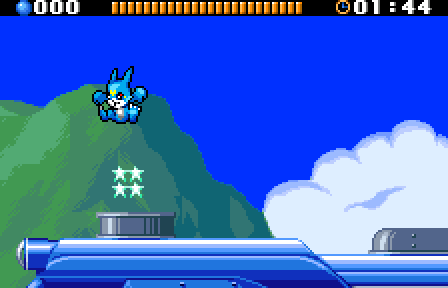
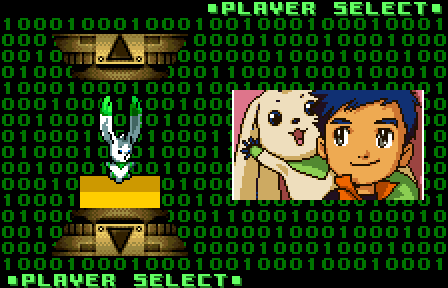
Battle Spirit Ver. 1.5 is a revised edition of Digimon Tamers: Battle Spirit, the versus action game that Dimps developed for Bandai and that came out on the WonderSwan Color in October 2001. The new version followed on 27 April 2002 and, like the first, needs a WonderSwan Color or SwanCrystal.
Matches are not decided by wearing down a health bar. Partner Digimon from Digimon Adventure through Digimon Tamers jump around side-view stages and knock loose orbs called spirits from their opponents, and whoever holds the most when time runs out wins. Kurumon appears on the field and can trigger an evolution, which lets a fighter who is behind catch up.
Ver. 1.5 keeps everything from the original and adds to it. Fighters that were hidden before can be chosen from the start, Patamon and Tailmon join the roster, Impmon gains Beelzebumon Blast Mode, and a special Guilmon can become Dukemon Crimson Mode. There are three new stages, more minigames and a tag system, and a player who reaches the end on Normal or above without a continue faces a second final boss. Two players can fight each other over the link cable.
The story
The game takes place in the Digital World. Some time before, the dark Digimon Millenniummon was destroyed by seven Digimon who had gathered from across time and space. In the spring of 2002 a surge of darkness reaches the Digital World again, and the waves of Millenniummon’s power grow stronger and more sinister. The seven return to face it: Guilmon, Renamon, Terriermon, Agumon, V-mon, Wormmon and Sukamon. Six more join them, Gabumon, Black WarGreymon, Lopmon, Omegamon, Patamon and Tailmon, making thirteen. Only these thirteen and the player, as their Tamer, can bring back peace.
The cast is a crossover of the first three Digimon television series. Each Digimon belongs to a human partner, and ten Tamers appear, from Takato Matsuda, Jianliang Lee and Ruki Makino of Digimon Tamers to Daisuke Motomiya and Ken Ichijouji of Digimon Adventure 02 and Taichi Yagami, Yamato Ishida, Takeru Takaishi and Hikari Yagami of the first Adventure, along with Wallace. Every fighter can evolve into a Mega form from the shows, Guilmon into Dukemon, Terriermon into Saint Galgomon, Renamon into Sakuyamon, V-mon and Wormmon into the two modes of Imperialdramon, Patamon into Seraphimon and Tailmon into Ofanimon, while Sukamon turns into Etemon.
There is no plot to follow beyond that set-up. The story is the frame for a run of one-on-one battles across the stages, with Millenniummon waiting at the end. The tone is light: the Digimon who wander the stages are small fry such as Numemon, Bakemon and PicoDevimon, and every fighter has a bit of business of its own on a button, so Guilmon eats bread, Wormmon does magic tricks and dresses up, Tailmon grooms herself, Patamon yawns and Agumon and Sukamon play toilet jokes.
How it plays
It is a fighting game seen from the side, on stages with platforms to jump between, and its controls are simple. A jumps and B attacks. B on its own, a quick double tap forward and B, B while pushing up, and B in the air each give a different move, and some fighters have more: Guilmon builds up spirit with down and B, and Terriermon and Lopmon float by holding A in the air. Y does the free action, the fighter’s own little performance. Every move is rated by how many D-Spirits it knocks out of the opponent, from one for a light jab to six or seven for the strongest.
A battle is a race against the clock. Each hit spills D-Spirits from the fighter who takes it, both sides scramble to pick them up, and whoever holds more when time runs out wins. Kurumon flies onto the stage now and then, and the fighter who touches it evolves to its Mega form for a short time, with stronger attacks that knock out three or four spirits at a time. The stages have steps, slopes, conveyor belts and other features to use, and the small Digimon that wander them hurt anyone who bumps into them but leave an item behind when beaten. There are six items: a baseball worth one spirit; a lightning bolt and a flame, each worth two, which stop the opponent with a shock or a burn; a shot put, also worth two, which knocks the opponent down; a black gear that does no damage but swaps left and right on the opponent’s controls; and a clock that freezes the opponent for a while.
Thirteen Digimon can be chosen from the start, the seven of the first game, the four that were hidden in it and the two newcomers, and two more are hidden, for fifteen in all. The seven stages of the first game, among them a fire stage and an ice stage, are joined by three new ones. The waterfall stage is the only one in the series that is built upwards, and the new room, lined on both sides with screens, sucks in loose spirits.
The single-player mode is a series of battles that ends with Millenniummon, on one of four difficulty settings: easy, normal, hard and a hardest level. The D-Spirits gathered over the whole run are added up at the end and decide the dog tag the player receives, and a continue sets the count back to zero, so the higher tags, and on normal and hard the second final boss, ask for a run without one. On easy a Mega tag needs 800 points, on normal 750 and on the two hardest settings 650.
Two players can fight with two consoles and the link cable, which also connects to the first Battle Spirit, and tags can be staked on the result. The shooting minigame that opens after the first clear is a test of its own, seven rounds against groups of fighters, some of which change with the Digimon the player uses. The hidden final boss attacks with its hands: when the red one glows, three earthen spears rise under the player, the blue one slows the player down and reverses the controls, and when both act together it fires in three directions from its eye unless the eye is hit in time. Attacking its orb from below makes the fight easier.
Development and release
Bandai introduced Ver. 1.5 as a powered-up return of Battle Spirit with the extra stages and Digimon that fans had asked for, at a price of 3,980 yen before tax. It is for one or two players, with link-cable play. The game’s story is set in the spring of 2002, when Millenniummon’s power stirs again and thirteen Digimon gather to fight it.
Modes and features
The three new stages are a fight on the back of the runaway steam-train Digimon Locomon, a room modelled on the digital world of the film Our War Game, and a tall waterfall with many levels joined from top to bottom. The new fighters have their own traits; Bandai pointed out, for example, that Patamon can stay in the air for a long time. The single-player battle has four difficulty settings, from easy to a hardest level.
The dog tags are new to this version. Their ranks run from In-Training through several Rookie and Champion grades to Ultimate and Mega, and the title screen shows how many link battles in a row the player has won.
Secrets and extras
There are two hidden fighters. Impmon, who now evolves, appears after the player clears the single-player battle while holding a Champion tag or better or after clearing the minigame, and a special Guilmon, the one that becomes Dukemon Crimson Mode, after clearing it with an Ultimate tag or better. The second final boss, Zeed Millenniummon, appears after Millenniummon is beaten without a continue on the normal or hard setting, or after any clear on the hardest one.
Clearing the game once also opens a shooting minigame, which Bandai called Digimon Shooter. It is a run of seven rounds against fighters from the main game, with Kurumon appearing on the fourth turn to allow an evolution, and it is generally thought very hard.
Ports and other versions
Ver. 1.5 was made for the WonderSwan Color as an enlarged edition of a game that had itself first appeared on that system, and it was never released anywhere else. Unlike the first Battle Spirit and its sequel, it received no Game Boy Advance version.
The first Battle Spirit did travel. Bandai brought it to the Game Boy Advance in the West as Digimon Battle Spirit, released in North America in January 2003 and in Europe in September 2003. That version has seven fighters at the start, five more to unlock and seven stages, and its music uses lightly arranged samples from the anime. Because it is based on the original game rather than on Ver. 1.5, the fighters, stages and second final boss added here did not reach it.
Later history
Battle Spirit continued on the WonderSwan Color with Battle Spirit: Digimon Frontier, based on the next anime series. Like the first game, that sequel was later carried to the Game Boy Advance for Western players, under the name Digimon Battle Spirit 2.