
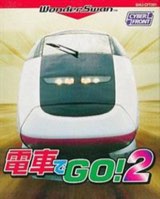
The WonderSwan version of Taito's second train-driving game, Densha de Go! 2 Kosoku-hen, adapted from the PlayStation release and published by CyberFront.
Screenshots
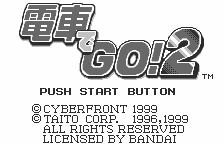
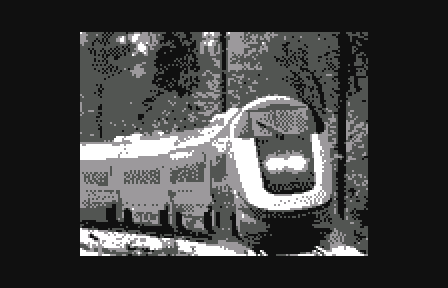
Title screen 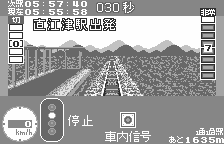
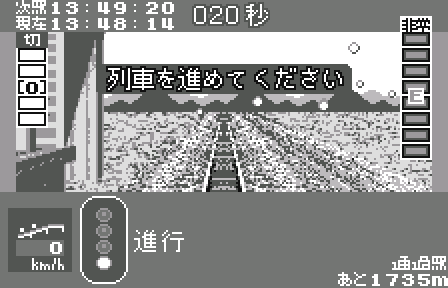
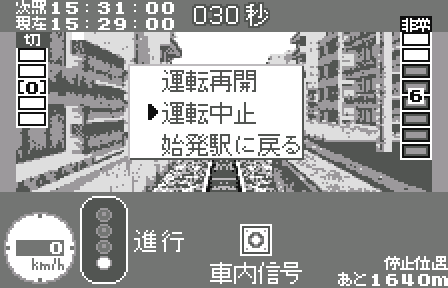
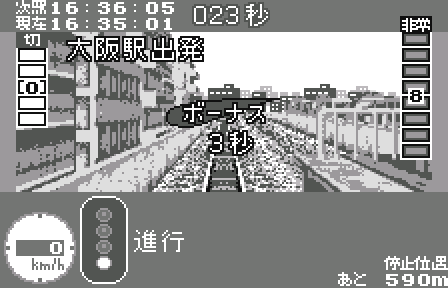
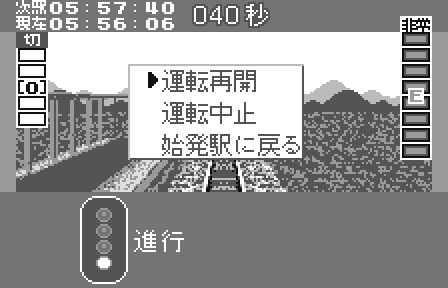
In play 
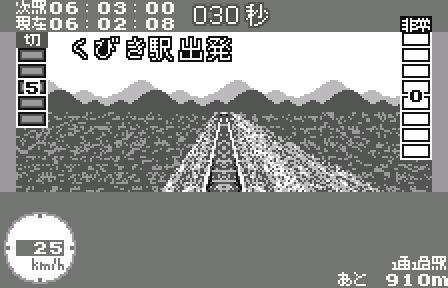
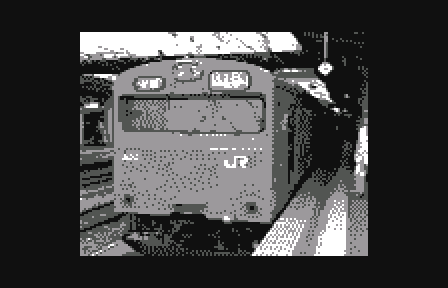
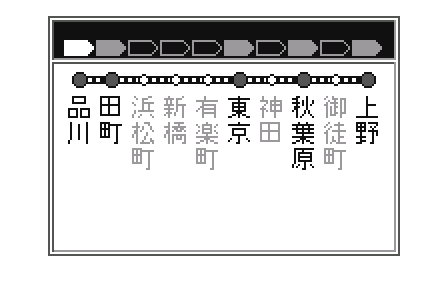
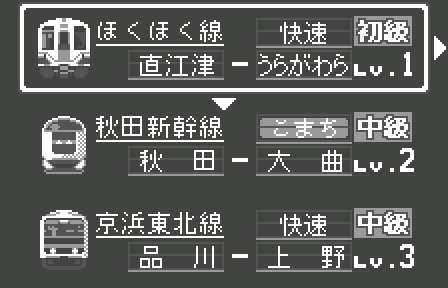
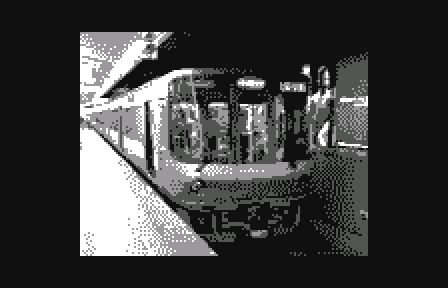
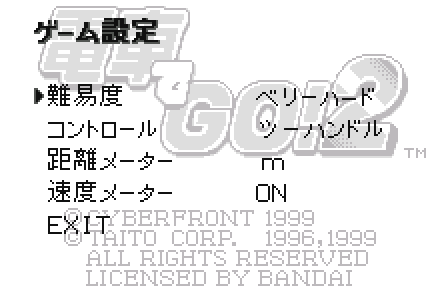
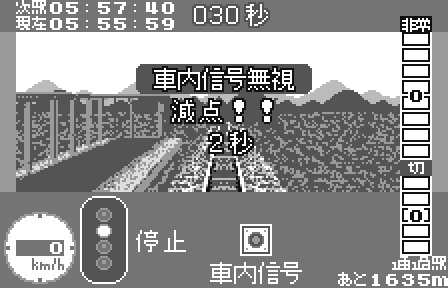
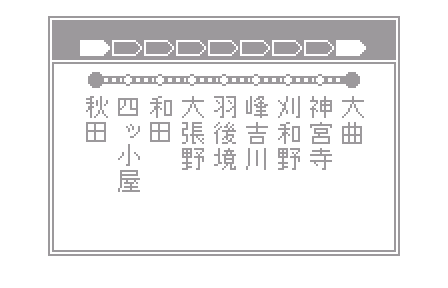
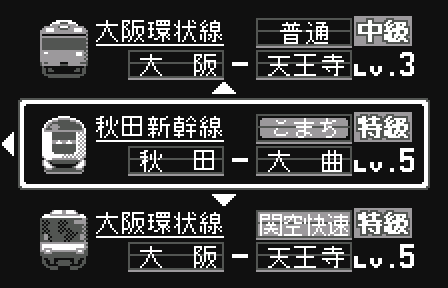
Densha de Go! 2 for the WonderSwan comes from Densha de Go! 2 Kosoku-hen, the second game in Taito’s train-driving series, which reached arcades in 1998. The WonderSwan version was published by CyberFront on 7 October 1999 at 3,800 yen before tax, seven months after the first Densha de Go! had appeared as one of the console’s launch titles. It was converted from the PlayStation version rather than straight from the arcade game.
As in the first game, the player drives a Japanese train to a timetable, watching the signals and speed limits and stopping each train on its mark, but this time on faster rapid, limited express and Shinkansen services, with a new rule for passing stations on time.
The story
There is no plot. As in the first game the player is the driver and the game is the job itself: running to the timetable, obeying the signals and stopping in the right place. What changes is the kind of train. The second game turns from the local commuter trains of the first towards rapid services, limited expresses and a Shinkansen.
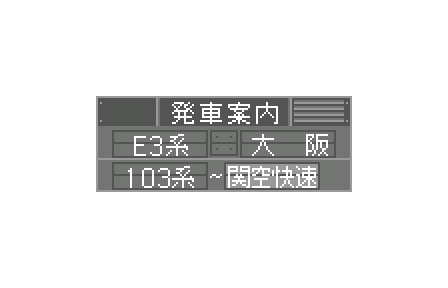
Bandai’s announcement made the Akita Shinkansen Komachi its headline train, with the cry that the Komachi was setting off from the WonderSwan. The other three lines are the Keihin-Tohoku Line in its rapid service, the Hokuhoku Line and the Osaka Loop Line. The first three were in the arcade game, and the Osaka Loop Line, an all-stations service, was one of the two lines the PlayStation version added. The other PlayStation addition, the Kagoshima Main Line, is not on the cartridge.
The presentation follows the first WonderSwan game. Voices and sound effects are taken from the PlayStation version as far as the hardware allows, the scenery is drawn to match it closely, and Bandai claimed clearly better graphics and sound than the first cartridge. The series mascot Tetsu-chan is as cheeky as before and pulls a silly face if the player declines to continue. There are no railway photographs or other bonus material.
How it plays
The cartridge is played on the buttons with the WonderSwan held sideways, and it is for one player. The basic rules are those of the first game. Each run is a timed series of stations; seconds come off an allowance for running late, missing the stopping mark or breaking a rule, good stops win seconds back, and the run is over when the allowance is gone.
The main new rule is timed passing, called teitsu. On the faster services many stations are passed without stopping, and going through one exactly on time earns seconds, while running behind drains the allowance steadily for as long as the train is late. With it comes a wider range of signals and speed restrictions than in the first game. The difficulty is split into four grades, from beginner to expert.
The four lines hold six courses, though the exact count of runs on the cartridge, hidden ones included, is not certain. These are the same timetables as the PlayStation version except for the Kagoshima Main Line, which was left out. The Osaka Loop Line is the one stopping service among them.
Stopping got particular attention. The animation of the train drawing into the platform was reworked, and it is now possible to halt exactly on the mark, at zero centimetres. As on the first cartridge, sounding the horn while a track-worker mark is on screen earns a hidden bonus, and a single save slot is provided.
The game is hard, like the rest of the series, and judging speed and the last metres before a stop from the small screen takes practice. The liquid-crystal screen shows little of the blurring it is prone to, and the screen packs in a great deal of information, but the way buildings and scenery grow as they approach is rough. The amount of content is generous for a handheld.
Development and release
CyberFront, the publisher, was a young company at the time, founded in August 1998, a little over a year before this release; it later came under the Kaga Electronics group. Bandai’s announcement presented the game as arriving quickly, only seven months after the first Densha de Go! had launched with the console, and led with the Akita Shinkansen Komachi as its headline train.
Modes and features
Of the four lines, three come from the arcade game, the Akita Shinkansen, the Keihin-Tohoku Line in its rapid service and the Hokuhoku Line, and the Osaka Loop Line comes from the PlayStation version. It is a single-player game with stereo sound and no link-cable play.
Reception
Weekly Famitsu’s Cross Review gave it 24 points out of 40, in issue 565, three points more than the first WonderSwan game. One reviewer found that the game’s selling points, such as the Akita Shinkansen and the timed passing of stations, had been kept, and another was satisfied with the amount of content, but both had doubts about how well it conveys the feeling of driving a train. A third noticed little of the blurring the screen tends to show, while finding the way buildings grow as they approach rather crude.
Ports and other versions
Densha de Go! 2 Kosoku-hen opened in arcades in March 1998, and a revised 3000-series edition with more lines and trains followed later that year. Taito’s PlayStation version of March 1999 added two lines of its own, the Osaka Loop Line and the Kagoshima Main Line, and dropped the Kosoku-hen subtitle; a Windows version released the same day kept to the arcade content. The Nintendo 64 received an expanded remake of the 3000-series edition in 1999 as Densha de Go! 64, with a beginner mode and support for voice recognition. Later in 1999 came the WonderSwan cartridge and, two weeks after it, a Neo Geo Pocket version from SNK built from the arcade game. A Dreamcast version with the 3000-series content followed in January 2000, a second Windows release with the same content in April 2000, and a colour-only Game Boy Color version from CyberFront in December 2000.
The WonderSwan release follows the PlayStation version rather than the arcade game. Like it, it carries the Osaka Loop Line, a stopping service, and therefore also goes without the word Kosoku-hen (“high-speed edition”) in its title, but it leaves out the Kagoshima Main Line. Its other three lines come from the arcade game. Of the two handheld versions released that October, the WonderSwan one is therefore the PlayStation-based and the Neo Geo Pocket Color one the arcade-based. Bandai claimed better graphics and sound than the first WonderSwan Densha de Go!.