
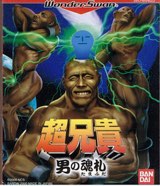
A card-battle RPG and the Chou Aniki series' first handheld game: pick a series hero, roam a galaxy of odd opponents and win duels with a 40-card deck.
Screenshots
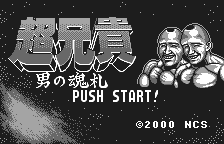
Title screen 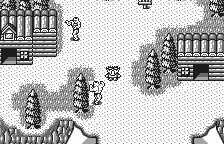
In play 
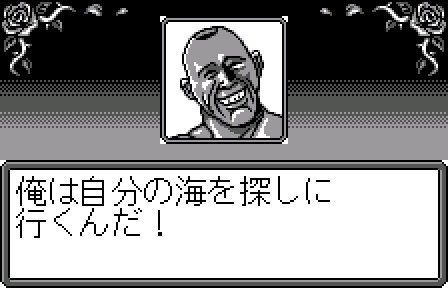
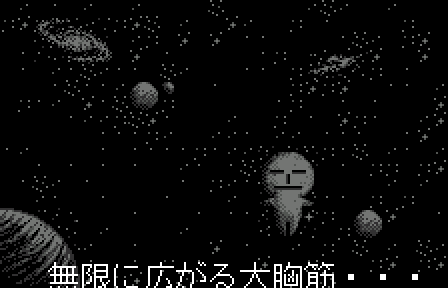
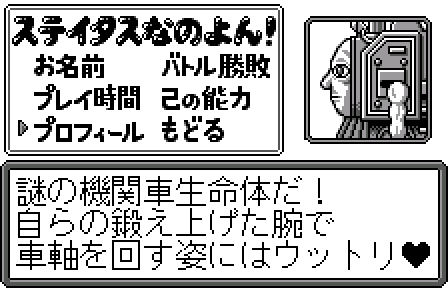
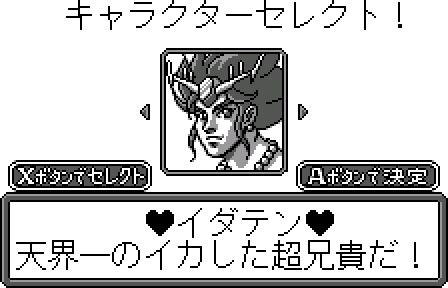
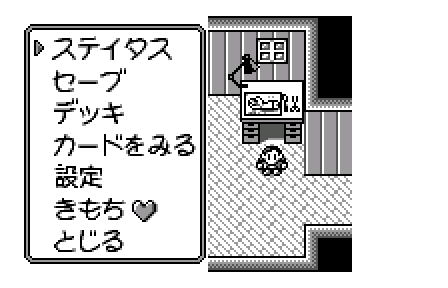
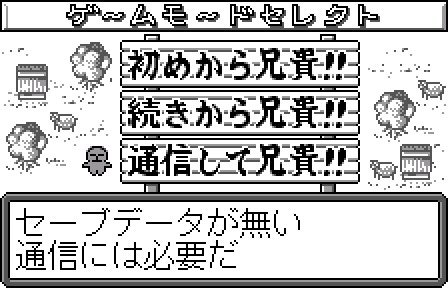
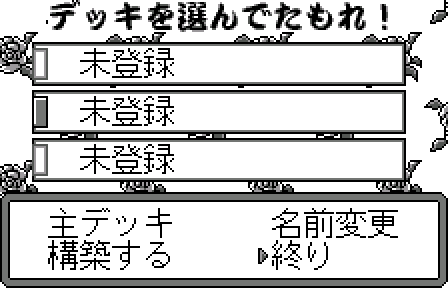
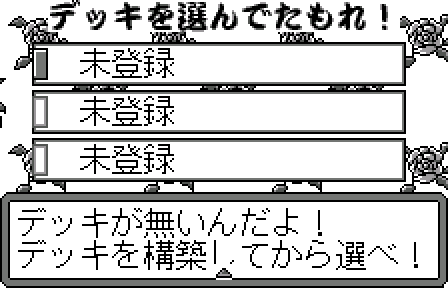
Chou Aniki: Otoko no Tamafuda is the WonderSwan entry in the Chou Aniki series. The series began on 25 December 1992 with a side-scrolling shooter for the PC Engine Super CD-ROM², made by NCS and Winds and released under NCS’s Masaya brand, in a bright and eccentric world built around displays of muscle. By 2000 it had added a posing game, a fighting game and other sequels on the PC Engine, Super Famicom, PlayStation and Sega Saturn. This game was developed by CP Brain and published by Bandai on 10 February 2000, and it was the first time the series came to a handheld console.
Instead of a shooter, Otoko no Tamafuda is a role-playing game in which every fight is played with cards; its publicity called it a card-battle RPG. The player picks one of the series’ heroes, travels from place to place and challenges the people met there to card battles, building up a collection of cards along the way.
The story
The game has little plot to speak of. It takes the cast of the earlier games out of their shooters and sends them on a role-playing journey, and its short opening does not set out a clear story. What it offers instead is the series’ usual setting, a bright and absurd world built around bodybuilding. Bandai sold it as a hot-blooded battle of sweat, muscle and love.
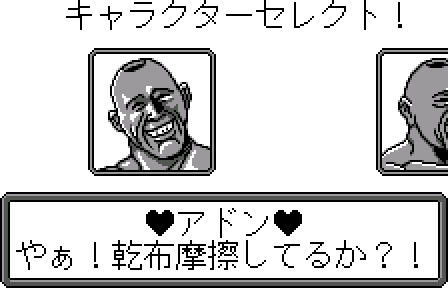
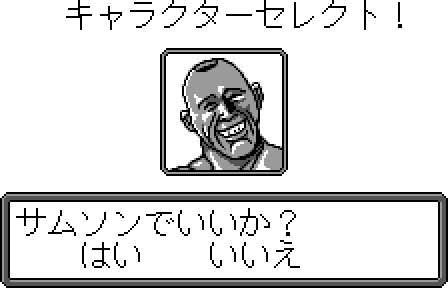
The player chooses the hero from a cast of at least eight. Most are series regulars: Idaten, Benten, Adon, Samson, Sabu and Adam. The cast also takes in a train with a face and one character who is new to this game.
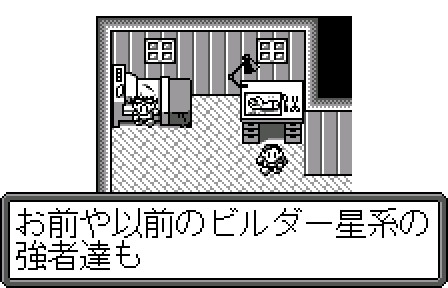
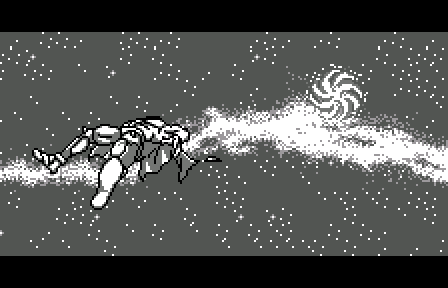
The journey takes place across outer space, and the hero wanders the galaxy looking for opponents. The towns along the way are full of the series’ humour. The townspeople stand still where they are, the hero can walk into the toilets and talk to the men using the urinals, and a menu option lets the characters ramble about whatever is on their minds, from how much they would like a Chou Aniki anime to their views on bikini briefs. The cards themselves carry jokes too: some names are puns, some are borrowed from other games, and some come from the Chou Aniki manga.
How it plays
The WonderSwan is held horizontally. Outside battle the game plays like an ordinary role-playing game: the hero walks around towns, talks to the townspeople and the other aniki, and challenges them to a card battle, much as a trainer is challenged in Pokémon. Winning adds cards to the player’s collection. There are no experience levels; the hero gets stronger through the cards and, in Bandai’s description, either by steady build-up training or by drinking protein for a sudden jump in power.
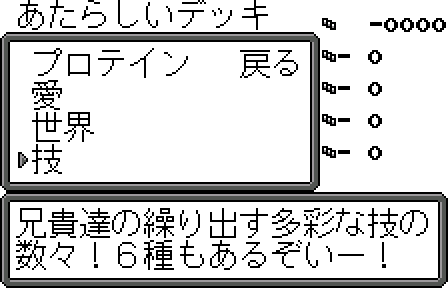
Each side fights with a deck of 40 cards, and the aim is to bring the opponent’s HP to zero. Cards are drawn from the deck during the battle, with the draws announced in muscle puns. Attacks are made with technique cards, such as the series’ Men’s Beam, and every technique has a cost in protein. Some techniques cannot be used without enough protein, but most can still be played when the protein runs short, because the missing cost can be paid out of the hero’s own HP instead. Paying with HP keeps an attack going, but it brings the hero closer to defeat.
The rules are easy to pick up, though shallower than Magic: The Gathering. The early attack cards do little damage, and even the stronger ones need many hits to finish an enemy, so battles run long. The game also uses voice samples, with shouts such as “OK” and “Build up!”, and Koji Hayama’s music is upbeat.
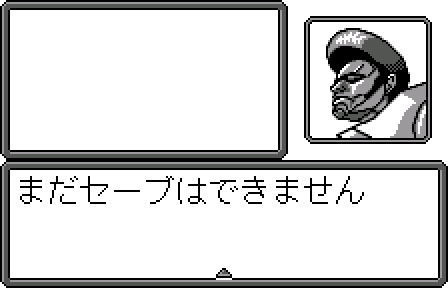
Besides the game against the computer, there is a versus mode in which two players battle over the link cable. Some special cards can only be unlocked by beating another player in that mode. Progress is kept in the cartridge’s S-RAM.
Development and release
The game carries a 2000 copyright line for NCS, the company behind the Masaya brand that had made the series. The music was written by Koji Hayama, the composer of the first Chou Aniki, and Bandai’s announcement made a point of his return, since the series’ composers had changed from game to game after the first. The cartridge holds 8 megabits with S-RAM for saving, plays in stereo and is held horizontally.
Otoko no Tamafuda was one of NCS’s last console games. NCS left the games business in 2000 after this game and Langrisser Millennium: The Last Century, both on the WonderSwan, and afterwards concentrated on its business software while licensing its old Masaya titles to others.
Ports and other versions
Otoko no Tamafuda was made for the WonderSwan and was never ported or re-released. It is the only card game in a series that otherwise runs to shooters, a fighting game, rhythm and bowling games and party games. The older titles that have come back, such as the first Chou Aniki on download services and the PC Engine mini, and the Switch collection of 2024 that pairs it with Ai Chou Aniki, leave this one out.