
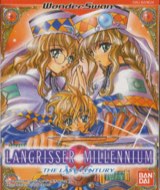
A turn-based Langrisser strategy game for the WonderSwan, set in the world of the Dreamcast's Langrisser Millennium with a new hero, released by Bandai in March 2000.
Screenshots
Title screen 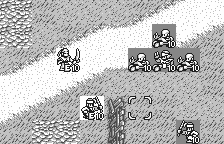
In play 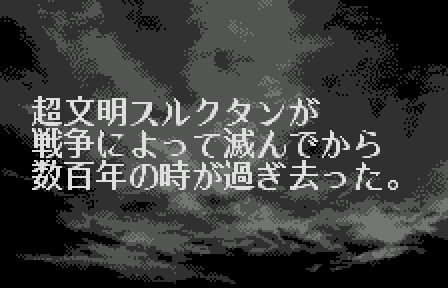
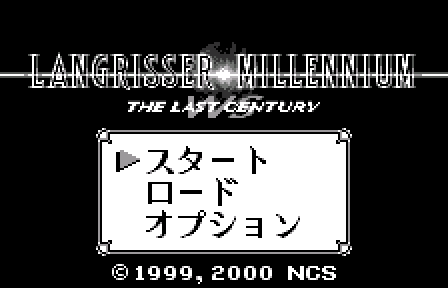
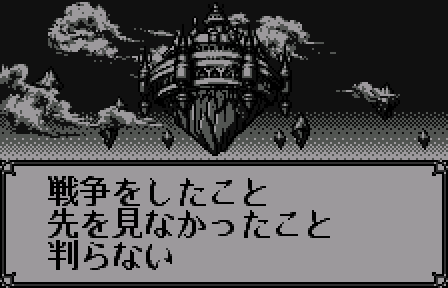
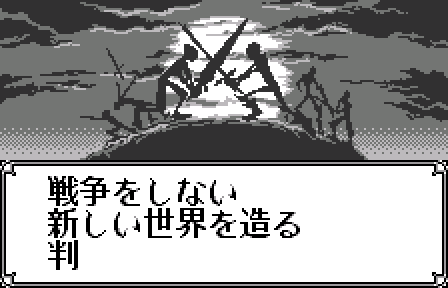
Langrisser Millennium WS: The Last Century is a strategy game for the black-and-white WonderSwan, released by Bandai on 9 March 2000. It belongs to Masaya’s Langrisser series of fantasy war games and follows Langrisser Millennium, which had come out on the Dreamcast in November 1999. When the handheld game was first reported in 1999, it was described as a continuation of the Dreamcast game’s story, to be made with Masaya involved and to arrive in March 2000, which it did. Bandai called the finished game the second Langrisser Millennium title, but its story and characters are new, with the setting tied to the Dreamcast game’s world.
The player leads a young man named Sion through a run of separate battle maps. Unlike the Dreamcast game, which plays in real time, The Last Century is a turn-based strategy game in the manner of the older Langrisser games on the Mega Drive.
The story
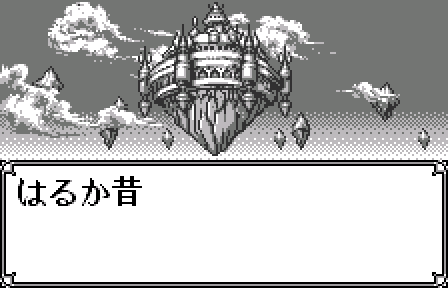
The game is set in the same world as the Dreamcast’s Langrisser Millennium, but tells a new story with a new cast. It opens on the hero’s birthday and first recounts the history of the world and the state it is in now, before play begins. The tale is a straightforward heroic adventure that turns on a struggle over a hidden treasure.
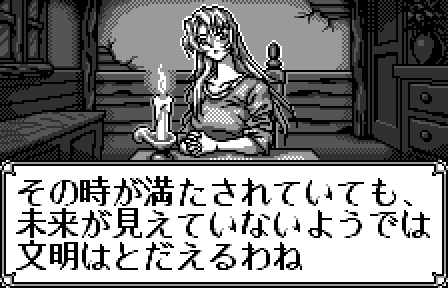
Sion is a boy raised by his stepmother Tiana, who keeps her face hidden behind a mask. Early on a girl appears out of nowhere, Sion learns who he really is, and he sets out for the battlefield with the aim of becoming king. Along the way he is joined by the twin sisters Aria and Iria.
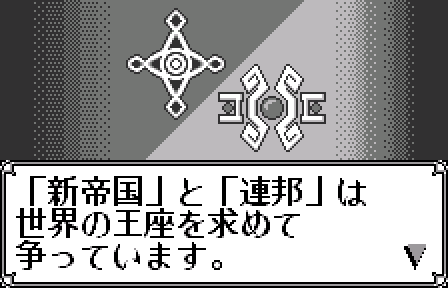
The story is told in stages, one battle map after another. Partway through, the player must choose which of the twins to save, and the choice splits the game into an Empire route and a Federation route. The two routes lead to much the same final goal. Scenes are told through character portraits and text, with no voice acting.
How it plays
The WonderSwan is held horizontally, and the game is for one player only, with no link play. It does not use the Dreamcast game’s system. Instead it brings back the stage-by-stage structure of the older games: each stage is a single battle on a map, fought in turns, and the fights are shown with small super-deformed figures as in the Mega Drive games.
The battle rules are a simplified form of those in Der Langrisser. Commanders lead troops, and the series’ old system of hiring mercenaries returns, though the hired troops matter less towards the end. Weapon types beat one another in a three-way cycle of sword and axe, dagger and claw, and spear and staff. The cycle runs differently from earlier games in the series, so that monks, for example, now have the edge over swordsmen, which catches out players who know the older games.
Characters gain levels at a generous pace, and stages pay out large clear bonuses. Healing magic earns no experience, which makes healers hard to raise. Equipment comes from a pool shared by every character, so there is little room to fit out each one separately.
The main game has 18 stages and one hidden stage, 19 in all, and with both routes counted there are about 30 maps. Most stages are won by wiping out every enemy. The maps are wide, with few obstacles, and enemies always start in the same places; reinforcements, allied troops and special conditions are rare. The difficulty is moderate through the early and middle stages, and the first fights are easy. By the late game a single commander can beat whole enemy forces on his own, and the balance falls apart. On the small black-and-white screen, movement and attack ranges are hard to make out.
Development and release
Bandai presented the game as a merger of the whole series up to that point. By its count eight Langrisser games had been released since the Mega Drive original, and the WonderSwan game brought back the stage-by-stage structure that had been popular in the older entries. The character designs are by Kaishaku, the manga artist behind Steel Angel Kurumi, who had also drawn the characters for the Dreamcast Langrisser Millennium.
Masaya was the game brand of Nippon Computer System, which left the games business in 2000, the same year this game came out, and afterwards only licensed its old titles. The WonderSwan game was developed by NCS itself under the Masaya name, by a different team from Career Soft, the studio that had made the earlier games, and Bandai published it.
Ports and other versions
The Last Century was made for the WonderSwan and was never ported, remade or re-released. It should not be confused with Langrisser Millennium itself, which shares most of its name but is a separate game: it came out on the Dreamcast in November 1999, and also had a Windows version. The handheld game reached shops a little over four months after the Dreamcast one, with a new story and cast set in the same world. The two also play differently: early reports on the WonderSwan game said it would not reuse the Dreamcast game’s system and would draw on the battle style of the older games in the series instead.