
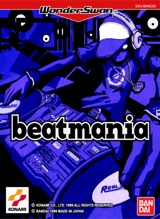
Konami's portable version of the beatmania 3rdMIX DJ game, sold with a small clip-on turntable and the only game Konami released for the WonderSwan.
Screenshots
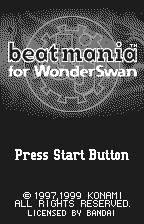
Title screen 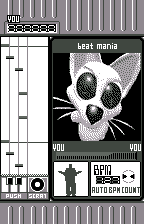
In play 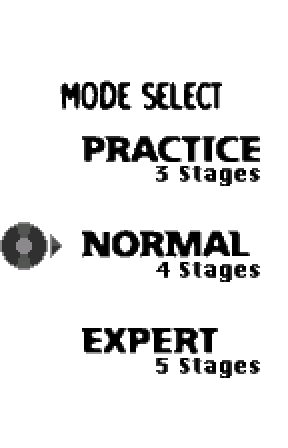
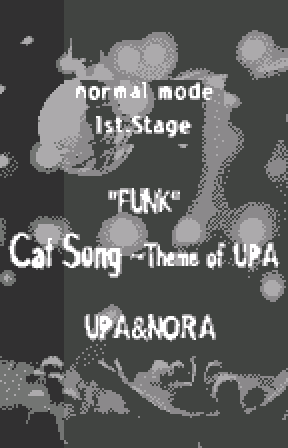
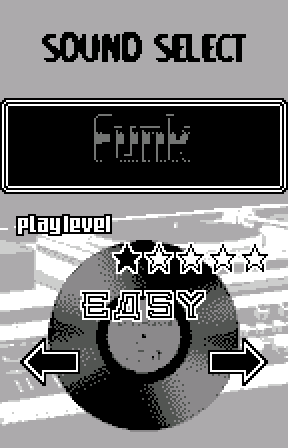
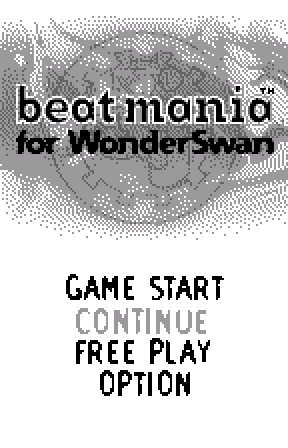
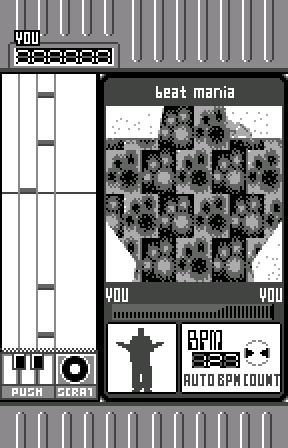
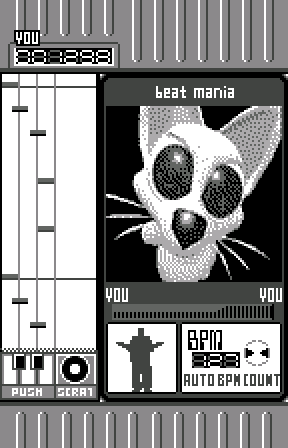
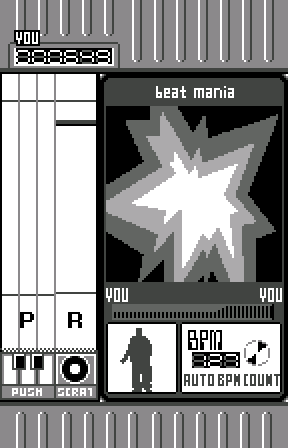
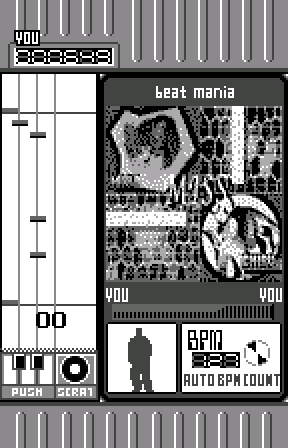
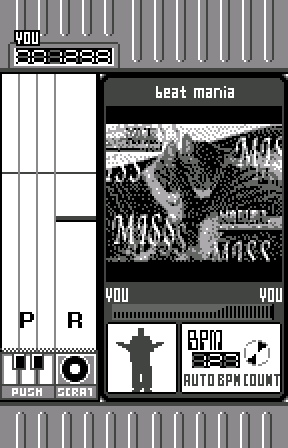
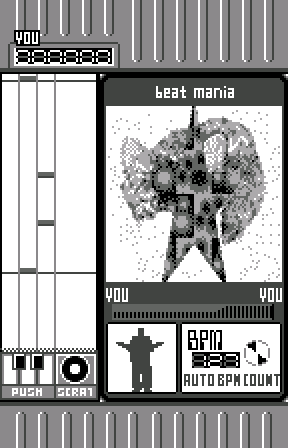
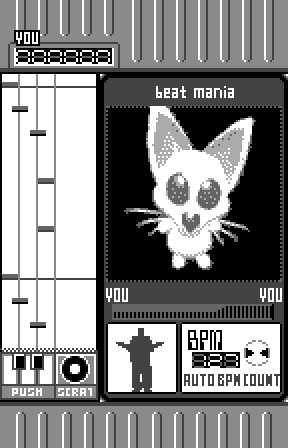
beatmania for WonderSwan brings Konami’s arcade DJ game to the WonderSwan. It was released on 28 April 1999, less than two months after the console itself, and it is the only game Konami made for the system. The work was done by Konami Computer Entertainment Japan, the studio behind the PlayStation version of beatmania, and the game follows the arcade’s 3rdMIX in its look and its songs.
The aim was to let players practise arcade-style play wherever they were, and most of the arcade charts were kept. Unlike the Game Boy Color versions, the songs use sampled sound rather than chip music, vocals included, though the cartridge’s size kept the song list short. Besides normal play there are fixed expert courses, a free mode and a duel for two linked consoles, and the box came with a dial-shaped turntable that clips over the buttons, although its shape and position make it awkward to use.
The story
There is no story. Bandai sold the game as a DJ simulation, and the only premise is that the player stands at the decks and plays the songs. The framing comes from the arcade: the screens follow the look of beatmania 3rdMIX, and every song is introduced by a genre label, from soul, funk and reggae to house, bossa groove and a big-beat mix of the Metal Gear Solid theme.
The arcade’s background movies are reproduced on the monochrome screen and play smoothly behind the notes, and there is no loading time between songs, unlike the PlayStation version. The introductions before each song can be skipped. The game’s one host figure is DJ.KONAMI, who runs the lessons that teach how the timing works.
The nearest thing to a contest is the DJ battle, a stage of normal play with its own fixed charts, and the duel mode, in which two players on linked consoles play against each other.
How it plays
The console is held upright. Notes fall down the screen and are hit as they reach the judgement line at the bottom, and the timing of each hit is judged, with Great above Good. Three button layouts can be chosen, and the bundled dial clips over the A and B buttons, so that turning it to scratch presses the button beneath. The dial does not really spin, and it takes a lot of getting used to.
Normal play is a set of stages in the arcade manner. The player picks a song for each stage, the choice grows harder as stages are cleared, and the run ends with a final stage. The DJ battle appears only in normal play: it uses one of four fixed charts, picked at random, each with 53 notes.
Ten songs are open from the start, each with a difficulty rating from 1 to 5. The easiest are Cat Song ~Theme of UPA, a funk track at 127 BPM, and find out, a soul track at 100 BPM. The middle of the list holds Beginning of life, Believe again, La Bossanova de Fabienne and Stop Violence!, and the hardest are the Metal Gear Solid theme and Queen’s Jamaica at 4 and 20,november and Deep Clear Eyes at 5. The tempos run from 94 BPM for the reggae of Queen’s Jamaica to 155 BPM for the drum and bass of Deep Clear Eyes. A hidden hard techno track from 3rdMIX, Attack the music, at 140 BPM, is the only song rated 6.
The expert mode strings songs into fixed courses. Class a and class b have five songs each and use the normal expert gauge of the first beatmania and 2ndMIX, while the survival course runs through eleven stages, the ten standard songs and Attack the music, on a survival gauge modelled on the 3rdMIX expert mode. This was the first beatmania whose expert courses differed in length and in the kind of gauge.
The free mode lets any open song be played on its own and is where the hidden option can be switched on. Once unlocked, the medley is also played here: it joins 16 randomly chosen four-measure pieces of the songs, and it shows no score or tempo and saves nothing. The duel mode needs two consoles and the link cable.
The game is fairly hard to play well. The buttons are small, and the manual does not show the proper way to hold the console. With so few songs, getting through all the content takes about three to four hours, and the music sounds best through headphones, which need the separately sold adapter.
Development and release
The game arrived less than two months after the WonderSwan itself and about seven weeks after beatmania GB, which a different Konami studio had made for the Game Boy Color. Where the Game Boy game reworked its songs as chip music, the WonderSwan version put its effort into sound: the cartridge holds 128 megabits, among the largest on the system, so that the arcade recordings could be kept close to their original form. That sound was the version’s main selling point and the reason for its short song list. Bandai’s preview spoke of ten well-known tracks, and the finished game has ten regular songs plus a hidden song, a battle stage and a medley; the count runs anywhere from ten to thirteen depending on whether the battle stage and the hidden tracks are included. The end credits list a small team under director M. Takahashi and thank the KCEJ and GM beatmania staff, which leaves some doubt over which Konami group actually did the port. A headphone adapter for the console was sold separately, and Bandai recommended it for the full effect of the music.
Modes and features
Bandai packed in the turntable for players who felt that buttons alone could not give the feel of a scratch. Besides the duel, the link cable also offers a compatibility reading between two players. The lessons with DJ.KONAMI explain the timing judgements, and high scores and unlocked songs and courses are kept in the cartridge’s save memory.
Secrets and extras
A hidden techno track appears as the last stage of normal play once every regular song has been played and a harder song has been cleared on the third stage; clearing normal play after that adds the random medley to the free mode. Once the hidden techno track has been played, clearing either of the first two expert courses opens a survival course, and if hidden play has been tried in the free mode, clearing a course also opens its hidden version. Holding A and B while pressing Start on the title screen turns on hidden notes in the linked duel, and holding Start with all four X buttons at power-on erases the save data.
Reception
The sound is widely considered remarkable for a handheld of 1999, with vocals and sampled music close to the arcade, and it drew beatmania fans to buy the console. The controls are criticised: the small buttons are hard to hit precisely, and the turntable attachment takes a long time to get used to. The short song list is the other common complaint, and it has been rated a below-average 55 out of 100 for that reason, though its gentler difficulty is preferred to that of the home versions. It is counted among the system’s notable games, and it is best played with headphones, since the built-in speaker distorts the music.
Ports and other versions
The game is a handheld conversion of beatmania 3rdMIX, which Konami put into Japanese arcades in September 1998, and it borrows that version’s screen design. Most of its regular songs are 3rdMIX tracks, and Cat Song is an addition from outside that version. Most of the arcade charts were kept, and the survival course uses a gauge modelled on the arcade game’s expert mode. The differences lie in scale and in the hands: the cartridge holds far fewer songs than the cabinet, and it is played upright on the console’s small buttons or the clip-on dial instead of on a row of keys and a full-size turntable.
3rdMIX also reached the PlayStation in December 1998 as beatmania APPEND 3rdMIX, an add-on disc that needs a separate key disc to start. That disc puts the 3rdMIX songs and look on top of the older YebisuMIX engine, so that it lacks several arcade features such as the combo system, the expert mode with its special gauge and the hidden harder charts. The WonderSwan game itself was never ported or re-released. beatmania GB on the Game Boy Color, released a few weeks earlier, is a separate game with its own song list rather than another version of this one.