
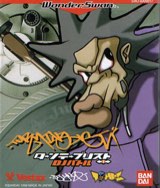
A Bandai music game for the original WonderSwan in which the player works a turntable to build beats from samples and takes on computer DJs in battles.
Screenshots
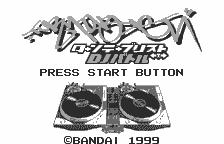
Title screen 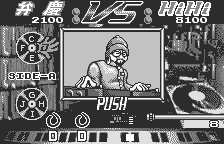
In play 
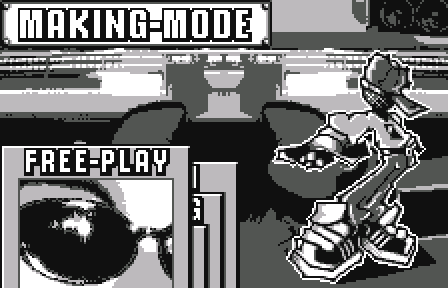
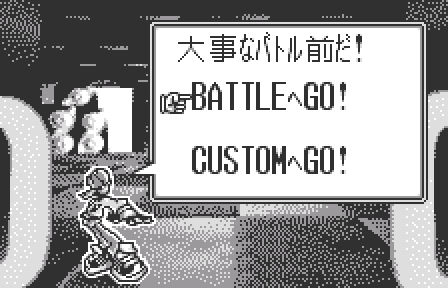
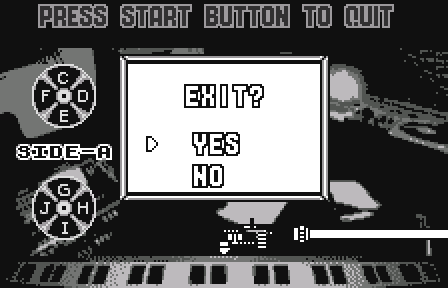
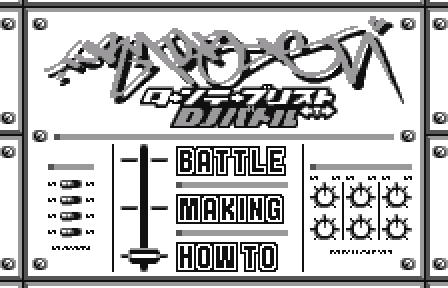
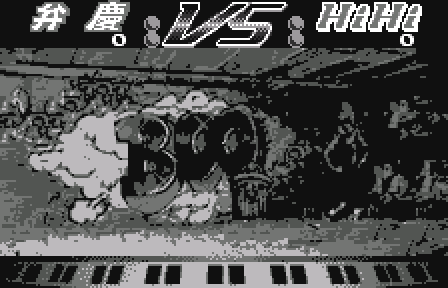
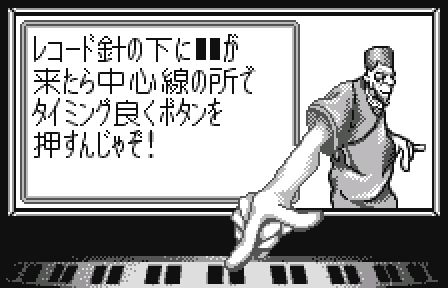
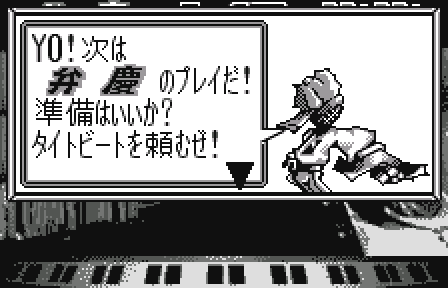
Turntablist: DJ Battle is a music game for the original WonderSwan, published by Bandai on 25 November 1999, in the console’s first year on sale. It came out in the years of the beatmania boom in Japan, and the player takes the part of a DJ at the decks.
Instead of playing along to finished songs, the player builds a track at a turntable from beats and sampled sounds and uses it to battle DJs controlled by the computer. The sound was produced by DJ YUZE and the characters were designed by the hip-hop graphic artist TOMI-E.
The story
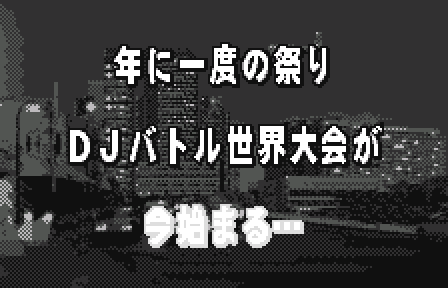
Turntablist has no story in the usual sense. Its framing is the DJ battle, then popular in Japanese clubs, in which DJs compete on the musicality and technique of their performance. The game puts the player in that contest against a line of computer DJs.
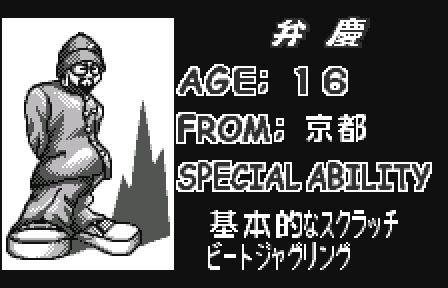
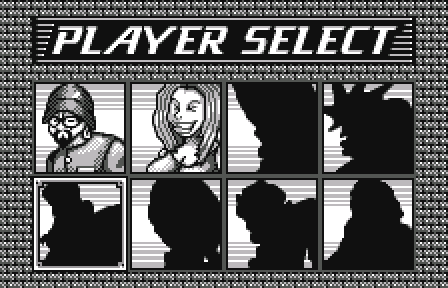
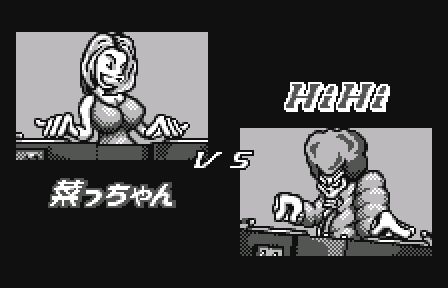
The cast is a set of eight DJs drawn by TOMI-E, and the player picks one of them to play as. Their names are Benkei, Nachan, HiHi, Gorio, Trackter, Picari, Muda211 and Caizer, and one of them is a sixteen-year-old who already wears a moustache. Each has a run of battles of their own to the end of the game.
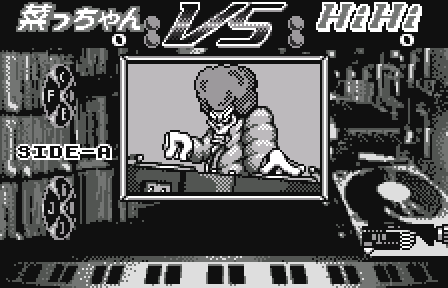
The presentation leans on still images built from photographs, which give the screens a stylish club atmosphere. The equipment on screen is modelled on real hardware: the DJ equipment maker Vestax lent its help, so the beat counter, the sampler and other units carry their real names, and the sound, produced by DJ YUZE, is in stereo.
How it plays
The WonderSwan is held horizontally, and the game is for one player only, with no link-cable play. The play screen scrolls sideways across the measures of the track, which has led to comparisons with Konami’s beatmania, but there are no notes to hit in time with a fixed song. The player freestyles inside the bars and measures, choosing what to play and when, and the game scores how well the result fits the beat.
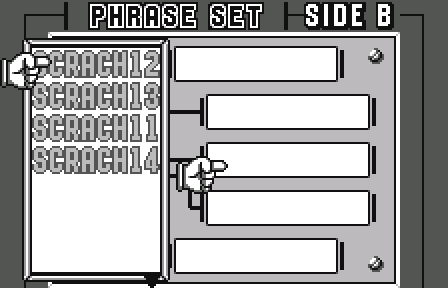
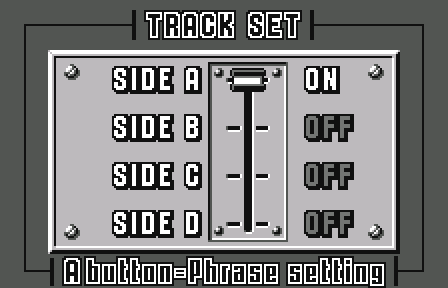
The material for a track is a stock of more than sixty sound phrases, which can be combined freely. On top of these the player performs turntable techniques such as scratching and track play, and the game also recognises combos. Each battle ends with a total score, counted in the tens and hundreds of thousands of points.
The main game is a battle mode. After choosing a DJ, the player meets the computer DJs one after another, and each opponent has to be beaten on musicality and technique before the next appears. Clearing the whole run counts as beating the game with that character, so the eight DJs give eight separate runs.
The controls are the main hurdle. A tutorial explains them before play, and skipping it makes even the first battles very hard to win, since the opponents demand a good sense of rhythm and practice with the inputs. The cartridge has a 16-kilobit EEPROM for saved data.
Development and release
Bandai presented the game as a version of the DJ battles then popular in clubs, and named the outside help it had. DJ YUZE produced the sound, TOMI-E designed the characters, and the DJ equipment maker Vestax cooperated so that equipment such as the beat counter and the sampler could appear under their real names. The copyright line names only Bandai, and no separate developer is credited. Vestax is sometimes named as the developer, though its known part was cooperation on the equipment, and who developed the game remains uncertain. The cartridge sold at 3,800 yen before tax under the model number SWJ-BAN017.
Modes and features
Beyond the battle mode and the tutorial, the game offers a choice of eight DJs and a stock of more than sixty phrases. It has stereo sound, and the cartridge holds 32 megabits of program and data together with a 16-kilobit EEPROM for saved data.
Reception
Players have found the controls too demanding to get far, especially without the tutorial. The presentation, built from still photographs, is liked for giving the screens a stylish club atmosphere.
Ports and other versions
Turntablist was made for the WonderSwan, and it was never ported to another system or re-released. It has no series of its own on other consoles. The game it is most often set beside is Konami’s beatmania, but the two are separate games, and this one differs in having the player put together a track from samples rather than play along to a finished song.