
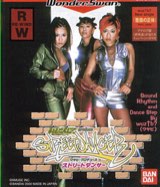
A dance rhythm game made with the Japanese dance trio wuz↑b? (Wasabi), whose three music styles are each played with the WonderSwan held a different way.
Screenshots
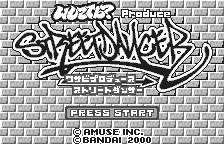
Title screen 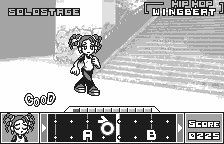
In play 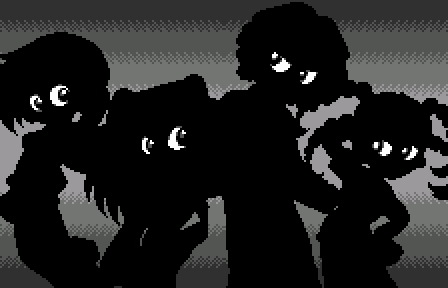
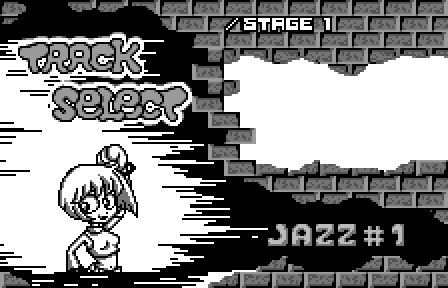
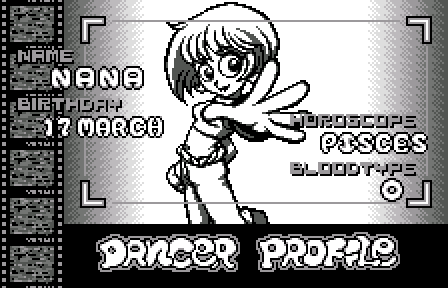
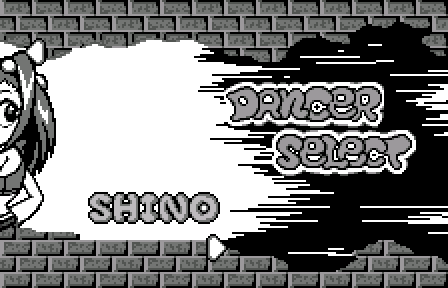
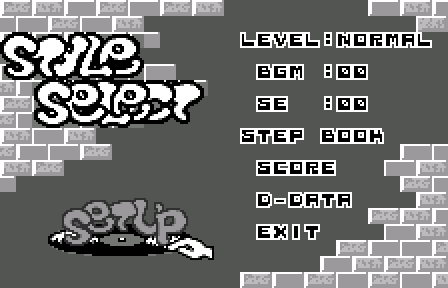
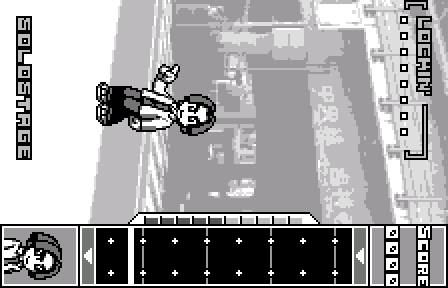
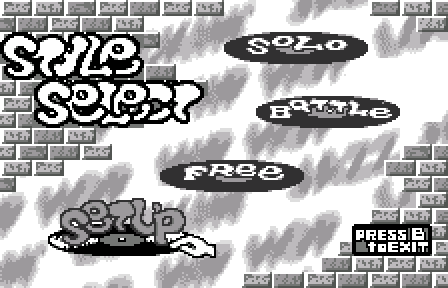
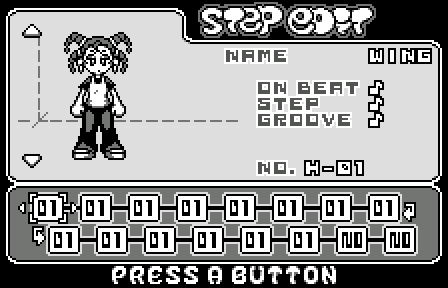
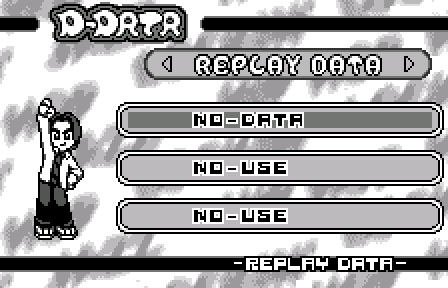



Wasabi Produce: Street Dancer is a dance rhythm game for the WonderSwan, published by Bandai on 27 April 2000. It was made as a full tie-in with wuz↑b? (pronounced Wasabi), a dance and vocal unit of three women, Nana, Shino and Kaoru, who had worked as choreographers, instructors and tour dancers before forming the group in 1998 and had made their major label debut shortly before the game came out. Bandai also announced a dance performance by the group at its stand at the Tokyo Game Show in spring 2000.
It is a rhythm game in which the player keeps a dancer moving by pressing buttons on the beat, and each of its three styles of music, jazz, hip hop and lockin’, is played with the console held a different way. The player can dance as any of the group’s three members or as a mysterious dancer known only as U, and two people can play together on one console.
The story
Street Dancer has no story in the usual sense. Its subject is wuz↑b? itself: the game is built around the group’s members and their dancing, with no plot, scenes or cast beyond the dancers. Bandai aimed it at the teenagers, girls and boys alike, who knew the group from the club scene, where wuz↑b? was then breaking through.
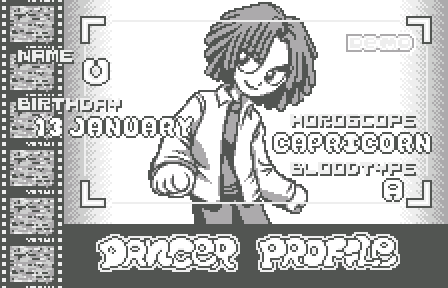
Three of the four dancers are the real members, Nana, Shino and Kaoru. Their characters, from the way they are drawn to the choreography they perform, were made with the members’ own input, so what the player sees on the small screen is meant to be their dancing rather than a stand-in’s. The fourth is U, who is not one of the group and is presented only as a mysterious genius dancer.
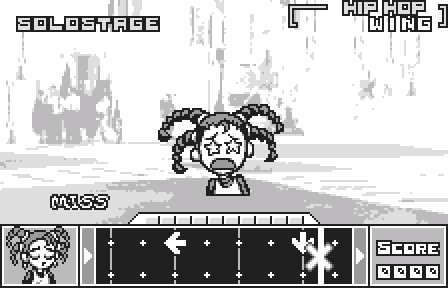
The game is staged as a run of performances, each on a stage with its own backdrop and a song to dance to. The dancer is the centre of attention throughout: when the player keeps the beat she dances, and when the player loses it she stands there staring back in bewilderment. As the game goes on, the members’ signature moves are collected in a Step Book, where they can be watched performing each one.
How it plays
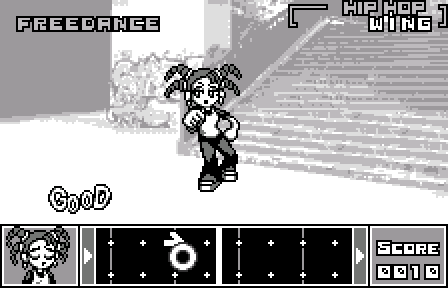
Before a song the player picks one of the four dancers. A line of button cues then scrolls along a timing bar at the bottom of the screen, and each one has to be pressed as it reaches the middle. How well the cues are hit decides what the dancer does, and a life bar drains with every mistake; when it is empty the game is over.
Each style of music has its own way of holding the console. Hip hop is played with the WonderSwan held sideways in the normal way, using the A and B buttons and the directional buttons. Lockin’ turns the console upright so that both hands rest on the two sets of directional buttons, and its cues often come in pairs, two directions to be pressed at once, one on each set. Jazz turns the console sideways again but upside down, which moves the buttons to the opposite ends from hip hop, so the hands have to swap roles.
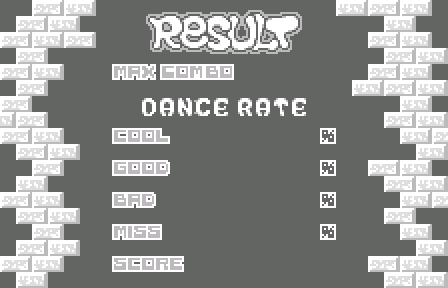
To clear a stage the player needs roughly 60 percent of the cues hit perfectly. Clearing one opens the next, with a harder song and a new background, and also unlocks new dance moves. The new moves turn up in the dancing itself and are added to the Step Book.
The moves are also the pieces of a small editor. The player can put the dancers through a routine of their own, record it and play it back to show friends, and ordinary performances can be recorded and watched again as well.
The two-player game is played on a single console in the upright lockin’ layout. Each player takes one set of directional buttons and picks a different dancer, and two columns of cues scroll along the right of the screen, one for each player. Whichever player is doing better gets their dancer shown on the screen. There is no mode for two consoles, since the game has no link cable support.
Development and release
Bandai described the project as a complete tie-in and, in its introduction, also called the game Street Dancer with Wasabi. The timing matched the group’s career: wuz↑b? had made its major label debut on RE-WIND RECORDINGS in November 1999, had played more than thirty club events around Tokyo, Osaka and Nagoya over the following winter, and released its second single on 3 May 2000, a week after the game came out. Bandai planned a performance by the group on the central stage of its stand at the spring 2000 Tokyo Game Show, held at Makuhari Messe on 1 and 2 April. The cartridge sold for 3,800 yen before tax under the model number SWJ-BAN028.
No developer is credited, and the copyright line names Amuse alongside Bandai. The game is sometimes credited to a developer named FortyFive, but this has never been confirmed.
Modes and features
The game is unusual in using three ways of holding the console, sideways, upright and upside down, one for each style of music. The 32-megabit cartridge has 256 kilobits of SRAM for saving, the sound is mono, and the game is for one or two players with no link cable support. It is usually classed as a music game, while Bandai’s own label for the genre is dance action.
Ports and other versions
Street Dancer was made for the WonderSwan, and it was never ported, remade or re-released. It is a one-off tie-in rather than part of a series, and its design is bound to the hardware it was built for: switching between sideways, upright and upside-down play from one song style to the next depends on a handheld that can be turned in the hands.