
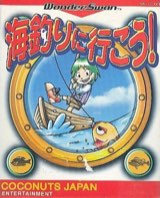
An early WonderSwan sea fishing game from Coconuts Japan: catch ten target fish at each of four spots, then use monster bait to land eight monster fish.
Screenshots

Title screen 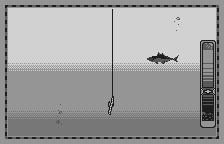
In play 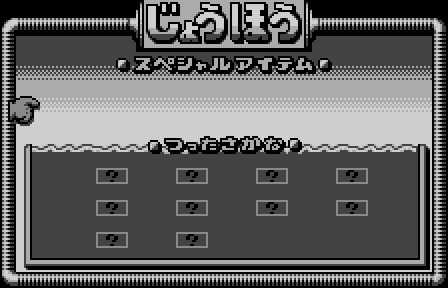

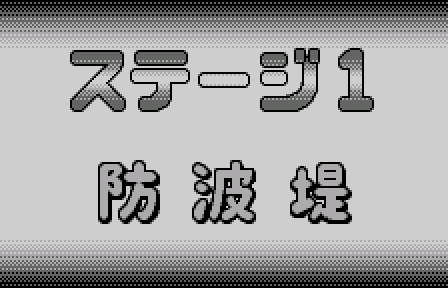
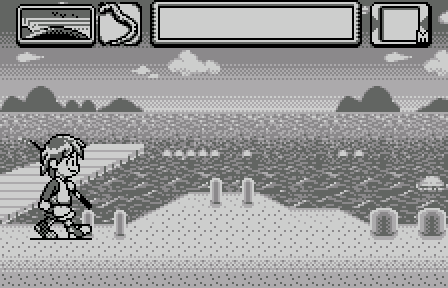
Umizuri ni Ikou! is a sea fishing game for the WonderSwan, published by Coconuts Japan on 1 April 1999, less than a month after the console went on sale. Coconuts Japan was a Tokyo game company best known for its Pachio-kun pachinko games, and it withdrew from making games the following year. Umizuri ni Ikou! was presented as a fishing game that anyone could pick up, with simple controls.
A boy works his way through four fishing spots, a breakwater, a sandy beach, a rocky shore and the open sea, catching ten kinds of target fish at each. Once all four are cleared, a special stage opens where he can go after the legendary monster fish. The game is played with the console held sideways, keeps progress with passwords, and lets two players swap fish and items over the link cable.
The story
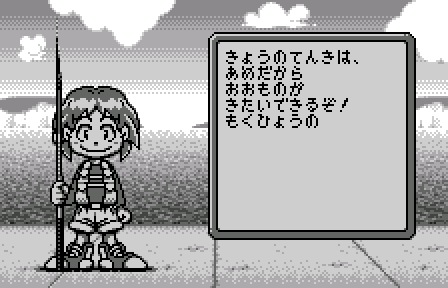
There is no story in the usual sense. The hero is a cheerful boy in a fishing vest who goes sea fishing, and the game follows his outings from spot to spot. He is never given a long introduction: he appears on screen with his rod, and after every catch he passes a short comment on it, with a different picture of him for a fish landed and for a fish that got away.
The four ordinary stages are all familiar kinds of Japanese sea fishing ground, from a breakwater to the open sea. A small picture at the top of the screen shows the time of day, with the sun for daytime and the moon for night. The fish are everyday species of Japanese coastal waters, and the manual describes several of them, such as horse mackerel, flounder, red sea bream and mackerel, each with a note on where it lives and what it eats and a pun on its name.
The goal beyond the ordinary fishing is the monster fish, creatures that live in no ordinary sea and whose habits are a mystery. The manual sets them up with sightings: a deep-sea survey ship that met and photographed an unknown animal, and a coast guard helicopter that saw something shark-like in the water with a fin unlike any known species. After the last ordinary stage the coast guard appears and the way opens to the monster sea, where eight of these creatures wait. They are drawn in very different styles, from a dragon-like beast to a mermaid and a mascot-like character. The tone throughout is light and joking.
How it plays
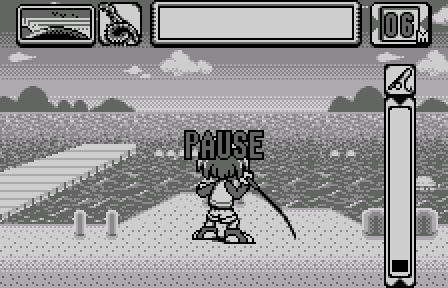
The console is held sideways, and the Y buttons are not used. On the shore, left and right on the X buttons move the boy along to choose a spot. Pressing A puts him into his casting stance, and a power gauge rises and falls beside him; pressing A again as it nears the top sends the hook farther out. The screen also shows the bait that is set, the distance to the hook, and how many of the stage’s target species have been caught so far.
Once the hook is in the water, the view changes to a cross-section of the sea with a depth meter running from the surface to the seabed. Holding A draws the hook slowly up towards the surface, and letting go lets it sink again. Different fish swim at different depths and favour different baits, so the player steers the hook to the right depth with the right bait on; flounder, for example, keeps to the seabed and likes ragworm.
When a fish takes the hook, the word HIT appears and the fight begins, seen from behind the boy. A distance gauge shows how far away the fish is, up to 99 metres, a small window shows the fish as lively, normal or tired, and a tension gauge shows how tight the line is. A reels in, B lets line out, and left and right tilt the rod. Reeling raises the tension, and too much breaks the line, so the player stops and waits when it climbs. Pulling the rod against the fish’s direction tires it, and swinging the rod sharply back towards the fish drops the tension at once. When the distance reaches zero the fish is landed, and its name and length in centimetres are shown before the boy’s comment. If it escapes, a question mark and exclamation mark appear and the player casts again.
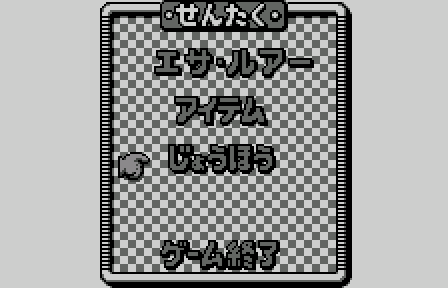
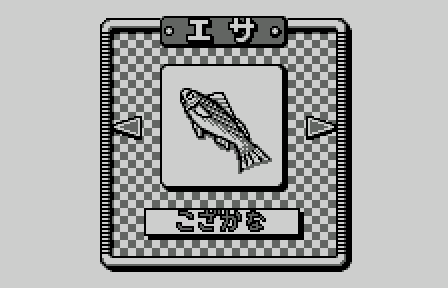
Pressing B before a cast opens the stage menu, used to change bait or lure, use an item, look up the items held and the fish caught, or quit. There are seven natural baits, ragworm, earthworm, shrimp, small fish, cut fish, clams and a fake bait, rated by how many kinds of fish they suit, and three lures, a soft lure, a plug and a metal jig, which work on fewer fish but suit the big ones. New baits and lures become available as stages are cleared.
The items help in different ways. A special groundbait and a set of super lures bring more bites just by being carried, the second only when fishing with lures. A master’s rod makes the line harder to break and the fish less likely to get away. A metal line does the same for one use. A fish radar, used from the stage menu, puts a cursor on the sea and finds where fish are gathering. A mysterious bait shows a list of fish, and the one chosen bites on the next cast.
A stage is cleared by catching every target species, and the player can then stay to fish more or move on. The stage clear screen lists the items won and the number of monster baits earned, which grows with how well the stage went. Monster bait is useless on ordinary fish and is the only bait allowed in the monster sea, so landing all eight monster fish depends on collecting plenty of it in the four ordinary stages.
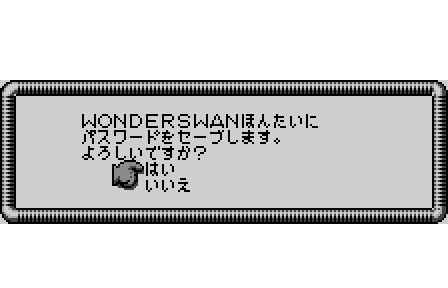
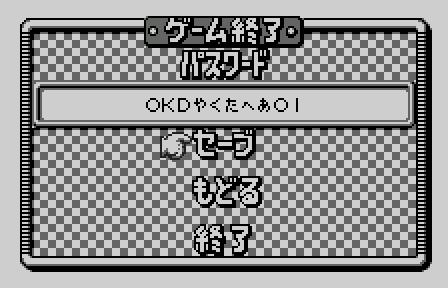
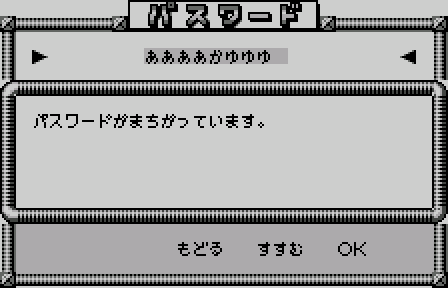
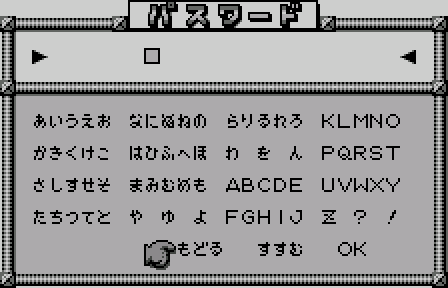
Progress is carried over by a password, shown on the stage clear screen and when quitting from the stage menu. The password can also be saved to the WonderSwan console’s own memory, so that the game can be continued without typing it in, but another game can overwrite that save, and the manual advises writing the password down as well. The data exchange option on the title menu links two consoles by cable: both players enter their passwords, then pass caught fish and items to each other, and each gets a new password at the end. A fish can only be given if it is a target of the other player’s current stage, and an item the other player already has cannot be sent.
Development and release
This was Coconuts Japan’s first WonderSwan cartridge, numbered SWJ-CCJ001 and sold at 3,800 yen before tax. The company followed it in August 1999 with a football game, Challenge the World: Soccer Yarou!, numbered SWJ-CCJ002. No company other than Coconuts Japan is named on the game, and the copyright line is Coconuts Japan’s alone, but the developer has never been confirmed.
Modes and features
The game is for one player, with stereo sound, and the title menu offers a new game, a continue by password and the link-cable data exchange. The monster sea is the one feature that sets an otherwise very plain fishing game apart, and the puns in the fish descriptions run through the whole game.
Ports and other versions
Umizuri ni Ikou! was made for the WonderSwan, and it was never ported to another system or re-released. It does not belong to a series on other consoles either: Coconuts Japan made no other fishing game, and the company was otherwise known for pachinko titles. What sets it apart among ordinary fishing games is the closing visit to a sea of fantastic monster fish.