
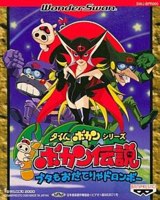
Banpresto's WonderSwan RPG in which the Doronbo trio of Yatterman hunt a lump of gold big enough to buy the Earth, building their own mecha to fight the heroes of past shows.
Screenshots
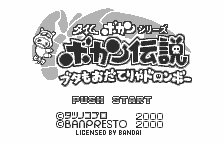
Title screen 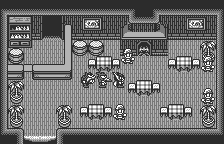
In play 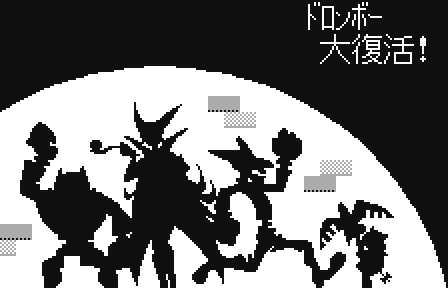
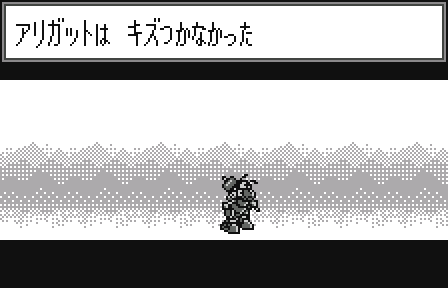
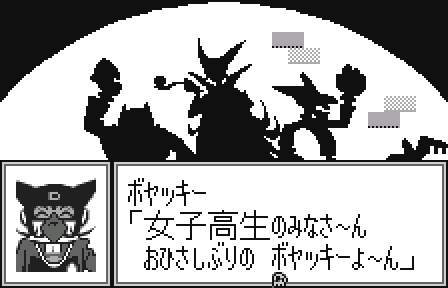
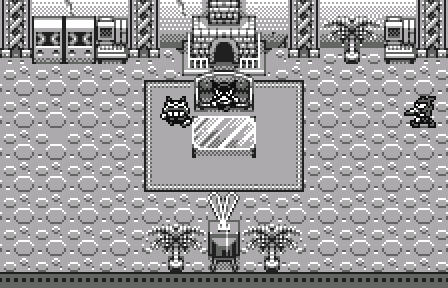
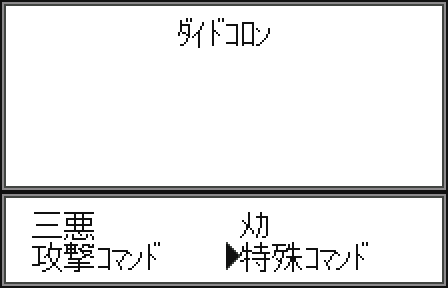
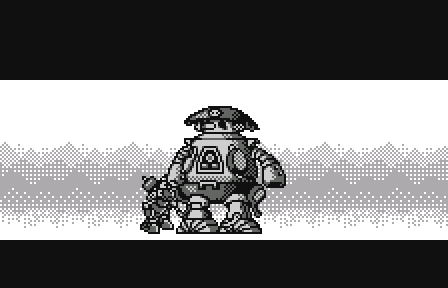
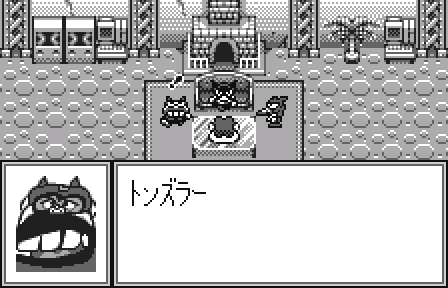
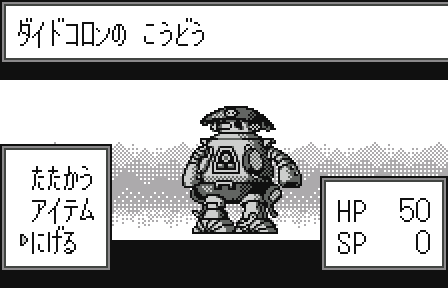
Bokan Densetsu: Buta mo Odaterya Doronboo is a role-playing game based on the Time Bokan Series, the run of comedy science-fiction anime that Tatsunoko Production began in 1975. Banpresto published it for the original WonderSwan on 27 April 2000. Earlier Time Bokan games on the PlayStation had been shooters, and this one moved the series to the role-playing genre.
The game puts the player on the villains’ side. The leads are Doronjo, Boyacky and Tonzura, the Doronbo gang from Yatterman, the best known of the shows. Working for their boss Dokurobei, they build their own scheming machines and set out to defeat the good machines of the heroes from across the series, and the game is meant to bring back all seven of the original television series. The subtitle plays on a Japanese proverb about a pig that climbs a tree when flattered, a running gag of the anime.
The game was made for the black-and-white WonderSwan, and it supports the link cable between two consoles. It was developed by Alpha Unit, a Tokyo studio.
The story
The story finds the Doronbo gang flat broke. A delivery from Dokurobei, the god of thieves they work for, brings a new order: find the Chikyū Marukin, a lump of gold so big that it could buy the whole Earth. The gold can only be tracked down by gathering special pieces called T Parts. On the promise of an even split of the haul, Doronjo, Boyacky and Tonzura take the job and set off across the world, and Yatterman, their old enemies, are back in action too.
The search runs over thirteen episodes, each with a title in the style of the anime’s episode titles. Every episode but the last follows the shape of a television episode, and each takes the gang somewhere new with its own dungeon to clear: an undersea city called Atarandesu, the village of Princess Kaguya, ruins in Tekirahoma, the land of Fushigi, the snowy mountain of Kooryan Island and the island of Tenjō among them. In most episodes the gang run into the heroes of a different series, from Yatterman and Ippatsuman to Zendaman, Otasukeman, Yattodetaman and Itadakiman.
The tone is a gag adventure, slow and deliberately half-hearted, and it is often hard to tell whether the game is ever being serious. The story moves in sudden jumps and leans on the anime, so it is easiest to follow for those who know the shows. The stakes are played for laughs, from the gang’s empty pockets to the punishment that waits for them at the end of each episode.
How it plays
The game is played with the WonderSwan held horizontally. Each episode starts with Dokurobei’s order, and the gang then raise money with a crooked business that is played as a slot machine: lining up a character pays out, with Doronjo paying most, Boyacky less and Tonzura least. The money goes on parts for the mecha before the gang set out.
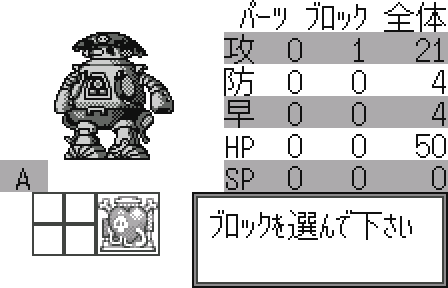
The mecha is built in a grid divided into five blocks, lettered A to E. Each part has a fixed shape and has to be fitted in like a puzzle piece with no gaps, so a badly packed grid wastes squares. Parts are bought by telephoning the Time Lease company from towns or are dropped by enemies after battle, and they raise the mecha’s hit points, attack, speed and other values. They also change its body, which grows more ridiculous as stronger parts go on, and the current body decides which attacks the mecha can use. Five kinds of item each add one point to a part: Energy Source for SP, Life Source for HP, Light Screw for speed, Defence Coil for defence and Strength Spring for attack. Other items restore HP or SP.
Out in the episode the gang walk through towns and fields much as in Dragon Quest, gathering information from the people they meet, then explore buildings and dungeons. Touching Gongman starts a fight with Zoromecha, and touching Dotchidemo Iizō in a dead end starts a fight with stronger ones. The game is saved at Dokuro Points, and a game over returns the player to the last one.
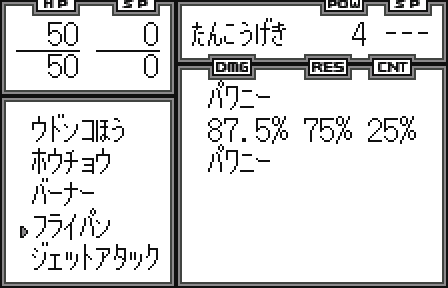
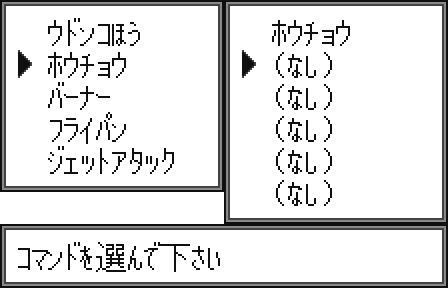
Battles are turn-based. The Fight command opens two lists, the attack on the left and the target on the right. Experience from battles raises the characters’ levels, and at each new level the player picks one of speed, attack or defence to raise. Each episode ends with a punishment, where the player picks one of three courses, Acchicchi, Gorogoro or Appuppu; each belongs to one member of the trio and raises that member’s level.
All thirteen episodes take about twenty hours, and a good share of the middle goes on levelling up. The battles are easy, and choosing the strongest attack every turn is usually enough, so the main way to get ahead is to use the upgrade items freely and keep fitting stronger parts. About seventy-six mecha appear in all: thirty-one from Yatterman, the rest from the other six series, and three of the game’s own, two Dokurobei mecha and a Doronbo tank.
Development and release
Alpha Unit, founded in 1995 in Toshima, Tokyo, counts this cartridge among its works, beside many other games the studio made for Banpresto on the Game Boy Color and PlayStation. The full title carries the series name in front, as Time Bokan Series: Bokan Densetsu. Bandai announced it at a provisional 4,200 yen before tax, with stereo sound, under the copyright of Tatsunoko Production and Banpresto, and presented it as the first time the villain trio had returned in a role-playing game, after two Time Bokan shooting games on the PlayStation.
Modes and features
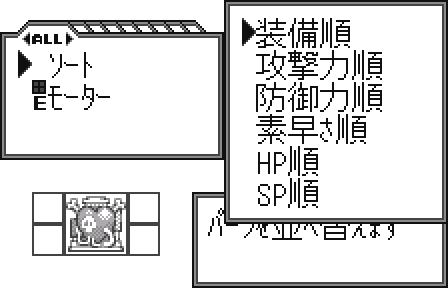
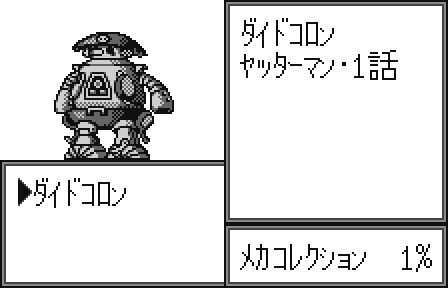
The title menu offers a new game, a continue from the last save, link-cable battles, a Special mode, parts exchange, a Mecha Library that shows the mecha the player has built, and an options screen that can also erase the saved data. Unusually for the WonderSwan, voice clips are heard throughout.
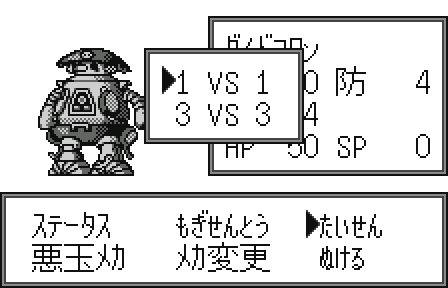
The mecha on show come from all seven television series, from the Mechabuton of Time Bokan to the robots of Itadakiman. With the link cable two players can battle each other one against one or three against three, or swap parts.
Secrets and extras
After the ending, a second playthrough lets the player start from any chapter and skips the money-making and punishment scenes. Fitting certain parts on that second run can turn the trio’s machine into one of the heroes’ mecha, and a battle-only special stage also opens once the game has been finished. The options menu includes a sound test.
Reception
The game was received coolly, with one review giving it two stars out of five. The relaxed, unhurried mood and the music were liked, and the length of about twenty hours was thought generous, but the battles were found monotonous, the customisation a matter of simply fitting ever stronger parts, and the middle of the game heavy with grinding. The deliberately lazy tone of the story charms some players and irritates others.
Ports and other versions
The game was made for the WonderSwan and was never ported or re-released. Its neighbours among the Time Bokan games are Banpresto’s others of the period: Bokan to Ippatsu! Doronboo on the PlayStation in 1996, with a Sega Saturn edition the following year, Bokan desu yo on the PlayStation in 1998 and Bokan GoGoGo, again on the PlayStation, in 2001. Those are separate games rather than versions of this one; the WonderSwan cartridge stands apart as the trio’s turn into role-playing after the earlier shooting games, built around customising their own machine on a handheld with link-cable battles.