
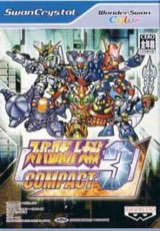
The last Super Robot Wars game on the WonderSwan, a Color-only tactical crossover that moves between Earth and Byston Well and adds four series new to the line.
Screenshots
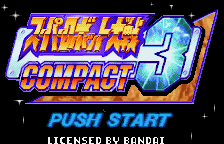
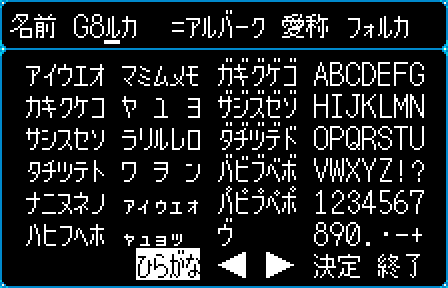
Title screen 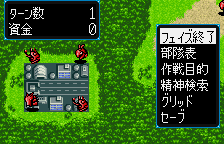
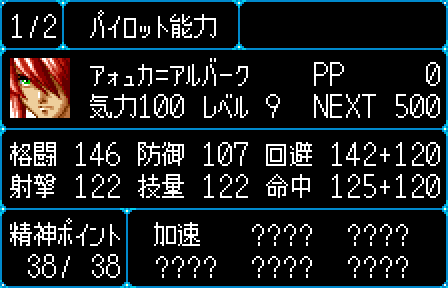
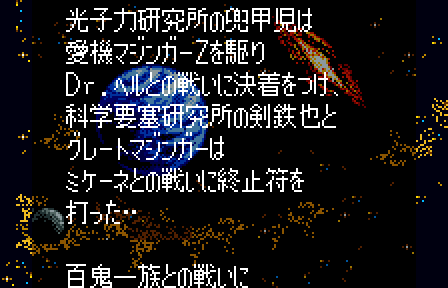
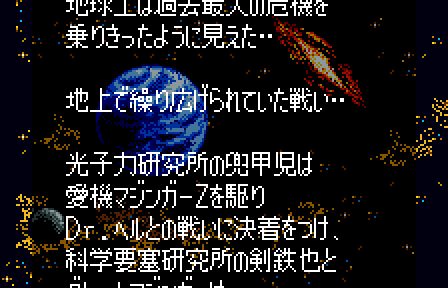
In play 
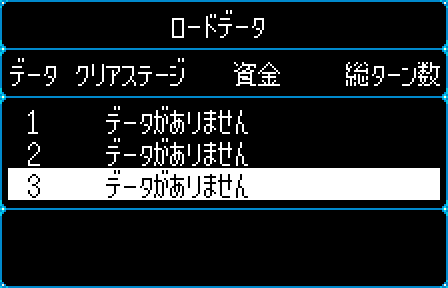
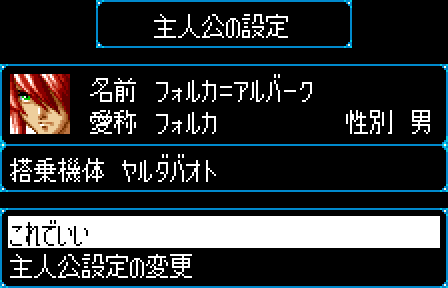
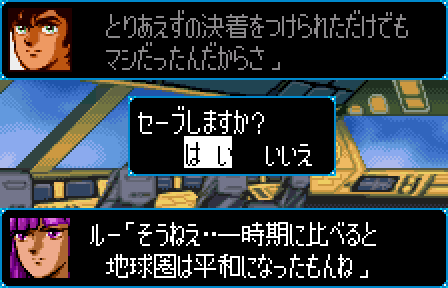
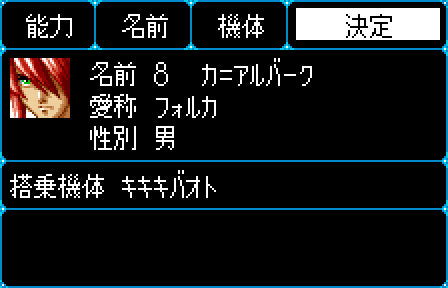
Super Robot Taisen Compact 3 is the third numbered Compact game in Banpresto’s Super Robot Wars series and the final one released for the WonderSwan family. It came out for the WonderSwan Color on 17 July 2003, late in the system’s life, priced at 4,800 yen, and is made for the Color and SwanCrystal only. It is usually credited to TOSE, as with the earlier Compact games, though the developer has never been officially confirmed.
The player follows a fixed hero, Folka Albark, in a story that opens in the Universal Century after the Shura have taken Jaburo and then travels back and forth between Earth and the other world of Byston Well. Four anime appear in Super Robot Wars for the first time: Makyou Densetsu Acrobunch, The Vision of Escaflowne, Betterman and Mechander Robo. Unusually for the series, there are no maps in outer space. The story has 32 chapters, or 38 counting branches.
Several systems were reworked from Compact 2, with pilot training, optional support actions, one-step weapon upgrades, skippable battle animations and saving partway through a map. Some features shown before release never made it into the finished game, and parts of them were recreated as story events instead.
The story
The game is set in an unspecified year of the Universal Century. The Earth Federation has been worn down by the One Year War, the Gryps conflict and invasions by inhuman foes such as Dr. Hell and the Mycenae Empire. With the fighting on Earth and in space winding down, the Federation has handed everything that is left, from hunting down the remnants of old wars to settling local disputes, to a single independent task force known as the Argama unit, led by Bright Noa. Half a year later, contact with Jaburo is suddenly cut off. Bright hurries there and finds the base already fallen to a mysterious force called the Shura.
The Shura are a warrior people who live only for battle. Folka Albark is one of them, but he has doubts about the code that places fighting above everything else. Through circumstance he ends up working with the Argama unit, keeping watch on the movements of the other Shura, and among its crew he begins to look for what fighting is really for. He is calm and fiercely driven, and gifted even by Shura standards, yet he knows almost nothing about everyday life or common sense, and his new comrades keep pointing this out. He fights in the Yaldabaoth, one of a pair of twin Shura machines. His rival is Fernando, who pilots the Bilefor, a machine strikingly similar to the Yaldabaoth, and the nature of the bond between the two men is one of the questions the game holds back.
The Argama unit carries on with its clean-up work and takes in Mazinger Z, Getter Robo and Combattler V. Then a giant dragon and an unknown robot appear at a school, and the battle that follows throws the unit into another world, Byston Well, the resting place of souls. The boy who piloted the robot, Van, returns to his own world of Gaea, and the unit is forced into a war in one of these other worlds. Along the way it gains allies such as Show of Byston Well, Van of Gaea and the Rando family of Acrobunch, headed by a leading archaeologist, before returning to Earth, where Mechander Robo and the threat of the Kongister army are waiting.
The story is divided into seven scenes, from an opening on Earth and a first trip to the other worlds through to a final battle, and the unit keeps moving between Earth and the other worlds. The licensed series are recreated at their key moments rather than woven together, so the structure is close to the older games of the series, in which a mixed force travels from place to place and runs into the events of each anime. It is also the first game to retell the story of the Dunbine OVA rather than borrowing only its machines.
How it plays
Compact 3 is a turn-based tactics game on grid maps, made for the WonderSwan Color and SwanCrystal only. Units move and attack in turn, and each attack plays a short battle animation, with animated cut-ins that set it apart from the still cut-ins of Super Robot Taisen D. Because some units have more commands than the small screen can show, those units get Next and Previous commands to page through them. With no maps in space, terrain ratings cover only air, land and sea. Battle animations can be switched off or cut short, in which case the result is shown as an animation on the map, and the game can be saved in the middle of a map, even on story screens and during the enemy phase.
The 32 episodes are grouped into seven scenes with two major branches, giving 38 episodes in all. After the first episode the player chooses between the Photon Power Laboratory route, with Mazinger Z and Combattler V, and the Science Fortress Laboratory route, with Great Mazinger and Getter Robo, for episodes 2 and 3. The second scene opens with a choice of whether to accept Van’s invitation, which decides which world episodes 5 to 8 take place in. In parts of the game the episodes of a scene can be played in any order, and the episodes on offer in the third scene depend on the route taken in the first. There are no bonuses for a second playthrough, and only eight hidden units, several of them stronger or weaker versions of one another.
Pilots are developed with pilot points (PP), the training system that replaces the skill coordination of earlier Compact games. As a rule a pilot earns one point for each enemy destroyed, and clearing a stage awards up to 11 more, depending on the turn count, to be handed to any pilot. One point of a statistic costs 5 PP, and even the cheapest skill, Prowess level 1, costs 25 PP, so points spread across the roster add up to very little. The spirit commands Training, which works on the user, and Teaching, which works on any ally, double the points from the next battle only, but they are learned around level 30 and cost 60 and 80 SP. The Wing of Leen part also doubles PP but lowers the machine’s performance. A bug lets Hayato Jin of Getter Robo G collect huge amounts of PP with little effort.
Support attack and support defence, which were close to automatic in Compact 2, are now optional, and before attacking the player can choose which unit joins in and which weapon it uses. Weapons are upgraded all at once, one step at a time, in place of the per-weapon upgrades of earlier games. Older rules remain beside these changes: a unit’s mobility still affects its hit rate, machines still have a limit on their reactions, and upgrades add fixed amounts rather than percentages, so how far a unit’s armour has been upgraded makes a large difference to the damage it takes. The personal data system, which used the owner’s details stored in the console, is gone.
The balance turns on Folka. His statistics were set on a different scale from everyone else’s, and he and the Yaldabaoth can clear many maps alone, so the usual advice is to pour money and PP into him from the start. Many enemies have the Aura Barrier or a Stealth Mantle, which blunt ranged weapons, so units with strong melee attacks, such as Folka, the Aura Battlers and the Guymelefs, do best, while the Gundams struggle. Ordinary enemy mobile suits also have more HP than the mechanical beasts and are hard to bring down. Front-line machines such as the Zeta Gundam and ZZ Gundam join early, so money can go into favourite units from the opening chapters.
Overall the game is on the easy side, but the middle stretch is harder because of the Omega Missile, which appears on the map once a set number of turns has passed and is very troublesome. A full playthrough takes about twenty hours.
Development and release
Bandai introduced the game as proof that the WonderSwan’s Super Robot Wars line was not over, two and a half years after the previous Compact game. Its copyright line names Bandai alongside Banpresto. The in-game credits list Hiroshi Kikuchi, Takanobu Terada and Jippa Hitokarage as producers, and a writer credited as A. Syou as both director and scenario writer, with design work by the studio Lay-up. Miho Itoi designed the characters and Kintaro Takaragi the machines.
Terada later said in an interview that development was even shorter than the nine months of Super Robot Taisen Alpha Gaiden, and that in return the team was free to pick the series it wanted, which explains the unusual line-up. Several systems shown in magazines before release were missing from the finished game: a Dragon Energist system for Escaflowne, a Linker Gel system for Betterman and an Omega Missile system for Mechander Robo, the last of which the manual still describes. The television advertisement was a low-cost one shot inside Banpresto’s offices, in which an employee reads the list of series in a newsletter and is astonished by how obscure it is; the voice actor Shigeru Nakahara narrated it, and his first role had been in Makyou Densetsu Acrobunch, one of the newcomers.
The game came out three weeks before Super Robot Taisen D for the Game Boy Advance. Banpresto’s 2004 press release lists only 15,000 copies shipped, by far the lowest of the 33 Super Robot Wars games on that list. It was also Banpresto’s last WonderSwan release.
Modes and features
The pilot training system lets the player spend points earned in battle on a pilot’s statistics and skills, and two new spirit commands double the points gained. The personal data system of the earlier Compact games, which read the owner’s birthday and blood type from the console, was dropped. Battle scenes can also be cut, in which case the result is shown as an animation on the map, and the player chooses freely whether a supporting unit joins in and with which weapon. Unlike other Super Robot Wars games of the period, there is nothing to carry into a second playthrough, and only eight hidden units exist, several of them variants of one another.
Reception
The game’s main flaw is generally agreed to be that Folka and his machine, the Yaldabaoth, are so strong that one unit can clear most maps alone. Terada later blamed a mistyped value in the parameters. Players also find the story disjointed, as the cast keeps being thrown between worlds, and ranged weapons are weak against the many enemies with special defences, which leaves the Gundam units struggling. On the other side, the rare choice of series, the plentiful cut-ins, the music and the sampled voices are praised, and some fans count it as an overlooked gem. A playthrough takes about twenty hours.
Ports and other versions
Compact 3 was made for the WonderSwan Color and SwanCrystal, and it was never ported, remade or re-released for download. That sets it apart from its predecessor Compact 2, whose three cartridges were retold on the PlayStation 2 as Super Robot Taisen Impact; nothing of the kind followed for this game, and what lived on elsewhere were only its original characters, as described below. What marks it out within the series is the mix described above: a story that moves between Earth and Byston Well, and four anime that had never appeared in Super Robot Wars before.
Later history
Folka, his rival Fernando and their faction, the Shura, later returned in the Original Generation games, first in an extra scenario of Super Robot Taisen OG Original Generations and then in Super Robot Taisen OG Gaiden, and Fernando was given a different family name along the way. Because so few copies were made, it is one of the hardest regular Super Robot Wars releases to find, and used copies often carry premium prices.
Notes
The game has a few known faults. A bug lets Hayato Jin of Getter Robo G gain huge amounts of training points, and some names are misspelled in the game, among them a finishing move of the Acrobunch and the surname of the Dunbine OVA hero. The game is also the first in which the story of the New Story of Aura Battler Dunbine OVA is retold, after earlier games had used only some of its machines.