
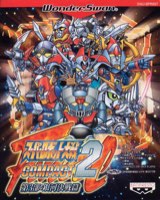
The final part of Super Robot Taisen Compact 2 on the WonderSwan, where the Earth and space teams of the first two cartridges join for 30 closing stages and one hidden one.
Screenshots
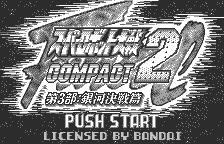
Title screen 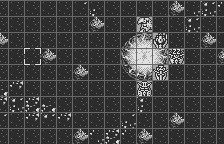
In play 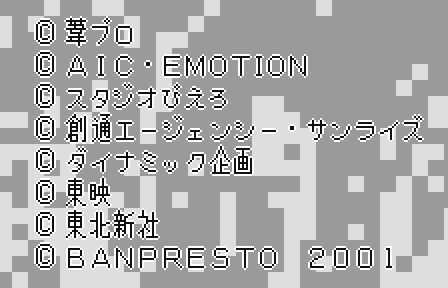
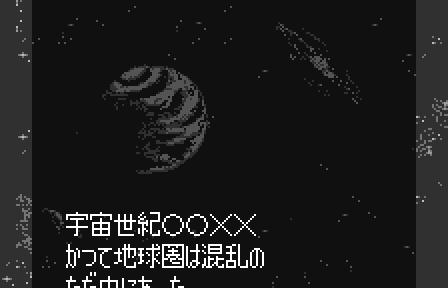
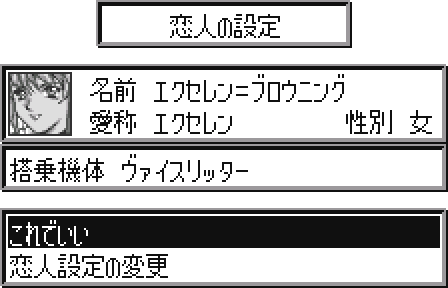
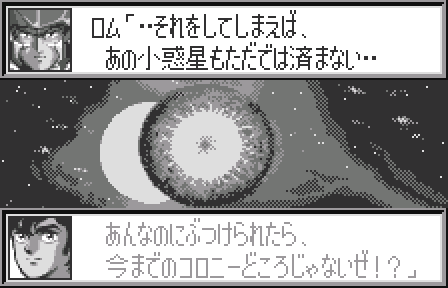
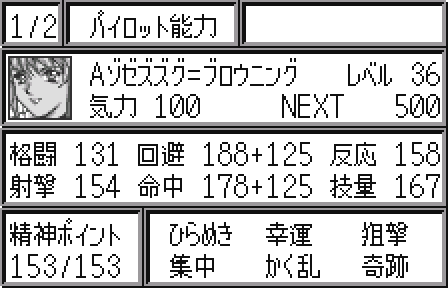
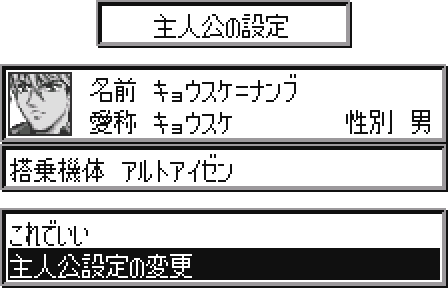
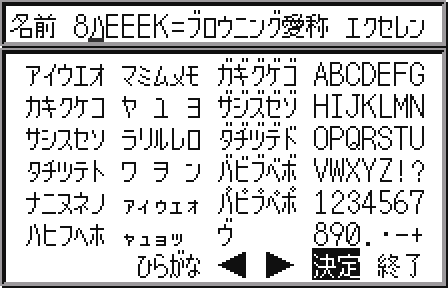
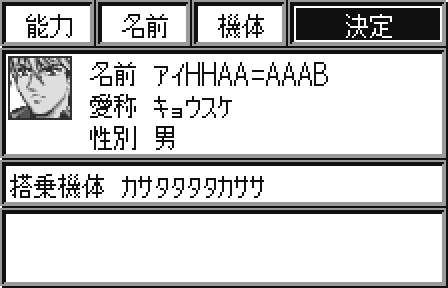
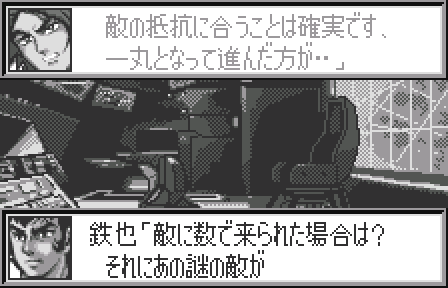
Ginga Kessen Hen closes Super Robot Taisen Compact 2, the tactical robot crossover that Banpresto split across three WonderSwan cartridges. Developed by TOSE, it went on sale on 18 January 2001, four months after the second part, at a price of 4,500 yen. As in the rest of the Compact line, robots from many anime series appear as small super-deformed figures and fight turn-based battles on a grid, with pilots and machines growing stronger from map to map.
The first part was told through Kyosuke Nanbu and the second through Excellen Browning. Here their two stories join, and every series from the earlier chapters comes together for the final fight. The only addition to the line-up is the original manga version of Shin Getter Robo, which joins only when certain conditions are met. The story has 30 chapters, plus one hidden stage.
What the player finds depends on what came before. Clear data from the first and second parts, passed along through the WonderSwan’s internal memory, opens extra units, routes and stages, the best known being a scenario based on Char’s Counterattack that needs saves from both earlier parts. Without that data the game can still be played from the beginning. Across all three cartridges Compact 2 runs to 92 chapters, or 100 with branches and hidden stages.
The story
Part 3 picks up after the parallel stories of the first two cartridges, when the forces that fought on Earth under Kyosuke Nanbu and those that fought in space alongside Excellen Browning come together as one team. The game opens with a large roster already assembled, and many of the characters found in the earlier parts’ secrets join only when their saves are carried over. Kyosuke’s Alteisen is one of the units fixed for the first battle.
The enemies are again the forces of the series and the game’s own mysterious life forms, the Einst. New arrivals on the player’s side are few: the Nu Gundam joins, and the manga version of Shin Getter Robo can be had under certain conditions. Choices made in Parts 1 and 2 change how the story unfolds here.
The part has six scenes and 30 stages. One scene is given over to the Einst, two more are named after the Earth and space upheavals that gave Parts 1 and 2 their subtitles, and the last is the galactic decisive battle of this part’s own title. A hidden seventh scene, based on Char’s Counterattack and set around Axis, follows only for a player who brings data from both earlier parts and reaches the end of the 30th stage in 777 total turns or fewer.
How it plays
The game is played with the WonderSwan held horizontally and keeps the system of the earlier parts: turn-based map battles, spirit commands, support attack and support guard, upgrades bought with money, and skills awarded by clear turn, from Concentration for six turns or fewer down to nothing at twelve or more. The balance shifts, though. Evasion matters much more here, and the attacks of super robots barely hit the bosses. Some pilots’ stats and spirit commands differ from the earlier parts, and the spirit command sets still come from the personal data registered in the WonderSwan.
What carries over from earlier saves is adjusted. Money and some parts come across, while parts held by members who leave are removed. With no earlier data the player starts with 1,000,000 in money and fewer parts. Units that were in space at the end of Parts 1 and 2 arrive with three levels of stat upgrades and two of weapon upgrades, while the ground team arrives unupgraded, and new units join at a high level. Because money carries into this part, a common tip from the earlier parts is to give pilots who learn Bless a good set of commands.
Sortie slots are tighter. About eight units can be chosen freely for a stage, against fifteen in Parts 1 and 2, and every pilot must sortie at least once, with Kyosuke forced into 13 stages. The Free Order system of choosing stages within a scene is changed slightly in this part only. The Alteisen fights its first battles in space here, and it is worth upgrading in everything except energy, since it is later rebuilt as the Alteisen Riese.
Merging rules change too. After the event in which Tobikage joins, its partner machines gain a merge command once their morale reaches 120, instead of merging on their own. Kenryu can still merge into Baikanfu at morale 130. Shin Getter Robo comes only through a condition that conflicts with the one for the second lead’s upgraded machine, so one playthrough can have only one of them. When Combattler V joins also depends on the Part 1 save.
Planning for the hidden scenario starts in Part 1. It needs saves from both earlier parts, passed in through the Flag Convert System, and a total turn count of 777 or fewer at the end of the 30th stage, so slow clears in this part can close it off.
Development and release
Banpresto had first planned the trilogy for the spring, summer and winter of 2000, so this closing part arrived a little later than announced, in January 2001. Bandai and Banpresto promoted it with the arrival of the Nu Gundam and Shin Getter Robo, the latter shown firing its Stoner Sunshine finishing move, and with new cut-in pictures, new allies and new weapons. Both companies also hinted that the story would take an unexpected turn for the two leads. Banpresto’s 2004 press release lists 100,000 copies shipped, the same as each of the earlier parts.
Modes and features
Banpresto stressed that what the player did in Parts 1 and 2 changes how the story of Part 3 unfolds, and encouraged players to go back and check their earlier saves.
Secrets and extras
The best-known hidden content is the Char’s Counterattack scenario, which appears only with clear data from both earlier parts and the right choices along the way. The condition for getting Shin Getter Robo clashes with the condition for the second lead’s upgraded machine, so a single playthrough can have only one of the two.
Ports and other versions
Compact 2 was made for the WonderSwan, and this closing part, like the other two, was never released on another system in its own form. Its story was told again on the PlayStation 2 in Super Robot Taisen Impact, developed by TOSE and published by Banpresto on 28 March 2002. Impact is a remake in all but name: it keeps the trilogy’s scenario, systems, series and lead characters and joins the three parts into a single game, although Banpresto never announced it as a remake.
Impact runs to 101 chapters on one disc, and the three parts are played in a fixed order, so there are no saves to carry from one cartridge to the next. Two series join the line-up, Martian Successor Nadesico and Mobile Fighter G Gundam, and the script was reworked to fit them; hidden units from the New Story of Aura Battler Dunbine OVA are gone, and an enemy character, Alfimi, was created for the new game. The names of the leads and their machines can no longer be changed, and the personal data system was dropped because the PlayStation 2 could not hold the owner’s details. Maps are drawn in three dimensions, and new rules include combination attacks, support from battleships and shields that wear out with use. This final part is where Impact strays furthest, with new branching routes, and the enemy’s behaviour changes from that point.
Impact came to be seen as one of the hardest games in the series, and players disliked its slow saving and loading, its hard-to-read 3D maps and a script that follows Compact 2 with few surprises. It also shipped far more copies than any of the cartridges: it won a Gold Prize at the PlayStation Awards 2002 for shipments of half a million copies or more.
Notes
Each part has its own background behind the title logo: the Earth for Part 1, outer space for Part 2 and the word FINAL for Part 3. The game is usually credited to TOSE, though TOSE is not named in the staff roll and this has never been confirmed. The game is for one player, with stereo sound and no communication features.