
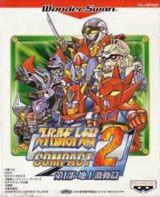
The first of three cartridges of Super Robot Taisen Compact 2, a WonderSwan tactical RPG: the Earth-side story, led by Kyosuke Nanbu, with 18 series and 31 stages.
Screenshots
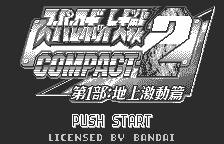
Title screen 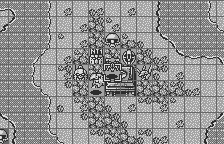
In play 
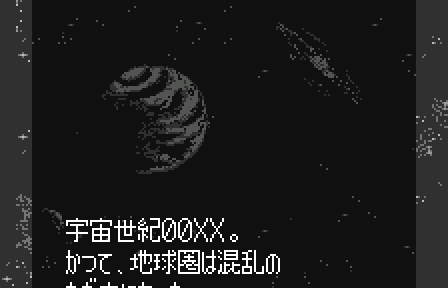
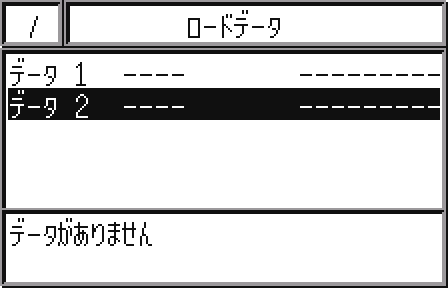
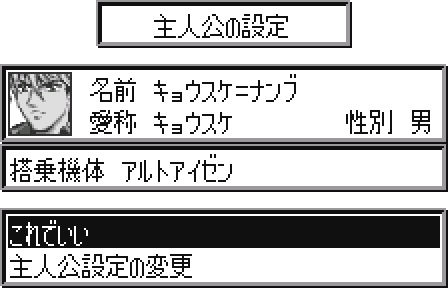
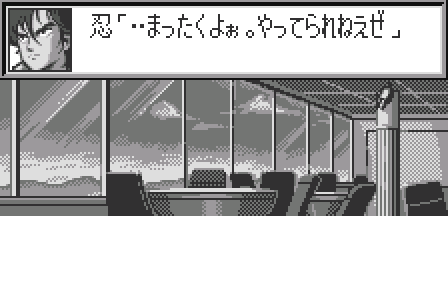
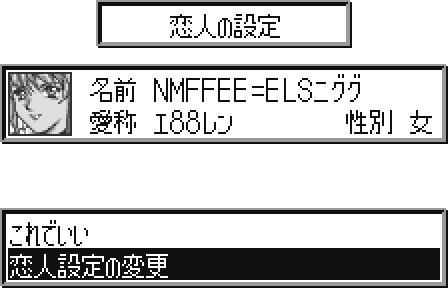
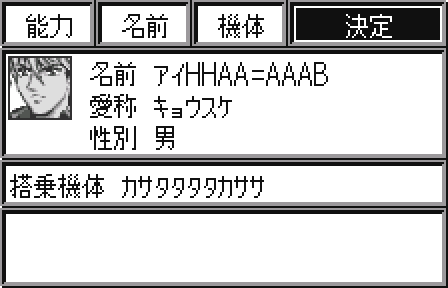
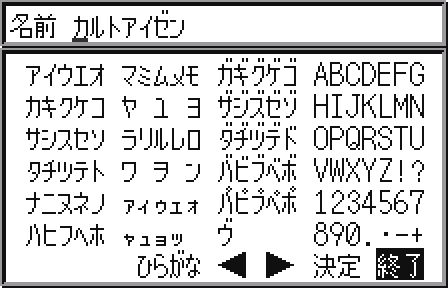
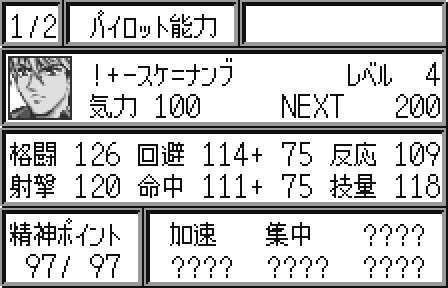
Super Robot Taisen Compact 2 Dai-1-bu: Chijou Gekidou Hen is the first part of Super Robot Taisen Compact 2, the second game in the Compact line of Banpresto’s Super Robot Taisen tactical role-playing series on the WonderSwan. Compact 2 was the first game in the series to be told in three parts, each sold on its own cartridge and released one after another. This first part, developed by TOSE like its predecessor, came out on 30 March 2000. Part 2 followed in September 2000 and Part 3 in January 2001.
Part 1 brings together robots from 18 anime series, among them Mazinger Z, Getter Robo, Combattler V, Zambot 3, several Gundam series and two newcomers to the series, Dangaioh and Ninja Senshi Tobikage. Unlike the first Compact, it also has characters of Banpresto’s own: the hero is Kyosuke Nanbu, who pilots the Alteisen, and the player can rename both. The part has 31 stages, or 35 counting branches.
Compact 2 added support actions and redrew the unit graphics with cut-in pictures for special attacks. A cleared Part 1 can be saved in the console’s memory and carried into the later parts, where it opens hidden units, routes and stages, though each part can also be started fresh.
The story
Compact 2 tells a new story that does not follow on from the first Compact. Part 1 is the Earth half of that story. It opens at the base of the Juusenki team, the pilots of Dancouga, where the first units on the map are Dancouga, the Gandor and a handful of Gundams. The hero, Kyosuke Nanbu, is a test pilot newly posted to the Far East branch. He is quiet and serious, with a hidden streak of passion, and because he is better at close combat than at shooting he becomes the main pilot of the Alteisen, a prototype machine that had been sent to the Juusenki team. His partner and lover, Excellen Browning, is part of the cast from the start but appears only in conversation scenes in this part.
The opening scene, called the strange-events chapter, sends the team around Japan’s robot laboratories, where the Getter Robo, Mazinger Z, Great Mazinger and Zambot 3 casts each come into the story in turn. It closes at the Space Science Laboratory, where Dancouga, one of the Mazinger pairs and Boss Borot leave for space, which is where Part 2 picks up their thread, and the cast of Ninja Senshi Tobikage arrives. A Japan chapter follows, bringing in Dangaioh, Raideen and the Aura Battlers of Dunbine, and then a world chapter that takes the war abroad, from New York to Jaburo.
The enemies come from the series themselves, and Compact 2 spends a lot of time on the villains of the super robot shows. Alongside them is the game’s own enemy force, the Einst, mysterious life forms whose name is German for “once”. The series were chosen from 1980s shows for WonderSwan owners then in their twenties, and the story of the Dancouga OVA runs through the trilogy as its backbone.
Part 1 is divided into six scenes and 31 stages. Midway through, the story splits: depending on when the player takes on a stage in New York, the team either goes to the world of Byston Well or turns to fight an underground empire, and the two routes meet again later. The part ends with the ground forces’ last battle on Earth, while the space story of the same months is told in Part 2.
How it plays
The game is played with the WonderSwan held horizontally. Each stage is a turn-based battle on a map, in which the player moves units, attacks and uses spirit commands, the special abilities of each pilot. Battles are shown in short scenes with the new cut-in pictures, and each series plays its own theme music. Between stages, money goes on upgrading the machines.
Stages are chosen with the Free Order system kept from the first Compact. The first and last stages of each scene are fixed, and those in between can be played in any order. The order changes the story and which units and parts the team gets, and the stage played last in a scene gives a bonus item, sometimes only after the scene’s final stage. Order also sets the route: playing the New York stage third or fourth leads to Byston Well, and playing it first or second leads to the underground empire. A stage later in the part, if played first in its scene, opens the B route of Part 2 when the data is carried over.
The big new rule is the support action, as support attack and support guard. An ally at the same altitude next to a fighting unit joins its attack or takes a hit in its place. Support always triggers when it is possible, and the weapon used is picked by the game, so it cannot be turned down. The system grew out of a spirit command from Super Robot Taisen F that let one unit take a hit for another; later games in the series made support optional and then fully controllable. Double actions per turn were removed for the player, and only computer-controlled allies such as Tobikage keep them. Tobikage also merges with one of its partner machines once its morale passes 110, with the partner picked by set odds that favour Kurojishi, then Houraioh, then Bakuryu.
Terrain ratings are strict: Great Mazinger and Dancouga, among others, have only a B rating in the air. Damage follows the formulas of Super Robot Taisen F, tuned into a steadier balance. V-UP units, parts that raise a machine’s strength, make weaker robots usable, and playing without upgrading machines is hard. The Alteisen, with a high critical rate and three part slots, is at its best backing up range-1 super robots, and its armour is worth upgrading because of its beam coat and support guard; its stake does less damage to flying enemies and has few shots.
The personal data the owner entered when setting up the WonderSwan decides which spirit command set each pilot gets, chosen from preset patterns. In Compact 2 the patterns vary more than in the first Compact, so even a main character can end up without key commands: the Dangaioh team and Banjo of Daitarn 3, for example, can miss Strike and Alert. A common tip is to tune the data for Kyosuke and two or three key pilots, or for pilots who learn Bless, because money carries over to Part 3. Entering seven zeros as the owner’s name with male as the sex makes Kyosuke stronger, while with no owner data at all his stats are those of an ordinary soldier.
Skills are also handed out by the clear turn, counted from the turn the last enemy falls. A clear in six turns or fewer gives Concentration, seven turns Fighting Spirit, eight a boost of 20 to SP, nine a boost of 20 to hit rate, ten a boost of 20 to critical rate and eleven Prevail, while twelve turns or more gives nothing. Skills gained this way do not carry over between parts.
The finished game is saved to the console for the later parts. Some actions in Part 1 pay off only there: defeating Butcher’s Bandock in the last stage of the first scene gives an extra V-UP unit in Part 2, and upgrading Dancouga’s stats by one level opens a stronger Dancouga in Part 2. The strategy guides of the time contain errors, listing some spirit commands a level too low and giving wrong timings for when pilots join.
Development and release
Banpresto presented Compact 2 as a new line built on the system of the first Compact, released in April 1999, and planned as a trilogy to come out in the spring, summer and winter of 2000. The first two parts kept to that plan; the third slipped to January 2001. The cartridge holds 32 megabits, twice the size of the first Compact’s, and the extra room went on cut-in pictures for special attacks, map weapons and some robots’ entrances. Soichiro Morizumi was producer and scenario writer, Sachiko Kono drew the character illustrations and Kazue Saito made the original character designs. The game’s television advertisement used gameplay footage with narration by the voice actor Norio Wakamoto.
The first part sold well. About 90,000 copies sold in the first two weeks, and 104,816 by early July 2000. In a 2004 press release Banpresto put shipments at 100,000 copies for each of the three parts. Part 1 is among the ten best-selling games on the WonderSwan. Each part of Compact 2 received several strategy guides from different Japanese publishers.
Modes and features
Parts 1 and 2 show the same period from two sides, the first centred on Earth and the second on space, with the story cutting between them, before both casts meet in Part 3. The game saves its flags to the console’s own memory, and Banpresto named this the Flag Convert System: some stages and units in later parts can only be reached with a Part 1 save carried over. Data can go from Part 1 to Part 2, from Part 1 or Part 2 to Part 3, or from Part 1 through Part 2 into Part 3.
Secrets and extras
Much of what Part 1 hides only shows up later. The best-known extra of the whole trilogy, a scenario based on Char’s Counterattack in Part 3, needs clear data from both earlier parts and careful play from Part 1 onward. Choices in this part also decide whether Combattler V appears in Part 2, although the robot is pictured on that part’s box.
Ports and other versions
Compact 2 was made for the WonderSwan, and this first part, like the other two, was never released on another system in its own form. Its story was told again on the PlayStation 2 in Super Robot Taisen Impact, developed by TOSE and published by Banpresto on 28 March 2002. Impact is a remake in all but name: it keeps the trilogy’s scenario, systems, series and lead characters and joins the three parts into a single game, although Banpresto never announced it as a remake.
Impact runs to 101 chapters on one disc, and the three parts are played in a fixed order, so there are no saves to carry from one cartridge to the next. Two series join the line-up, Martian Successor Nadesico and Mobile Fighter G Gundam, and the script was reworked to fit them; hidden units from the New Story of Aura Battler Dunbine OVA are gone, and an enemy character, Alfimi, was created for the new game. The names of the leads and their machines can no longer be changed, and the personal data system was dropped because the PlayStation 2 could not hold the owner’s details. Maps are drawn in three dimensions, and new rules include combination attacks, support from battleships and shields that wear out with use. In the remake this Earth story always comes first, and the space story of Part 2 cannot be started until it is done.
Impact came to be seen as one of the hardest games in the series, and players disliked its slow saving and loading, its hard-to-read 3D maps and a script that follows Compact 2 with few surprises. It also shipped far more copies than any of the cartridges: it won a Gold Prize at the PlayStation Awards 2002 for shipments of half a million copies or more.
Notes
The game is usually credited to TOSE, though the staff roll does not mention TOSE and this has never been confirmed. The title is printed with small differences in official material: in some the part number and subtitle run together, in others the number is written as a kanji numeral, or as a digit followed by a full-width colon.