
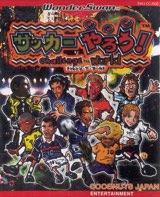
A single-player football game from Coconuts Japan for the WonderSwan, in which the player runs one footballer while the computer handles the rest of the team.
Screenshots
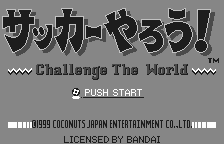
Title screen 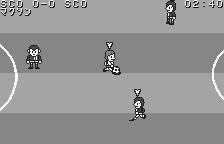
In play 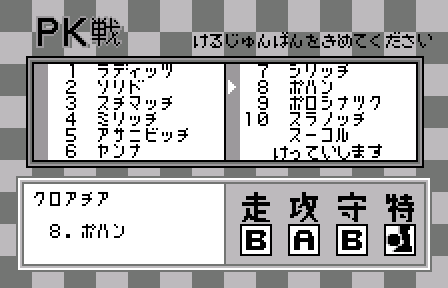
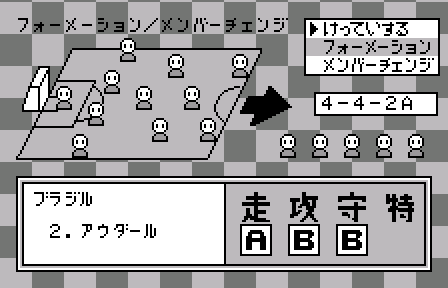
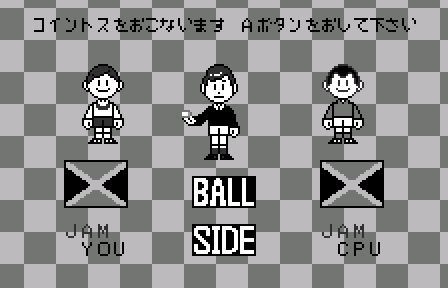
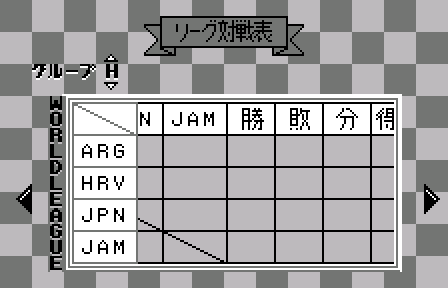
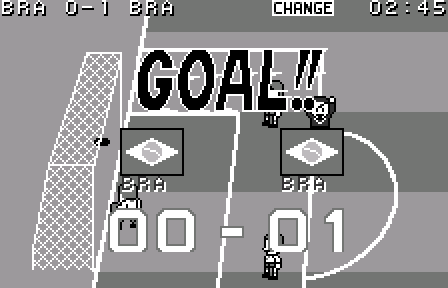
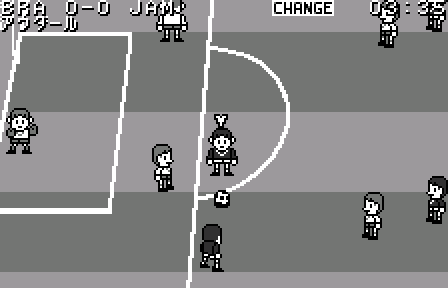
Soccer Yarou!: Challenge the World is a football game for the WonderSwan, made and published by Coconuts Japan and released in Japan on 12 August 1999, in the console’s first summer on sale. It is a game for one player and has no two-player mode.
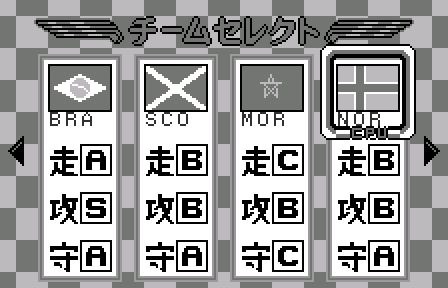
The player controls one footballer at a time while the computer moves everyone else, and the game offers a 32-nation World League, single exhibition matches and a penalty shoot-out mode. The game is occasionally dated to 12 September 1999, but it came out on 12 August.
The story
Soccer Yarou! has no story, no named hero and no scenes between matches. The title means roughly “Let’s play football!”, and the subtitle sets out the premise: the player takes a national side into a competition against the rest of the world. The main mode is a league of 32 national teams playing for the world title.
The cast is the squads themselves. The 32 teams hold 512 players between them, each with a set of ability ratings and a trait of their own meant to set them apart. Some of the names in the Japan team match players from the real national squad of the time.
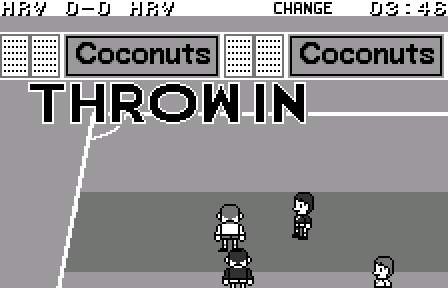
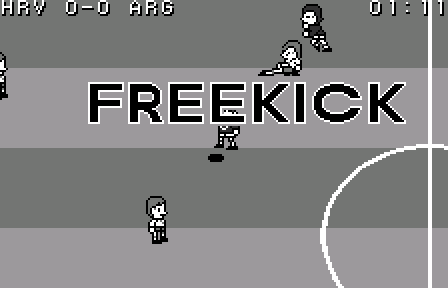
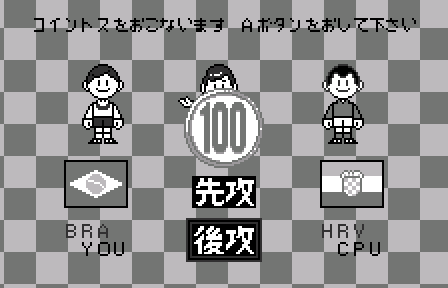
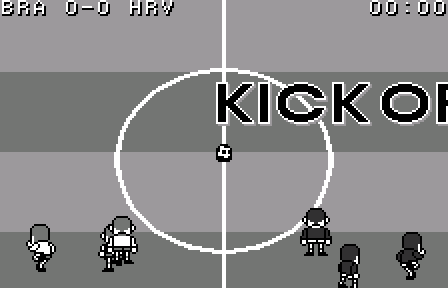
The game is shown on the monochrome screen with the console held sideways, and Bandai made a point of how much of the pitch the sharp display shows, enough to see where the other players are running. Each match opens with a carefully animated coin toss for kick-off. The music is made of very short loops that repeat quickly through a match.
How it plays
The WonderSwan is held horizontally, and the game is for one player only. The player runs one member of the team at a time, and the computer moves the other footballers on both sides. The player with the ball runs with it in the direction pressed on the pad. Players move slowly at a normal run; pressing a direction twice in quick succession makes them sprint, though a sprint on a diagonal is hard to get the game to register.
One button passes to a teammate, and control then moves over to whoever receives the ball, so the player follows the ball around the team rather than picking who to control. The pass and the switch of control often do not go the way the pad is held and can seem to pick a teammate at random. Another button kicks, but a careless press can send the player tumbling to the ground instead. Pressing the buttons with the right timing produces showier moves, such as overhead kicks and volleys struck first time.
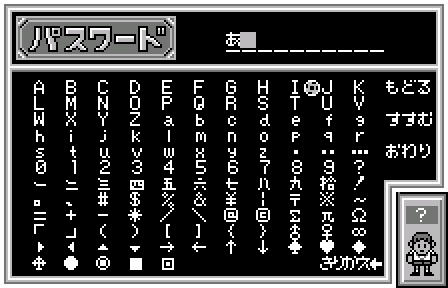
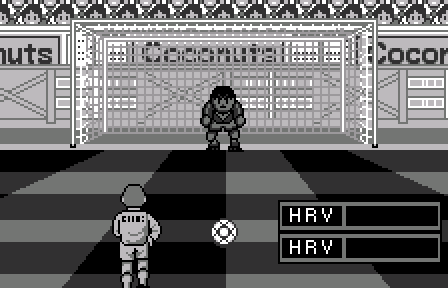
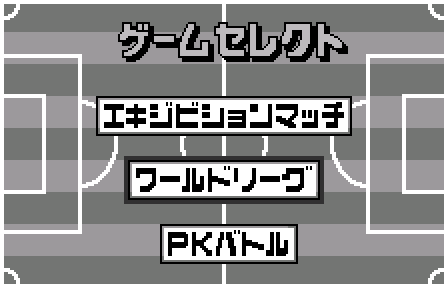
There are three modes. World League puts the chosen national side against the other teams in a tournament for the world title, and progress through it is kept with passwords, since the cartridge cannot save. Exhibition is a single match against the computer. PK Battle settles a contest by penalty kicks alone, and for a penalty the view switches from the match camera to a position behind the player taking the shot.
The menus can be followed without reading Japanese, so the game is playable without a translation. There is no two-player mode and no link-cable play, so every match is against the computer. It is the only football game released for the WonderSwan, and it is usually judged a middling one, held back by the slow running, the unreliable passing and the short, repetitive music.
Development and release
This was the second and last WonderSwan cartridge from Coconuts Japan Entertainment, a Tokyo game maker best known for its Pachio-kun pachinko games, coming four months after its fishing game Umi Tsuri ni Ikou! in April 1999. The planned price was 3,800 yen before tax, and the game came on a 4-megabit cartridge with stereo sound. The cartridge has no battery-backed save; progress is kept with passwords instead, and the game cannot be played over the link cable.
Ports and other versions
Soccer Yarou! was made for the WonderSwan and was never ported, remade or re-released on any other system. It does not belong to a series. Coconuts Japan’s better-known work was its Pachio-kun pachinko line, and on the WonderSwan its only other cartridge was a fishing game, so this one-player football game with password saves stands as the company’s lone attempt at the sport on Bandai’s handheld.
Later history
Coconuts Japan’s games other than its pachinko series sold poorly. The company left game making in 2000 and went bankrupt in 2002. The rights to its games now belong to the company Soft Vision.