
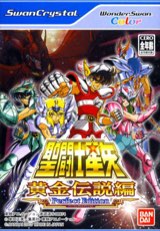
Bandai's 2003 WonderSwan Color remake that merges its two Saint Seiya Ougon Densetsu games for the Famicom into one, with new graphics and characters.
Screenshots
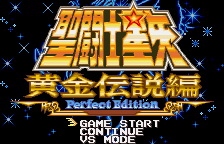
Title screen 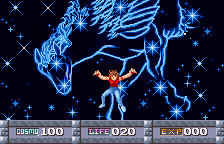
In play 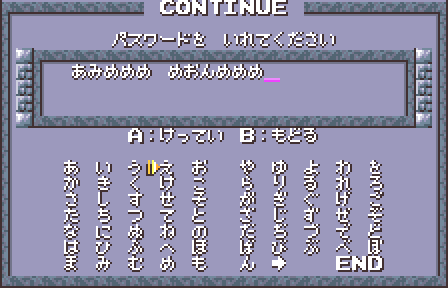
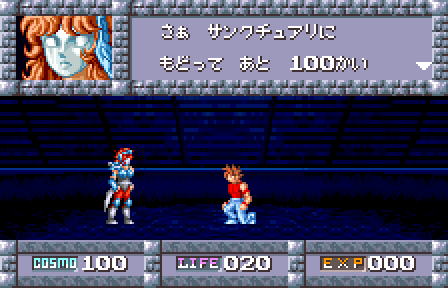
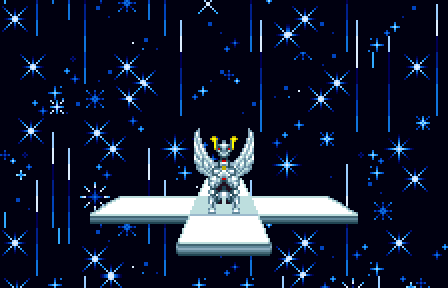
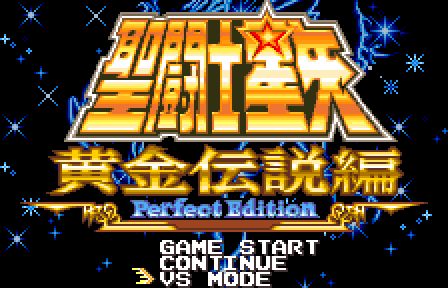
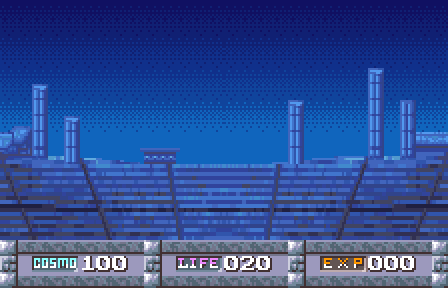
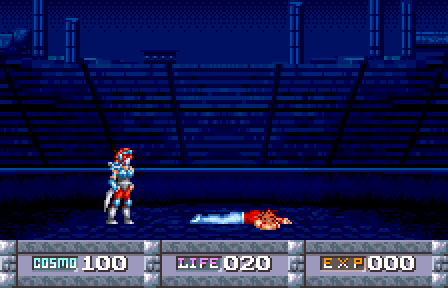
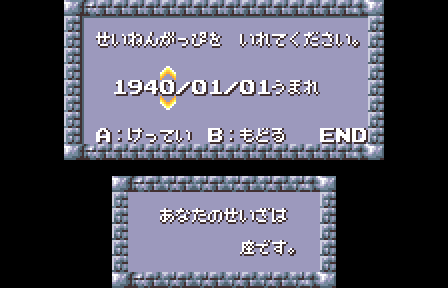
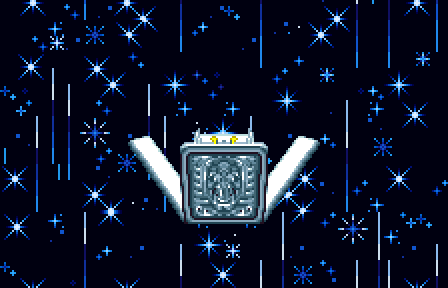
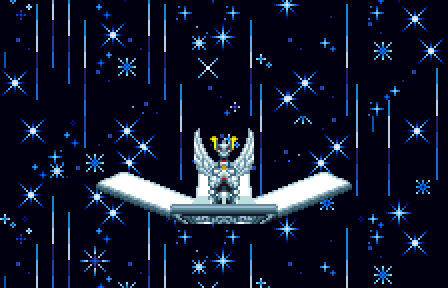
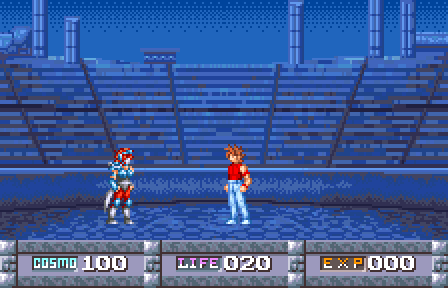
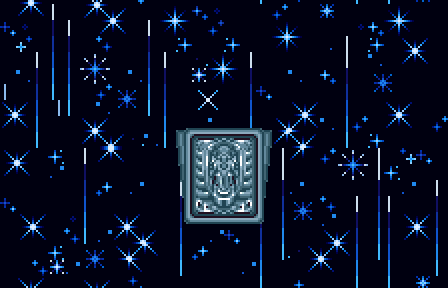
Saint Seiya: Ougon Densetsu Hen Perfect Edition is a remake of two Famicom games Bandai built on the Saint Seiya manga and anime: Ougon Densetsu, released in August 1987, and its sequel Ougon Densetsu Kanketsu Hen from May 1988. Rather than putting the two older games side by side on one cartridge, the WonderSwan Color version reworks them into a single game. Bandai released it in Japan on 31 July 2003, late in the system’s life.
The remake uses the first game as its base and folds in the story of the sequel, so it follows Seiya and the other Bronze Saints from the opening of the original story through the battles of the Sanctuary’s Twelve Temples against the Gold Saints. Travel is side-scrolling action, and bosses are fought in one-on-one command battles.
The developer is uncertain: it is credited both to Bandai and to TOSE. The cartridge is made for the Color and does not run on the original black-and-white WonderSwan.
The story
Saints are warriors of hope who are said to appear whenever evil spreads through the world. Mitsumasa Kido of the Graad Foundation learned their secret and sent a hundred boys to places around the world to be trained as Saints. Six years later ten of them have come back as Bronze Saints, among them Seiya, who has won the Cloth of Pegasus, Shiryu of the Dragon and Ikki of the Phoenix. Kido’s granddaughter Saori, carrying on his wishes, orders the Bronze Saints to fight in the Galaxian Wars, a tournament with the Gold Cloth of Sagittarius, the most powerful of all Cloths, as its prize.
The game opens as the first volume of the manga does, with the thirteen-year-old Seiya and Marin of the Eagle. His contest with Cassios is settled in conversation, and Shaina of the Ophiuchus follows him afterwards, as she does in the original story. From there the story moves to the colosseum of the Galaxian Wars, where Seiya meets Shiryu, Hyoga of the Cygnus and Shun of the Andromeda, and on to a showdown with Ikki at Mount Fuji’s wind cave.
Silver Saints are the next opponents. Docrates, a character who appeared only in the anime, and Misty of the Lizard are fought in battle, while others such as Algol of the Perseus and Jamian of the Crow appear only in the text. The second half of the game, taken from the Famicom sequel, is the climb through the Twelve Temples of the Sanctuary, each guarded by a Gold Saint, with the Pope waiting beyond them.
The story follows the manga closely, much more so than the Famicom games, which were made while the anime was still partway through the Twelve Temples and so left some Gold Saints out and ended the first game with a boss invented for it. Here every Gold Saint appears. When a Gold Saint is fought, the game switches to the Bronze Saint who faced that opponent in the manga, so that the duels play out as they do in the original story. A few details come from the anime instead, so that Shun’s teacher is named Albiore. The Black Saints of the Famicom game are gone, and most of the Silver Saints’ fights have been cut.
How it plays
The game has two layers. Moving between bosses is side-scrolling action, in which Seiya makes his way through foot soldiers, and meeting a boss starts a one-on-one battle fought with commands. A map screen links the places the story visits, and the game continues by password.
In the action scenes Seiya cannot jump, which removes the pits and the rooms that drained life in the Famicom version but also leaves no way to avoid foot soldiers, who now guard and dodge. The rapid shots of light that Seiya fired in the Famicom game are gone. Holding the button instead charges a rush that makes him invincible for its duration, but it cannot be charged while moving, turning around cancels the charge and every use costs Cosmo. Each soldier defeated gives Cosmo and a fixed 1 point of experience.
Boss battles keep the Famicom system of dividing Cosmo each turn between attack, mind, defence and movement. In practice many fights turn into both sides throwing their strongest technique at full power, so the split matters less than it seems. Techniques are drawn much closer to the original than on the Famicom, with cut-in pictures and sometimes the technique’s name on screen, and Hyoga and Camus even have a dedicated clash of their Aurora Executions. The companion command brings in Shiryu, Hyoga and Shun to fight. Life is restored by converting Cosmo, and the old trick of multiplying Cosmo at the hospital no longer works.
Because the early battles with Marin, Cassios, Shaina and others happen only as text, it takes more than five minutes from the start before the player has control, and the first real battle is with Shiryu. No experience is earned before that fight, and the birthday entered at the start sets Seiya’s attack and mind values, so with a weak birthday the Shiryu battle comes down to luck. After it, levelling up depends on defeating foot soldiers one point at a time, since the ghosts at Mu’s house, the classic place to earn experience on the Famicom, give none here.
Mount Fuji’s wind cave, the hardest part of the Famicom game, is still a struggle: foot soldiers keep appearing and the falling rocks are hard to see against the new graphics, although the constant fighting also builds up Cosmo and experience. In the Twelve Temples many Gold Saints cannot be hurt until the Bronze Saint facing them has first been beaten down, as in the manga’s duels.
The game gives no hints about what to do next, and reaching the Twelve Temples takes more than two hours. Enemies are much weaker than in the Famicom version, so the difficulty is lower, but much of the playing time goes into fighting foot soldiers for Cosmo and experience. The famous Famicom password that starts the game with maximum strength still works, but it is a trap: some enemies stay invincible until Seiya’s side has been beaten, and with stats pushed over their limits the game can become impossible to finish.
Development and release
Bandai announced the game as the return of its two Famicom Saint Seiya games, combined into one cartridge with redrawn graphics and with the strongest enemy of the Golden Legend story added, an opponent the Famicom versions never included. The Famicom originals came from different studios, the first from Axes Art Amuse and the sequel from Shinsei. The WonderSwan Color version went on sale on 31 July 2003 at 3,980 yen before tax, with the model number SWJ-BANC3D. It was one of Bandai’s last releases for the system: only a handful of WonderSwan titles came out after it.
Modes and features
Ordinary progress takes the form of side-scrolling action battles, while fights against bosses switch to the command-based duels inherited from the Famicom games, where techniques such as Seiya’s Pegasus Meteor Fist are used by burning Cosmo. The game is for one player, has no link-cable support and plays in stereo. The cartridge holds 16 megabits, and progress is kept with passwords.
Ports and other versions
Perfect Edition is a remake rather than a direct conversion. The first Famicom game stopped short of the confrontation with the Pope and left it to the sequel, and the WonderSwan Color version rebuilds the first game around the sequel’s scenario so that the whole arc plays as a single adventure. The graphics were redrawn, new characters were brought in and the game balance was adjusted compared with the Famicom originals. The remake also features the most powerful enemy of the story, whom the Famicom games never included. It is sometimes described as an enhanced port of the first game, and Weekly Famitsu scored it 19 out of 40.
The Famicom games had a life of their own. The first game was released for the NES in France in 1987, with the text translated into French. Both Famicom games were later included unchanged in two collections: the Nintendo 3DS compilation Bandai Namco Games Presents J Legend Retsuden of November 2013, and the Weekly Shonen Jump 50th anniversary edition of the Nintendo Classic Mini Family Computer, released in July 2018. The WonderSwan Color remake itself was never re-released.
Notes
The game is variously labelled an action RPG, an RPG, or, like the Famicom originals, a simulation and adventure game. The developer is usually given as Bandai; the credit to TOSE has never been confirmed.