
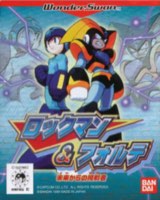
An original Rockman action game Bandai made under licence from Capcom, in which Rockman or Forte fights the Dimensions, robots from the future, across eight stages.
Screenshots
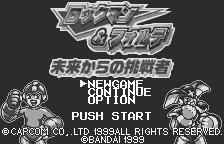
Title screen 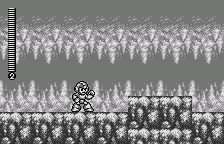
In play 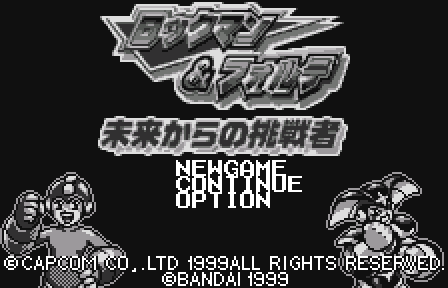
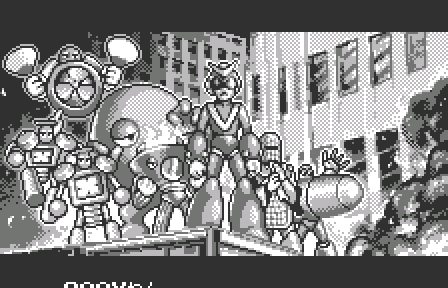
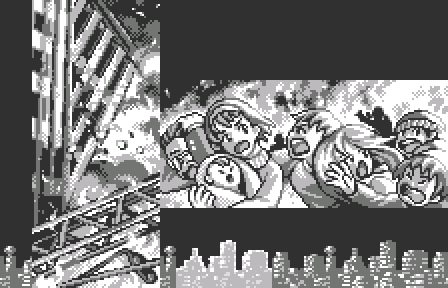
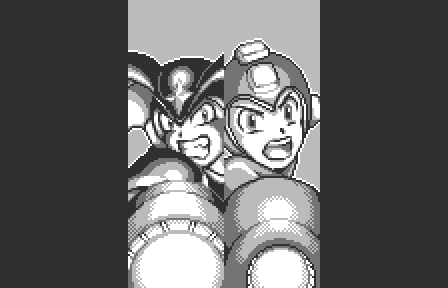
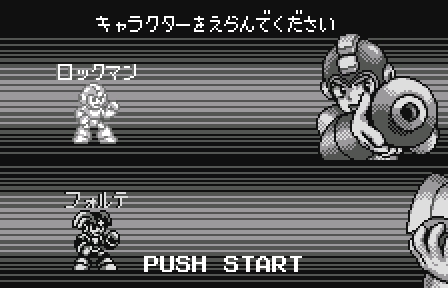
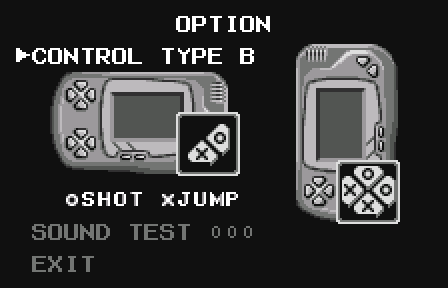
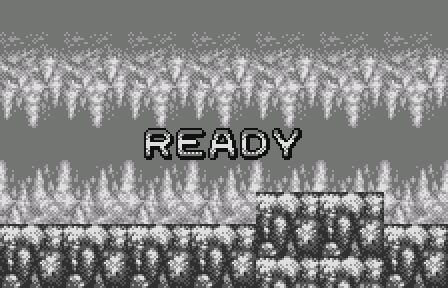
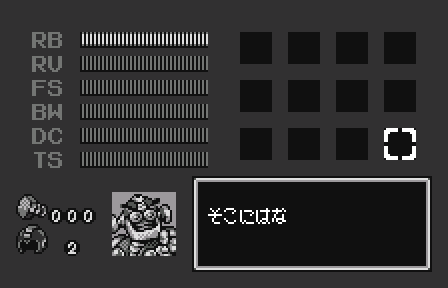
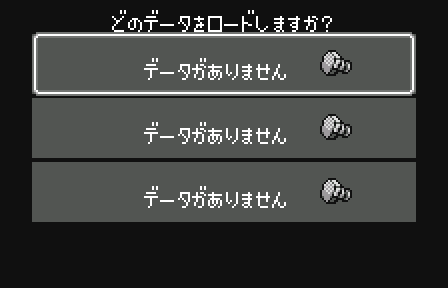
Rockman & Forte: Mirai kara no Chousensha is a side-scrolling action game in Capcom’s Rockman series, known in English as Mega Man. Bandai published it for the WonderSwan in Japan in October 1999 under licence from Capcom, and it was developed by Layup. It borrows the choice of two heroes and the music of the Super Famicom game Rockman & Forte, but its story, bosses and stages are new.
The player picks Rockman or Forte at the start and plays the whole game as that hero, through eight stages against the Dimensions, a band of robots from the future. Screws collected along the way buy items and support characters, and one stage, Aircon Man’s, is played with the console turned on its side.
The story
The game is set in the year 20XX, in Symphony City, where people and robots live side by side. A band of robots that call themselves the Dimensions arrive from a hundred years in the future and attack the city, and the assault leaves no survivors to say what happened. Their leader is Rockman Shadow, a robot built in Rockman’s image, so the attackers seem to have come with a dark double of the hero at their head.
The news reaches Dr. Right’s laboratory while Rockman is in the middle of maintenance, and he sets out for the city anyway. Dr. Wily, watching from his side, catches sight of the robot that looks like Rockman and sends Forte to find out what it is. Proto Man stays out of this adventure. Bandai’s announcement promised a separate story for each hero, and the game makes the player choose one of them at the start and keep him to the end.
The Dimensions’ fighters are new Robot Masters made for this game, and none of them is Dr. Wily’s work. Dangan Man is a bullet with limbs that leaps into the air and fires at the hero, Konro Man is a gas stove burner with fire attacks, and Aircon Man fights with a paper fan in each fist. Komuso Man is modelled on the wandering mendicant monk of that name and plays a bamboo flute to raise pillars of flame and conjure false copies of himself. The Clock Men are a pair who fight together with powers over time and space, and Compass Man is one of the Dimensions’ leaders.
The story unfolds as a straight run through the Dimensions’ ranks, with two rival heroes after the same enemy for their own masters, and who Rockman Shadow really is stays a question until the end. The familiar cast fills the gaps. Dr. Right runs Rockman’s shop and Roll runs Forte’s, and helpers from across the series come along, among them Rush, Eddie, Beat and Tango on Rockman’s side and Gospel and Reggae on Forte’s.
How it plays
The two heroes handle differently, and that choice shapes the whole game. Rockman’s jump goes higher and further the longer the button is held, he can have three shots on screen at once, he can charge his buster for a stronger shot, and he can slide under gaps and jump out of the slide. Forte can jump a second time in mid-air and dash, and he fires a rapid stream of shots in seven directions with no limit on how many are on screen, but he cannot walk while shooting on the ground, his shots are weak, and they stop at walls. Some stretches of the stages favour one hero, and a few side paths can be reached by only one of them. The slide and the dash are shorter than in the Super Famicom game.
An opening stage comes first, with the Gray Devil as its boss. After it, the stages of Dangan Man, Konro Man, Aircon Man and Komuso Man can be played in any order from a stage select screen, which shows each beaten boss in a defeated pose. Beating all four opens the Clock Men’s stage, then Compass Man’s, then the last stage, Rockman Shadow’s. That makes eight stages in all, none of them long, so the game is short. Every Robot Master stage has a mid-boss, and the only restart points come after the mid-boss and in the corridor before the boss, which can send a player who dies a long way back.
Five bosses give a special weapon, and each hero gets his own version. From Dangan Man, Rockman gets the Rock Vulcan and Forte the homing Forte Vulcan. Konro Man gives Rockman the Flame Shower and Forte the Flame Mixer, four fireballs that circle him but do not block shots. Aircon Man gives the Barrier Wind, which also breaks certain walls, or the Forte Cyclone. Komuso Man’s Doppel Crash makes Rockman invincible while he charges into enemies, and Forte’s Doppler Attack sends out four small copies of him that fly through walls. The Clock Men give the Time Switch or the Time Bomb; the Time Switch stops time for three seconds, during which Rockman cannot attack but takes no damage from touching enemies. Compass Man and Rockman Shadow give no weapon. All the weapons sit in the menu from the start but cannot be chosen until their boss is beaten, and weapon energy is not refilled between stages.
Each boss has a listed weakness, yet in practice the weaknesses hardly matter. Special weapons hit as hard as the normal buster, and most enemies have almost no invincibility after being hit, so what counts is how many hits a weapon can land. That makes the wind weapon from Aircon Man the strongest choice against most bosses, and it is the weapon players lean on.
Screws are the currency. Small screws are worth 3 and large ones 10, and a hero can carry up to 999. Rockman shops at Dr. Right’s and Forte at Roll’s, from a shared list of 17 items, though items meant for the other hero cannot be bought. Upgrades take effect as soon as they are bought, while one-use items such as a weapon refill and an exit from the stage have to be used by hand, and extra lives can be bought several at a time. The support characters are one-use items as well. Rush Coil lifts Rockman to ledges Forte reaches with his double jump, Eddie brings one large energy refill, Beat is a barrier that lasts for a while and also attacks, and Tango rolls into enemies. Forte has the Gospel Boost, which lets him fly freely, and Reggae, who works like Eddie. Only one Rush Coil can be held at a time. There are no energy tanks.
The hero has a 32-unit life meter and starts with three lives, and continues are unlimited. The Start button opens a screen showing weapons, lives and screws. The game saves to one of three slots after a stage is cleared or left.
Some rules are new to the series, and they make the game harder than its length suggests. Being hit knocks the hero back for longer than usual, and the hitboxes are larger than the sprites. Spikes and being crushed kill at once. At the top of a ladder the hero drops off by himself once his feet reach the last rung, which leads to many falls and lost lives. Aircon Man’s stage, a water level, is the only one played in the WonderSwan’s vertical position, and movement there is awkward; in his arena, being caught between two of his clouds kills instantly. Forte’s Doppler Attack also kills him if he turns back while inside the scenery. The grey sprites can make enemy bullets hard to see.
Development and release
Bandai made the game itself under a licence from Capcom, which is why it is missing from Capcom’s own list of its works. Capcom’s official art and data book on the Rockman and Rockman X series nevertheless covers it, the only Rockman game from another company to be included. Bandai’s announcement put the chance to play as Forte at the front, along with separate stories for the two heroes and stages that switch between vertical and horizontal screens. The cartridge went on sale on 28 October 1999 at 3,800 yen before tax, with the model number SWJ-BAN013.
Modes and features
The game is for one player and supports the link cable, though what the connection is used for is unknown. Several rules are found only in this entry. Enemy shots disappear when the enemy that fired them is destroyed, so shooting the source is another way to avoid them, and shots that bounce off shielded enemies such as Mets still do damage, a trick one mid-boss in Aircon Man’s stage is built around. Support robots are bought with screws and used up like items rather than drawing on weapon energy.
The game also departs from series habits: the weapon menu has its own music, defeated bosses do not burst apart in the usual way, and there is no stage-clear jingle. The cast also brings in characters who rarely appear elsewhere in the series, among them Reggae, Tango and Quint.
Reception
Weekly Famitsu’s Cross Review in issue 568 gave the game 23 out of 40. Japanese players regard it as a very traditional Rockman, hard but fair once enemy positions and boss patterns have been learned, though some felt that losing a life sent them too far back. Western critics who imported it were much harsher, with 1UP.com’s Jeremy Parish ranking it at the bottom of the series.
Ports and other versions
Mirai kara no Chousensha was made for the WonderSwan alone, with no port, remake or download re-release; it was never sold outside Japan. It is easy to mix up with Rockman & Forte, the Super Famicom game of April 1998 whose name and two-hero setup it borrows. That earlier game is a separate work: Capcom later brought it to the Game Boy Advance in 2002, released in the West as Mega Man & Bass, and that handheld version was in turn offered on the Wii U Virtual Console in 2015. The WonderSwan entry takes over only the earlier game’s premise, so none of those releases is a version of this cartridge.
Later history
The game’s music was later collected on CD. The ten-disc soundtrack set Rockman Sound BOX 2, released by Capcom on 17 December 2014, gives it 22 tracks on its fifth disc, recorded from the original hardware and issued on CD for the first time.
Notes
The release date is sometimes given as 21 October or 5 August 1999; the game came out on 28 October 1999.