
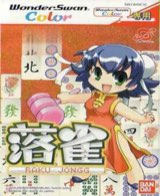
A falling-block puzzle game with mahjong tiles, in which tiles of the same kind are cleared and finished sets build up a scoring hand, released for the WonderSwan Color in 2001.
Screenshots
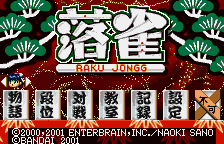
Title screen 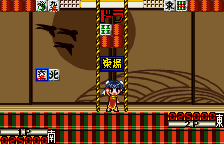
In play 
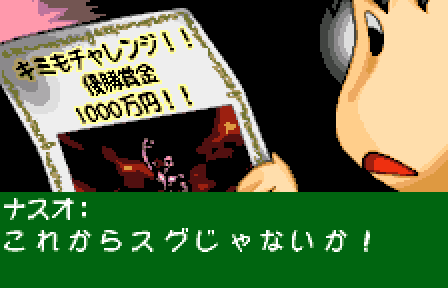
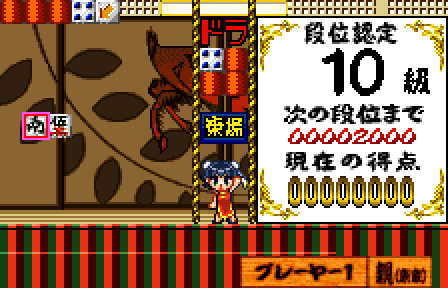
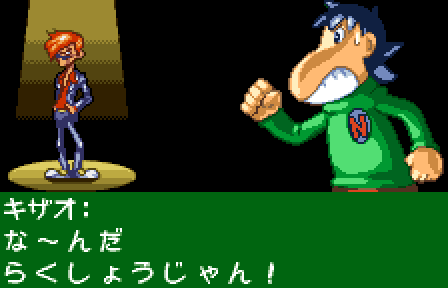
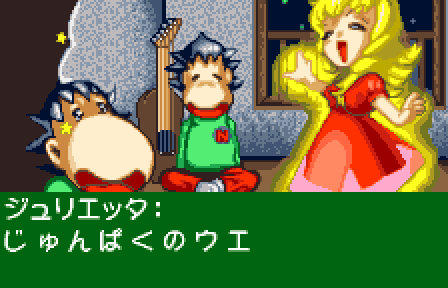
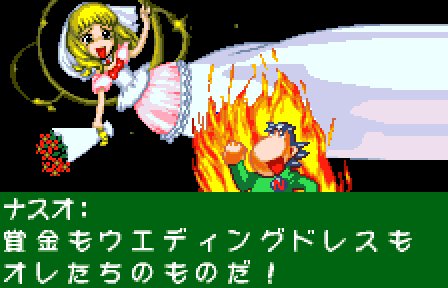
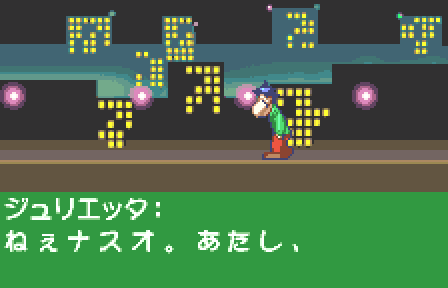
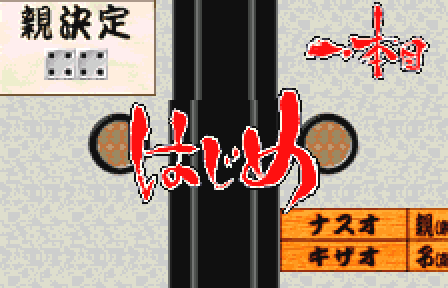
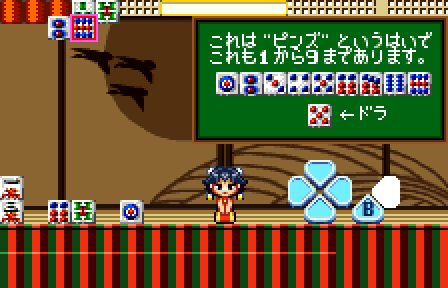
Raku Jongg is a puzzle game for the WonderSwan Color, published by Bandai in Japan on 31 May 2001. It takes the falling-block formula of games like Tetris and replaces the blocks with mahjong tiles. Enterbrain developed it, and the idea goes back to a prize-winning entry in a 1998 software contest run by ASCII.
Tiles drop into the well two at a time, and tiles of the same suit lined up in threes disappear. The sets made along the way collect below the field and build towards a mahjong hand, so some knowledge of mahjong helps, though the moment-to-moment play is that of an action puzzle.
The WonderSwan Color edition has a story mode, a rank certification test, a time attack and a versus mode for two players, along with a blind setting of its own. The cartridge is made for the Color and does not run on the original black-and-white WonderSwan.
The story
Raku Jongg has only a light story, and it serves to string matches together. The title already says what the game is: mahjong that falls. Bandai sold it with a slogan about dropping tiles, stacking them and calling a win, and the setting never goes beyond the mahjong table and its tiles, hands and winning calls.
The story mode is a run of matches against computer opponents who appear one after another along a storyline, and each has to be beaten to move on.
The tone is comic and showy, borrowed from pachinko and pachislot machines.
How it plays
Pairs of tiles fall from the top of the well and are steered into place. What counts for clearing is the kind of tile, of which there are four: characters, circles, bamboo and honours. The number or symbol printed on a tile makes no difference, and three or more tiles of one kind lined up across or down disappear. The original contest entry only cleared rows lined up across. Tiles marked with an arrow wipe out every tile in the direction the arrow points.
When the tiles cleared also make a mahjong set, a run, a triplet or a quad, that set is stored in a field below the well. A run only counts if its tiles are laid in order, from the top down or from left to right, so building sets takes more planning than simply matching suits.
Once four sets are stored, a reach event starts to decide the pair that completes the hand. It is usually a slot machine and it is pure luck, but chains build up a Lucky Power that makes a more generous event more likely, and an event that seems to have missed can turn into a different one. If the event comes up, the stored sets and the pair are scored as a hand by the usual mahjong reckoning. If it fails, one of the sets is removed and play carries on.
The hand rules are adapted to the format. There are no calls, riichi is always granted at a reach event, and winning the very first reach event adds ippatsu. Nearly all the standard hands are in, along with local ones such as Big Wheel, which only counts in circles, but hands the system cannot produce, such as seven pairs, thirteen orphans and a win on the dead-wall tile, are left out.
Matches are played against an opponent on a second field beside the player’s own, and chains made on one side put pressure on the other.
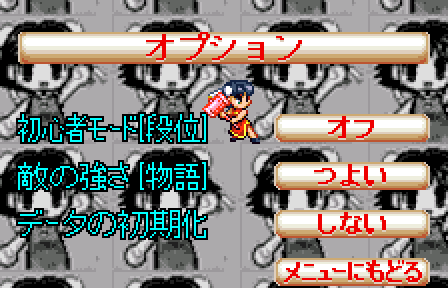
On the WonderSwan Color the story mode leads the list, and the dan certification mode awards the player a rank. The time attack is a race against the clock, the versus mode is played between two consoles over the link cable, and the blind mode hides the opponent’s tiles. The game can be paused or suspended part-way through.
Luck weighs heavily. Because riichi always applies, any four sets can win, so a player who knows no hands at all still has a chance, and Bandai pitched the game as a way to learn the hands while playing. The other side is that a valuable hand can come to nothing when the pair goes wrong.
Development and release
Raku Jongg began as a personal project that won the personal computer prize at ASCII’s third Entertainment Software Contest. ASCII’s games arm, which became the separate company Enterbrain in April 2000, turned it into a commercial game for Windows the same month. Bandai presented the WonderSwan Color edition as a new take on the popular computer game, with extra modes of its own and fuller use of communication features. The price was 2,980 yen, and the copyright line names Enterbrain and Naoki Sano alongside Bandai. The model number is SWJ-BANC10.
Modes and features
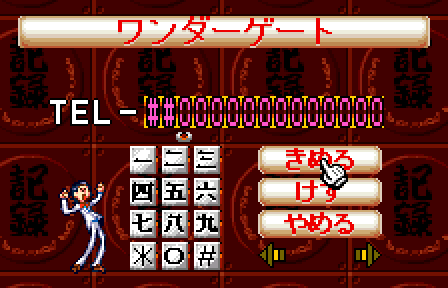
There are a story mode, a dan-ranking certification mode, a time attack and a versus mode for two players over the link cable. A blind setting, which hides the opponent’s tiles, was described as original to the WonderSwan version. Because it was made for a handheld, the game can be paused and suspended part-way and picked up later; the cartridge stores data in a 1-kilobit EEPROM. The sound is in stereo. With a WonderGate connected, a player could post a high score to a national ranking and download the ranking.
Ports and other versions
The WonderSwan Color cartridge was the third home for the game. The commercial Windows version came first, on sale from 26 April 2000 for 2,980 yen and distributed by Digicube through convenience stores, and a second Windows release appeared in MediaKite’s budget Ultra2000 range that December. On 16 November 2000 D3 Publisher brought it to the PlayStation as volume 46 of its low-priced Simple 1500 series, under the title The Mahjong Ochige: Raku Jongg. Bandai’s edition followed in May 2001, the same price as the computer original.
What Bandai advertised as new on the WonderSwan Color were the extras suited to a handheld: a blind setting that hides the opponent’s tiles, versus play between two consoles over the link cable, pause and suspend saves, and national high-score rankings through the WonderGate. The later Gokurakujan is a sequel rather than another version of this game.
Later history
Enterbrain followed up with the sequel Gokurakujan for Windows in March 2003 and a PlayStation 2 edition later that year, both published by Digicube. It added a column of tiles at the side of the field, called the Niko Niko Tower, which joins play once a gauge is filled by large clears, together with many local hands.
Notes
The game is listed for the Color only and does not run on the original WonderSwan.