
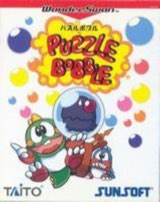
Sunsoft's WonderSwan port of Taito's bubble-shooting puzzle game Puzzle Bobble, based on the expanded Super Famicom version.
Screenshots
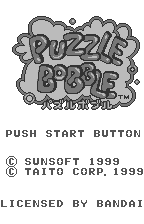
Title screen 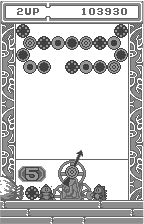
In play 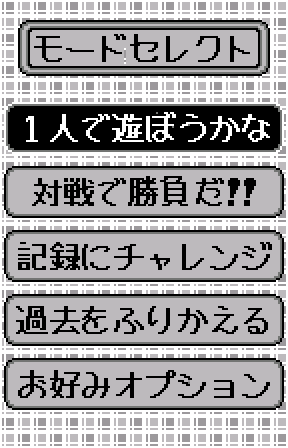
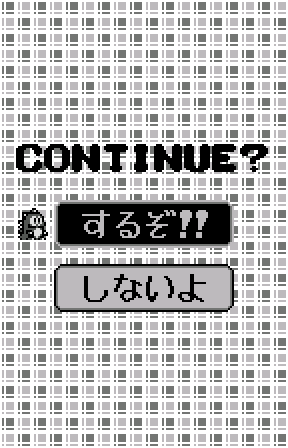
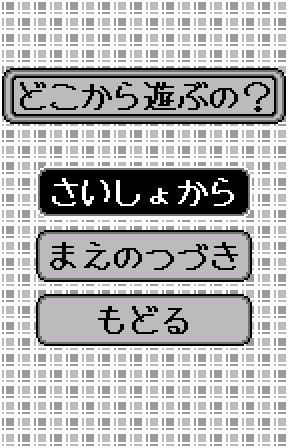
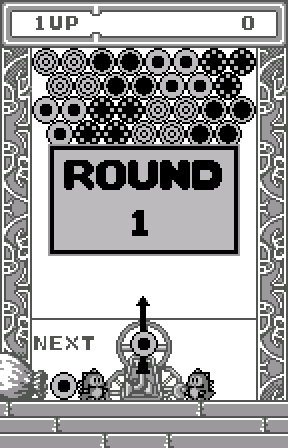
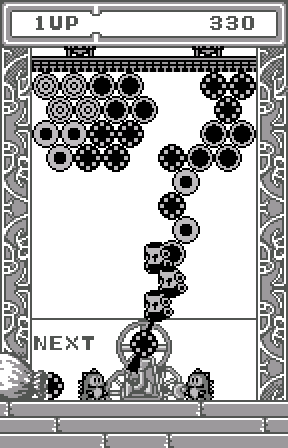
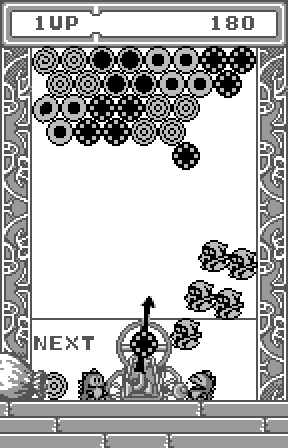
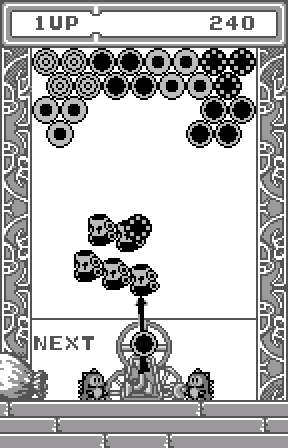
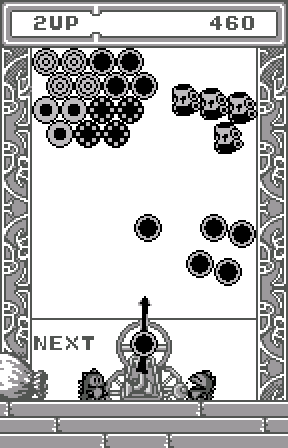
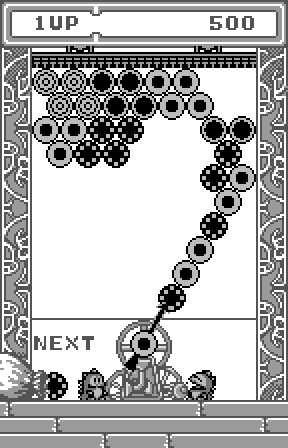
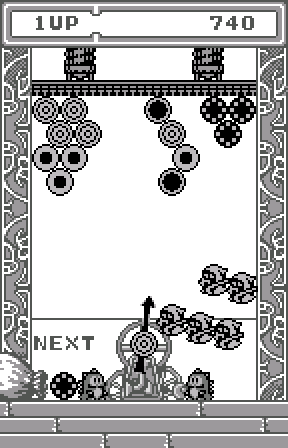
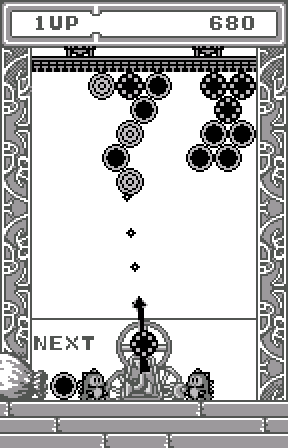
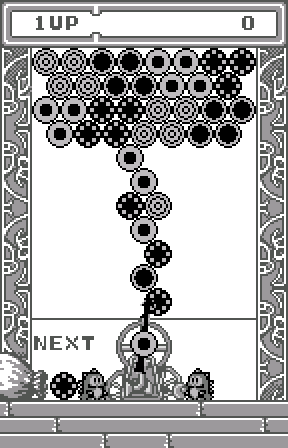
Puzzle Bobble, known in the West as Bust-a-Move, is a puzzle game that Taito released in arcades in December 1994. Its heroes are the two bubble-blowing dragons from Taito’s earlier hit Bubble Bobble. From a launcher fixed at the bottom of the screen, the player fires coloured bubbles upwards; three or more of one colour that touch disappear, and any bubbles left hanging without a link to the ceiling fall away with them. Bubbles bounce off the side walls, so banking shots is a large part of the skill. The ceiling drops after a set number of shots, and a round is cleared when every bubble is gone before they reach the launcher.
The WonderSwan version, usually credited to Yoshidayama Workshop, was published by Sunsoft in Japan on 1 July 1999. It follows the 1995 Super Famicom version rather than the arcade original, so it has that version’s longer single-player game with its special bubbles and final boss, matches against the computer as well as against a second player, and an endless mode.
The story
Puzzle Bobble has only a light story. Its heroes are Bub and Bob, the two bubble dragons of Bubble Bobble, and the game borrows that game’s cast of enemies for a gently comic puzzle setting. Bub is the first player’s dragon and Bob the second’s.
The single-player game has a short premise. Someone has stolen the Book of Bubble from the village, the magic of the bubbles is being put to bad use, and enemies wrapped in strange bubbles are arriving in great numbers. The player works through 100 rounds of them, and the last round is a boss stage that plays differently from everything before it.
The versus game has no plot of its own. Against the computer, the chosen dragon faces ten enemies from Bubble Bobble in a row, and a match between two people is always Bub against Bob. The endless mode has no story at all. The whole game is shown in black and white on the WonderSwan’s screen, with the playfield standing tall because the console is held upright.
How it plays
The launcher sits at the foot of the tall screen. The player swings its aim left and right and fires the bubble loaded in it. A fired bubble sticks to whatever bubble it touches, and when three or more of one colour are joined they burst. Any bubbles that are no longer linked to the ceiling drop away with them, and dropping many at once scores far more than bursting them. Bubbles bounce off the side walls, so a shot can be banked through a gap to reach a cluster that a straight shot cannot.
After a set number of shots the ceiling comes down by one row. A round is cleared when every bubble is gone, and lost if the bubbles come down to the launcher first. There are no chains to set up as in falling-block puzzle games, so accurate aim counts for more than planning ahead: bursting a group close to the ceiling brings down everything hanging below it, which is the quickest way to empty a screen.
The one-player mode is a long series of rounds to clear one after another. Some rounds start with special bubbles in place, which go off when a fired bubble hits them. A fire bubble releases flames that clear the bubbles around and above it, a thunder bubble sends lightning sideways and clears the whole row, and a water bubble pours down and turns the bubbles below it into one colour, the colour that is rarest on the field at that moment. The last round is a boss fight.
In the versus mode two people play each other, each with their own console and cartridge joined by the link cable. In a match there is no falling ceiling: a new row of bubbles is added after a set number of shots instead, and bursting four or more bubbles at once sends extra bubbles up into the other player’s field from below.
The endless mode is played for a record. There are no rounds to clear; every few shots another row of bubbles arrives from the top, and the game simply goes on for as long as the player holds out. From time to time a shining special bubble is loaded, and wherever it lands it clears every bubble on the field of the colour it touches first.
Development and release
Sun Electronics, the company behind the Sunsoft label, sold the game for 3,800 yen before tax under the model number SWJ-SUN003. The cartridge holds 4 megabits and the game is played with the console held upright. Its copyright line carries both Sunsoft and Taito for 1999. Bandai introduced the game by recalling Bub and Bob from Bubble Bobble, then thirteen years old, and by noting that Puzzle Bobble had already appeared on many other machines in the five years since its debut.
Modes and features
The game is for one or two players. Two people can play against each other by joining two consoles, each with its own cartridge, through the link cable, and the sound is in stereo. The rules and feel of the original were carried over unchanged.
Reception
Weekly Famitsu gave the WonderSwan version 25 points out of 40 in its cross review, with its four reviewers scoring it 7, 5, 7 and 6. That was two points more than the 23 that both the Super Famicom and Game Gear versions had received.
Ports and other versions
The WonderSwan cartridge is one of many home and handheld versions of the 1994 arcade game. Like the 3DO and Game Gear releases, it is a conversion of the January 1995 Super Famicom version, which is why it has the hundred-round story, the special bubbles and the computer opponents that the arcade machine lacks. The arcade game also ran on SNK’s Neo Geo hardware and came out on the Neo Geo CD in 1995, and a Windows version followed in 1999 with the stage count raised to 120, a save feature and a choice of three difficulties. The Neo Geo version returned in Hamster’s Arcade Archives line for Nintendo Switch, PlayStation 4 and Xbox One in December 2018, and a further Switch collection that includes it followed in 2025.
The Super Famicom version itself returned in 2023 as an early-purchase bonus for Taito’s Switch game Puzzle Bobble Everybubble!, with the North American Bust-a-Move release selectable and options for the screen shape and a CRT-style look. Taito also released it for Japanese mobile phones from 2001 and for iOS in 2009. Set against the others, the WonderSwan version is played on a monochrome screen with the console held upright, and its two-player matches need a second console and cartridge joined by the link cable. Bandai described the rules and feel as carried over unchanged.
Notes
The developer is uncertain. The port is usually credited to Yoshidayama Workshop, but this has never been confirmed, and the release names only Sunsoft and Taito, whose game it is.