
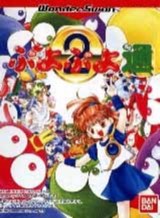
A WonderSwan port of the Game Boy version of Puyo Puyo Tsuu, Compile's falling-block puzzle sequel, released by Bandai a week after the console's launch.
Screenshots
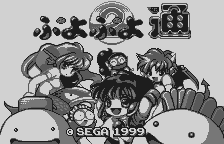
Title screen 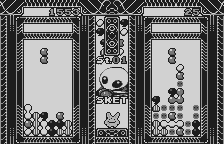
In play 
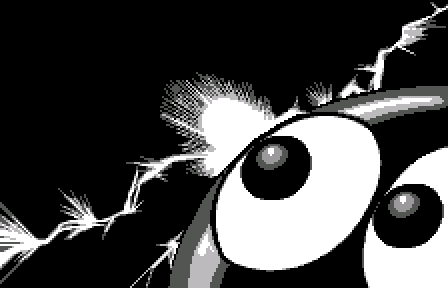
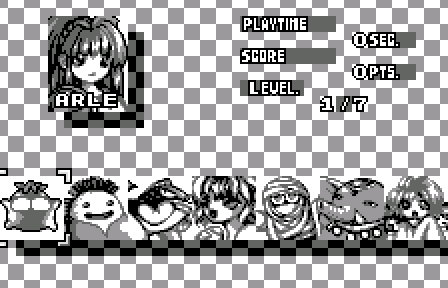
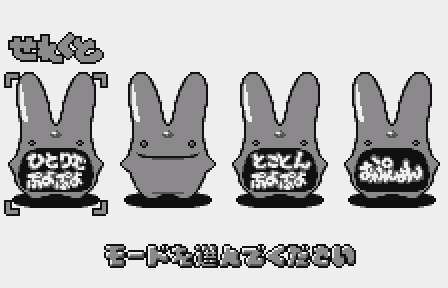
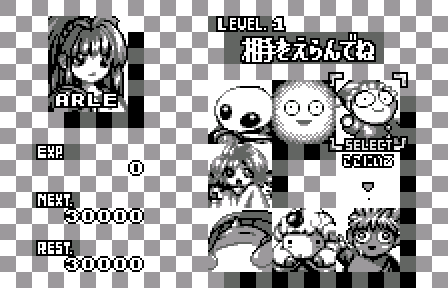
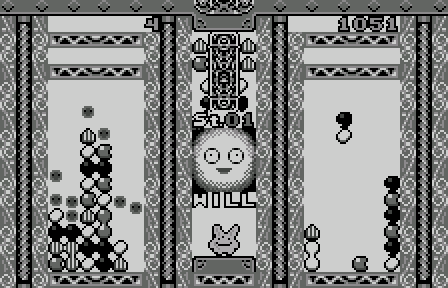
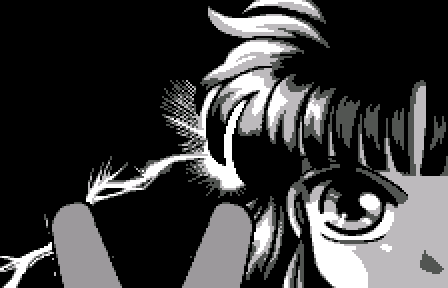
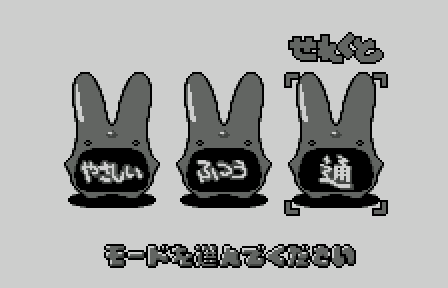
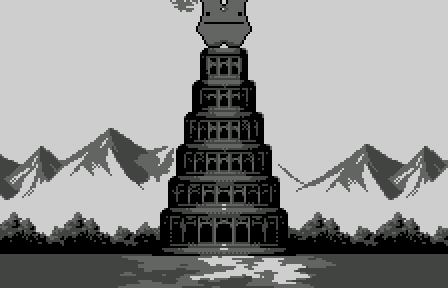
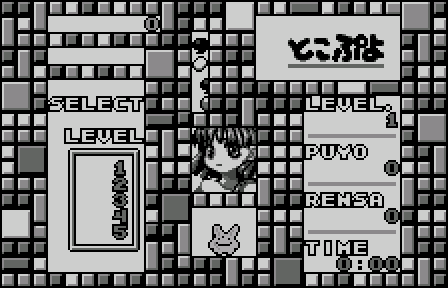
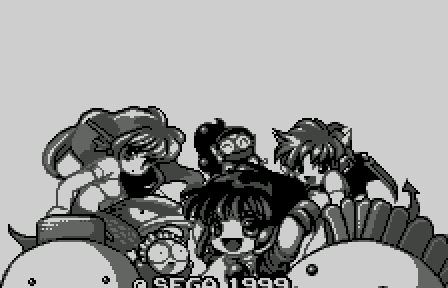
Puyo Puyo Tsuu is the second game in Compile’s Puyo Puyo series of competitive falling-block puzzles, first released in arcades in 1994. Pairs of coloured blobs drop into the well, four of one colour touching each other pop, and chains of pops send rubbish blobs over to the opponent. Tsuu added the ability to cancel incoming rubbish with one’s own attacks, which shifted the game towards building long chains. Bandai released the WonderSwan version in Japan on 11 March 1999, a week after the console went on sale, under licence from Sega.
The WonderSwan game is a port of Pocket Puyo Puyo Tsuu for the Game Boy, and shares most of its graphics, modes and systems. It runs in black and white and does not use the WonderSwan Color’s colours. Alongside the single-player climb up a tower it offers an easier course, a harder Tsuu mode, an endless mode and link play.
Two players can face each other over the link cable, and in the four-player mode two linked players are joined by two computer opponents; three or more human players are not possible.
The story
Puyo Puyo Tsuu has no real story. It gives no reason why its characters have gathered in a tower, and the short prologue of other versions differs from one edition to the next. What it has instead is a cast and a setting. The player is always Arle Nadja, the heroine of every mode and never turns up as an opponent, and nearly all of the people and monsters she plays against come from Compile’s earlier role-playing games Madou Monogatari 1-2-3 for the MSX2 and PC-98.
The framing belongs to the normal course of the single-player mode. Arle climbs a tower of six floors. Each floor has a joking group name: the first is the Hachibushuu, a band of eight minor creatures such as Skeleton-T, the second the Rokkasen of six, the third the Gonin Bayashi of five including Harpy, the fourth the Shitennou of four including Suketoudara and Witch, and the fifth a pair, Minotaur and Draco Centauros, billed as the two everyone is talking about.
On the sixth floor wait the three who are, in the game’s own phrase, those three: Schezo, Rulue and Satan. In all, 33 characters appear in the tower. Only in this course does the WonderSwan game show the arcade version’s character introductions and animations before each bout; the other modes are plain matches with no framing at all.
How it plays
The console is held horizontally. Pairs of coloured puyo fall into the well, and the player moves and rotates each pair as it drops. Four of the same colour touching each other pop, and one pop can set off the next as a chain. Pops send nuisance puyo into the opponent’s well, and longer chains send more. When a pair is wedged in a gap one column wide, pressing rotate twice flips it end over end, a move known as the quick turn.
Tsuu changed the first game’s rules in two ways that shape every match. Nuisance puyo on their way can now be cancelled by popping puyo of one’s own before they land, a system called offsetting, and any that are left over after the cancellation fall at once. Because of this, building one large chain matters more than attacking quickly. Clearing every puyo from the well, an all clear, earns a bonus of extra nuisance puyo on the next chain.
In the normal course of the single-player mode, a roulette picks Arle’s opponent on each of the first five floors. Every win earns experience points based on the score, and a floor is cleared once the experience total reaches its target; any extra beyond the target does not carry Arle more than one floor. If she beats everyone on a floor without reaching the target, one extra opponent appears, and failing that ends the game with no continue and a bad ending. The sixth floor is fixed: Schezo, then Rulue, then Satan. A player who reaches Rulue without using a continue and with enough experience meets a hidden opponent in Satan’s place.
The easy course is meant for beginners. It uses only three colours and has three courses: the first of three opponents, the second of five and the graduation course of seven, with an eighth appearing for a player who clears it without a continue. The Tsuu mode, aimed at experts, puts the player against nearly every character one after another and is always played at the hardest difficulty whatever the difficulty option says. The endless mode, Tokoton Puyo Puyo, has no opponent; the player keeps going as the level rises.
Two players can play against each other with two consoles and a link cable, choosing among several rule sets, one of them an edit rule that can be adjusted. In the four-player mode two linked players are joined by two computer players; three or more human players are not possible. The WonderSwan keeps the switch for turning link play off, but it does nothing, so two-player and four-player games always need a second person and a second console.
The WonderSwan version plays a little differently from other editions. Its puyo pop with a slower animation, which makes chains take longer to play out, and the chain voices, one for each step of a chain, are taken from the Super Famicom version. The cartridge has no save memory.
Development and release
The WonderSwan release and a Neo Geo Pocket version that SNK published on 22 July 1999 were both based on the Game Boy game, and both were sold by companies other than Compile with Sega’s permission. The cartridge carries only a Sega Enterprises copyright and a note that Bandai made and sold it under licence from Sega. Who actually did the porting is unknown: Bandai is sometimes named as the developer, Compile is not named in any of the material Bandai published, and the game itself has no staff roll.
Bandai sold the game as SWJ-BAN004 for 3,600 yen before tax, and promoted it as a complete port in which the characters’ voices were reproduced through the WonderSwan’s sound hardware. The cartridge has no save memory. The box illustration was reused from the Sega Saturn version, so it shows the werewolf, Scylla, Incubus and Cockatrice, none of whom appear in this game.
Ports and other versions
Puyo Puyo Tsuu went from the arcades to a long run of home versions: the Mega Drive and Game Gear in December 1994, the PC-9801 and the Saturn in 1995, the Super Famicom as Super Puyo Puyo Tsuu late that year, the PC Engine CD and PlayStation in 1996, Windows in the same period, and the Game Boy as Pocket Puyo Puyo Tsuu in December 1996, followed by the Macintosh in 1998. The WonderSwan cartridge is built on that Game Boy edition rather than on the arcade game, and it is the only Puyo Puyo game the WonderSwan ever received.
Compared with the Game Boy game it adds a little. The Game Boy version has no character introductions or voices at all, while the WonderSwan one plays chain voices taken from the Super Famicom edition and, in the normal tower course only, shows the arcade game’s character introductions and animations. It displays its blobs in shades of grey with no WonderSwan Color support, and their popping animation runs a little slower than on other systems, which slows chains down. It also loses things: the ending shows only “END” where the Game Boy game had its staff credits, and the option for switching link play off is present but does nothing, so the hidden Game Boy trick of matching a player, or two computer players, against the computer cannot be used.
SNK’s Neo Geo Pocket version of July 1999, also derived from the Game Boy game, took a different path. It shows colour on the Neo Geo Pocket Color, with some characters coloured differently from other versions, and adds chain and entrance voices like the PlayStation edition’s at the cost of the battle music while they are switched on. It drops the four-player mode with computer partners that the WonderSwan keeps, folds the endless mode into a new skill test mode and lets the blob shapes be changed. It was released in North America and Europe as Puyo Pop, the first version of Tsuu sold outside Japan.
The WonderSwan cartridge itself was never re-released, but Puyo Puyo Tsuu kept returning on other systems, among them a PlayStation 2 collection in 2004, Wii Virtual Console downloads of the Mega Drive and arcade versions from 2007, a series of mobile phone versions, Nintendo 3DS editions in 2015 and 2016 and a SEGA AGES release for the Switch in 2020, along with Android and PlayStation 3, PSP and PS Vita downloads.