
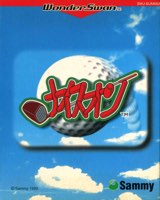
Sammy's golf game for the WonderSwan, the first on the system, with stroke and match play, a handicap mode for uneven players and two-player play over the link cable.
Screenshots
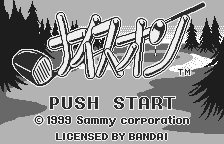
Title screen 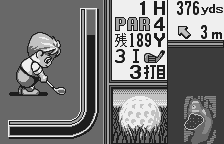
In play 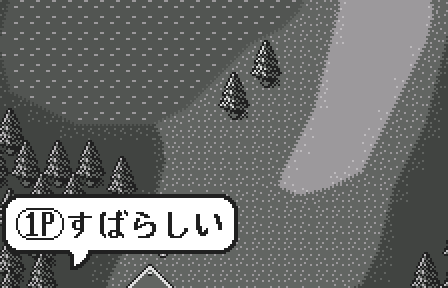
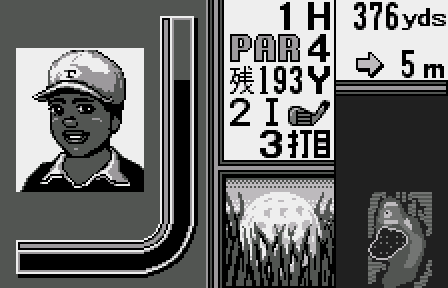

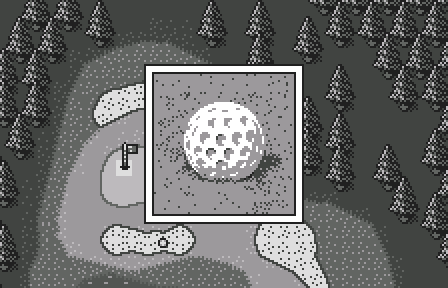
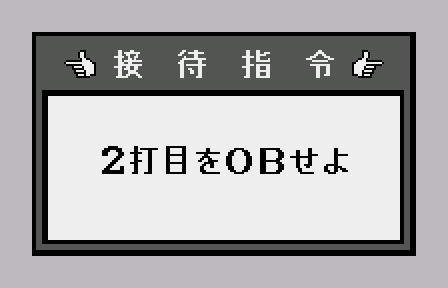

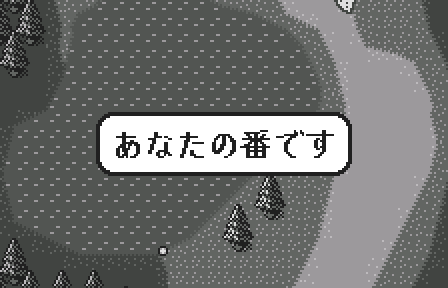
Nice On is a golf game published by Sammy for the WonderSwan on 8 April 1999, a month after the console went on sale. Bandai presented it as the first golf game on the system. It is a straightforward take on the sport, built for short sessions on a handheld, with no story to follow.
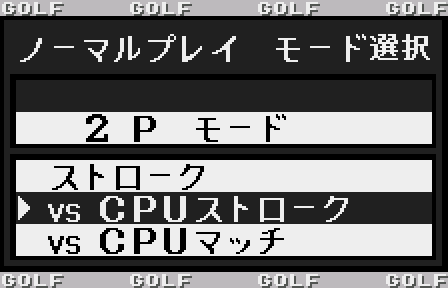
Its selling point was the number of ways to play. Besides ordinary stroke play and match play there are several extra modes, one of which evens out a match between a strong golfer and a weak one, and two players can face each other over the link cable.
The story
Nice On has no story. There is no tour to win and no career to build: each round is simply a round of golf. The title is the call Japanese golfers give when a shot comes to rest on the green, while its partner, nice in, is kept for a ball that drops into the cup.
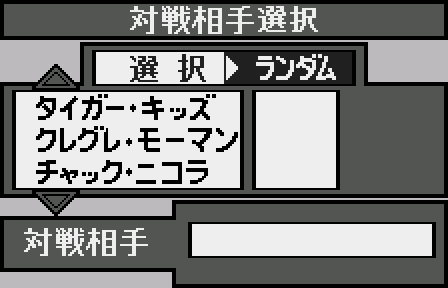
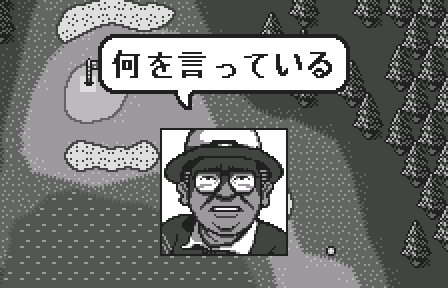
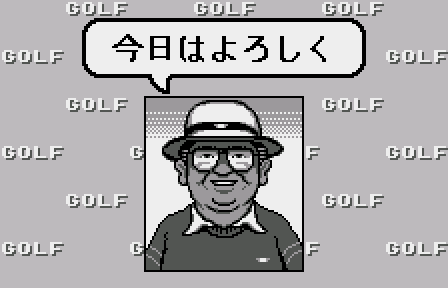
The cast is small. The player’s golfer is drawn in chibi style, a small figure with a large head, who waits at the tee with the club raised. The computer opponent is a golfer in a fly-fishing hat, who plays the round against the player and passes comment on the player’s game as it goes.
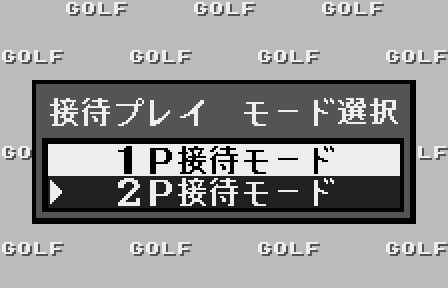
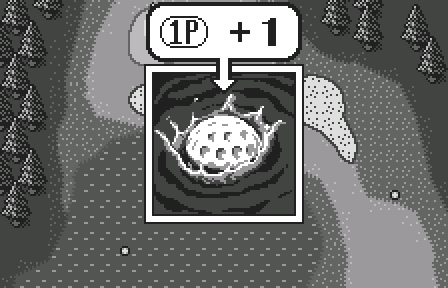
The presentation stays close to the course. The ball’s flight is followed from above, the sound is in stereo, and the big moments of a hole, a ball in a bunker or in the water or a ball holed out, cut away to a separate picture. One of the extra modes takes its name from settai, the Japanese custom of playing golf to entertain a client or a boss.
How it plays
The WonderSwan is held sideways. Every shot is played in three steps. The player first chooses the direction, then the point on the ball where the club will strike it, and finally presses a button to stop a power gauge that rises and falls beside the golfer. The higher the gauge stands when it stops, the further the ball goes, and its flight is shown from overhead.
Bunkers, water hazards and trees stand in the way. Landing in a bunker or the water, or holing out, switches the screen to a cut-in picture of the moment. Bandai stressed that its rules were made easy to pick up, as suits a game on a handheld.
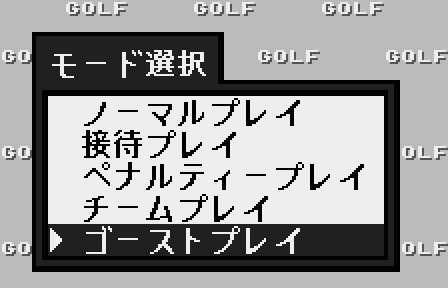
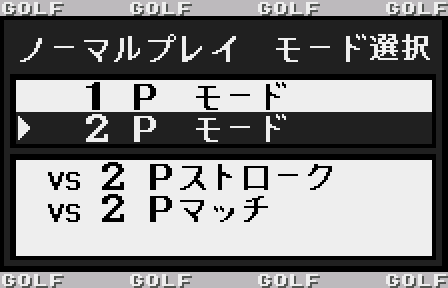
The menu offers stroke play and match play as the basic modes, joined by a hospitality mode, a ghost mode and a penalty mode. The penalty mode gives one side a handicap according to the gap in skill between the two players, so that a stronger and a weaker golfer can play on even terms. The exact rules of the hospitality and ghost modes are not certain.
A single player can take on the computer golfer. Two players need two consoles, two cartridges and the link cable to play each other. The cartridge has a small EEPROM, listed as 16k, for saved data. The number of courses and holes on the cartridge is not certain.
Development and release
Nice On was Sammy’s second WonderSwan cartridge, numbered SWJ-SUM002, after the mahjong game Mahjong Touryumon four weeks earlier. It was developed by Aisystem Tokyo. The staff roll names no company: it lists a planner, three programmers, four designers and a producer, with the music and sound handled by Studio PJ. The copyright line reads 1998, the year before the WonderSwan came out.
Reception
Very little has been written about the game in Japanese. Famitsu classes it as an action game rather than a sports game, the genre Bandai gave it.
Ports and other versions
Nice On was made for the WonderSwan and was never ported, re-released or followed by a sequel on another system. Aisystem Tokyo made no other golf game, so the cartridge has no close relative from its makers elsewhere; it remains a one-off, notable mainly as the first golf game the WonderSwan received.