

A Neon Genesis Evangelion raising game from Bandai: as Ryoji Kaji, the player brings up an infant Angel at NERV in seven days, then sends it into card battles.
Screenshots

Title screen 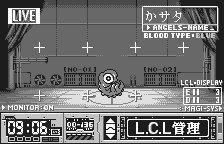
In play 
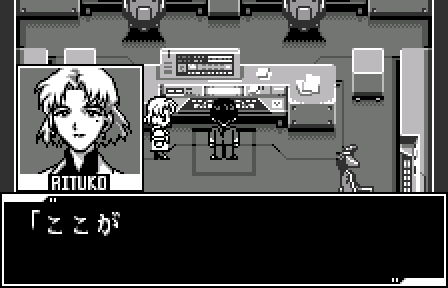
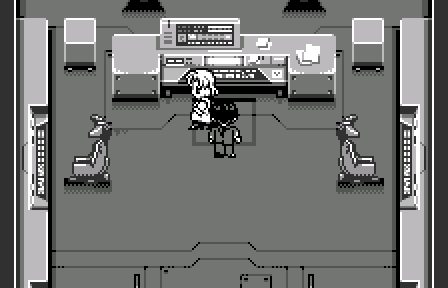
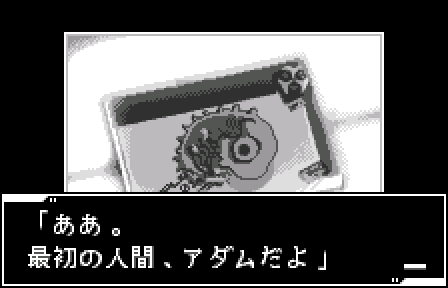
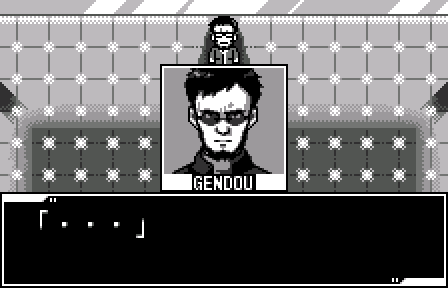


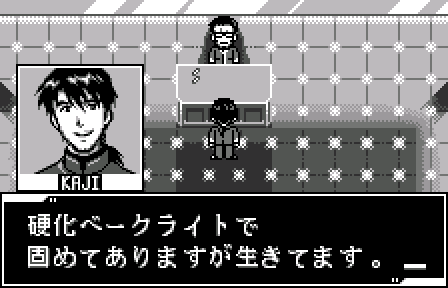
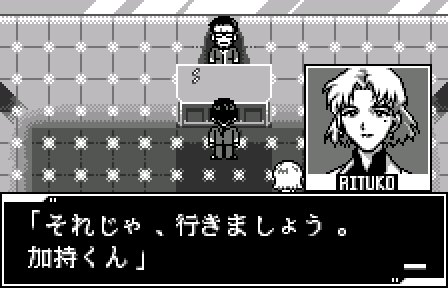
Shito Ikusei is a raising game based on the anime Neon Genesis Evangelion, published by Bandai for the WonderSwan on 22 July 1999. It turns the series around: instead of piloting an Evangelion, the player raises one of the Angels the show’s heroes fight. The player takes the part of Ryoji Kaji and is given seven days to bring up Adam, an Angel still in its infant stage, inside NERV headquarters.
The game joins a raising part, built much like the Tamagotchi that was in fashion at the time, to an adventure part in which Kaji walks around NERV and the city, meets characters from the anime and runs into events. At the end the grown Angel faces an Evangelion in battle. Each Angel raised is recorded in an in-game encyclopedia, and recorded Angels can afterwards fight one another in a card game, against the computer or against a friend over the link cable.
The story
The game is set in the world of the series, in NERV headquarters and the city of Tokyo-3 above it. Ryoji Kaji, NERV’s special inspector, comes back from Germany escorting the Second Child, Asuka Langley, and Evangelion Unit-02. That is only his cover. His real errand is to bring back in secret Adam, an Angel embryo that had been under study and restoration in Germany.
When Kaji hands the embryo over in the commander’s office, Gendo Ikari gives him a new job: raise Adam into a fully grown Angel. Kaji half laughs and asks whether that means making an Angel, and Gendo simply says yes. The secret orders are to bring Adam up to an adult inside the L.C.L. tank of a raising room within seven days, and to fill in an encyclopedia of Angels as he goes.
Kaji does not work alone. At the start he picks an assistant operator from three candidates, who gives advice on the raising and whose presence shapes the events and the Angel’s growth; a new operator is chosen every two days. Around NERV he meets the cast of the series, among them Shinji, Rei, Asuka, Misato, Ritsuko, Gendo and Fuyutsuki, and Asuka keeps trying to win his attention. Later he can go out into Tokyo-3, where the places include the middle school class 2-A that Shinji and Asuka attend, the block of flats where Rei lives and a dry cleaner’s.
The story runs as one week of NERV working days. Kaji has the hours from morning to night to split between the tank and wandering the base, things happen around him as the days go by, and on the seventh day a series of events brings the raising to its result. The series is seen here from the side of Gendo’s hidden schemes, with the player working for them rather than fighting the Angels.
How it plays
The console is held horizontally. The X buttons move the cursor or Kaji, A confirms, talks and examines, and B cancels. From the title the player starts a new game or continues; starting a new one over a save erases all data. A prologue leads into the choice of operator and a name for Adam of up to five characters. The operator can be picked again every two days, and the same one may be kept. The game is saved by pressing Start on the raising screen, which also returns to the title, and that is the only proper way to stop.
Time follows NERV’s working hours, from 09:00 to 21:00. The raising room is closed from 21:00 to 09:00 and the Angel does not change outside working hours. At 09:00 and 21:00 Kaji is called back to the raising room to greet the operator, and sleeping in the bed in his own room outside working hours skips straight to 09:00. The speed of the game clock can be set to slow, middle or fast in the MAGI settings.
Raising is a matter of keeping several values in balance. The Angel’s energy is shown in ten steps, drops over time at a rate that depends on its stage and is topped up with an energy supply. The concentration and electrolysis rate of the L.C.L. are shown as percentages and also drop over time; each can be set to rise 10 per cent an hour, fall 10 per cent an hour or be switched off and fall 5 per cent an hour. Extreme values can kill the Angel and strongly shape the form it takes. Contamination of the tank rises with time and with the Angel’s waste and makes illness more likely, and changing the filter cuts it by 20 per cent. Illness, mostly caused by a poor tank or by fatigue, is cured with medicine. If energy reaches zero or an illness is left untreated the Angel can die, which ends the game.
The Angel’s motor ability, intelligence and AT Field are shown on a data screen and can be raised by training. In the training mini-game lasers come from four directions and the player blocks each with the AT Field by pressing the matching direction quickly; the session succeeds if the Angel is hit fewer than three times in ten rounds. Training is only possible at the larva and intermediate stages, and too much of it brings on fatigue. Items include an antibiotic for illness, a drug against fatigue, boosters for each of the three abilities, a contamination neutraliser and two stabilisers for the L.C.L. values. Some are found during the adventure and some can only be used under certain conditions, and special items given to the Angel can lead to unexpected results.
Growth follows a fixed calendar with branches. Adam is an embryo on the first day, a larva on the second and third, then an intermediate form of humanoid, biological or inorganic type from the fourth day, a cocoon from the fifth and an adult on the sixth or seventh, with the path depending on the care given. What it finally becomes is one of the Angels of the television series, listed in the encyclopedia under its name from the series with a picture, a description and its type. The encyclopedia records only new kinds, and filling it brings a reward.
Away from the tank, Kaji travels by picking one of three areas on a map, then a place, and then walks around a field map. Some places are closed at certain hours. He can talk to people, examine things to find items, take lifts between floors and read mail on the computer in his room. Tokyo-3 lies beyond a security gate and needs an ID card, which he receives after raising one Angel to the end. If the Angel gets into danger while he is out, the operator calls and he is sent back. On the seventh day the result report lets the player save the grown Angel as data, overwriting an old one when the slots are full, and an event completion rate shows how much of the game has been seen, so the week is meant to be played many times.
After a successful raising, Card 1P against the computer and Card 2P over the link cable, which needs a cartridge for each player, are added to the title menu. Each side enters one saved Angel with its own HP, AT Field and up to four attack abilities, the order of play is set automatically and each player holds three cards. Turns alternate between attacking and defending. An attack card only works for an ability type the Angel has, and its damage is the ability’s attack plus the card’s value minus the defender’s AT Field. Other cards restore HP, stop the opponent attacking or countering for two turns, or cancel the AT Field for two turns. The defender can answer with a Reverse card, which can itself be reversed, or pass and let the AT Field soften the blow. The first Angel to bring the other’s HP to zero wins.
Development and release
The game came out in the WonderSwan’s first summer, four months after the console’s launch. The cartridge holds 16 megabits with 256 kilobits of SRAM for saves, the sound is stereo and it plays for one or two people, and the copyright line names Gainax and the Evangelion production committee alongside Bandai. The developer is unknown. A strategy book, the Shito Ikusei Perfect Guide, followed from SoftBank on 9 August 1999.
Modes and features
Besides the seven-day raising itself, the game keeps its records in the MAGI system: the data of raised Angels for the card game, the settings, and the Angel encyclopedia. What the Angel finally becomes depends on how it was cared for, which items it was given and which events took place, and the player’s actions in the adventure part feed back into its growth. The card battles, which Gendo permits in the story, are played against the computer or against a second player over the link cable.
Secrets and extras
The raising can be pushed into unexpected results, such as growing Evangelion units or even Rei Ayanami instead of an Angel. There are two known tricks. Once Rei has been raised successfully, she appears again at the location called CL3, and repeating this lets the player raise four Reis. The contents of the item bag also change when a save is reloaded, so saving when changing areas, checking the bag and reloading if the items are unwanted lets the player fish for a particular item.
Reception
The game is remembered fondly by players who spent a summer holiday on it at release, though few of them found anyone else with a copy to try the battle mode against. Player reviews are few and mixed, one calling it lukewarm and another simply naming Ayanami, with star ratings ranging from one to five.
Ports and other versions
Shito Ikusei was made for the WonderSwan and was never ported, remade or re-released on another system. The best-known Evangelion raising game, Gainax’s Ayanami Raising Project, is a separate and later work: it first came out for Windows in 2001 and went on to the Dreamcast, PlayStation 2 and Nintendo DS, and in it the player brings up Rei Ayanami on a weekly timetable over roughly a year. Shito Ikusei stands apart by giving the player an Angel to raise, in the role of Kaji, over a single week.