
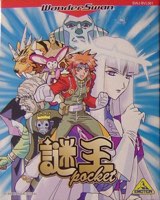
A quiz adventure in which an amnesiac hero beats eight sages at trivia to win back his memory, a WonderSwan remake of the 1996 PlayStation game Nazo Ou.
Screenshots
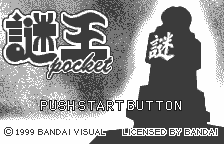
Title screen 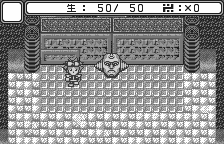
In play 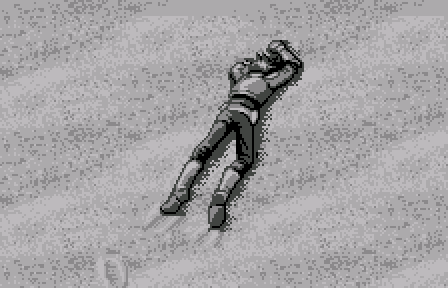

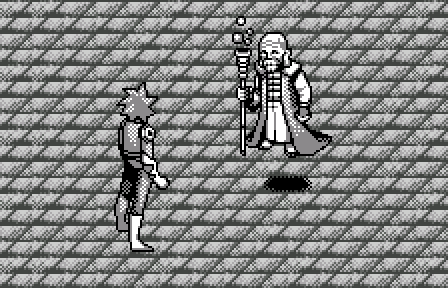
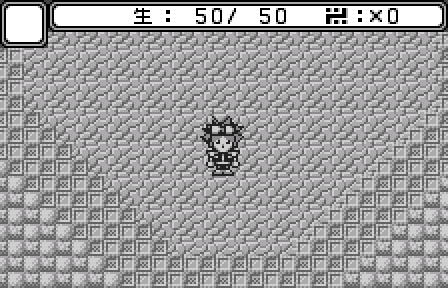
Nazo Ou Pocket is the WonderSwan version of Nazo Ou, a quiz game Bandai Visual released for the PlayStation in August 1996. It came out on 18 November 1999. Its bank of about 5,000 questions, supervised by a quiz champion, is split into five subjects: sports, entertainment, science, society, and literature and history.
The main mode is a quiz adventure. A young man who has lost his memory washes up on a mysterious island and wins his past back by beating eight sages in quiz bouts, one in each of eight chambers, before a tower opens to him. A separate practice mode serves up questions without the story. The game is for one player only and has no link cable play.
The story
The game is set on Nazo Island and the Nazo Kingdom built on it, a realm given over to knowledge and contests of wits. It was founded by the riddle king of the title, and its eight chambers are held by his Eight Sages. Most of the sages were once something else before the kingdom changed them: a trainee of knowledge who now guards the realm, a lonely nobleman whose experiments with drugs to sharpen his mind warped his body, a mountain plant that grew clever by drinking in the spirit of hermits and became the king’s pet, a leading physicist who turned wild in an ice cave, a spy who traded on her charms, a bio-computer that keeps the kingdom’s knowledge, a once brilliant thinker grown too fat to move after the king gave him a watermelon, and a genius boy who has not aged since the founding.
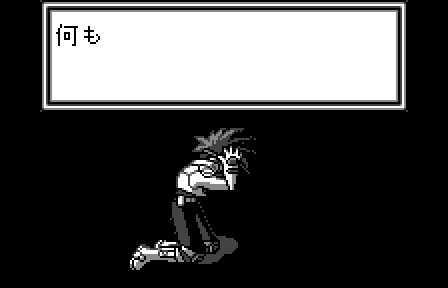
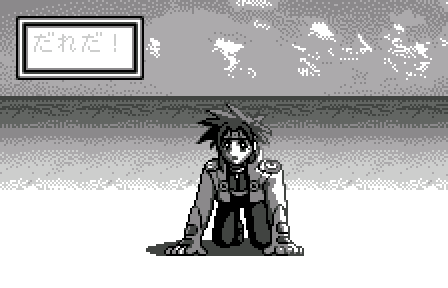
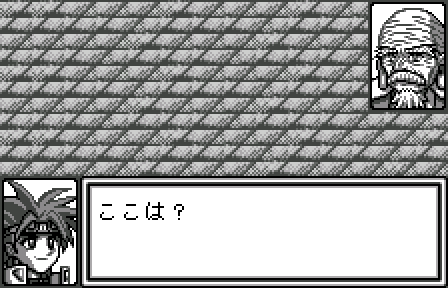
The hero is a young man who set out for the Nazo Kingdom. His ambition offended the Eight Sages, who stripped him of his memory, and he washes up on the shore of the island remembering nothing but the shapes of eight creature-like beings.
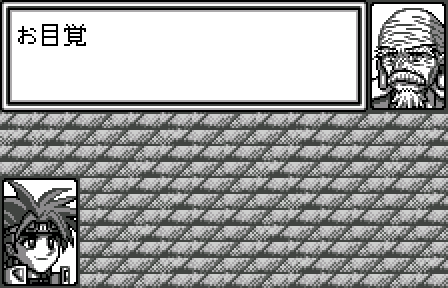
An old monk shuts him up in the central plaza at the heart of the kingdom and tells him that if he defeats the sages in contests of knowledge, he will get his memory back. Why the monk is pushing him against the sages is left unclear. Each sage the hero beats returns a piece of his memory, and the pieces slowly tell where he came from and why he came to the island.
Other figures wait in the tower that rises over the plaza. A girl held prisoner in its upper floors holds the key to how the kingdom was founded, and the hero’s returning memories suggest she has some link to him. A small creature called Run turns up with the tower and offers to guide him through it, and a guardian named Karakuri defends the tower against intruders with a mandala formed by its own clones. The world and its cast, redrawn by Kazuhiro Soeta, look conventional at first and grow stranger the closer one looks.
How it plays
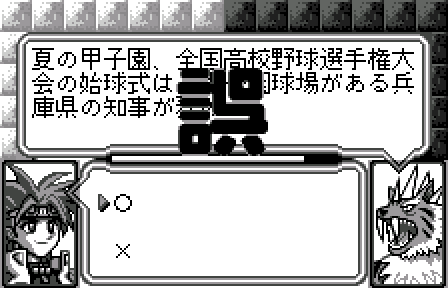
The WonderSwan is held horizontally. The X buttons move the hero in eight directions and A examines things and talks to people. In a quiz, X1 and X3 move the cursor and A confirms; in an ordering question the player picks the options one at a time from first to last, with B to take a pick back, and in a buzzer question A claims the right to answer. Start opens the status screen. A new game is begun from the title screen, and a saved one continued.
The kingdom is laid out around the central plaza, which has a gate on each of its four sides, and each gate leads on to two of the chambers. At a gate the hero either takes on its gatekeeper or slips through a small side door into a maze patrolled by guards. A guard who catches him forces a buzzer bout at once, and losing it costs five points of life and sends him back to the gate. The chambers can be taken in any order, and a lost chamber can be tried again as long as the hero is still alive.
Every chamber sets its own format and terms. The bouts use true-or-false questions, multiple choice with three or four options, ordering questions with three or four items, and buzzer questions in which three options appear first and the question is revealed bit by bit. Most chambers are won with seven correct answers before the fourth wrong one. One is played in sets, with three sets needed to win, and the two buzzer chambers pit the hero against a sage who can answer first, where a wrong answer counts as a point for the opponent and the sage wins on reaching seven.
The hero’s life is a gauge that starts at 100. Wrong answers and falls into the sea drain it, and the game ends when it runs out. He begins with a few items and gains more. A mushroom used before a bout starts him with one correct answer already counted, coral stops a wrong answer from counting for each piece held, a life item refills the gauge, and a token used at a gate changes its question format and opens a direct way to the chamber. After each chamber win he chooses one of three prizes, a mushroom, coral or a life item, and each defeated sage gives up a seal.
When all eight seals are set in the central plaza, the tower is open. Its entrance holds a run of three-choice bouts against eight opponents, each won with three correct answers before three wrong ones. The second floor is a buzzer gauntlet that uses a separate stock of special lives and allows five wrong answers. It keeps a completion rate for each subject, combining the player’s overall accuracy with the answers won on that floor, and every subject must reach 100 per cent before the floor is cleared. The third floor asks for seven correct before four wrong, and the fourth for five correct with no mistakes at all. Items left over from the chambers can still be used in the tower, and there are several endings depending on where the climb finishes.
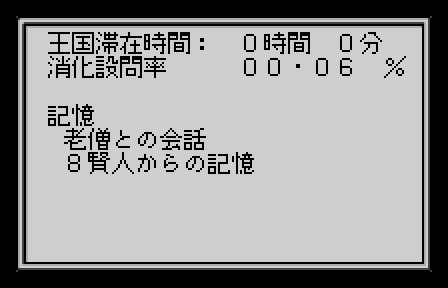
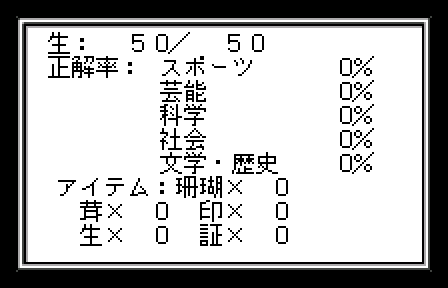
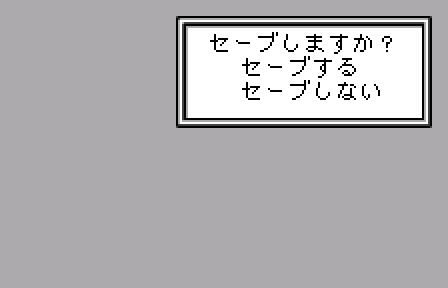
The status screen shows the life gauge, the player’s accuracy in each subject, the items carried, the memories recovered so far, which can be read again there, and the total time spent in the kingdom. It is also where the game is saved, anywhere in the kingdom except inside a chamber or during a quiz bout. There is a single save, and each save replaces the last.
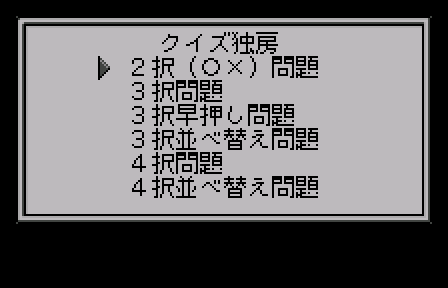
The practice mode drops the story and sets random questions in any of six formats: true or false, three choices, three-choice buzzer, three-item ordering, four choices and four-item ordering. Pressing Start during a quiz goes back to the format menu.
Development and release
Bandai stressed that the Pocket in the title did not mean a cut-down game. The new character designs were given to Kazuhiro Soeta, an animator known for Haou Taikei Ryu Knight and Record of Lodoss War. The game was made by Avit for Bandai Visual. The cartridge holds 8 megabits with a small save area.
Nazo Ou Pocket carries the model number SWJ-BVL001, the first of Bandai Visual’s WonderSwan cartridges. It was followed within a few months by the WonderSwan versions of the simulation games Graduation and Debut, both developed by Image Works.
Modes and features
The story mode is called the kingdom infiltration mode. The practice mode is named after a solitary prison cell, in keeping with the chambers of the story, and the title screen’s choices for a new game and a saved one are called New World and Continued World.
Reception
Little has been written about the game in Japanese. It seems more conventional at first sight than the strange PlayStation original, but its world and characters turn out to be just as odd on a closer look, and players have wondered what the eight sages were modelled on.
Ports and other versions
The original Nazo Ou came out for the PlayStation on 30 August 1996, and the WonderSwan game is a port of it. It carries over the whole bank of about 5,000 questions and the overall structure of the game, while the scenario and the field the player walks through were made anew so that people who had played the first game would still meet something unfamiliar, and the characters were redrawn. The basic shape stayed the same: the PlayStation story mode also sends a nameless hero into the kingdom to clear eight chambers, gather their seals and then take the tower.
The handheld also dropped the multiplayer modes. The PlayStation game had a two-player versus mode of buzzer questions and a party mode for two to eight people, in which the console acted only as a buzzer and scoreboard for a human host; the WonderSwan game is for one player and offers only its practice mode beside the story. The 2000 PlayStation follow-up, Chou Nazo Ou, did not come to the WonderSwan, and Nazo Ou Pocket was never re-released on another system.