
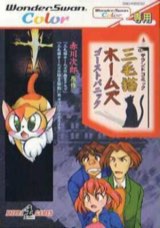
A WonderSwan Color mystery based on Jiro Akagawa's Mikeneko Holmes novels, told as an illustrated sound comic with branching choices and several endings.
Screenshots
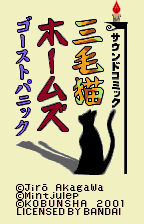
Title screen 
In play 

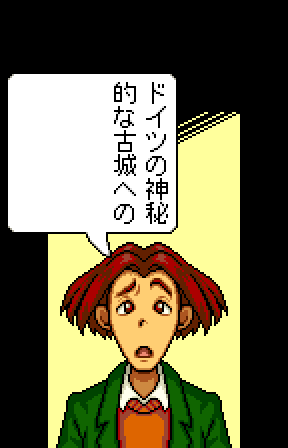
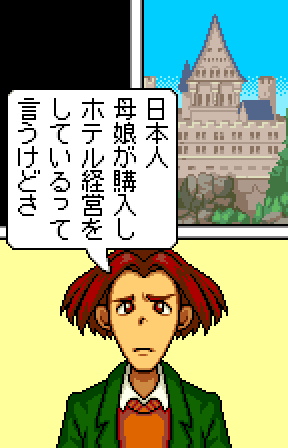
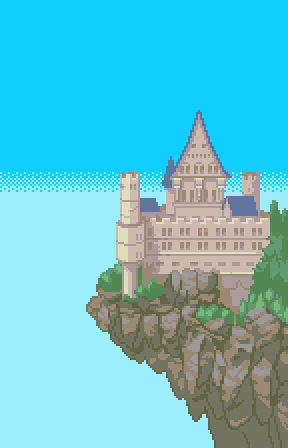
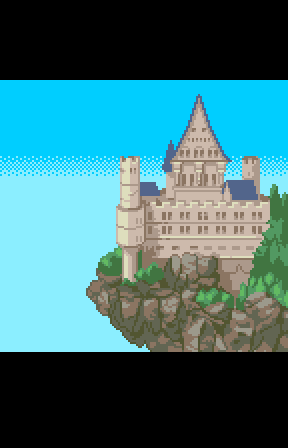
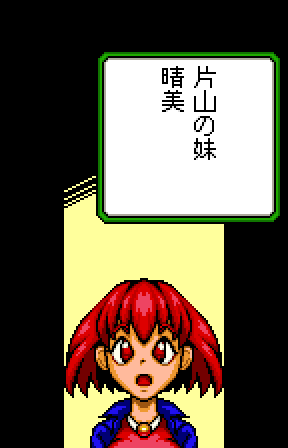
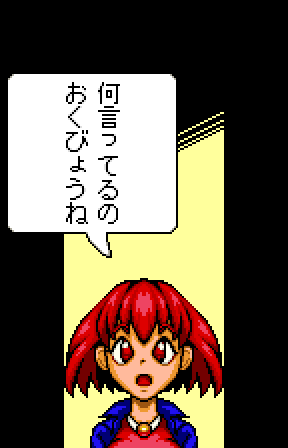
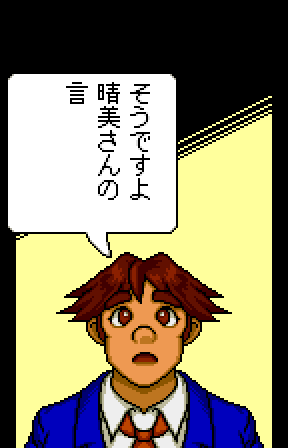

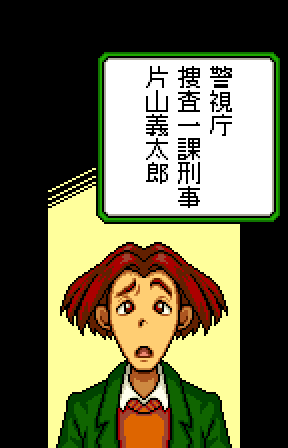


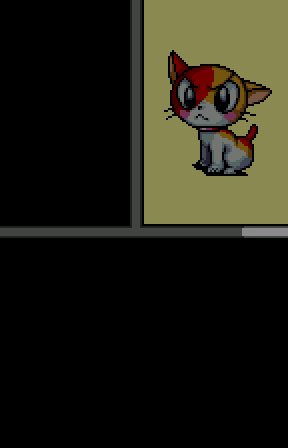
Mikeneko Holmes: Ghost Panic is a mystery adventure based on the Mikeneko Holmes novels by Jiro Akagawa, a series that began in 1978 and whose detective is a calico cat named Holmes. The game was published on 26 April 2001 for the WonderSwan Color by Kobunsha, the publishing house that has issued the novels since the first one.
Holmes and his companions are caught up in a murder at an old castle hotel in Germany, and the story is told as a sound comic: illustrated scenes that build up like a manga, with choices at certain points that send the plot towards one of several endings.
The story
The case is set on the Brocken, which the game places in southern Germany. The mountain has carried legends of demons and witches since ancient times, and many sightings of strange phenomena have been reported there. On it stands a quiet, mysterious old castle, Horukku Castle, which now serves as a hotel for tourists. Holmes and his companions happen to be visiting the castle when a murder takes place there, and they are drawn into the case.
Holmes is the hero. As in the novels, he is a calico cat, and Bandai introduced him as a cat whose powers of deduction put humans to shame. The game’s tagline asks whether the killing at the old castle is the curse of a ghost, and the mountain’s legends of demons and witches give the case a supernatural colour. The characters are introduced in the four-page manual, which otherwise only explains the buttons.
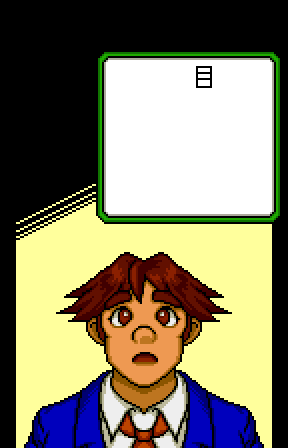
The story is a single case told in comic form, and it does not run in a straight line. At each branch point the player decides what the main characters do, and the plot splits off in different directions, so the case can unfold in several ways and close with one of several endings. A single run through the story takes about half an hour. The comic style shows in small touches such as the way the characters run and the way sounds are drawn on the page.
How it plays
Ghost Panic is a one-player game and it is played by reading. Bandai presented the sound comic as its answer to the sound novel: where sound novels tell a story with text and sound, this one uses manga panels and sound, and it is meant to be enjoyed like reading a comic. The X button moves on to the next page, and progress is saved to the cartridge’s EEPROM.
Each page is assembled in front of the player. Its panels appear one by one with sound effects and pauses of set length, so the game, not the reader, decides how fast the page fills and how long each picture stays before the next. There is no sign that a page has finished drawing, and pressing X too early moves straight on to the next page, which can mean missing a line that matters. It pays to wait for a page to settle before pressing the button.
The player’s part is the choices. When the story reaches a branch point it stops and offers a choice of what the main characters do next, and the pick sends the plot down one path or another. The choices are few, and most of a half-hour run is spent watching the pages play out between them.
The game is built to be played more than once, since each ending is reached by a different set of choices. Choices already taken on earlier runs are shown in a different colour, so there is no need to note down the branches on paper, and reaching an ending that has been seen before brings up a hint about which branch point is the key one. Scenes cannot be skipped, even on later runs, there is no fast way to the next branch point, and the game cannot page back, so every run plays from the start at the same pace. The exact number of endings is not certain.
Development and release
Bandai presented the game as a sound comic in place of the better-known sound novel, meant to be read much like a manga, and promoted it on the strength of the novels’ popularity: the series then ran to 37 books in Kobunsha’s Kappa Novels line with 26 million copies in print. The cartridge sold for 4,300 yen before tax, under the code SWJ-KBSC02, with 32 megabits of ROM and a 16-kilobit EEPROM for saved progress. It is for one player, in mono sound, with no link-cable play.
MintJulep developed the game and is credited on its title screen beside Jiro Akagawa and Kobunsha, which released it under its Kappa Games label. It is occasionally credited to Koto Laboratory instead. The box is marked as for the WonderSwan Color only, so the cartridge does not run on the original black-and-white WonderSwan.
Reception
The game was received harshly. The care taken over the pacing of the pictures and the colour-coded choices drew praise, but players found the forced, unskippable presentation tedious, the choices few, and a single run of about half an hour mostly spent watching. The cartoonish art was felt to suit comedy more than a murder mystery and to give away the culprit too early, the four-page manual was criticised for explaining little, and Holmes’s meowing was singled out as the most convincing part of the game.
Ports and other versions
Ghost Panic was made for the WonderSwan Color and was never ported or re-released on another system. Only two console games have been drawn from the novels. The other one, Mikeneko Holmes no Kishidou, is a separate and much earlier game: a Game Boy cartridge published by Ask Kodansha in February 1991, a decade before this one and from a different company. A Mikeneko Holmes mystery game for the GREE service and feature phones followed in 2012 and is also a title of its own rather than a version of Ghost Panic.