
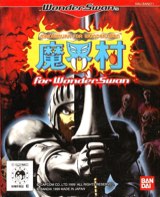
A new Ghosts 'n Goblins platformer made for the WonderSwan, with branching routes, swimming and a climbing stage played with the console turned on its side.
Screenshots
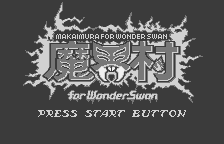
Title screen 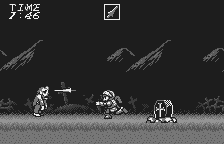
In play 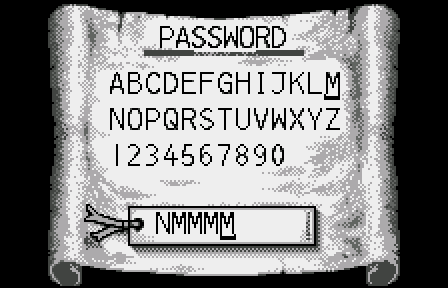
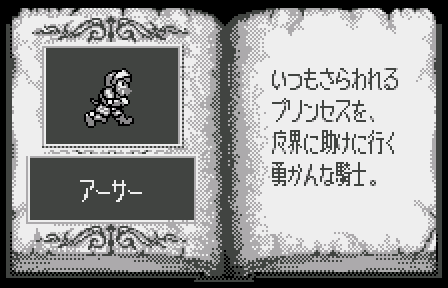
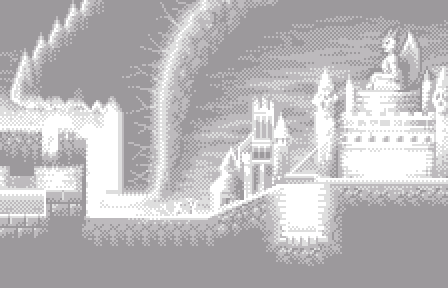

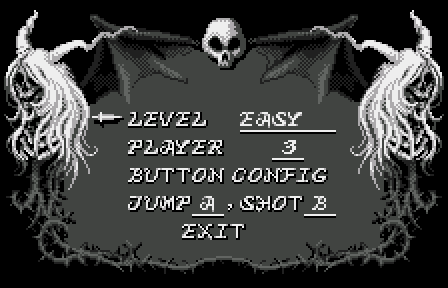
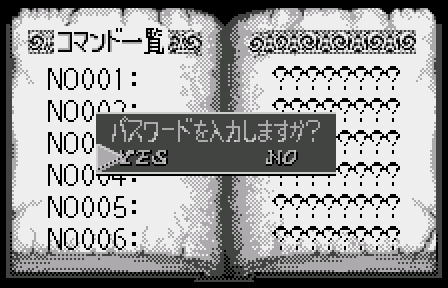
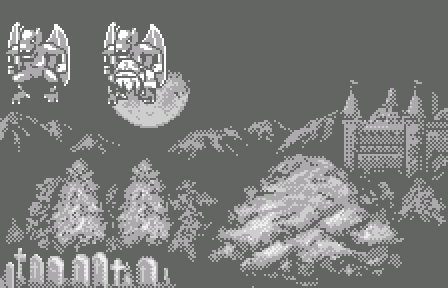
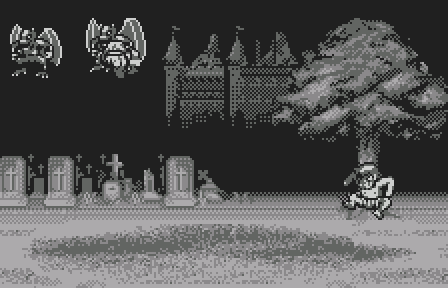
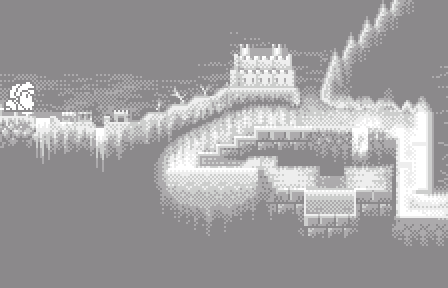
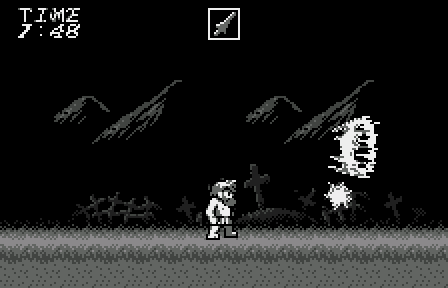
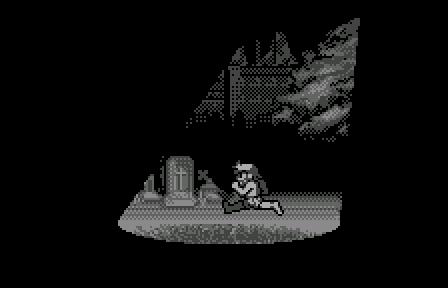
Makaimura for WonderSwan is an original entry in Capcom’s Makaimura series, known in English as Ghosts ’n Goblins, written for the WonderSwan rather than ported from another system. Bandai published it in Japan on 22 July 1999. Capcom, which owns the series, is usually credited with the development, though the game is also attributed to Bandai together with the studio Team OX, so who did the programming is not settled.
It plays like the earlier games in the series, with the knight Arthur making his way through side-scrolling action stages. Much of what the player meets is familiar, since enemies, weapons and backgrounds are taken from the three earlier games, among them Daimakaimura and Chou Makaimura. New to the series are routes that split between the second and fifth stages and sections where Arthur swims underwater.
The best-known part of the WonderSwan version is a tall vertical stage in which the player turns the console a quarter turn and holds it upright while Arthur climbs and slides down a rope. The game also offers tips for the player, and its characters move with smoother animation.
The story
The game follows on from the first Makaimura. Arthur rescued the princess, Prin-Prin, from the Demon Realm and has since become the kingdom’s foremost hero. While he is with her, winged messengers from the Demon Realm appear and carry her off once more. Arthur buys back his armour and sets out after her into the realm of demons.
Arthur is the only character the player controls, and the story is told in short scenes and messages rather than long conversations. The forces against him are the creatures of the Demon Realm, many of them old enemies from the series, such as the zombies that climb out of coffins in the opening graveyard and the demon Red Arremer. Behind the kidnapping stands the emperor who rules the Demon Realm.
The journey runs through graveyards, cliffs, fortresses, flooded caves, a mine, an execution ground and castles, each stage ending with a boss. As in the series before it, reaching the end of the road once is not the whole story: a message at the end of the first trip through the game sends Arthur back to the start for a second pass through the same lands. The plot is new, but it is built around familiar faces.
How it plays
Most of the game is played with the WonderSwan held horizontally. Arthur walks, jumps and throws his weapon straight ahead, as in the first game: there is no magic, no double jump and no throwing up or down. Once he leaves the ground he is committed to the arc, and the jump is always the same length however long the button is held, so many deaths come from misjudged take-offs. All of his weapons can be thrown in quick succession, though only two lances can be on screen at once.
Arthur starts with the lance, which serves well throughout. Other weapons turn up in treasure chests that appear along the way, or are carried by enemies who drop them when defeated, and picking one up replaces the weapon in hand. Seven weapons are known: besides the lance there are the dagger and the crossbow, the most useful of the rest because they can be thrown fast enough to pin enemies down, and the torch, sword and axe, which are weaker. The seventh is the Goddess’ Bracelet, a powerful weapon with a shorter reach than the lance that is needed to finish the game.
Armour comes from chests as well. What a chest gives depends on Arthur’s state at the time, so losing armour to enemy hits changes what later chests hold, and staying armoured gives the best results. The bronze and the gold armour use the same icon, so the player has to remember which one Arthur is wearing. Continues are unlimited.
The game has seven stages. The first is a graveyard; the second climbs slippery hills to a castle with a living fortress for a boss; the fourth is an execution ground ending in a stretch of small moving platforms and a boss, a horse wreathed in flame; the fifth mixes a water section, a draining room, a guillotine and shadow copies of Arthur, with a magician as its boss; and the sixth sets earlier bosses against Arthur again before a final battle. The route divides in the middle: one version of the third stage is a flooded cave that Arthur swims through, with a trio of giant fish at its end, and the other is a dim, fiery mine shaft where the console is turned upright and Arthur climbs and rides ropes, pressing down to slide and jumping down to drop faster, before facing a fire spirit.
The game runs in two loops, and the credits roll only after the second. The Goddess’ Bracelet appears only on the second loop, and getting it takes some work: the player has to uncover every hidden chest in a stage, break a gargoyle statue and open the last chest while wearing the gold armour, as hinted at the end of the first loop. Expert players clear both loops in under half an hour, and a tool-assisted run does it in about 22 minutes.
The game is generally thought easier than the hardest entries in the series, at around half their difficulty, though still demanding. Enemies come in large numbers, and the bosses have small weak points that need accurate throws, although most have little health and fall quickly to close-range attacks. The usual sticking points are the moving platforms at the end of the fourth stage, the fiery horse that guards it, and the run of bosses in the sixth stage. Red Arremer, the series’ most feared enemy, is slower and easier to read than usual. The playing tips described below add a further layer, rewarding persistence with passwords and cheats.
Development and release
Bandai’s catalogue presented the game as the newest entry in the series and its first appearance on a handheld, and stressed that it kept the series’ reputation for being hard to clear. The cartridge carries copyright lines for both Capcom and Bandai. Besides Capcom, the game is also described as an all-new work made by Bandai under licence, and credited to the studio Team OX; Capcom’s own history of the series leaves it out. The price was 3,800 yen before tax.
Modes and features
Bandai singled out two new systems. The first is a set of playing tips that appear when the player meets certain conditions; collecting them unlocks tricks that can then be used in play. The second is branching stages, which Bandai described as a first for the series. Arthur also gains new moves, swimming through water and sliding down ropes on cliff faces.
Secrets and extras
The playing tips work as the game’s built-in cheats. Sticking at certain tasks earns a password, and entering it and then a command can give Arthur invincibility against ordinary enemies or let him change weapons. The game has to be played through a second time to reach the full ending.
Reception
Players found it a faithful imitation of the series. It was thought better made than expected from Bandai, and the swimming and the upright stage were enjoyed, but the water stages were found monotonous, players wanted more new ideas, and Arthur was felt to move stiffly. The jumping is seen as the hardest part: the jump is always the same length, and the timing at ledges and on small moving platforms is very strict. The dark monochrome screen with its ghosting also makes small moving enemies hard to follow.
Ports and other versions
Makaimura for WonderSwan was released only on the WonderSwan, and it was never ported, re-released or included in any of Capcom’s collections. It is also counted among the versions of the first Makaimura, as a game built on that one but with a new story, weapons and enemies from the two sequels, and stages of its own, so the same facts can frame it either as a new entry or as a reworked relative of the 1985 arcade game.
It is easy to confuse with the Game Boy Color Ghosts ‘n Goblins, which Capcom released in North America in January 2000 and in Europe in 2001 and which was never sold in Japan. That cartridge is another handheld version of the first game; it is a separate release, not a conversion of the WonderSwan game, which stands apart from it through its branching routes, swimming and upright climbing stage. The series’ later handheld outings are different games as well: Chou Makaimura R on the Game Boy Advance in 2002 brought the Super Famicom’s Chou Makaimura to that system, and Gokumakaimura on the PSP in 2006 is a new entry.