
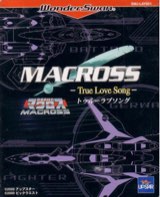
A Macross game for the WonderSwan in which a Valkyrie pilot on an emigrant ship trains, fights in command battles and grows close to one of three heroines.
Screenshots
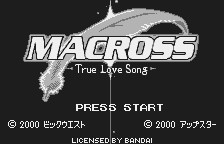
Title screen 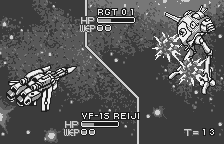
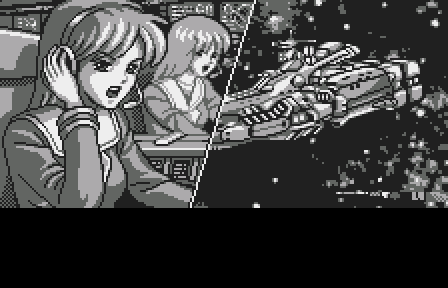
In play 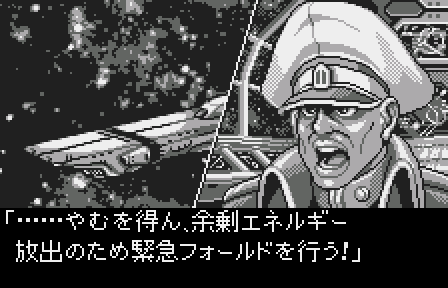
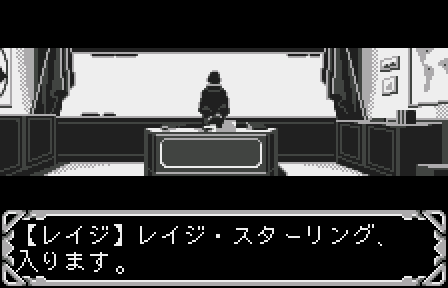
Macross: True Love Song is a game for the black-and-white WonderSwan set in the Macross science-fiction anime series, released on 23 March 2000 by Lay-Up. Lay-Up is the publisher, but the game’s copyright line names Upstar next to Big West, the holder of the Macross rights, which is why it is sometimes credited to Upstar instead or to the two names together. Upstar was the part of Lay-Up that made its games. The story is an original one rather than an adaptation of any of the anime.
The player is a trainee Valkyrie pilot pressed into service on a stranded emigrant ship in 2043. The game mixes week-by-week scheduling, training and command battles fought from a transforming Valkyrie with a love story.
The love story involves three heroines, and the relationships with them are played out in an adventure mode, which leads up to a final choice made by the player.
The story
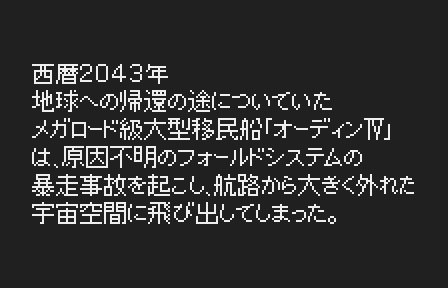
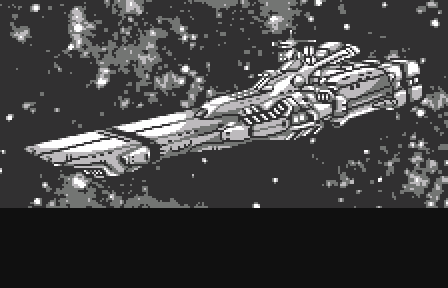
The game is set in 2043, 33 years after the first Macross met with a similar accident. The Odin IV is a sister ship of the Megaroad class and the core of one of the later long-range emigrant fleets. During its maiden voyage its fold system, the series’ faster-than-light jump, runs out of control and forces an emergency fold. The ship comes out 26 light-years from where it should be, cut off from its escort fleet, and gives up on the emigration to make its own way back to Earth.
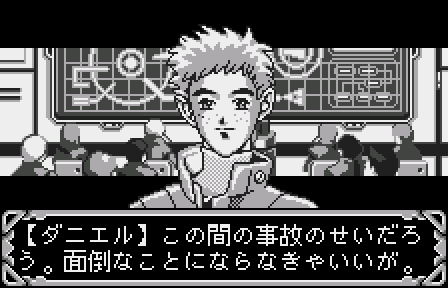
Without an escort the ship is exposed to attacks by the Zentradi and to terror attacks by groups opposed to the United Nations government. The captain calls up the trainee pilots who were about to sit their graduation exam and puts them into the ship’s defence force. The hero, Reiji Sterling, is one of them. He is a troublemaker with a long record of breaking flight rules and Valkyrie regulations, several spells in confinement and a habit of turning up late, and he chases women. He is made a second lieutenant on special duty. His comrade Daniel, a married man with a two-year-old daughter, puts his family first and flies with Reiji on patrol.
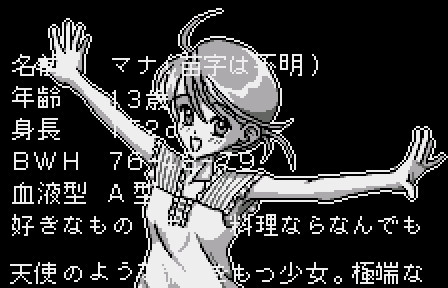
The three heroines each come into Reiji’s life in a different way. Major Elena Simmons, aged 22, is a technical officer for tactical systems who taught Reiji at the military cadet school and likes swimming and gambling. Mio Saotome, 18, works part-time at a café called Petit Love and dreams of becoming a dancer in musicals; Reiji first meets her when he saves her from a gang of thugs in the town. Mana, 13, is a caring girl who likes singing and making potato dishes. She lives at a music production company, her background is unclear, and her producer, Clay, keeps a tight hold on her.
The story follows the ship’s long trip home, with Reiji’s duties as a pilot on one side and his private life on the other. As in the anime, the romance includes a love triangle with a singer among the heroines. The main course of events is the same whichever heroine the player courts, and what changes is how things turn out with her.
How it plays
The WonderSwan is held horizontally, and the game is played through menus and command choices. It is an adventure and simulation game in the style of the dating games of its time. The player sets a schedule for each week, and events then happen according to the plan.
Training raises the pilot’s parameters. The skills do not need to be raised evenly, and building up a few of them is the easier way through the game. Heavy training makes later fights very easy, to the point that the final boss can be beaten without trouble.
Pilots go out on patrol at regular intervals, and meeting the enemy on patrol starts a battle. Battles are fought by choosing commands, in the manner of an RPG, and the Valkyrie can be switched between its three forms, the Fighter, the Gerwalk and the Battroid, to suit the situation. They are somewhat hard at the start while the parameters are low, and from the middle of the game onwards they stop being a challenge.
New aircraft come with experience. Reiji starts in the VF-1S, which is long out of date by the 2040s, and moves on to the VF-11, skipping the VF-4. Near the end the player chooses between the VF-19 and the VF-22.
The romance is decided by how close Reiji grows to each heroine and how those feelings balance out. Each of the three has her own ending, and staying devoted to one of them, rather than being nice to all three, is the simple way to win her. The game is short and easy and can be finished quickly, though the long event scenes slow it down, and the cartridge’s battery-backed memory keeps the save.
Modes and features
The game is a romance simulation combined with a raising adventure, with a light strategy element. There is a single one-player game with no link-cable play.
Reception
Players found the game easy and short. Battles are hard only while the pilot’s skills are low and pose no challenge from the middle of the game onwards, raising one skill well works better than raising all of them evenly, and winning a heroine is simple as long as the player stays devoted to one of them. Some players felt that long event scenes made the game drag and that heavy training left the final enemy too weak. The romance and battle sides were both thought thin, though the brief length was also seen as a fair fit for a handheld.
Ports and other versions
Macross: True Love Song was made for the WonderSwan and was never ported, remade or re-released on another system. Other Macross games of the same years went mainly to the PlayStation, the Dreamcast and Windows as flight and shooting games. The only other handheld entry of the time, Macross 7 for the Game Boy Color, came out in the same month but is a separate side-scrolling shooter from another developer, whereas True Love Song is a schedule-driven romance and raising game with its own story.
Notes
The title is written in more than one way in Japanese. The short form is Macross with True Love Song set between wave dashes, and the longer form, Chō Jikū Yōsai Macross True Love Song, adds the name of the first anime series. Bandai billed the genre as a multi-scenario adventure with a raising simulation. The game has stereo sound and no link-cable play, and the cartridge holds 16 megabits with battery-backed save memory.