
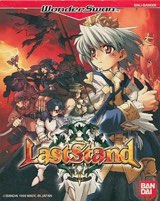
An early WonderSwan strategy RPG in which ageless royals send heroes into automatic battles, train them over the years and hand their abilities to successors.
Screenshots
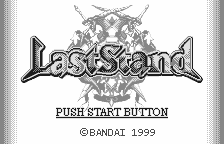
Title screen 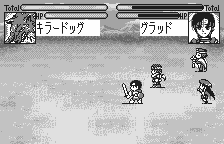
In play 
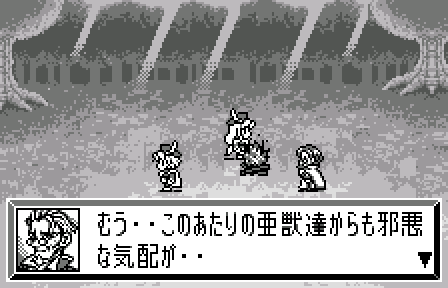
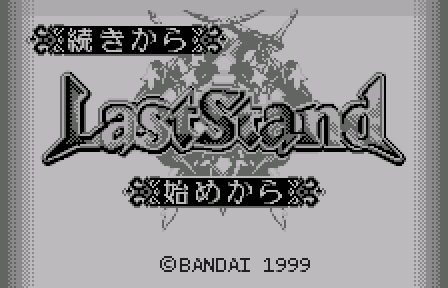
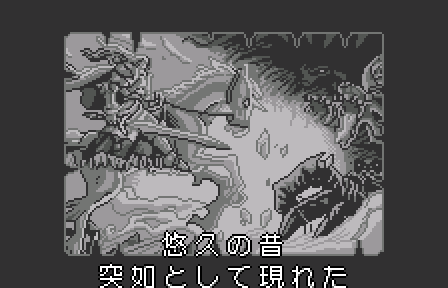
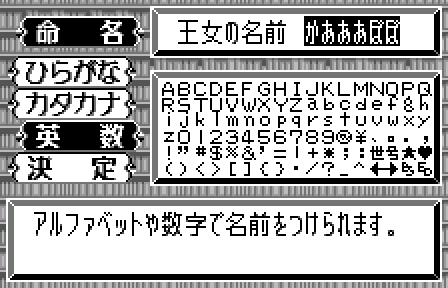
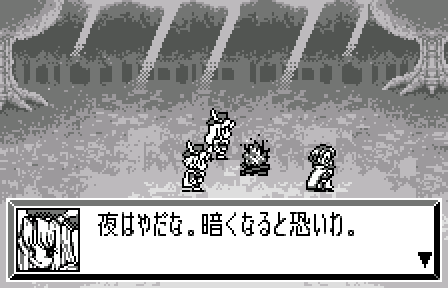
Last Stand is a strategy role-playing game for the WonderSwan, developed by Soft Machine and released by Bandai on 27 May 1999. It came out less than three months after the console itself went on sale in Japan, which places it among the earliest games on the system.
The game is set in a kingdom that has lived in peace for centuries behind a protective barrier left by its first king, until a demon king who had been sealed away returns. The player commands the old king’s ageless prince and princess and a growing band of fighters, who are trained, aged, retired and replaced by successors over the years of the campaign.
The story
The kingdom of Rowa takes its name from its first ruler, the hero king Rowa. Long ago a demon king appeared, and Rowa led humans and the beast-like ajū together to seal it away. The Kuruze no Mamori, the barrier he left behind, has kept the land at peace for several hundred years since, but Rowa himself did not survive the battle.
Rowa’s children did not grow up after him. His twin son and daughter, Prince Alec and Princess Reilly, and their butler Oblight were placed under a curse that stops them ageing, so the three are more than a hundred years old while still looking like children of about ten. They are the game’s three main characters, and the player sees the story through them.
Over the long peace the ajū, once allies, have turned violent, and with the sealed demon king returning they now threaten the kingdom again. The story begins when Alec’s party goes to the aid of a warrior fighting ajū near the castle. From there the royal party sets out to protect the outlying regions, and four heroes rise to defend the kingdom alongside the ageless prince and princess.
The aim is to gather heroes from across the land, free its regions one by one from ajū rule, and along the way uncover the secret of the Kuruze no Mamori, the curse on the royal children and what really happened in Rowa’s battle. Because the three leaders never age while everyone around them does, the story covers many years, and the first companions grow old and retire as it goes on. The art is clean on the monochrome screen, with small super-deformed figures in the story scenes, and the characters were designed by the manga artist Aoi Ōmori.
How it plays
Last Stand is played with the WonderSwan held horizontally. The map of the kingdom is divided into regions, and the campaign runs in turns of one month each, which gives the game the feel of the pennant mode in a baseball game. Each month the player decides which squads fight, train, search and rest, and the calendar keeps moving whatever happens on the battlefield.
Battles are fought entirely by the computer. Alec, Reilly and Oblight never fight themselves; the heroes do. Before advancing into a region next to the player’s territory the player sets the squad’s formation, and once the battle starts the only choices are to change that formation or to push on or pull back. A battle that runs past its time limit ends in a draw. Defeating the boss of a region frees it and opens the regions beyond. The enemy also takes turns to advance, and if its forces reach the player’s home base the game is over.
The computer’s tactics are the game’s best-known weakness. Front-line fighters tend to wander off or turn back, which leaves mages and priests exposed and often gets them killed, so a formation that protects the back row matters more than it might seem.
Heroes improve in two ways. Training means fighting again in a region already freed, one squad per month; advancing into a region and then retreating trains heroes more efficiently but costs a month. Education raises strength or endurance, or sets a hero’s preference for the front or back row, and changes only hidden values rather than levels. The game shows no numerical stats at all, and a hero’s level counts for more than the class.
New heroes come from searches. A master is sent to a chosen region for a short or long search, or the search is left to them, and longer searches give a better chance of a good recruit; each region tends to turn up certain classes. Masters are appointed each January and only from heroes in advanced classes, and every extra master allows more battles and searches in a month. Heroes start in one of the basic classes, among them warrior, priest, ranger and mage, and get one chance a year to change to an advanced class such as high warrior, knight, swordsman, bishop, archer, pugilist, beast master with a whip, curse caster, sorcerer or sage. Some classes are open to only one sex, and a hero’s sprite changes with the class.
Heroes age as the months pass and retire at around fifty, unless they become masters who coach and scout for the next generation. A hero with enough experience can find a successor, who inherits their abilities. Late in the game the high warrior, sorcerer and beast master are the strongest classes. Reaching the end takes about 18 hours, and there are two endings. It plays more like a training and management game than a tactical one in the style of Fire Emblem, and SoftBank published a full strategy guide for it in June 1999.
Modes and features
The game is for one player only and has no link-cable features, and its sound is in stereo. Progress is kept in battery-backed SRAM on a 16-megabit cartridge. Bandai announced 27 May 1999 as the date a few weeks ahead of release, and the game came out on that day.
Ports and other versions
Last Stand was made for the WonderSwan and was never released on another system or re-released later. It did not grow into a series, and it is not tied to any earlier game. The feature Bandai promoted as its own is the passing of abilities from veteran fighters to their successors.
Notes
The kingdom is called Rowa after its first king, and the barrier he left behind is the Kuruze no Mamori, the Protection of Kuruze; uncovering its secret is the thread of the story. The monsters that overrun the land are called ajū, a word for beast-like creatures, rather than the usual word for monsters.