
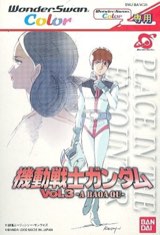
The last of Bandai's three WonderSwan Color games retelling the first Mobile Suit Gundam, covering episode 31 to the final episode, with four original side scenarios.
Screenshots
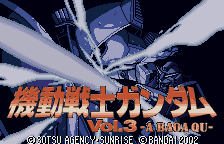
Title screen 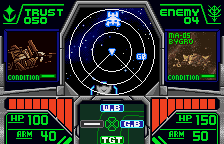
In play 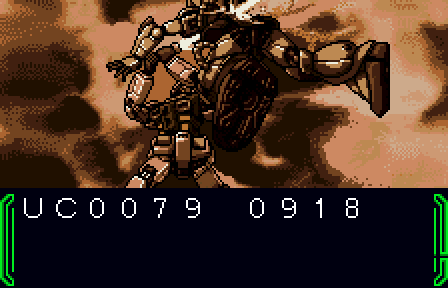
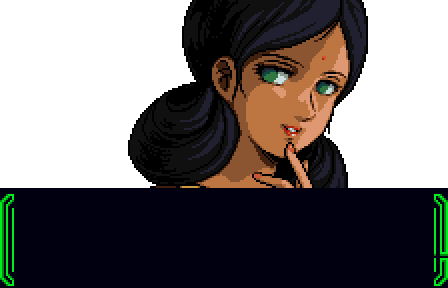
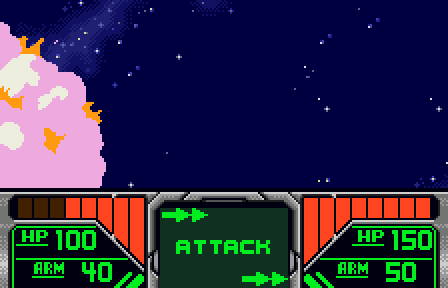
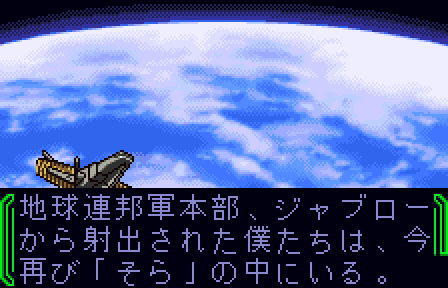
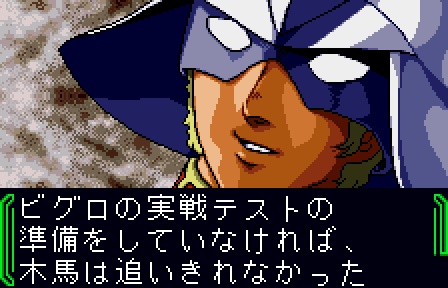
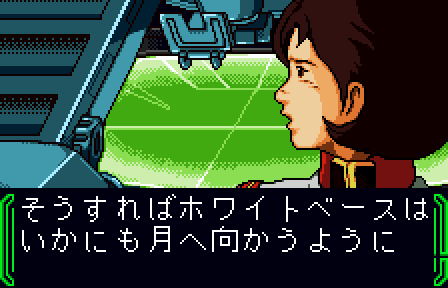
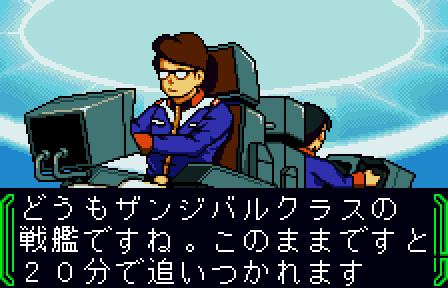
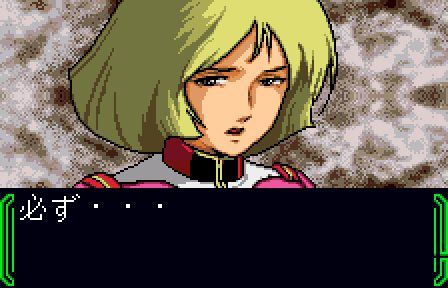
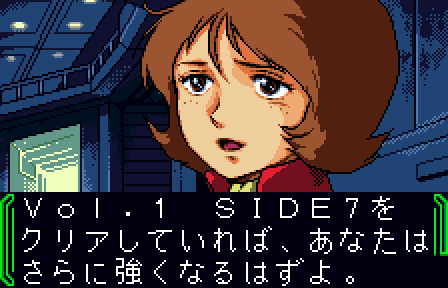
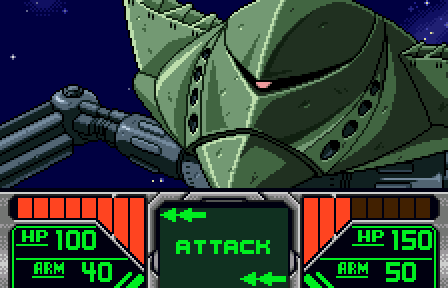
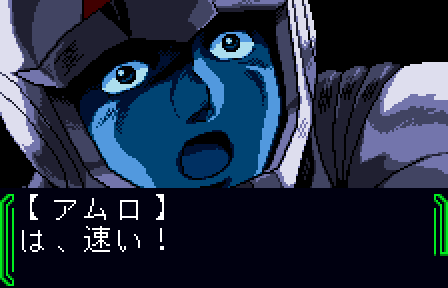
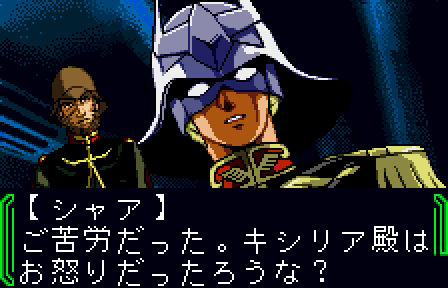
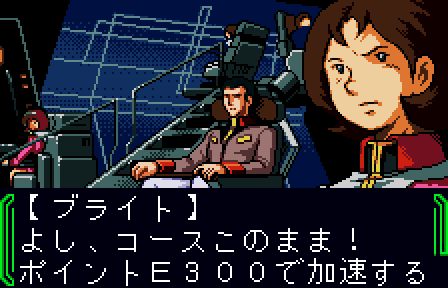
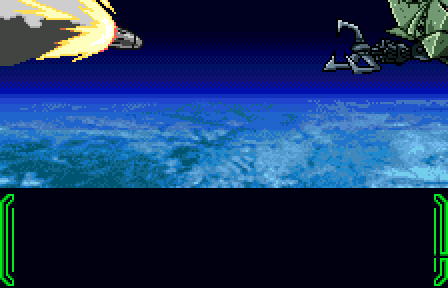
Kidou Senshi Gundam Vol. 3: A Baoa Qu completes Bandai’s trilogy of WonderSwan Color games based on the original Mobile Suit Gundam TV anime. Released on 25 May 2002, nine months after Vol. 2: Jaburo, it takes the story back into space and runs from episode 31, the chase of the Zanzibar, to the last episode of the series. Proficiency earned in Vol. 1 carries over when its clear data is on the console.
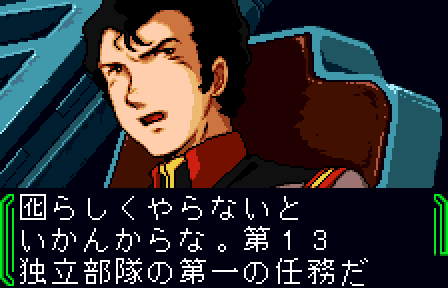
As in the earlier parts, each episode is told from Amuro’s point of view in novel-style adventure scenes, broken up by command battles. Bandai summed up the three parts as Amuro thrown into the war in Vol. 1, growing into a pilot through the loss of comrades in Vol. 2, and becoming the strongest fighter here, with his reunion with his father and his meeting with Lalah among the events of this stretch.
The story
The manual’s prologue is told by the crew themselves. Since 18 September of U.C. 0079, when their home colony became a battlefield during the Federation’s top-secret Operation V, they have been flying military secrets they took up without permission, fighting to stay alive with too few supplies and treated as a threat by Zeon’s elite forces. Battle after battle has turned them into soldiers. With Jaburo behind them, White Base heads back into space to carry the war to the Federation’s victory. The game covers the thirteen episodes from 31 to the final episode, 43, on three maps: the space around Side 6 for episodes 31 to 34, the area around the fortress Solomon and the Texas colony for 35 to 40, and finally the approach to A Baoa Qu, the fortress that guards Zeon’s home colony.
Amuro Ray, the pilot of the RX-78-2 Gundam, has come through so many hard fights that he is now a full soldier. Bright Noa started the war as an officer cadet with the rank of ensign and was promoted at Jaburo to be White Base’s captain in his own right. Sayla Mass flies the G-Fighter, now together with Sleggar Law, a pilot who joined the ship as a replacement just before it left Jaburo, and Kai Shiden pilots the Guncannon. The helmsman Mirai Yashima meets her former fiancé at Side 6, an inspector there whom their parents had chosen for her. Amuro’s father Tem Ray, the engineer responsible for developing the Gundam, has been missing since he was thrown into space during Zeon’s attack on Side 7.
On the Zeon side, Gihren Zabi, the supreme commander and eldest son, rules as a dictator who believes only the able should survive. His brother Dozle commands the space attack forces from Solomon, the fortress Zeon built by moving an asteroid into the area of Side 1. Their sister Kycilia oversees the forces sent to Earth, with the colonel M’Quve still under her. Char Aznable, the Red Comet, has his own Gelgoog in this stretch, and new pilots enter the war: Lalah Sune, a Newtype lieutenant whose talent Char discovered, and Charia Bull, a commander of the fleet from Jupiter, sent from Gihren to Kycilia for his own Newtype potential.
As before, the story is seen only from Amuro’s side, now with more original lines than the earlier parts, such as a talk between Amuro and Bright on the way to Side 6. The battles are meant to show Amuro waking as a Newtype, a new kind of human whose awareness has widened through life in space, until he can read what his enemies are about to do. Four extra scenarios, the recollections of Kai, Fraw, Mirai and Sayla, tell parts of the war from their point of view.
How it plays
Vol. 3 follows the anime from episode 31 to episode 43 in the same adventure and simulation form as the earlier parts. On the title screen New Game starts at episode 31 and Load returns to a save. If the console holds a cleared Vol. 1, choosing New Game opens a transfer screen automatically and a tenth of each proficiency carries over, so the 9,900 maximum of the first game becomes 990 here. Clear data from Vol. 2 is not needed. On the map the X buttons move the cursor between stages and A selects one, and each stage shows how many of its events have been found, such as 12 of 17. In story scenes A advances the text and confirms, X1 and X3 move the choice cursor and START skips the conversation.
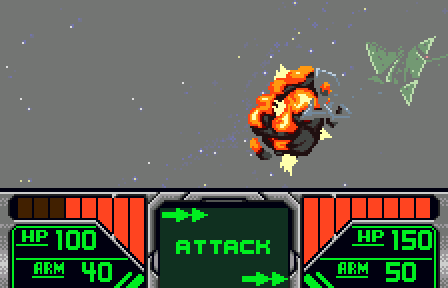
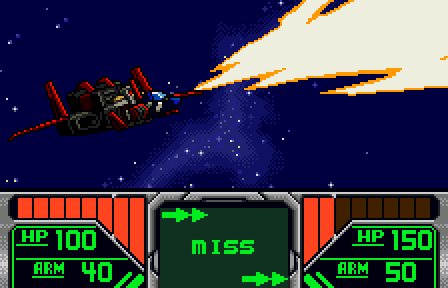
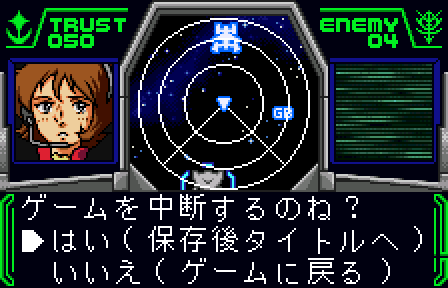
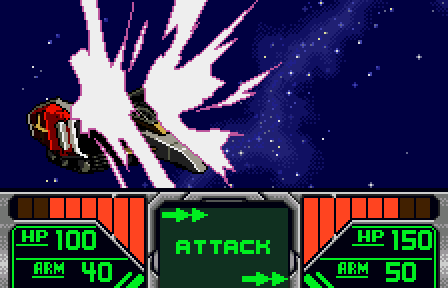
Battles begin on the optical radar. X1 moves the Gundam forward, X3 back, and X2 and X4 turn it right and left. Pressing A with an enemy inside the fan-shaped field of fire opens the command screen, and B switches between targets inside it. Y1, Y2 and Y4 call allies and Y3 shows the stage’s objective. Enemy lights are white when they have not noticed the Gundam and red when they have, and an enemy that attacks from outside the field of fire can be neither blocked nor answered. The screen shows trust, the pilot’s condition, the Gundam’s armour, HP and weapon energy, and the same three values for the enemy along with the number of enemies left. A red condition means Amuro is fired up and at his best, green is normal and blue means he is rattled, and the condition affects accuracy, dodging and the speed of the Bull’s-eye sight. HP does not recover during a battle. Weapon energy falls when weapons are used and when hits are taken, and recovers over time, and anyone whose gauge reaches the red zone overheats and cannot act.
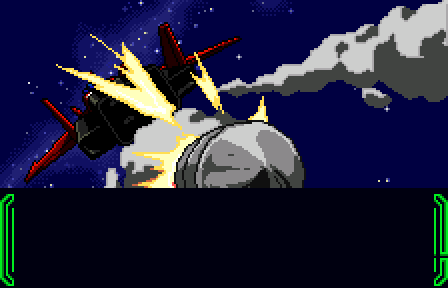
The command screen is built around a new ACT gauge. The player’s cursor starts from the left and the enemy’s from the right, and whoever reaches the centre first acts first. The length of the gauge changes with the weapon chosen and the distance to the enemy, and the speed of the cursor depends on the condition, the weapon and the charge system. When the player’s cursor reaches the centre, the attack’s strength depends on how far ahead of the enemy’s cursor it is. The weapon window rates each attack for speed from A to E, which changes with distance, power, damage to armour and critical chance. The weapons themselves no longer change with distance. The tackle has become a kick, which does the most damage to armour and also drains energy, the hammer is gone, and the beam rifle hits hardest. The manual’s advice is to strip the armour from warships and strong enemies with melee attacks first.
The charge system is new. After the cursors start moving and before either reaches the end, pressing A spends the remaining weapon energy to push the player’s cursor forward at once, which can turn a fight the enemy was about to start. The saber no longer drains energy, and energy recovers faster than in Vol. 2. The Sudden Select, three buttons pressed in time with arrows on screen, can now come up at any moment, including in story scenes. The Bull’s-eye triggers at random during long-range shots and in scenes that need a precise shot: a target sight moves over the enemy, the hit rate is shown beside it and rises the closer the sight is to the centre when A is pressed, all within a time limit. When both sides swing sabres at almost the same moment at close range, they lock blades, and hammering A wins the clash and lands critical damage.
Allies help through the trust system. Trust rises and falls with choices in story scenes and with how battles go. When an allied mobile suit or White Base is on the radar, the Y buttons ask it for a weak attack, which costs 10 trust, or a strong attack, which costs 20, and each request also uses one of a limited number of support points, three in the manual’s example. Allies may refuse when trust is low, and their support is weaker than in Vol. 2. Allies take damage too, and the colour of their call button changes as their durability falls. An ally whose durability reaches zero withdraws, and if White Base’s reaches zero the game is over.
A win leads to the report screen with three proficiencies: shooting raises the accuracy of shooting, melee the accuracy of melee attacks, and reaction helps the Gundam act first and dodge. They grow from the total damage dealt and taken, and for an enemy that cannot be beaten the manual’s advice is to replay a cleared stage and raise them. There is one save slot, used after each episode, and pressing START on the radar saves in the middle of a battle so that Continue on the title screen can pick it up later; that resume data is deleted once it has been used. After each episode an event check screen, also opened with START on the map, lists the names of the events found and the state of those still missing, and faded titles hint at what is left. Finding certain hidden events adds a Bonus menu to the title screen with a Sub Scenario mode for the four recollections. After one clear a WonderGate menu also appears on the title screen, through which the side scenarios can be played without finding those events. A full run takes about two to three hours, and the battles are easier than in Vol. 2.
Development and release
Bandai’s official site for the game was online by late March 2002 with key art credited to KEIICH SATO, as the name is printed there. Bandai promoted the game as a chance to see parts of Amuro’s story that the television series never showed, written under Sunrise’s supervision. Seeing every event in the game unlocks a true ending.
Modes and features
The main mode is the story, with New Game, Load and Continue for a battle that was saved midway. The battles were reworked so that fights are quicker and Amuro’s growth into a Newtype shows in them. Every mobile suit and mobile armour that appeared on television is included. Counting hidden ones, there are more than 150 events across the adventure and battle sections. The first two games allowed saving only between scenarios, so the mid-battle save is new here and meant for play on a handheld.
Ports and other versions
Vol. 3: A Baoa Qu was made for the WonderSwan Color and was never ported, remade or re-released elsewhere. Bandai covered the same final stretch of the anime on the PlayStation 2 with Mobile Suit Gundam: Encounters in Space, released in Japan on 4 September 2003 as the follow-up to its 2000 action game, but that is a different game built around 3D mobile suit combat. This one stands apart as a novel-style retelling from Amuro’s point of view that takes over saved progress from the two earlier WonderSwan parts.
Notes
The game supports the link cable, though what the link is used for is unknown, and is for one player. It needs a WonderSwan Color or SwanCrystal. As with the first two parts, the developer is unknown.