
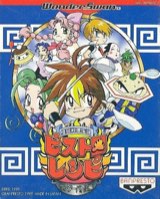
The first Bistro Recipe game, released by Banpresto for the WonderSwan, in which cooks summon fighting Foodon monsters out of the dishes they make.
Screenshots
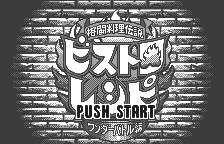
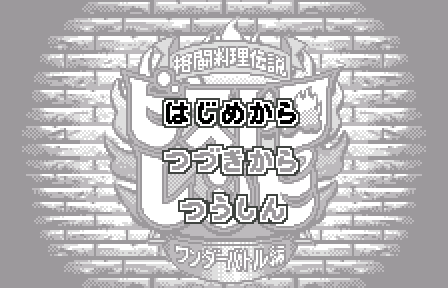
Title screen 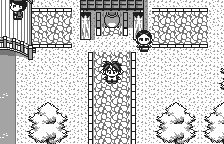
In play 
Kakutou Ryouri Densetsu Bistro Recipe: Wonder Battle Hen is a role-playing game from Banpresto’s Bistro Recipe series, released for the WonderSwan on 30 September 1999, about seven months after the console went on sale. It was the first of three Bistro Recipe games, and the same studio, Red Company, made all of them; the other two came out on the Game Boy Color in October and December 1999. The series ran at the same time as a manga in Kodansha’s Comic BonBon, written by Shuntarō Ashida and drawn by Naoto Tsushima, and an anime version was later shown on NHK’s satellite channel.
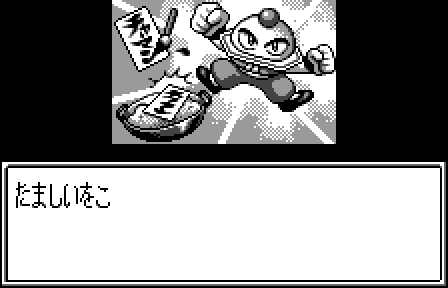
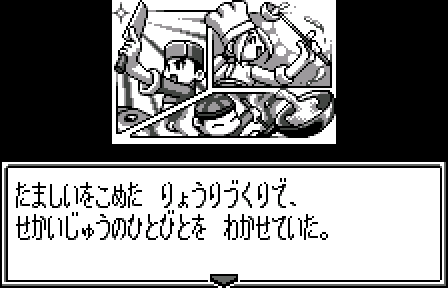
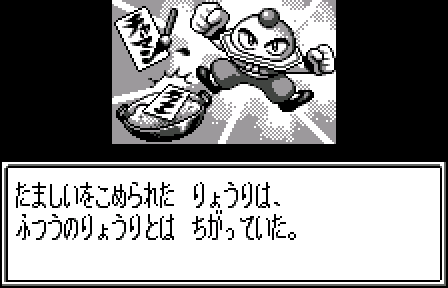
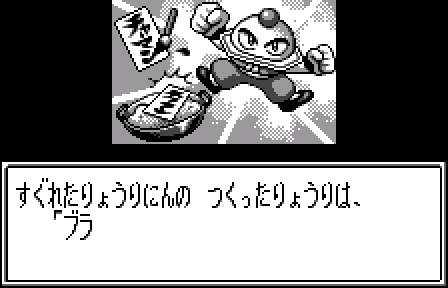
The idea behind the series is cooking as combat. Cooks known as Bistlers lay a recipe card on a dish they have just finished, and the dish turns into a monster called a Foodon that fights for them. A dish that goes wrong gives a feeble creature instead. Foodon are sorted into four cuisines: Japanese, Western, Chinese and ethnic.
The story
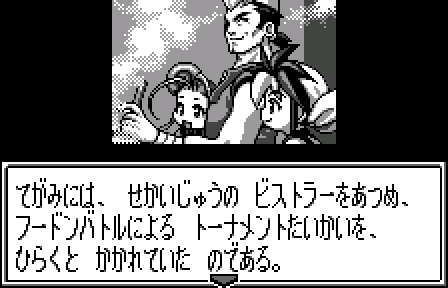
The game is set in the small world of a luxury cruise liner and the ports it calls at. In this world cooks called Bistlers raise Foodon and pit them against each other, and the player’s goal is to become the strongest Bistler of all by defeating one rival after another. The story takes place between the two chapters told on the Game Boy Color.
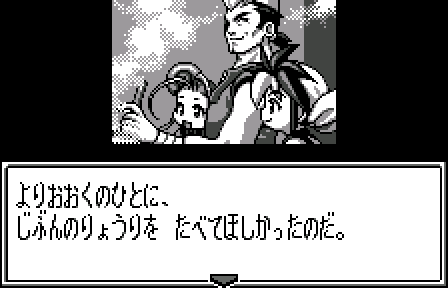
The hero is Zen, an apprentice cook who loves Foodon. His father and teacher is Tsukiji, a legendary Bistler, and his sister Karin looks after him. Along the way Zen meets a large cast of rival Bistlers, each with a style of their own.
The adventure opens in the port town of Asuka, where Zen’s first match, against a Bistler named Usakichi, wins him his first recipe book. From there he boards the cruise ship Bistrancia, which he can explore freely, and enters a cooking-battle tournament held on board, beginning with qualifying rounds in the ship’s waiting room. The story unfolds as a series of episodes, and each one brings the ship to a different port, such as Horai.
How it plays
Wonder Battle Hen is a one-player role-playing game that can be held either vertically or horizontally. Zen walks around towns and the decks of the ship, talks to people and takes on Bistlers. On the ship the grand staircase holds Bistlers of differing strength to fight, the kiosk sells ingredients, and a dojo holds tougher challenges. Wins bring prizes such as ingredients, recipe books and credits, the money used in the shops.
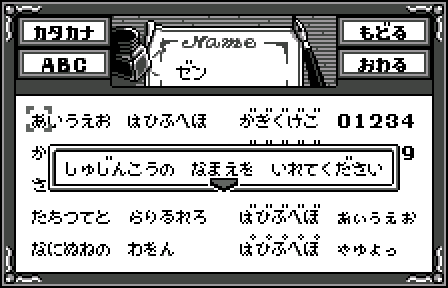
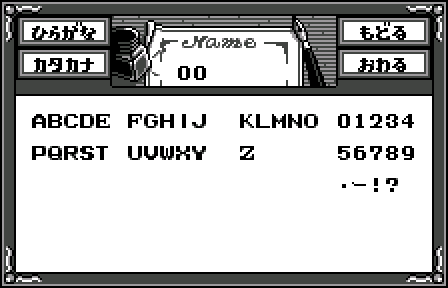
New Foodon come from cooking. Ingredients such as ketchup, rice, eggs, salt and herbs are collected during the game, and the player picks a dish from a list of those the ingredients on hand can make. The dish is then prepared in a cooking minigame, and a higher score gives a tastier dish and a stronger Foodon, while a very poor one produces the feeble Makkuron. Finally the player names a blank recipe card and places it on the dish, and the Foodon is born. Every Foodon therefore needs a recipe, the ingredients and a blank card. Blank cards are scarce and come one at a time from important wins. Recipes come from recipe books: after the first match the player chooses one of four, World Rice, Egg Dishes, Cooking Basics and Foreign Flavours, each holding three recipes, and the others can be collected later, with more books given as tournament prizes.
Battles are fought card-style. A normal match is a one-dish bout between two Foodon, but some rivals demand a course match, an elimination between three Foodon a side, or a full-course match with five. Foodon belong to the Japanese, Western, Chinese and ethnic cuisines, and the first three form a three-way matchup in which each beats one and loses to another. Each Foodon also has particular dishes it resists or fears. Moves carry cooking names such as wrap-and-hide and fluffy throw, and a few, like the spoon slash, appear only in this first game.
During a battle the player can add toppings to a Foodon. A topping can help or backfire: an egg on the omelette Foodon Omeresser restores its health, but toppings tried at random mostly fail, so it pays to learn a few combinations that work and stick to them. Players also pass on two traps in the early game. Jinbei in the ship’s dojo will only fight a three-dish match, so at least three Foodon are needed before taking him on. The shop in Horai sells minced meat, which the ship’s kiosk does not stock, and once the second round of the tournament is over Horai cannot be visited again; its shop also changes its stock after the ship leaves.
Two consoles joined by the link cable can fight each other’s Foodon and trade them. Link trades and battles can bring special changes to Foodon and hidden items. The cartridge carries 64 kilobits of S-RAM for saved progress, and the series’ games held hidden Foodon that only appeared once a password printed in magazines was entered.
Development and release
The original concept was by Ōji Hiroi and the planning by Red Company, and the cartridge carries a Red copyright alongside Banpresto’s. Red Company was the name of the studio at the time; its business passed to the newly founded Red Entertainment in 2001, which is why the game is often credited to that name instead. The manga began in the September issue of Comic BonBon, so the game and the comic were launched together. It sold for 3,980 yen before tax and was built for both vertical and horizontal play.
Banpresto released the three games within a little over two months, which suggests they were made side by side. Although the WonderSwan game came out first, its story is set between the two Game Boy chapters, and unlike them it lets the player walk around a map.
Reception
The WonderSwan game drew little attention. Players remember it as a fairly enjoyable Pokémon-style monster game with an unusual cooking theme, while finding its matchups and topping rules hard to work out; some wished the cartridge had been larger so the idea could have been carried further. The two Game Boy follow-ups had a much harsher reputation and are faulted for their short length and thin balance.
Ports and other versions
Wonder Battle Hen was made for the WonderSwan and was never ported, remade or re-released on any other system. Its two companions on the Game Boy Color, Gekitou Foodon Battle Hen and Kettou Bistgarm Tairiku Hen, are separate games that together tell a two-part story of their own, not conversions of this one. Where those cartridges move the player square by square along a board-like route, the WonderSwan game is the only one of the three with a map to walk around.