
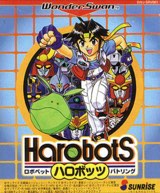
A monster-raising RPG from Sunrise Interactive in which a Haro, the ball-shaped robot from Gundam, changes into robots from Sunrise's anime and battles other Haros.
Screenshots
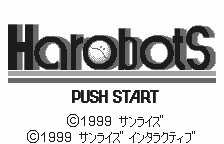
Title screen 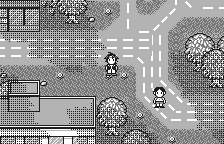
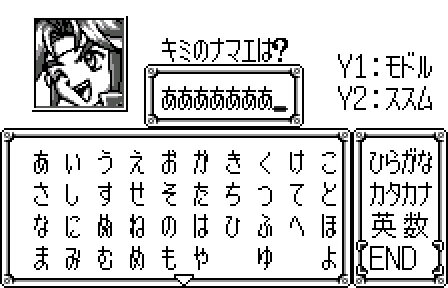
In play 
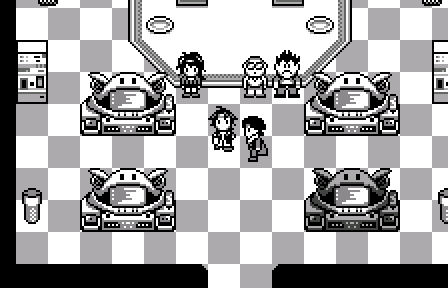
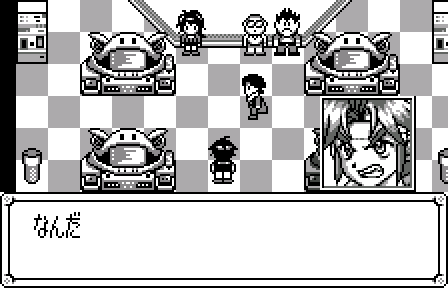

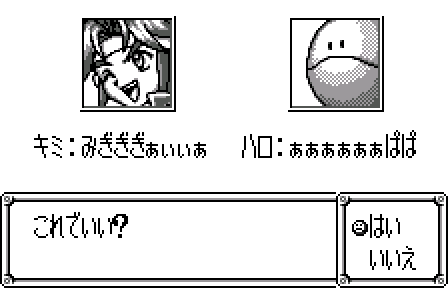
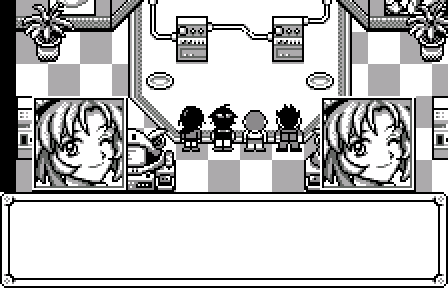
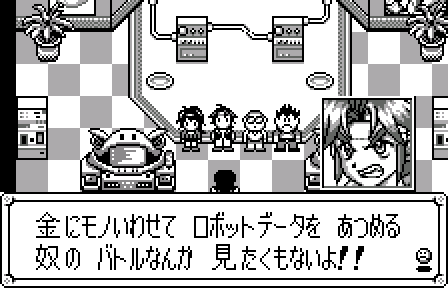
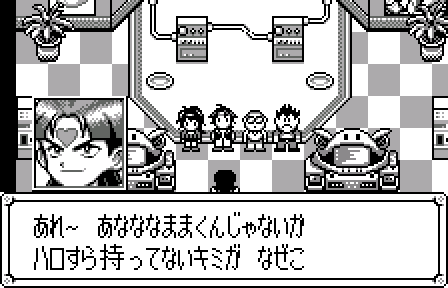
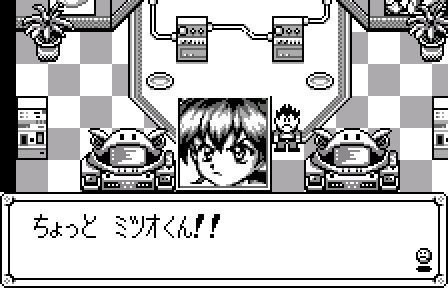
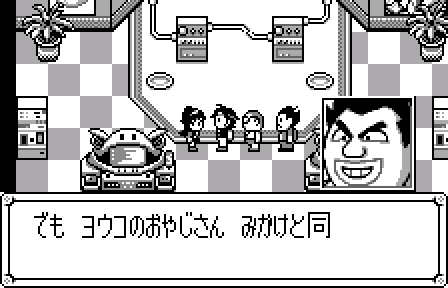
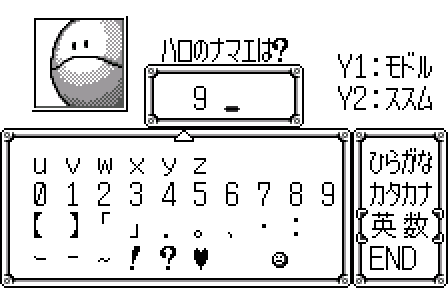
Harobots is a role-playing game built around raising a robot partner, released for the WonderSwan on 7 October 1999 by Sunrise Interactive, the games arm of the anime studio Sunrise. Its star is the Haro, the small round robot first seen in the Gundam series, and the game draws on the long list of robot shows Sunrise has produced over the years.
The player raises a Haro, takes it into battle against other Haros to make it stronger, and turns it into robots from Sunrise anime along the way. The structure follows the pattern of the monster-collecting RPGs that were popular on handhelds at the time.
Harobots came out in the first year of the WonderSwan, a few months after the console’s launch. A follow-up, GB Harobots, was released for the Game Boy Color in December 2000, and more games followed under the Harobots name.
The story
The game is set on the planet Claudia. There, children who reach the age of ten are given a Haro in place of a citizen code. A Haro is a robot pet that grows along with its owner, and when its master is in danger it can change into a giant robot, a Harobot, to protect them. Contests between these robots, called Harobots Battles, are the great craze among the planet’s children.
The hero is a hot-blooded boy with one problem: he has no money, and a Haro is beyond his means. He finds one at a rubbish dump instead, and picking up aluminium cans is how he earns a little cash. Soon after, a rival challenges him to a battle. His friends tell him not to accept, he accepts anyway, and he loses, because his newly found Haro has had no training at all.
From there the aim is to become the strongest Harobots Battler. The hero travels from district to district, and each one has a strong opponent to beat before the way onward opens. Among the people he meets are Noboru, Noriko, Yoko and Dr. Barrow Dick. The tone is light and comic throughout. The robots the Haro turns into come from 41 Sunrise productions, from G Breaker to Infinite Ryvius, and no Gundam series is among them: Gundam is present only through the Haro itself.
How it plays
The player names the Haro at the start, and from then on the Haro does all the fighting; the hero never fights himself. The Haro’s basic statistics are raised through training mini-games, and battles against other Haros make it stronger as well. New areas open up as the player collects more robots.
The heart of the game is building up a collection of robot forms. The Haro gains a form by reading robot data found during the adventure, and many robots are made by combining special combination items, about fifty in all, in a process the game calls Combinize. A correct recipe can still fail if the Haro’s level or statistics fall short of what the robot needs, and some robots can only be obtained by combining. There are 106 robot data entries in all: numbers 100 to 105 come from item combinations, and the data for number 106 becomes available after beating a boss. Robots in the game include Zambot 3, Dunbine, Giant Gorg, Dougram, Iron Leaguer and Ideon.
Battles are one-on-one. Each robot has three moves: a normal attack, a special attack, and a finishing move that can be used once its gauge is full. Most of the robots available at the start are Buff Clan machines from Ideon. Some robots are far stronger than others: the special attacks of Trider G7 and Daioja hit hard, while Daitarn 3 is weak. Random encounters are frequent, and the cut-in shown each time the Haro transforms slows the pace down.
The difficulty is low, and the player is free to switch between many robots rather than sticking with one. Raising statistics late in the game runs into an overflow: an Elgaim Mk-II with its statistics at the maximum can still lose turns. Two players can play over the link cable.
Finishing the story opens a mode with no restrictions, and the game carries on for players who want to complete the robot collection. The hidden master and the harder post-game tournament are described under Secrets and extras.
Development and release
Sunrise Interactive was set up in 1998 as a subsidiary of Sunrise to develop and publish games based on the studio’s anime, and Harobots was among its earliest releases. The WonderSwan cartridge is the first entry in its Harobots series, priced at 4,515 yen including tax and playable by one or two people. The story takes place in the same setting as Sunrise Eiyuutan, the company’s series of games for home consoles. A strategy guide, Harobots Perfect Guide, came out in the The WonderSwan Books line.
Modes and features
Harobots is for one player, or two over the link cable. Several of the combination recipes were left out of the published strategy guide.
Secrets and extras
Finishing the story does not end the game. The player can keep collecting robots, raising the Haro and winning the national tournament again, and can go looking for a hidden master known as the Haro Sennin. Defeating him raises the rival tournament entrants to their maximum level for a harder round of play.
Ports and other versions
Harobots was made for the WonderSwan, and it was never ported, remade or re-released. The game most easily mistaken for another version is GB Harobots for the Game Boy Color, since Sunrise Interactive described both with the same planet, Claudia, and the same premise of children being given a Haro at the age of ten. It is a sequel rather than a conversion, and its advertising promised more than 120 robots, against the 106 robot data entries in the WonderSwan game. The Game Boy Advance game and the later Harobots titles are likewise new games in the series, not versions of this one.
Later history
The series continued on Nintendo’s handhelds. GB Harobots for the Game Boy Color, released on 1 December 2000, was advertised with more than 120 robots from 42 Sunrise productions, and Harobots: Robo Hero Battling!! followed on the Game Boy Advance on 5 July 2002 with team attacks made up of several robots. Both were again for one or two players. Sunrise Interactive also made a later entry, Harobots Action!!.