
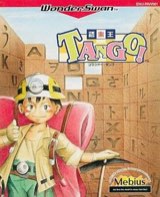
An original WonderSwan word puzzle from Mebius: letter blocks are slid around a 6x6 grid to spell words on a theme, across 120 puzzles set in ruins around the world.
Screenshots
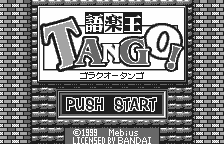
Title screen 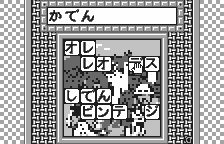
In play 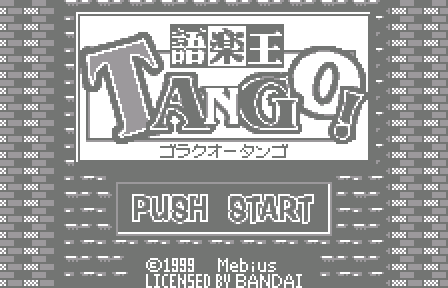
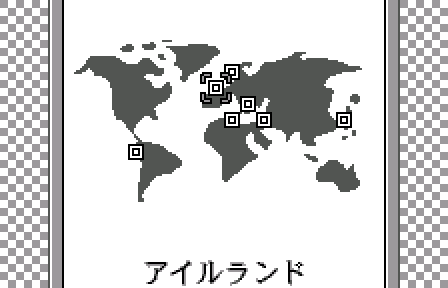
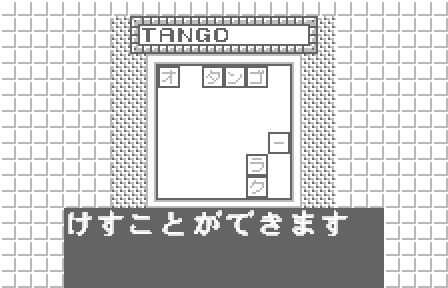
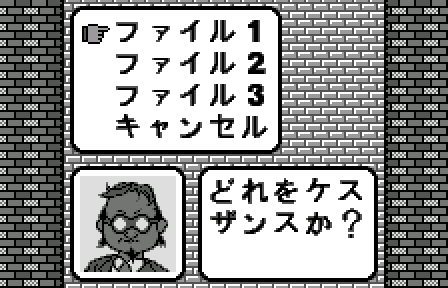
Gorakuou Tango! is a word puzzle game for the original WonderSwan, made and published by Mebius and released on 1 April 1999, less than a month after the console went on sale. At a time when much of the WonderSwan’s early library was carried over from other systems, it was a game written for the console. The title is read gorakuou tango, and the tango of the title is the Japanese word for a word. The puzzles were prepared with the help of Sekai Bunkasha, a leading publisher of puzzle magazines.
It is a word puzzle in which letter blocks are slid about a six by six grid, in the manner of a fifteen puzzle, to spell words on a theme, and a light adventure about a search through ancient ruins ties its 120 puzzles together. It was later ported to the Game Boy Color.
The story
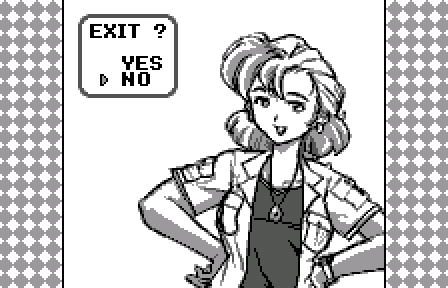
The story is told by Shingo, a Japanese boy on a homestay in America with the family of Professor McManan, an archaeologist and a friend of Shingo’s father. The professor’s daughter, Milly, looks sweet and quiet but is spoiled and quick-tempered, and she orders Shingo about and hits him when he teases her. Ian, the professor’s polite assistant, waits on her, calls her “miss” and stands in for her father while the professor is away. When the game begins the professor is away surveying ruins with his colleague Patricia.
A letter from the professor arrives, dated 1 February 1999. In it he tells Milly that someone seems to be after him and asks her to go to the police if he is not home before long. Two months have already passed. The police are no help, since he is in another country, and the household has no clue where he is until Milly’s mother, Fionnuala, turns up with a letter he sent to her. He asks them to explore the seven ruins marked on a map, take a crystal plate from deep inside each one and set the plates into a stone tablet, which will show where he is. Fionnuala stays at home to wait for him, and Milly drags Shingo along with Ian on the expedition.
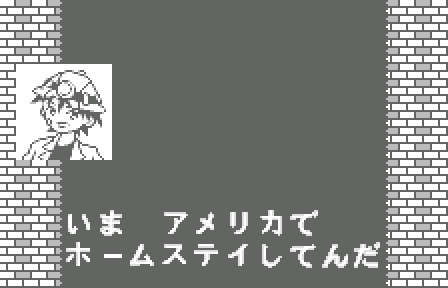
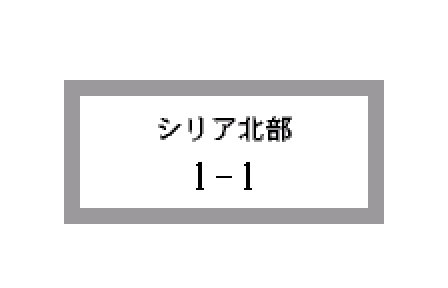
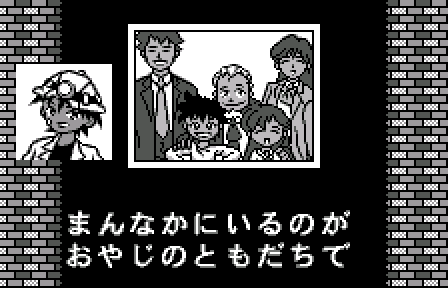
Each ruin is one map of puzzles, so the journey runs from Japan through northern Syria, Greece and Rome, Egypt, Scandinavia, Ireland and the Maya and Aztec lands, and the last map is the ruins of Mu. The story is told in short scenes with character portraits that play between puzzles, at the start and as crystal plates are collected. A pair of comic thieves, a big rough one and a small snob in glasses who ends every sentence with “zansu”, are after the crystal plates too. The tone is light family comedy, and the story is thin: it is there to give the puzzles a reason and a route, and it was felt at release to have been added as an afterthought.
How it plays
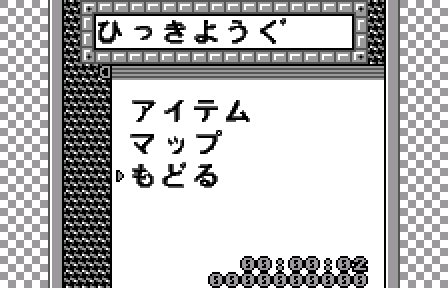
The console is held horizontally. In a puzzle the X buttons move a cursor from cell to cell, and holding B while pressing a direction slides the block under the cursor one cell into an empty space. Blocks that spell one of the theme’s words across or down light up, and A clears them. Start opens a pause menu with the items, the map and a way back to the puzzle. It is a game for one player with no time limit, so it can be played at any pace.
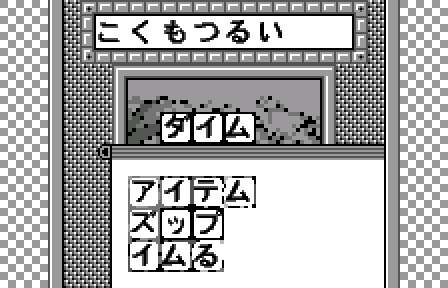
Each puzzle is a six by six board with blocks carrying hiragana, katakana or Latin letters, and a theme shown at the top of the screen. A word can be at most six letters long, the width of the board, and the puzzle is solved when every lettered block has been cleared. The very first puzzle, on home appliances, has thirteen blocks that spell stereo, video, microwave and TV, and three of the blocks are shared where the words cross. Unlike a printed crossword the board has no fixed squares, so the player decides where each word is built, and the hard part is often arranging them: a finished word may have to be taken apart to make room for another, and the order in which words are cleared matters, because a shared block disappears with the first word that uses it. Many themes accept more answers than are needed to clear the board. When the remaining blocks can no longer make any word on the list, the game says that there are no moves left.
The difficulty climbs steadily. The early puzzles have few blocks and need little thought, while later ones have more blocks, more letters shared between crossing words, and in a few puzzles blank blocks that only get in the way. Some puzzles mix look-alike blocks, the same sound written in hiragana and in katakana, or with and without the voicing marks, which must not be confused. The starting layouts are often arranged to spell words that have nothing to do with the theme: in a puzzle about spring the board opens on words such as beef and toothbrushing, which makes it hard to see the school entrance and graduation hidden in the same letters. Moving blocks about at random can also turn up a word the player had not thought of.
The 120 puzzles are grouped into eight maps, each of five areas with three puzzles. Japan comes first, with themes such as home appliances, bedding and furniture, then Japan’s lakes, mountains and rivers and the cities of its regions, and about thirty of the themes are about Japan. Later maps range across composers, sports terms, gemstones, sandwich fillings and much more. The puzzles were prepared with Sekai Bunkasha, and the variety of themes is the game’s strength.
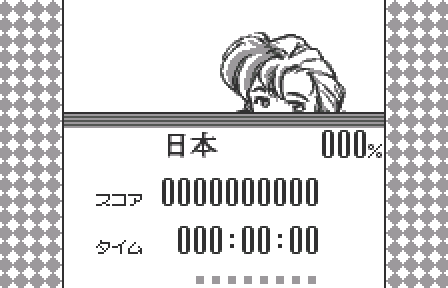
Clearing several words in one press of A, or words that cross, scores more than clearing them one by one, and after each puzzle a results screen counts the blocks and chains and shows the score and the time taken against the best. A Select Card screen then deals a random card. It may be a miss, a bonus of 1,000 or 5,000 points, or one of three items: Undo takes back a move, Hammer breaks a block that cannot be fitted into a word, and Clear solves the puzzle outright. Only so many items can be held at once. Cards are also dealt for clearing a finished puzzle again, so a player stuck on one puzzle can collect cards on others and force a way through, though the whole game can be finished without using any. The game cannot be saved in the middle of a puzzle; there are three save files, and loading one shows the area reached, the percentage completed, the score and the time.
Development and release
The publisher was Mebius Ltd., a yūgen kaisha, and the game is copyrighted to Mebius in 1999. The cartridge holds 8 megabits with an 8 kilobit EEPROM for saves; the game is played with the console held horizontally, with stereo sound and no link-cable play. Bandai pitched it as a blend of crossword, quiz and puzzle with simple rules, aimed at children and adults alike.
Modes and features
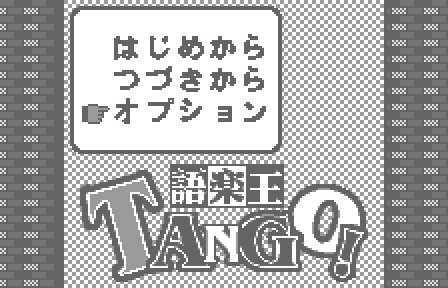
The title menu offers New Game, Continue, Options, where save files are deleted, and, once the game has been finished, Special. Special is a Time Attack mode in which any area and puzzle can be chosen and played against the clock, with a password shown after a clear. Apart from chasing scores and times, there is little reason to play the puzzles again once they have all been solved. Left alone, the title screen plays a short demonstration of how to play.
Secrets and extras
Special can be opened without finishing the game by pressing Up, Up, Down, Down, Right, Left, Right, Left, Up, Down on the title screen. A sound plays and Special appears in the menu, which makes every puzzle in the game available at once.
Reception
Players who bought the game at release recommended it warmly. It was enjoyed most because, unlike a printed crossword, thinking of a word is only half the job: a word already built often has to be taken apart again to make room for the others, so the player is building a crossword as much as solving one. Players also liked that pushing blocks about at random sometimes produces an unexpected word, and that the opening layouts are arranged into unrelated words that mislead the player. The reservations were that there is little reason to play again once every puzzle is solved, and that the story added to the maps feels like an afterthought. Weekly Famitsu’s review did not score it well.
Ports and other versions
The WonderSwan release came first, and the game was written for the console. A Game Boy Color version with the same title followed on 11 February 2000, published by J-Wing rather than Mebius. It is the same block-sliding word puzzle set among ruins from Japan to Mu, but it has 105 puzzles against the WonderSwan’s 120; Egypt is missing from its places, so the difference may be one map fewer, though the reason is not known for certain.
The Game Boy Color game is a port of the WonderSwan one, and the main change is colour. The puzzles are identical, with only the order of some changed. The game was thought just as good, but players regretted that the two releases did not offer different puzzles, and anyone who already owned the WonderSwan cartridge had little reason to buy the new one.