
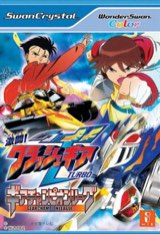
A WonderSwan Color action game based on the Crush Gear Turbo anime, built around customising the player's battle car, or gear.
Screenshots
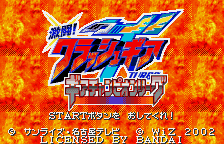
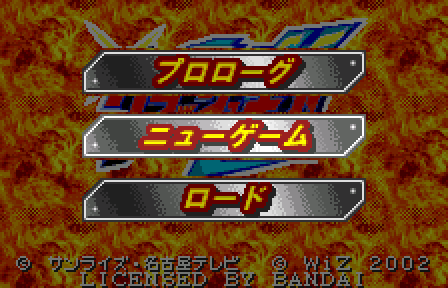
Title screen 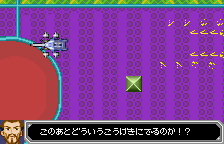
In play 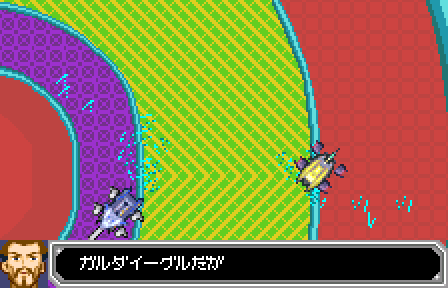
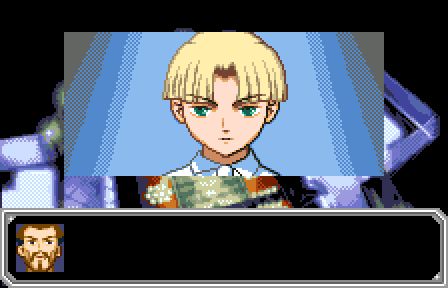
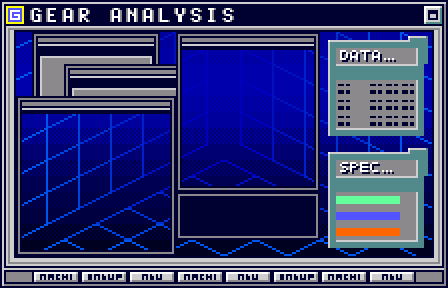
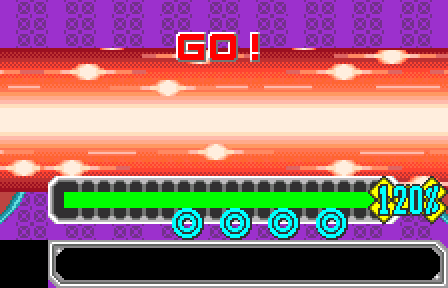
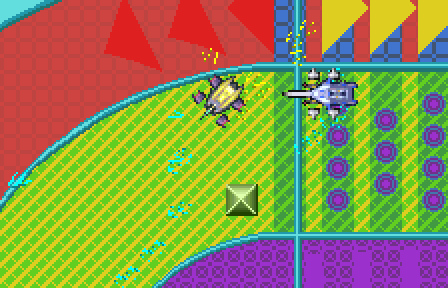
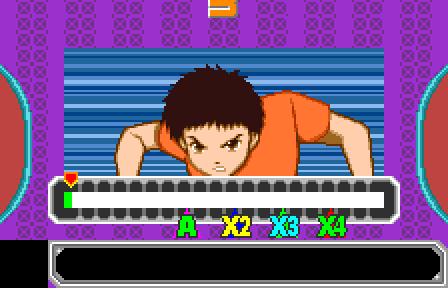
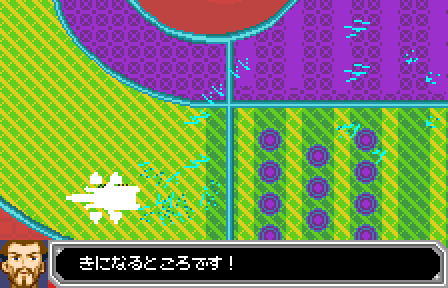
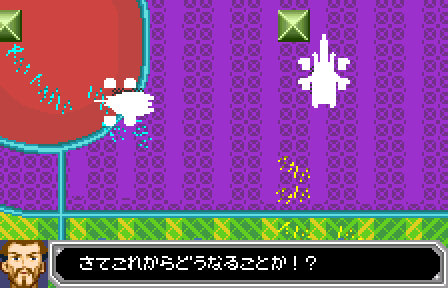
Gekitou! Crush Gear Turbo: Gear Champion League is a WonderSwan Color game based on Gekitou! Crush Gear Turbo, a Sunrise anime that aired in Japan from October 2001 to January 2003 to promote Bandai’s Crush Gear toys. The toys are small motorised four-wheeled cars, and in the show children pit them against each other in matches called gear fights. A gear loses when it is pushed out of the ring, when it is turned over and cannot right itself within a few seconds, or when it is broken or runs out of power.
The cartridge went on sale on 10 August 2002, a few weeks after a PlayStation game based on the same series. Its genre is customise action: the player follows Kouya Marino, the hero of the anime, through a career of tournaments, and the gear he builds is at the centre of every battle. It was published by Wiz, a toy and game company, whose name also appears in the product code and the copyright line, though it is sometimes credited to Bandai instead. Wiz is also usually credited with making the game, but no staff credits are known.
The game needs a WonderSwan Color and does not run on the original black-and-white console. Two consoles can be joined with the link cable, and the game is for one or two players.
The story
The game is set in the world of the anime, where battle machines called Crush Gears are wildly popular and gear fighters compete in tournaments. The box sells the gears as high-tech four-wheel-drive machines of the 21st century, and the story is about a boy who wants to be the best in the world with one.
The player is Kouya Marino, the younger brother of Yuuya Marino, a gifted gear fighter and a former Asian champion who has died. Kouya has inherited his brother’s machine and his place in the Tobita Club, and he talks loudly about becoming world champion, but he does not train seriously. At the start his brother’s old teammate, Takeshi Manganji, the son of a wealthy business family, leaves and takes every other member of the club with him, and the team falls apart. None of the departing members stands up for Kouya, who had been acting as leader on the strength of his brother’s name.
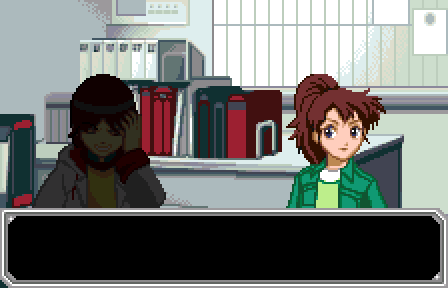
Kouya has to rebuild the club from nothing. He challenges fighters with the promise that if he wins they join his club, and the first recruit is a big boy he hunts for by shouting across a tournament venue. His childhood friend sticks with the club, and the team grows as he wins matches. The story is told in short event scenes between the tournaments, with strong opponents and rivals turning up one after another on the road from small local events to the world championship.
The tone is light and comic. Kouya is a brash, lazy hero in the early scenes, with no sense of manners and little wish to improve even in his talks with his friend, and his manner is the part of the game players remember most.
How it plays
The game is a career of tournaments. Kouya starts in small events with no entry fee, and winning them and finding teammates opens up bigger ones. The loop is to enter tournament after tournament, build up money and parts, and push the story on, so progress comes as much from a stronger gear as from the player’s own skill.
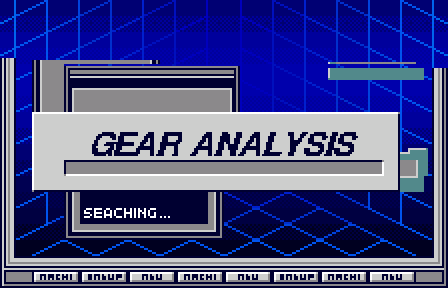
Between events the gear is built and tuned. A gear is a body fitted with parts, and the body and parts can be combined in more than ten thousand ways. Winning a tournament earns points, which buy stronger parts or pay for tune-ups. Each part carries its own special move, so the parts on the gear decide which moves are available in a fight, and choosing them is the core of the game.
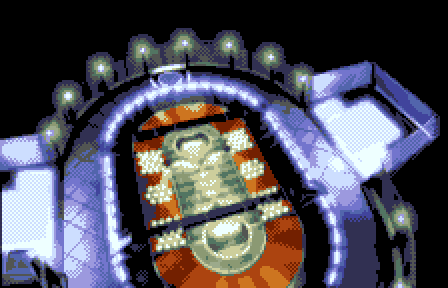
A match turns on three things. The first is the gear itself. The second is the shoot-in, the launch that sends the gear into the ring, where the player has to hit the right moment. The third is the command input during the fight: entering the right command fires one of the gear’s special moves, shown with its own animation as the gears clash and throw sparks.
Progress is saved to the battery-backed memory in the cartridge. The soundtrack uses the anime’s opening theme. The matches themselves are good fun, and the game is mainly aimed at fans of the anime; how long the career runs and how hard the later tournaments get is not well documented.
Development and release
Before release Bandai showed the cartridge on its WonderSwan site with screens marked as work in progress, and shops taking advance orders offered a pre-order bonus, though what the bonus was is unknown. The listed price was 4,200 yen before tax. The cartridge holds 32 megabits of ROM and 256 kilobits of battery-backed SRAM for saved progress, plays in stereo, and was marked as compatible with the WonderSwan Color and SwanCrystal. The price including tax was 4,410 yen. The PlayStation game based on the same anime, made by Natsume, came out on 25 July 2002.
Modes and features
The game has a one-player career and a two-player battle over the link cable, which joins two consoles. Bandai hinted that playing a friend this way might bring out a mysterious gear fighter, though what happens is not known.
Reception
The game is a loop of entering tournament after tournament to build up money and parts and push the story forward, and fans of the anime are thought likely to enjoy it. Players found the matches themselves good fun, but laughed at how brash and lazy the game makes Kouya seem in the early story scenes, and felt that this hurt it as a character game.
Ports and other versions
Gear Champion League was made for the WonderSwan Color. Bandai presented it as the anime’s world turned into a game for the WonderSwan, and it was never ported, remade or re-released on another system. The PlayStation game released a few weeks earlier under the plain series title is a separate game, not another version of this one: it was made by a different developer, Natsume, and is a command-driven gear battle game, where this cartridge is built around a tournament career and customising the gear.