
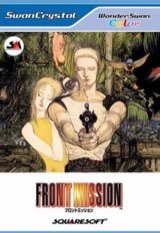
Square's WonderSwan Color port of its 1995 Super Famicom tactical RPG of customisable wanzer mechs, with a quick battle mode and link-cable versus play added.
Screenshots
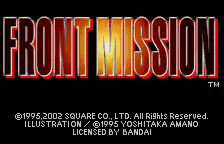
Title screen 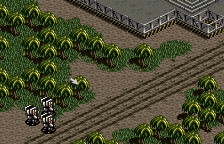
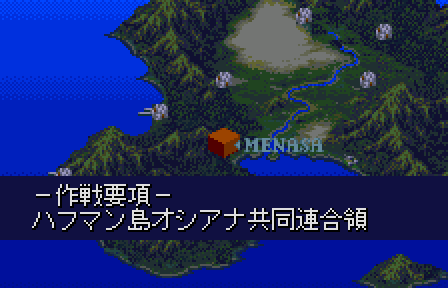
In play 
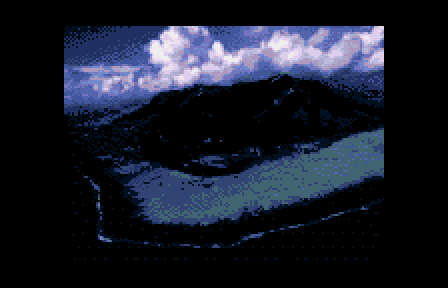
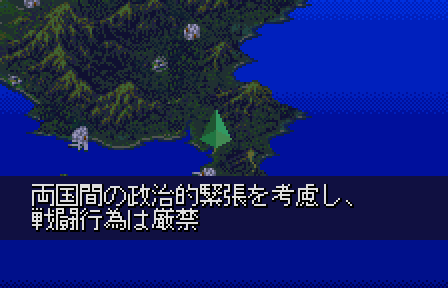
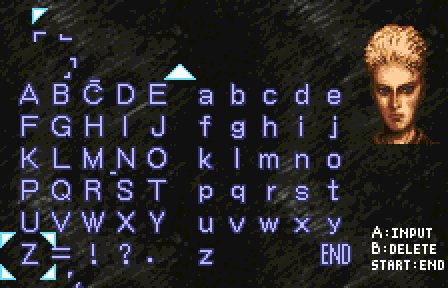
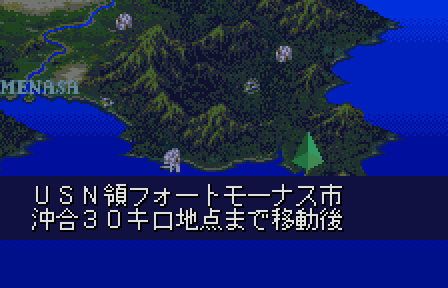
Front Mission for the WonderSwan Color is a port of the tactical role-playing game Square first released for the Super Famicom on 24 February 1995, the first game in its Front Mission series. Square released it on 12 July 2002 as part of its “Square Masterpiece” line of earlier hits, and the conversion was handled by Studio Clips and Tom Create. It was the last game Square published for the WonderSwan.
It is a war story about a discharged soldier looking for his missing fiancée, with Yoshitaka Amano’s character designs kept, and it is played as turn-based battles between wanzers, humanoid war machines that the player rebuilds from more than 350 weapons and parts.
The port follows the Super Famicom game closely, but it adds a simplified battle mode that skips the battle animations and a versus mode for two players over the link cable. The password system for exchanging data still works, and passwords made in the Super Famicom version can be entered. The cartridge needs a WonderSwan Color or SwanCrystal. Famitsu’s review panel gave it 30 out of 40, enough for the magazine’s Silver Hall of Fame, an award the original had also received.
The story
The game is set in 2090 on Huffman Island, a Pacific island thrown up by volcanic activity in 1995. Two blocs claim it: the Oceania Cooperative Union (OCU), an alliance of South and Southeast Asian nations with Japan, South Korea and Australia, and the United States of the New Continent (USN), a union of the countries of North and South America. Both settled the island, and after the First Huffman Conflict ended in 2070 it was split between them, the east going to the OCU and the west to the USN. Armies on both sides fight with wanzers, walking war machines whose name comes from the German for walking tank.
The game opens on the border. Captain Royd Clive leads a small OCU special reconnaissance team sent to look at a USN munitions plant in the Larcus district. USN wanzers led by an officer named Driscoll are waiting for them, and in the fighting Royd’s fiancée, Lieutenant Karen Meure, is lost. The plant is blown up, and the USN announces that four OCU wanzers attacked its territory; the OCU denies it and calls the raid a USN put-up job. Neither side gives way, the Larcus Incident becomes the Second Huffman Conflict, and the whole island goes to war. Royd’s team is discharged and written off as killed in action.
A year later Royd is fighting in a wanzer arena when Colonel Olson, commander of the mercenary unit the Canyon Crows, recruits him with the promise of a chance to avenge Karen. The Crows already include Natalie Blakewood, Keith Carabell, Joynas Jeriaska, known as J.J., and Ryuji Sakata, and other pilots can be taken on as the war goes on, among them the war correspondent Frederick Lancaster. Royd’s private aim, to learn what happened to Karen and why, runs alongside the unit’s contracts, and the story leaves it to the player to find out who was behind the ambush.
The story is told in a straight line. Event scenes lead to a mission, the unit rests and refits in a town, and the next mission follows, while new places appear on the island map as the plot moves on. In the early part of the war the Crows fight with the OCU to win back lost territory in the east, including Freedom City, the eastern capital, before pushing west. The tone is serious and against war, a drama of soldiers each with reasons of their own for fighting, though the producer asked for lighter moments to balance it. The WonderSwan game tells only this OCU story; the second campaign from the USN side belongs to the later PlayStation version.
How it plays
The WonderSwan Color is held sideways, and apart from its two added modes the port keeps the Super Famicom game’s systems, menus and hidden commands, which use the X and Y button groups together with A. The smaller screen shows less of a battle map at once than the Super Famicom game did.
Between missions the game is run from menus. The island map takes the unit from town to town and to each battle zone, and a zone cannot be revisited once its mission is won. A town offers a shop that sells and buys parts and items and can preview how a purchase would change a machine, a military office where most missions have to be accepted and briefed before setting out, a bar with hints about the story and equipment, a colosseum, and the set-up screens for fitting out machines and checking pilots. Saving is done in town; during a mission the game can only be suspended. Each mission pays a fee, and repairs to machines destroyed in it are charged afterwards, though the pilots normally survive.
Battles are turn-based on a grid of squares. The player chooses which units to send, and later missions limit how many. All the player’s units act, then all the enemy’s. Each unit moves within a range set by its legs and load, then attacks, uses an item or waits, and objectives are usually to destroy every enemy or to protect a particular unit. Each attack cuts to a closer view of the two machines. A unit that is attacked can fire back with a suitable weapon or guard, and since a missile launcher can neither fire back nor be answered at long range, missiles do much of the work in later missions. Peewee and his supply truck come along on many missions to repair damaged parts, restock missiles and let units change equipment.
A wanzer is put together from a body, two arms and legs, each with its own hit points, plus a computer and an optional backpack. Losing the body takes the unit out of the fight, losing an arm loses the weapons it carried, and losing the legs cuts movement to one square, so damage spreads across parts rather than wearing down a single bar. The total weight must stay within the machine’s power output. The computer improves accuracy, the backpack holds items such as repair kits and ammunition or adds power, and shields soak up part of the damage. Weapons fall into melee weapons such as rods and tonfas, short-range guns such as machine guns and shotguns, long-range weapons such as bazookas and grenade launchers, and shoulder-mounted missile launchers with limited ammunition.
Pilots improve with use. Each one gathers experience in melee, short-range and long-range fighting and in agility, which is earned by guarding, and levels up once enough has been gathered across them. On some level-ups a pilot is offered a skill: Double, First and Stun for melee, Duel, Speed and Switch for guns, and Guide for missiles. Duel and Guide let the pilot choose which part to aim at, Double and Switch add a second attack with the other hand, and each skill has three levels that raise the chance of it taking effect. Each pilot can hold only a few skills and a learned skill cannot be swapped, so a skill that is not wanted can be turned down and will be offered again.
In the colosseum one machine fights another for a bet, with odds that rise with the opponent’s strength; losing costs only the stake, and there is no repair bill. The WonderSwan adds a quick battle option that cuts the battle scenes short, and a VS Play mode in which two players set their wanzers against each other in the colosseum over the link cable. A machine and its pilot can also be passed on as a password, and passwords from the Super Famicom game work.
Difficulty rises steadily through the campaign. The advice handed on most often is that the weapon balance favours guns and missiles: machine guns hit several parts at once, which also earns more experience, missiles deal damage that cannot be answered, and melee pilots fall behind unless they are trained early. Guarding during the enemy’s turn is the main way to build agility, and the colosseum is a common place to train pilots and earn money.
Development and release
Square announced the port in June 2002, a month before release, and priced it at 5,200 yen before tax. Square ran a small site for it on its PlayOnline portal with an introduction, the characters, the story and a page of secrets. Square presented the port as faithful to the original’s event scenes while adjusting the systems for a handheld, and sold it for one or two players, with the screen held horizontally and the link cable as its only accessory.
Modes and features
The two additions are a quick battle option, also called simple battle, that cuts the battle animations short, and VS Play, in which two players pit their wanzers against each other over the link cable. Wanzer data can also be passed between cartridges by cable or by entering a password.
Secrets and extras
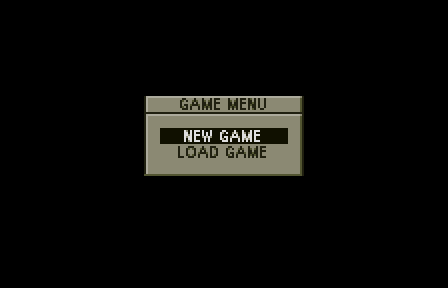
The hidden commands of the Super Famicom game survive in the port. Holding Y4 and X1 and pressing A on the game menu leads to Arena Town, a town that has only a colosseum, reserved for VS Play and stocked with six regular pilots at their starting stats. Holding Y4 and X3 and pressing A on the same menu opens a sound test with the music and sound effects. In a colosseum match, holding Y4 and pressing A when the two pilots’ faces appear moves the fight from the arena to a busy street. Square also published colosseum passwords for six bouts against the story’s boss pilots, each in a wanzer unlike the one met in the story and with greatly inflated stats.
Reception
Weekly Famitsu’s Cross Review gave the port 30 out of 40, which placed it in the magazine’s Silver Hall of Fame as the Super Famicom original had been. It is counted among the WonderSwan Color’s good straight ports rather than its remakes.
Ports and other versions
The original is the Super Famicom game of 1995, developed by G-Craft and published by Square, and the WonderSwan Color cartridge is its first conversion. Apart from the two added modes, the Swan version keeps the Super Famicom game as it was. It is a complete port and looks good, but it shows a much smaller part of the map at once, the background goes entirely black while the view moves, and the music has lost some quality while still sounding decent.
The PlayStation version, Front Mission The First, followed in October 2003. It was converted from the Super Famicom game rather than from the Swan one. Its main addition is a second campaign seen from the USN side, led by a new hero, Kevin Greenfield, with more than twenty missions and new parts for that side. Every Super Famicom track was rearranged and five new pieces were written for the new campaign, the graphics were improved, movies were added, some balance was changed, and the weapon demonstration of the original was dropped. The backgrounds were also redrawn, and new character art was drawn for the USN story. The First is also included in the PlayStation collection Front Mission History of December 2003. The PlayStation version went on sale as a download for the PlayStation 3 and PSP in Japan in November 2008, and for the PS Vita in 2012.
Tose then ported The First to the Nintendo DS, released in Japan in March 2007 and in North America in October 2007 under the plain title Front Mission, the first version of the game released outside Japan. It adds characters and wanzer parts from later games in the series, new missions in both campaigns, difficulty settings and a carried-over clear file, and it uses the two screens and the touch screen. Forever Entertainment’s full remake, Front Mission 1st: Remake, came out for the Nintendo Switch in November 2022 and for the PlayStation 4, PlayStation 5, Xbox One, Xbox Series X/S and Windows in June 2023. Its maps and wanzers are in 3D with a camera that can be moved and turned, battle animations can be skipped, and the music offers both new arrangements and the original tracks. It also has two display styles and a reworked battle screen.
Of the versions, the DS release is generally thought the definitive one, for its added missions and characters, though its touch controls are only passable. Weekly Famitsu’s Cross Review gave the Super Famicom original 31 out of 40 and the PlayStation version 28, and its reviewers praised the PlayStation’s new campaign while calling its graphics old-fashioned. Metacritic’s averages are 72 for the DS version and 69 for the Switch remake.